VISITING ICELAND IN FEBRUARY: EVERYTHING YOU NEED TO KNOW
February is one of the most rewarding months to plan your trip to Iceland. Nestled well into winter, it brings a compelling mix of extended daylight for sightseeing and long nights for aurora hunting, along with unique cultural traditions you won’t experience at any other time of year.
In this guide, we explain why February is a standout month to visit Iceland, what to expect from nature and culture, and how to make the most of your winter adventure.
Why February Stands Out
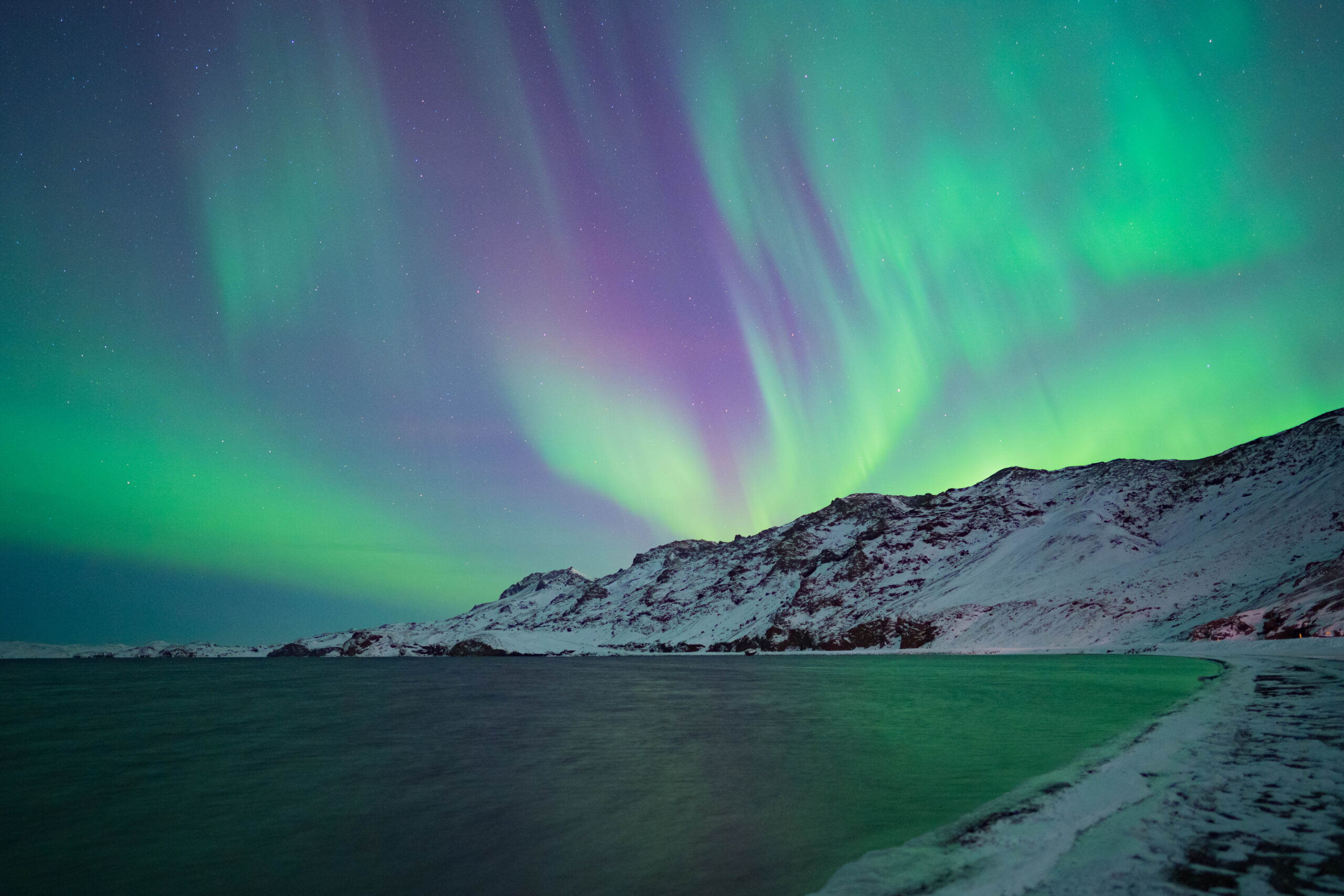
Iceland in February offers a balance between seasonal extremes: days are long enough for exploration, while nights are still dark enough for reliable Northern Lights visibility. This makes February a favorite among travellers seeking both natural wonders and seasonal experiences.
For a deeper dive into when and how to see the Northern Lights in Iceland, check out Aurora Reykjavik’s detailed guide to the best time to see the Northern Lights in Iceland which explains seasonal visibility, peak hours, and expert tips.
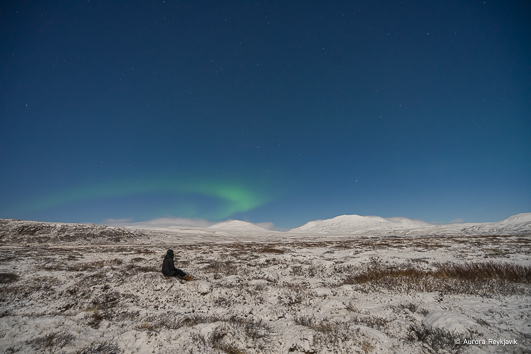
This could be you! Join a northern lights tour for an unforgettable experience
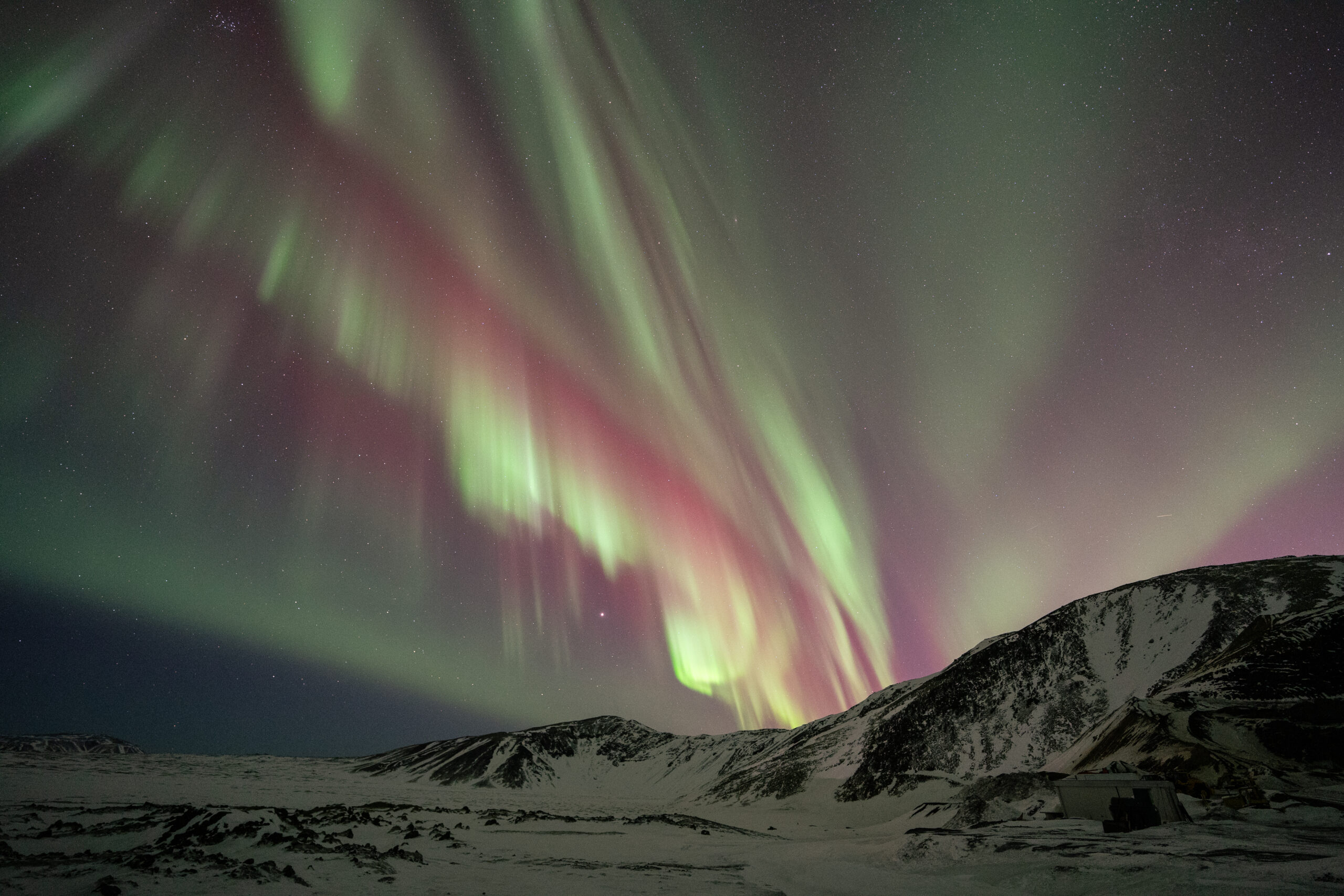
Colourful auroras during a solar storm – learn more here
Full moon aurora at Þingvellir National Park, Iceland
“Best of Both Worlds”: Daylight for Sightseeing and Darkness for Aurora Hunting
One of the greatest advantages of visiting Iceland in February is the remarkable balance between daylight and darkness.
By this time of year, Iceland gets approximately 9–10 hours of daylight, which provides ample time to explore iconic landscapes such as the Golden Circle and South Coast at a relaxed pace. At the same time, February still offers up to 14 hours of darkness, creating excellent conditions for chasing the Northern Lights once the sun goes down.
To build your perfect itinerary, consider these tours:
- Golden Circle & Northern Lights combo tour – See the Golden Circle by day, then hunt for auroras by night.
- Northern Lights Superjeep Tour – Venture into remote countryside for better aurora viewing conditions.
Explore Iceland’s Iconic Landscapes by Day
Iceland’s winter scenery is especially dramatic in February, with snow-covered mountains, icy waterfalls, and sweeping plains creating breathtaking panoramas.
Popular daytime excursions include:
- Golden Circle tours – Visit Þingvellir National Park, Gullfoss waterfall, and the Geysir geothermal area.
- South Coast tours – Discover waterfalls, glaciers, black sand beaches, and coastal views.
These tours highlight Iceland’s diverse geography and provide stunning winter landscapes that are perfect for photography and sightseeing.
Expert’s tip: add a visit to a geothermal spa or lagoon to your itinerary, for the ultimate Icelandic experience. More information here.
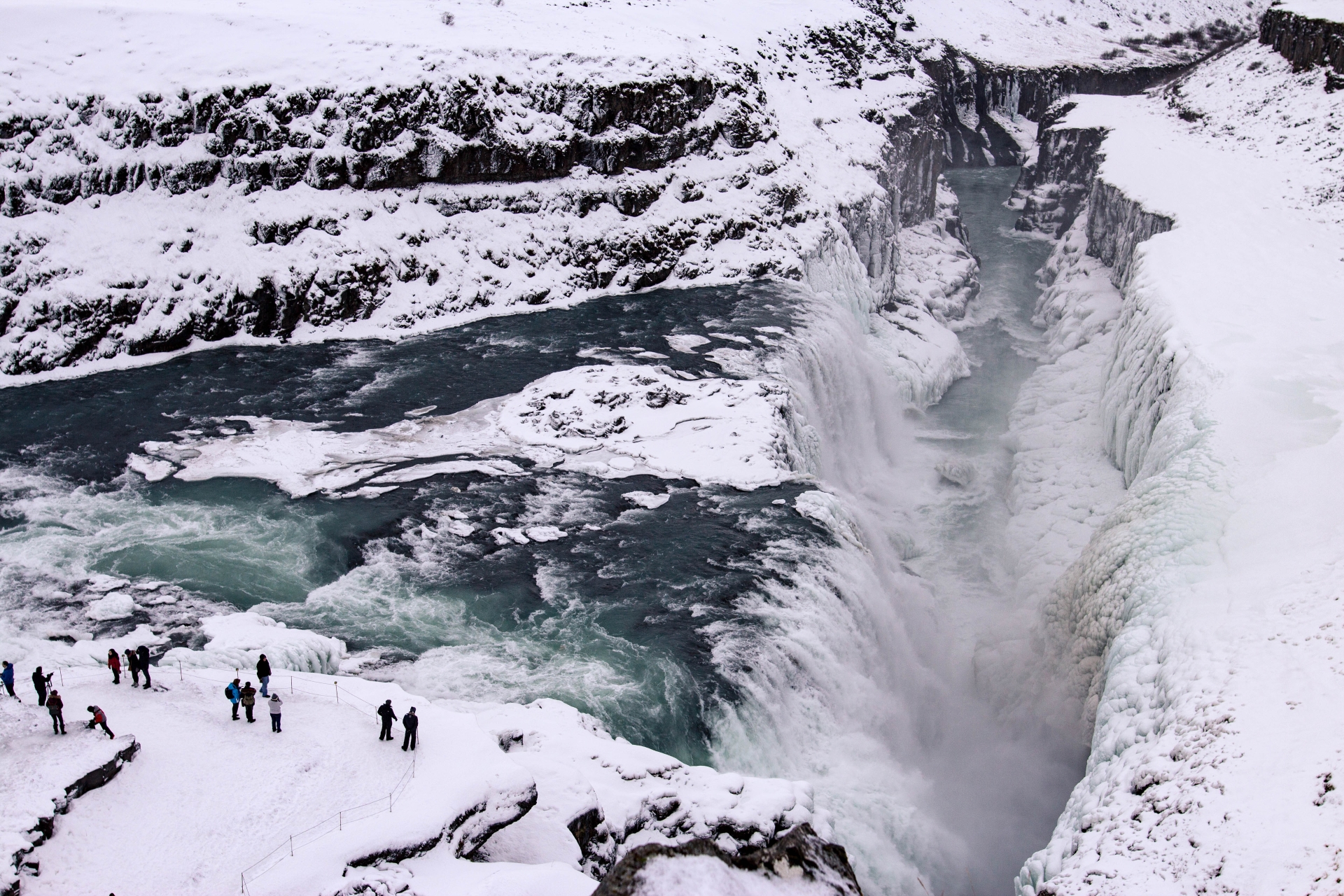
February snow at Gullfoss, in the Golden Circle
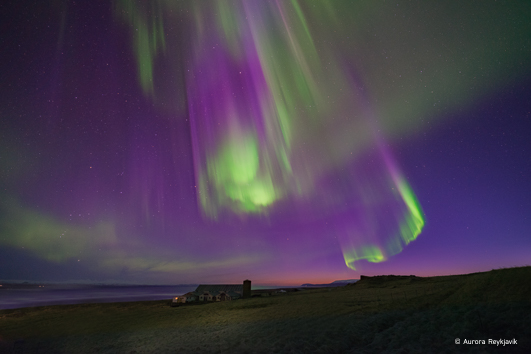
Aurora in the countryside of Iceland
Northern Lights in February
February sits comfortably within Iceland’s Northern Lights season, which generally runs from late August through mid-April. The combination of long nights and clear winter skies create favorable conditions for aurora displays.
But seeing the aurora isn’t just about dark skies: understanding how aurora activity works can help set your expectations. Aurora Reykjavik’s article What Are the Main Types of Northern Lights? explains the differences in auroral forms and how they influence what you might see during your trip.
Other helpful reads include:
- How to Photograph the Northern Lights, with tips on camera settings and techniques for capturing vivid aurora images.
- The 25 Best Places to See the Northern Lights in Iceland, outlining locations across the country that maximize your viewing chances.
- Full Moon and Northern Lights: Will a Full Moon Ruin Your Aurora Experience?. Learn how moonlight, cloud cover, and aurora strength interact.
Þórri — Iceland’s Winter Mid-Season
February in Iceland traditionally falls within the old Norse winter season known as Þórri, marking the midpoint of winter and the endurance of the darkest months. Today, Þórri is best known through Þorrablót, mid-winter gatherings where Icelanders celebrate cultural heritage through food and social events. The cuisine reflects historical preservation methods and typically includes cured or fermented meats, dried fish, and traditional dairy products, often accompanied by brennivín, Iceland’s signature schnapps. While rooted in history, modern Þorrablót celebrations often adapt these traditions to contemporary tastes.
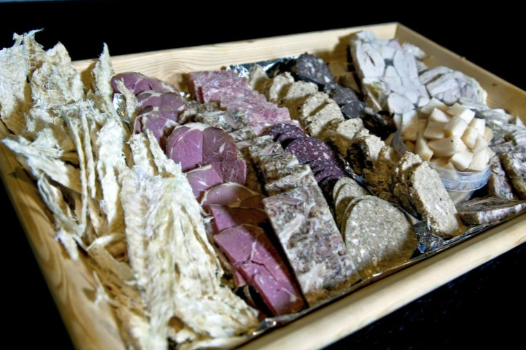
Some of the traditional foods of Þorrablót

Cream-filled pastries on display on Bolludagur
Bolludagur — Iceland’s Cream Bun Tradition
A fun highlight during Icelandic February is Bolludagur, also known as Cream Bun Day. Celebrated on the Monday before Lent, Bolludagur is all about enjoying delicious cream-filled buns topped with icing. Bakeries across Iceland prepare special bollur (buns), and both locals and visitors delight in this sweet tradition, making it a tasty cultural experience you won’t want to miss.
Practical Benefits of Visiting in February
Beyond scenic beauty and cultural traditions, February offers practical travel advantages:
- Fewer crowds than the summer months, giving you better access to popular sites.
- Lower travel costs, as some accommodations and tours are more affordable in winter.
- Excellent aurora viewing conditions, with long nights and frequent auroral activity.
Whether you’re planning a short break or a longer exploration, February delivers a complete Icelandic winter experience.
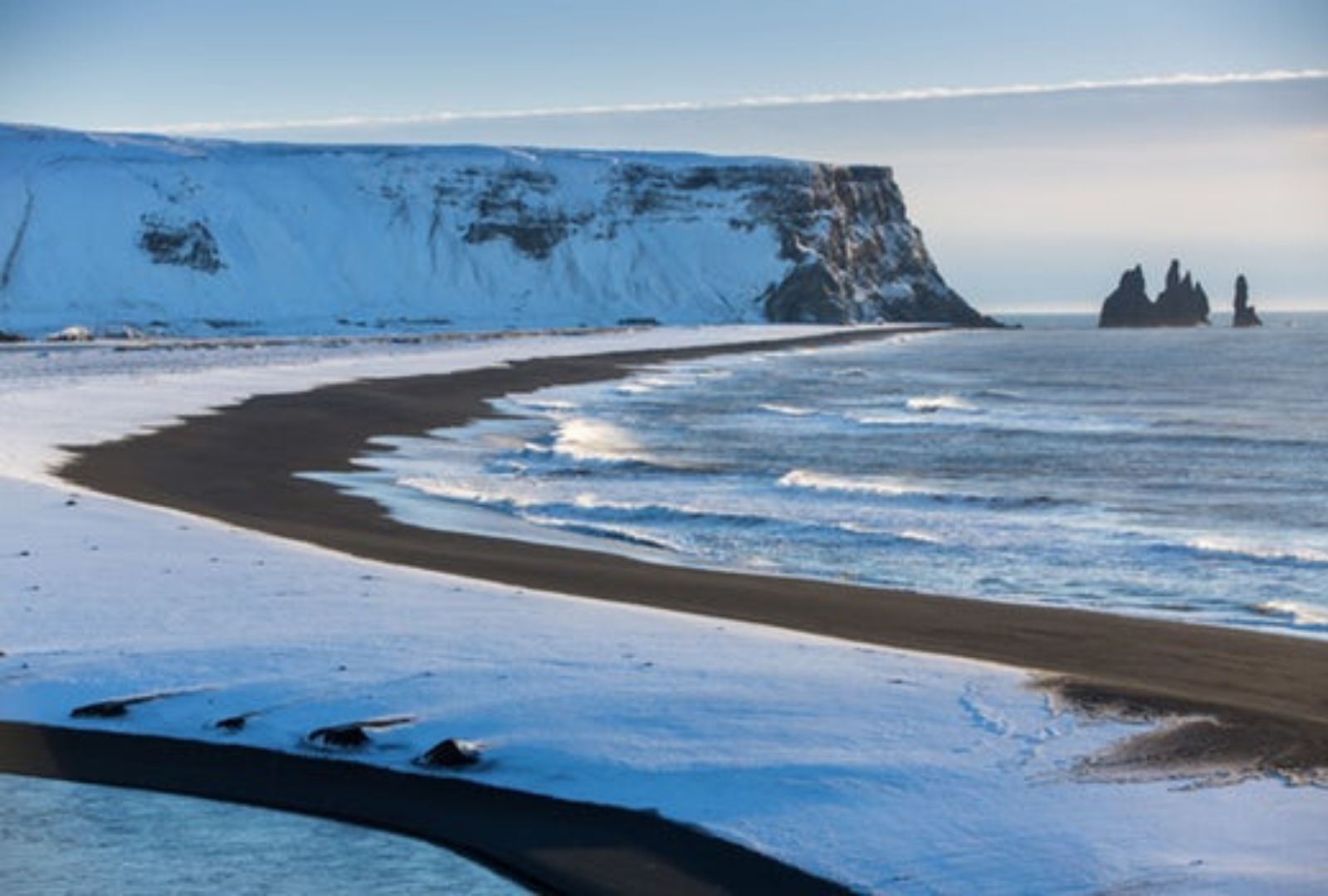
The black sand beach Reynisfjara
Final Thoughts — A Month Worth Discovering
Traveling to Iceland in February combines dramatic winter landscapes, cultural celebrations like Þórri and Bolludagur, and excellent conditions for Northern Lights viewing. From ample daylight for sightseeing to extended nights perfect for aurora hunting, February offers one of the most balanced and rewarding times to visit.
For more inspiration and insider tips on aurora experiences, explore Aurora Reykjavik’s range of Northern Lights blog posts and guides here.
JOIN US ON ICELAND'S BEST NORTHERN LIGHTS TOUR
OUR BESTSELLER
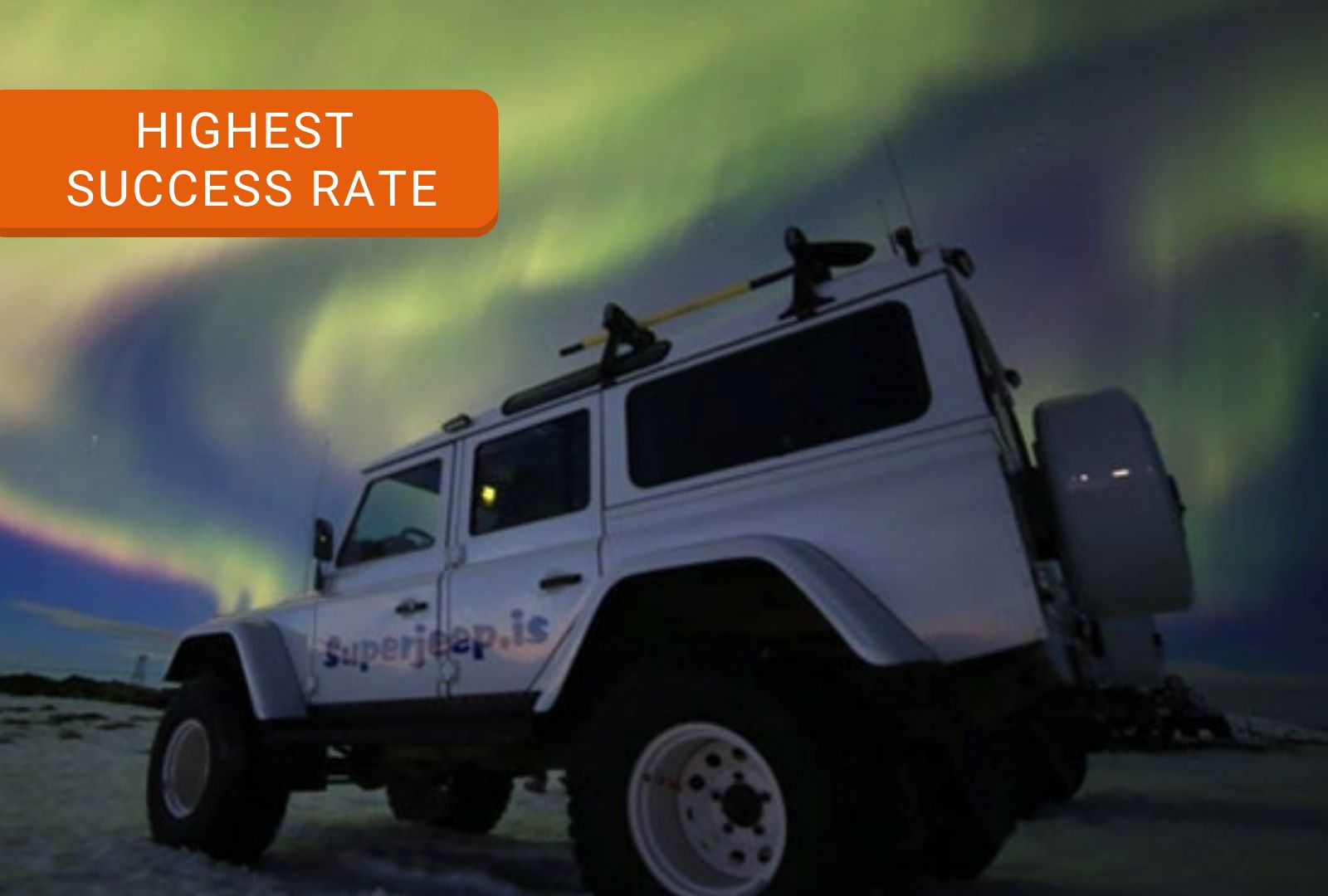
NORTHERN LIGHTS SUPER JEEP TOUR
HIGHLIGHTS:
✓ Guided premium Northern Lights tour in a super jeep ✓ Free pick-up and drop-off ✓ Free quality photos ✓ Homemade hot chocolate ✓ Warm vehicles on location
HIGHEST SUCCESS RATE
FREE ADMISSION TO AURORA REYKJAVÍK – SAVE 3900 ISK
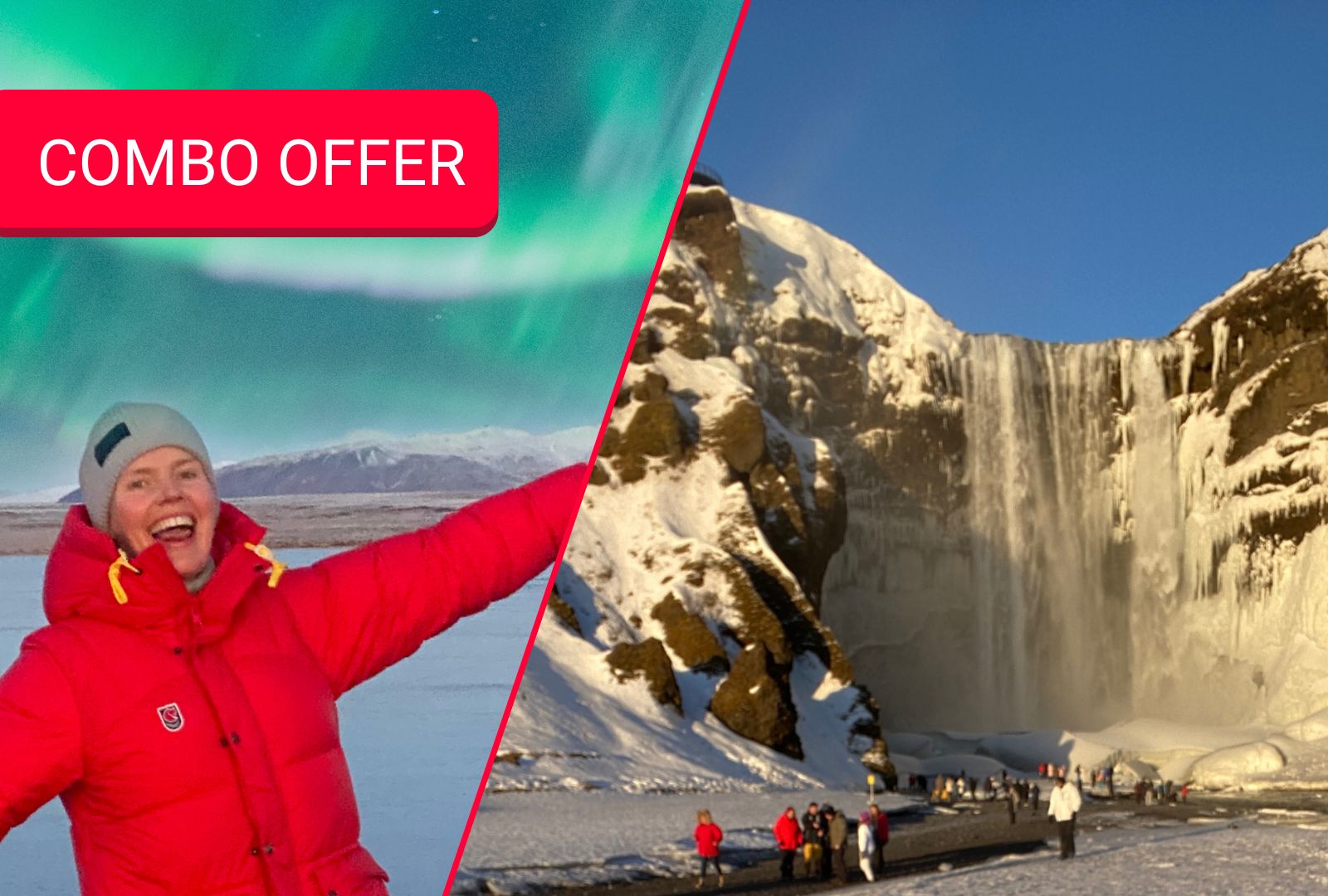
NORTHERN LIGHTS & SOUTH SHORE
HIGHLIGHTS:
✓ 2IN1 OFFER: SAVE OVER ISK 2000 ✓ Visit Sólheimarjökull glacier ✓ Stroll around the town Vík ✓ Walk at the black sand beach ✓ See the majestic waterfalls Skógafoss and Seljalandsfoss ✓ Witness the Northern Lights dance BEST VALUE FOR MONEY NORTHERN LIGHTS GUARANTEE: FREE RETRY IF NO LIGHTS ARE SEEN
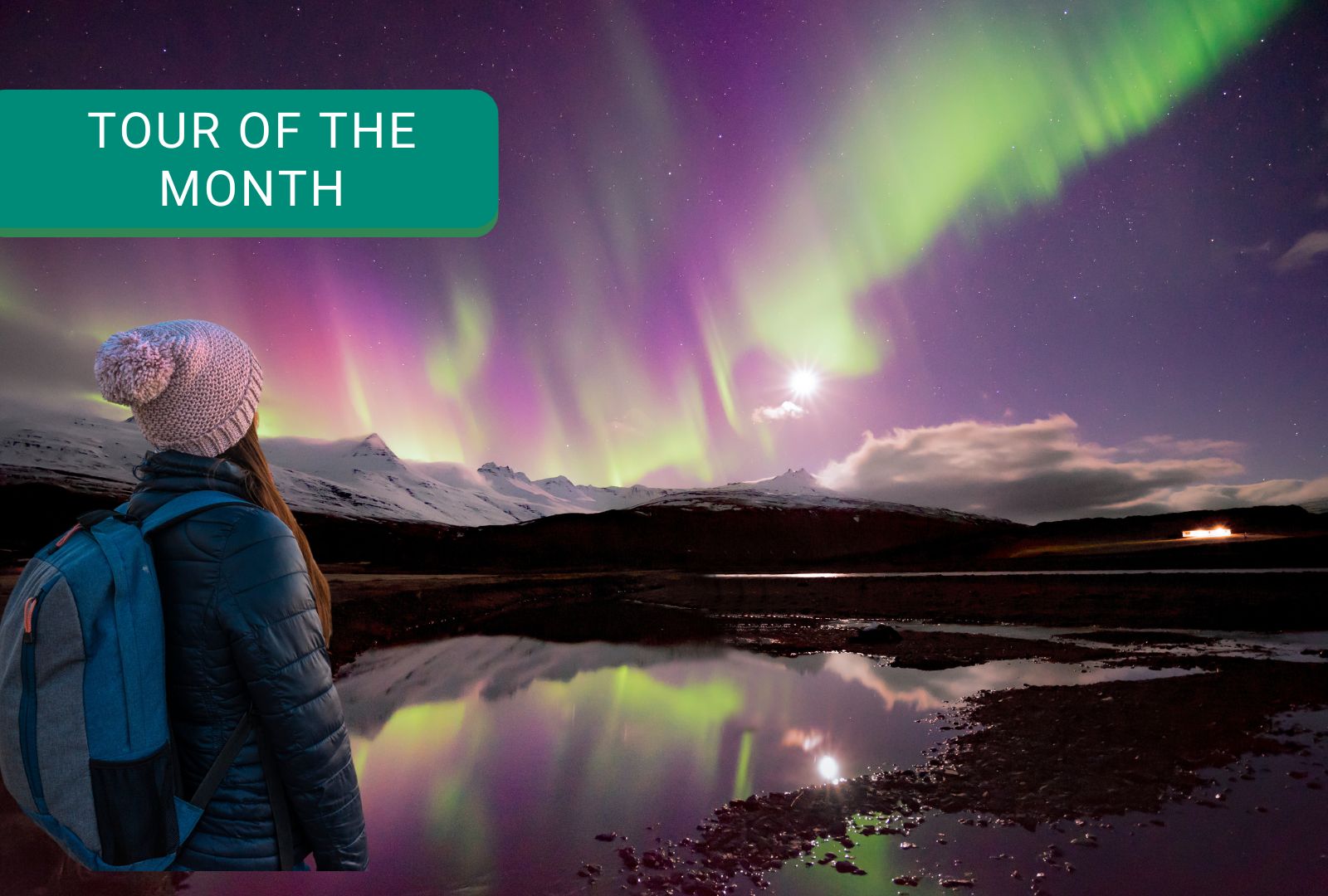
NORTHERN LIGHTS SMALL GROUP TOUR
HIGHLIGHTS:
✓ Northern Lights Tour in a small bus
✓ Free photos of you under the Northern Lights
✓ Homemade hot Chocolate and Pastries
✓ Free pick-up and drop-off
MOST POPULAR TOUR
FAQ ABOUT THE NORTHERN LIGHTS
When can I see northern lights in Iceland ?
Can you see the Northern Lights during a full moon?
What time do the northern lights show up?
How long do the northern lights last?
Can I see the northern lights when it is cloudy?
Do the northern lights only appear when it is cold?
Are the northern lights visible all over Iceland?
Are the northern lights really colourful?
Is a new moon better for aurora viewing?
Is the full moon good for aurora photography?
Katarina Raker