Northern Lights Forecast Iceland Tonight
Live Aurora Forecast for Reykjavík & Iceland
Check the live cloud forecast below and aim for the clearest areas — white areas on the map indicate clearer skies.
Check cloud cover to find clear skies. Use the time slider to track changes. Darker, denser color = more cloud cover. Lighter, whiter areas = clearer skies — your best bet for tonight.
Aurora Reykjavík - The Northern Lights Center is the first, and only, museum in Iceland fully dedicated to the Northern Lights. Founded and run by passionate aurora experts, astrophotographers, and guides with decades of chasing the lights across Iceland.
Watch the sky over Iceland right now, streaming year-round from two locations — the only Iceland aurora forecast with a live camera built in.
See nothing but darkness? Come back once the sun has set.
REAL-TIME NORTHERN LIGHTS FORECAST
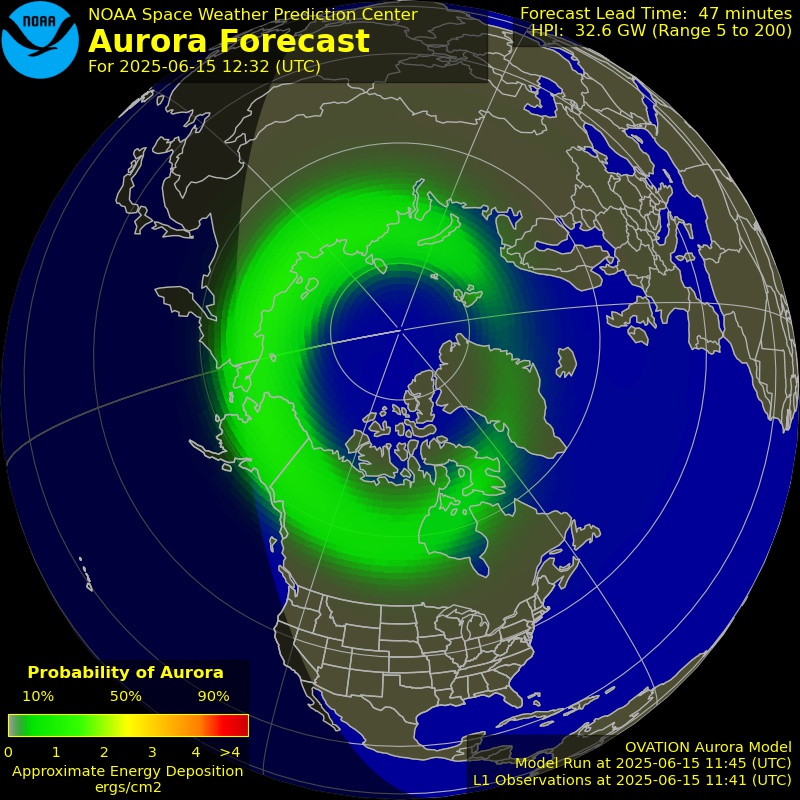
Live imagery straight from NASA and NOAA satellites — the same raw data our forecasters watch to judge tonight's chances.
NASA SDO/HMI · dark spots mark magnetically active regions, the source of flares and CMEs.
NOAA GOES-19 SUVI, 131 Å · bright flashes are flares — sudden bursts of energy from the Sun.
NASA SDO/AIA, 193 Å · dark patches vent fast solar wind that often fuels strong aurora nights.
NASA/ESA SOHO LASCO C3 · streaks show plasma clouds hurled outward — the biggest driver of major storms.
Measured ~1 million miles upwind of Earth by NOAA's SOLAR-1 spacecraft, shown at each reading's predicted Earth arrival time.
La EARTH line marks right now. Solid = already arrived. Dashed = already measured at SOLAR-1, still inbound.
Green = pointing north, red = pointing south. Southward Bz is what opens the door for aurora.
How to Read the Live Data
This is the same data our guides watch every night. It looks technical at first, but each number answers one simple question — here's how to read it, in order.
A single number from 0 to 9. Think of it as the headline number: the higher it is, the stronger and further south the aurora can reach.
Good sign: Kp 2 or higher usually means visible lights somewhere in Iceland.
Measured in km/s. Faster solar wind hits Earth's magnetic field harder, which tends to produce brighter, faster-moving auroras.
Good sign: speeds above 400 km/s.
Measured in particles per cm³. On its own, density doesn't do much — but combined with high speed and a southward Bz (see below), higher density can mean a more intense, energetic display. Think of it as fuel, not the spark.
Measured in nT. This is the total strength of the magnetic field the solar wind is carrying. A stronger Bt makes everything else more effective, but only if Bz (next) is pointing the right way.
Good sign: Bt of 6 nT or higher, combined with a southward Bz.
Measured in nT, either northward (positive) or southward (negative). This is the one that decides whether everything else even matters: a southward Bz opens a "door" in Earth's own magnetic field, letting solar particles in to create the aurora. A northward Bz keeps that door mostly shut, even if every other number looks great.
Good sign: Bz at –2 nT or lower (southward). Ideally –3 nT or below.
Put simply: check Bz first — it decides if the door is open. Then Kp tells you how strong the storm is, and speed, density, and Bt tell you how much punch is behind it. Combine all of this with clear skies and real darkness for your best chance of actually seeing it.
APÚNTATE A UN TOUR DE AURORA BOREAL
TOUR DE AURORAS BOREALES EN SUPER JEEP
4.9
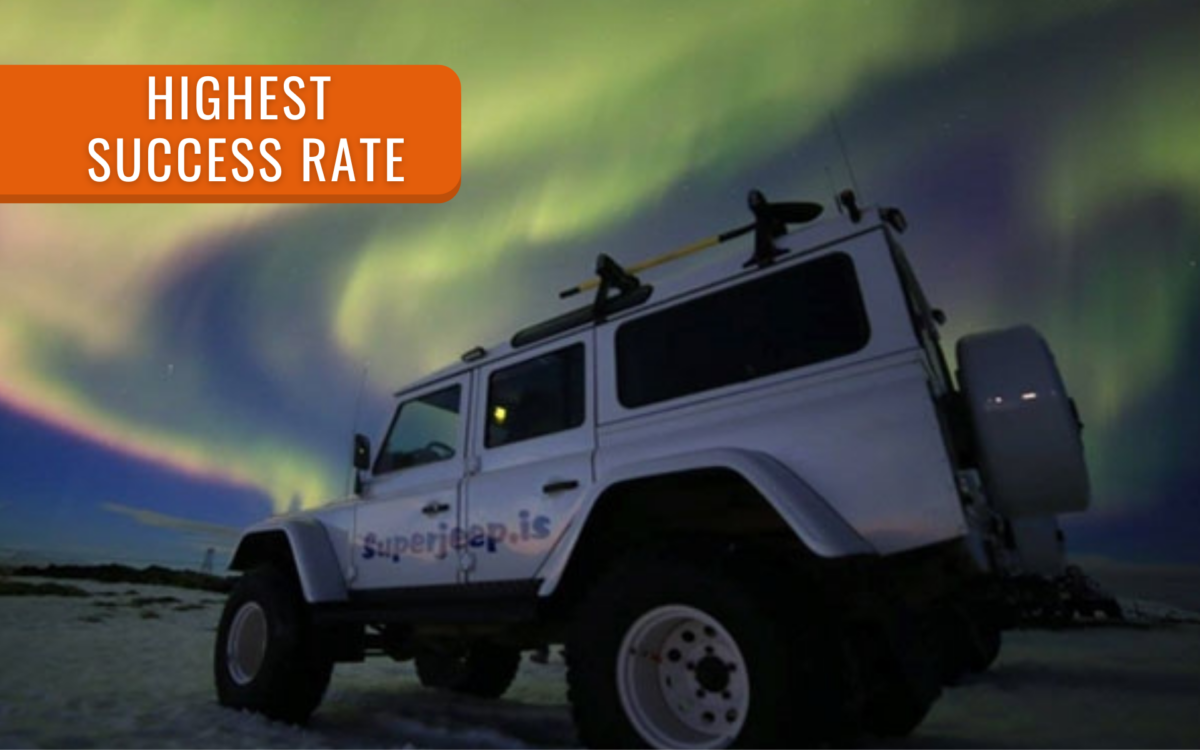
Chase the Northern Lights with the experts with our Superjeep tour. Small group experience, wilderness-ready vehicles, refreshments and free photos with the northern lights. Join the northern lights superjeep tour with the highest success rate in Iceland - including admission to Aurora Reykjavík.
SPECIAL OFFER: GOLDEN CIRCLE, BLUE LAGOON & NORTHERN LIGHTS
4.9
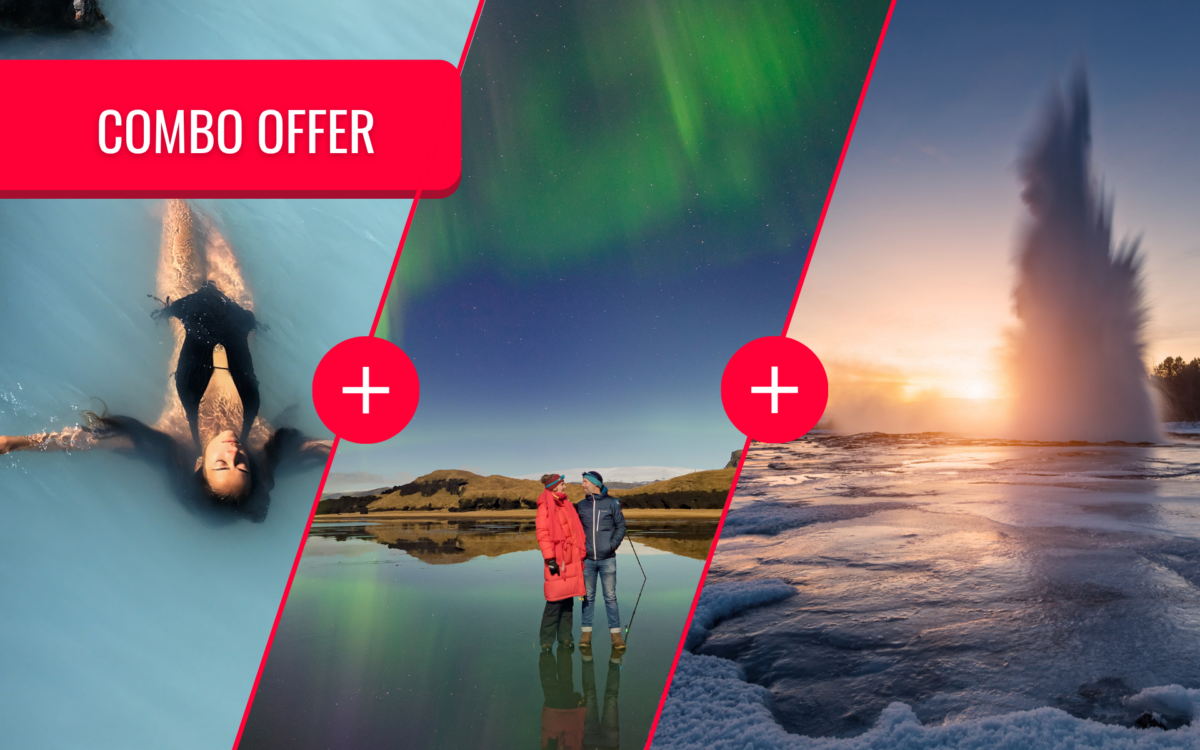
Explore Iceland’s iconic Golden Circle, relax in soothing milk waters at the Blue Lagoon, and chase the Northern Lights. The perfect small group combo tour for Iceland’s best attractions - all in one adventure-packed day!
N. 1 TOUR DE AURORAS BOREALES EN MINIBÚS
4.9
Join the highest rated northern lights minibus tour in Iceland and maximise your chances of success. Expert Aurora guide, free retry and complimentary photos with the northern lights - all included!
TOUR PRIVADO DE AURORAS BOREALES CON FOTOS PROFESIONALES
4.9
Witness the Northern Lights with this exclusive northern lights private tour! Hunt the Aurora with your private guide, a northern lights photographer. Enjoy premium transportation, flexible itinerary and free professional photos under the northern lights. A truly unforgettable experience awaits!
NORTHERN LIGHTS PRIVATE TOUR FOR SMALL GROUPS
4.8
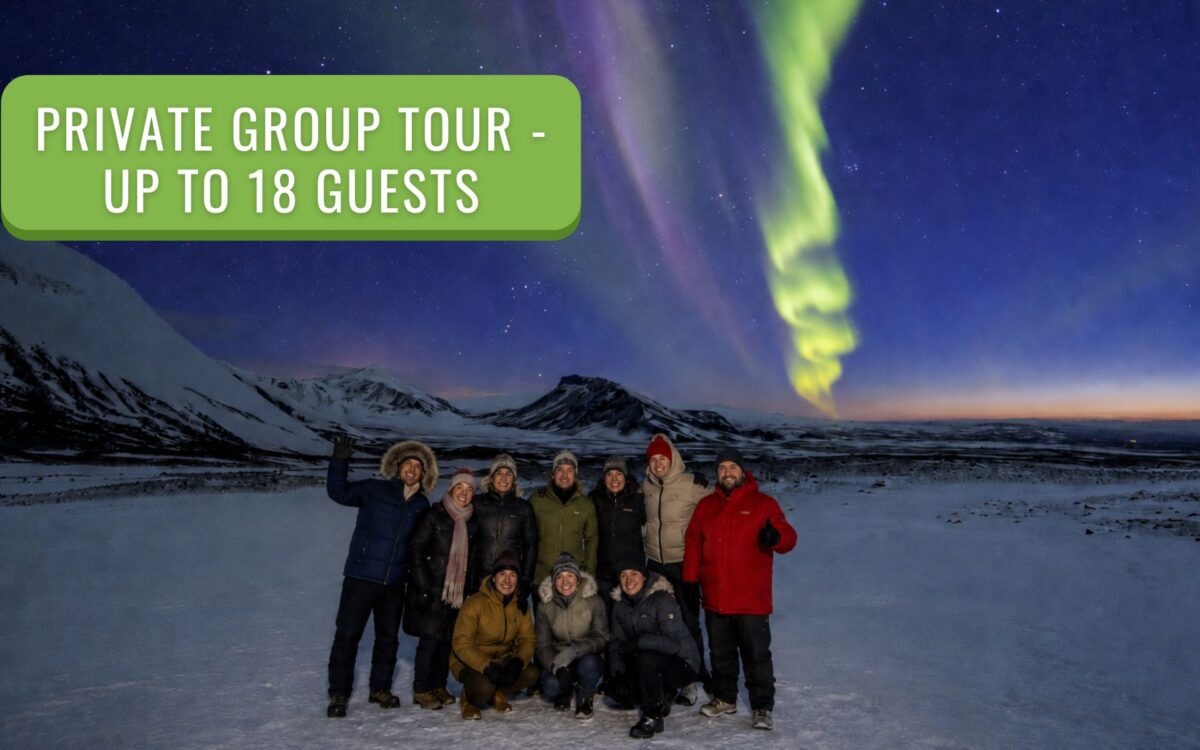
Chase the Northern Lights with a private guide! This private minibus adventure for up to 18 people is ideal for small groups. A less crowded, more personal northern lights experience, including northern lights photos and refreshments.
NORTHERN LIGHTS PRIVATE TOUR FOR GROUPS
4.7
Live your unique Aurora adventure with your group, with a private northern lights tour! This exclusive experience is designed for large groups, up to 52 passengers. Professional guidance, free photos and refreshments are included in this northern lights hunt away from the crowds.
CHASING THE NORTHERN LIGHTS – A STEP-BY-STEP GUIDE FOR YOUR AURORA HUNT
Plan your Northern Lights hunt with Iceland’s most complete aurora forecast. A clear 5-step guide combining KP index, solar activity, cloud cover, and the best locations to watch the aurora.
01
Choose Your Dates
Two windows matter most when planning an aurora trip to Iceland: the 27-day Kp outlook, and the moon phase.
The 27-day Kp forecast: the Sun rotates once every 27 days, so the same active regions can swing back into view and reappear as similar geomagnetic activity a month later. That gives a rough, genuinely useful sense of aurora chances weeks ahead — not a precise prediction, but a real pattern worth planning a trip around. The bars in the chart below show forecast Kp for each of the next 27 days.
Timing within the season also matters. Around the spring and autumn equinoxes, Earth's magnetic field aligns in a way that makes it easier for solar wind to reach us — a well-documented pattern called the Russell–McPherron effect, making March and September consistently strong months for activity. Deciding between late winter and early spring? Compare what April offers against what March offers.
Moon phase: a bright full moon can wash out fainter auroras, though it also lights up Iceland's landscapes for striking photos. The dashed line in the chart shows moon illumination for each night, calculated automatically — no need to check a separate calendar. Read our full guide to auroras and the moon phases for how to time a trip around both.
Source: NOAA Space Weather Prediction Center, 27-day outlook. Moon phase calculated locally.
02
ESCAPE THE LIGHT POLLUTION
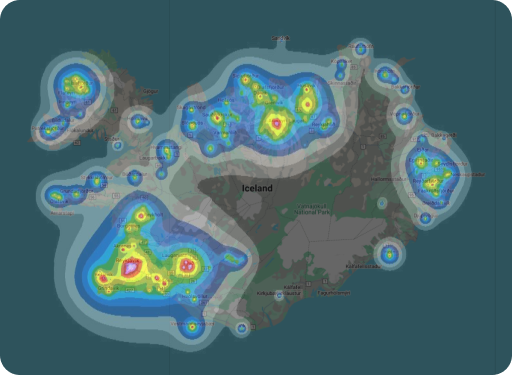
Darkness is non-negotiable. In Iceland, usable aurora darkness gradually returns during August and lasts until around mid-April. May, June and most of July are simply too bright. Once darkness returns, getting away from artificial light can make faint auroras much easier to see. Once you’re in that window, distance from artificial light matters as much as timing. See our full guide to the 25 best viewing locations in Iceland to find somewhere genuinely dark, not just “outside the city.”
Know the Live Tools Before You Need Them
Once you’re on the ground in Iceland, everything at the top of this page becomes your real-time toolkit: live Bz and solar wind data, the live cloud forecast map, and our live cameras. This step is just a heads-up — skim the “How to Read the Live Data” section near the top now, while you’re relaxed and planning, so on the night itself you’re reading conditions in seconds, not learning what Bz means for the first time in the cold and dark.
Pack Like You’ll Actually Be Standing Still in the Cold
Aurora hunting means standing still outside for long stretches, often well below freezing. Thermal base layers, a proper hat and gloves, and warm boots make the difference between an amazing night and a miserable one — see our recommended winter gear for Iceland for a full list. If you’re bringing a camera, a stable tripod and a wide-angle lens matter more than an expensive body — our full photography guide covers manual settings for both faint and bright displays. And bring patience: a hot drink and snacks go a long way through the waiting.
MONITORIZA LA ACTIVIDAD SOLAR
Chase It Yourself, or Let Us Point the Way
You don’t need to book a tour to get our help. Come by the museum before heading out, tell our guides what night you’re planning for, and we’ll advise you exactly where conditions look best — genuinely, whether or not you’re joining us. It’s the reason we opened in 2013: not to be your consolation prize if a self-guided hunt fails, but to be the reason it succeeds in the first place. If you’d rather not navigate dark, icy roads yourself, our guided tours do exactly what a solo chase can’t — real-time rerouting to clear skies, safety on the roads, and a guide who already knows tonight’s answer.
Peak forecast Kp for each day — the highest 3-hour window, since one active period can matter more than the daily average.
ENCUENTRA TOURS DE AURORAS
Everything on this page — Bz, Bt, solar wind, Kp — our guides watch it live, all night, every night. Knowing a number is favourable is different from knowing where that particular condition tends to produce results.
Cloud cover shifts across Iceland by the hour. Chasing alone means guessing and driving. Our guides track conditions across the whole island in real time and reroute the moment something better opens up.
Aurora hunting means driving unfamiliar roads in the dark, often on ice, then pulling over in unlit areas. Our vehicles and drivers are built for exactly this — you're free to focus on the sky, not the road.
Chase alone and a cloudy night is just a cloudy night. Most of our tours include a free re-run if the lights don't show — the kind of safety net a solo drive out into the dark can't offer.
¿Por qué el pronóstico de Auroras cambia continuamente?
¿Hay otras fuentes de datos sobre auroras que debería seguir?
¿Qué precisión tiene el Índice Kp para ver las Auroras Boreales?
¿Cuáles son los mejores meses para ver las Auroras Boreales en Islandia?
The Northern Lights season in Iceland runs from late August to mid-April. The darkest months, October through March, offer the longest viewing hours, but auroras can already be seen again once usable darkness returns in late August.
¿Cuál es la diferencia entre un número bajo de Kp y un número alto de Kp para ver las Auroras Boreales?
¿Puedo ver las Auroras Boreales en verano?
May, June and most of July are too bright for Northern Lights viewing because of Iceland’s midnight sun. Usable darkness gradually returns during August, and the Northern Lights season typically begins again in late August.
¿Cuáles son las mejores aplicaciones de pronóstico de Auroras Boreales para mejorar mi experiencia?
- My Aurora Forecast – Mapas en vivo de auroras, pronósticos de 27 días y alertas personalizables. Ideal tanto para principiantes como para cazadores expertos.
- Aurora Alerts – Northern Lights – Alertas en tiempo real, mapas de cobertura de nubes y lecturas del índice Kp. Perfecto para notificaciones instantáneas.
- Hello Aurora – Avistamientos compartidos por la comunidad, pronósticos y condiciones en tiempo real. Ideal para una experiencia social e interactiva.
- Northern Eye Aurora Forecast – Datos detallados del viento solar, índice Kp y actualizaciones en tiempo real de la actividad solar. Ideal para entusiastas de la ciencia.
- Aurora Forecast & Alerts – Pronósticos por hora, mapas de nubes y notificaciones personalizables. Simple y fácil de usar para actualizaciones rápidas.