¿Cómo se interpreta la predicción de auroras?
El servicio islandés de meteorología mide la actividad solar. Esto, combinado con la evolución de las nubes, nos ayuda a saber dónde hay posibilidades de ver las auroras.
Utiliza la barra situada debajo del gráfico para modificar la fecha y la hora.
Recuerda que las predicciones cambian con frecuencia y que solo son fiables a partir de las 18h del día en curso, aunque ver auroras nunca está garantizado.
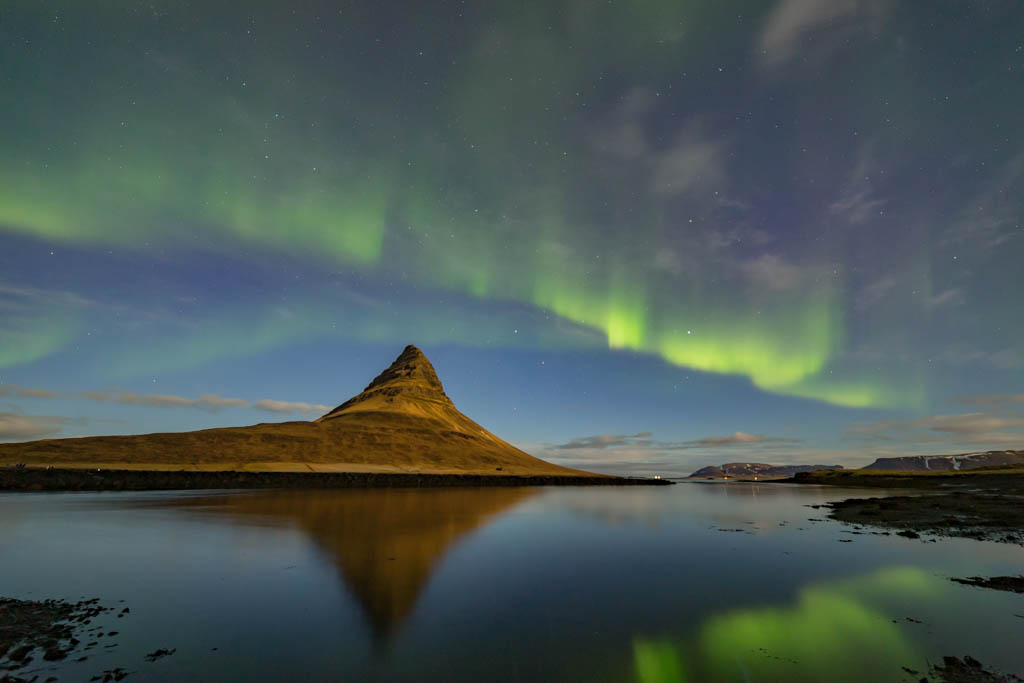
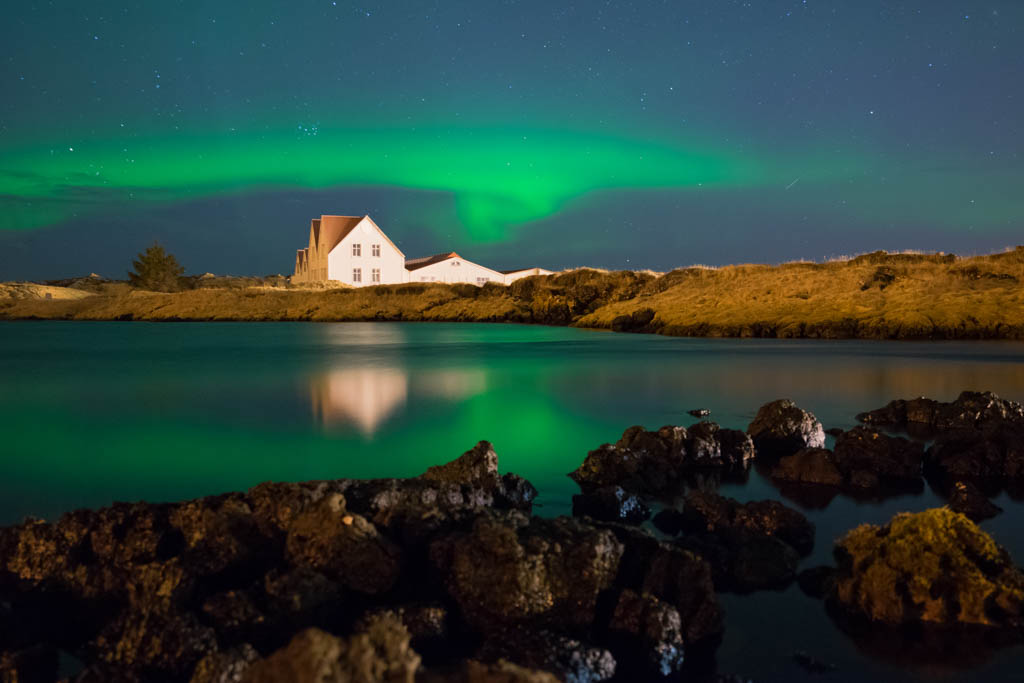
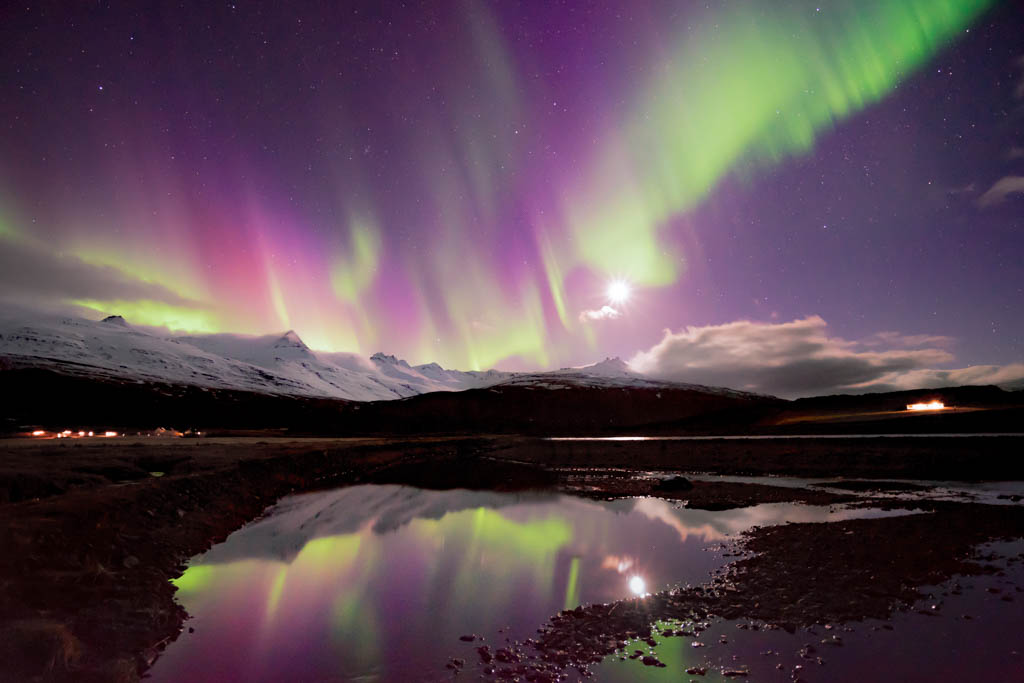
Cobertura de nubes
La norma básica: Cielos no despejados = Imposible ver auroras.
Existen diferentes tipos de nubes que afectan de manera distinta.
Utiliza las pestañas situadas encima del gráfico para seleccionar diferentes tipos de nubes.
Las nubes altas no suelen presentar problemas en Islandia. Nuestra principal preocupación son las nubes medias y bajas. Debemos buscar zonas despejadas (en blanco) en el mapa.
Actividad solar
La escala de 0 a 9 situada a la derecha es una manera sencilla de saber qué probabilidades hay de ver auroras.
0-2: Bajo, poca actividad. Las auroras que puedas ver parecerán más bien nubes.
2-3: Moderado, pero con altas probabilidades de ver auroras. Esta es la actividad solar habitual. ¡Sal a por ellas!
4-6: ¡Bravo! Se acerca una tormenta solar, ¡no pierdas esta oportunidad y sal a cazar auroras!
7-9: Extremadamente alto e inusual. Es posible que tus familiares y amigos también puedan verlas desde casa.
Leirvogur – Observatorio magnético
El observatorio magnético Leirvogur mide las alteraciones magnéticas en Islandia. Cuando las líneas se mueven es porque los vientos solares están sacudiendo el campo magnético terrestre, lo cual suele conllevar actividad auroral. Haz clic en la imagen para verlo en tiempo real.

Predicción meteorológica espacial – Space Weather Prediction Center
¡Déjate guiar en un tour de auroras!
Si quieres disfrutar de una experiencia de auroras completa, te recomendamos que vayas con un tour guiado. Te ahorrarás tiempo y preocupaciones, ya que los guías conocen las condiciones tanto meteorológicas como de actividad solar, y estarás rodeado de gente en busca de la misma aventura. Podemos recomendar cualquiera de las compañías indicadas más abajo, ya que seleccionamos cuidadosamente a nuestros colaboradores y podemos confiar plenamente en su profesionalidad.


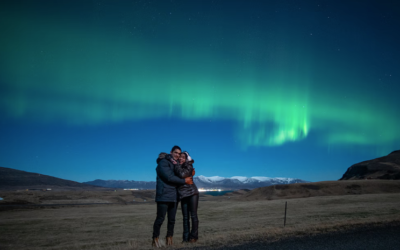
The 25 Best Places To See The Northern Lights In Iceland
As a lifelong Northern Lights enthusiast and founder of Aurora Reykjavík, I’ve spent countless nights chasing the auroras across Iceland. Each experience feels like the first—an awe-inspiring dance of color and light against the vast Icelandic skies. In this guide, I’ll share my 25 favorite spots to witness this natural wonder, from remote highlands to coastal gems. Whether you’re a first-time visitor or a seasoned aurora hunter, these locations offer something truly magical. Let me take you on a journey to the best places in Iceland to see the Northern Lights. – Grétar Jónsson
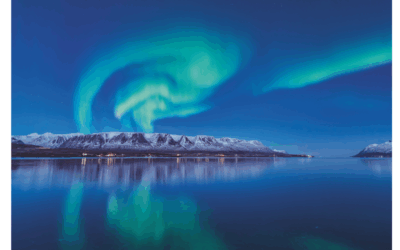
Northern Lights in Iceland in March & April: Why Spring Is an Underrated Aurora Season
Most travelers assume winter is the only serious northern lights season in Iceland.
In reality, March and early April can be one of the smartest times to hunt the aurora.
You still have dark nights long enough for aurora viewing, travel conditions are often easier than in deep winter, and the weeks around the spring equinox are statistically favorable for geomagnetic activity.
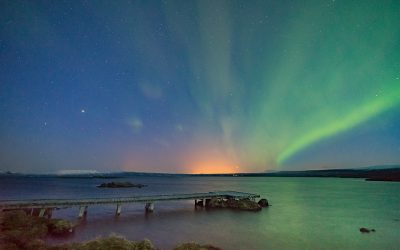
ICELAND IN APRIL: WEATHER, NORTHERN LIGHTS & BEST THINGS TO DO
April in Iceland is a month of transition. Winter begins to loosen its grip, daylight stretches dramatically, and the country starts to awaken for spring. For travellers, this means fewer crowds, powerful waterfalls fed by melting snow, and one final chance to see the northern lights before the season ends.
If you are considering visiting Iceland in April, here is everything you need to know – from weather conditions and Easter traditions to why this is still a great time to chase the aurora.
EASTER IN ICELAND: TRADITIONS, OPENING HOURS & WHAT TO DO IN REYKJAVÍK
Easter is one of the most beautiful times to visit Iceland. Winter still lingers in the landscape, daylight is rapidly returning, and Reykjavík comes alive with locals enjoying the first real feeling of spring. Here is everything visitors need to know about spending Easter in Iceland — plus the best ways to enjoy Reykjavík during the holiday weekend.
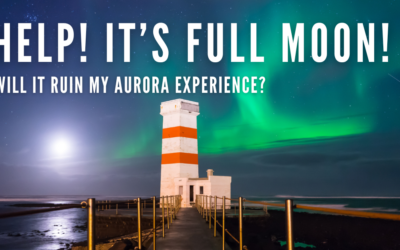
Full Moon and Northern Lights: Will a Full Moon Ruin Your Aurora Experience?
Does a full moon affect the Northern Lights? Aurora experts explain how moonlight, cloud cover, and aurora strength really impact your viewing experience.
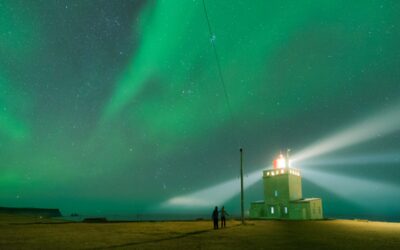
NORTHERN LIGHTS TRIP FROM REYKJAVÍK: TIPS & TRICKS TO PLAN YOUR NORTHERN LIGHTS HUNT
Seeing the Northern Lights is one of those bucket-list experiences that Iceland makes unforgettable. With the right planning, cozy gear, and a little luck from Mother Nature, you can witness the night sky dance in green, purple, and pink right above you. Whether you want expert guidance or prefer a self-guided adventure, here’s how to plan your Reykjavík Northern Lights trip like a pro.
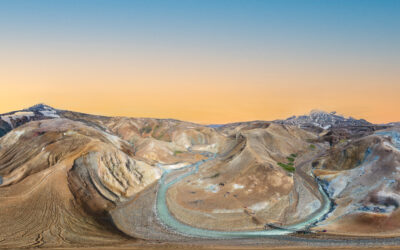
THE “MIDNIGHT SUN” MYTH: CAN YOU SEE THE AURORA IN ICELAND IN THE SUMMER?
In winter, long nights create perfect conditions for Northern Lights viewing. In summer, the season of the midnight sun, the landscape is bathed in near-constant daylight. This dramatic shift leads many visitors to ask the same question every year: Can you see the Northern Lights in Iceland during summer?
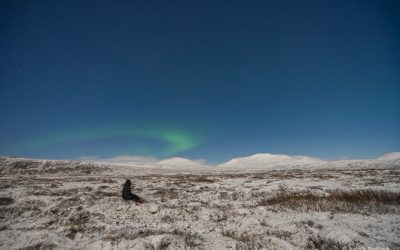
VISITING ICELAND IN FEBRUARY: EVERYTHING YOU NEED TO KNOW
February is one of the most rewarding months to plan your trip to Iceland. Nestled well into winter, it brings a compelling mix of extended daylight for sightseeing and long nights for aurora hunting, along with unique cultural traditions you won’t experience at any other time of year. In this guide, we explain why February is a standout month to visit Iceland, what to expect from nature and culture, and how to make the most of your winter adventure.

ICELAND IN WINTER TRAVEL GUIDE: ROADS, CLOTHING, DAYLIGHT & NORTHERN LIGHTS
Winter in Iceland is a season of extremes: dramatic landscapes, long nights, and the possibility of witnessing one of nature’s most spectacular phenomena. While unforgettable, winter travel also requires preparation. This guide covers winter road conditions, what to wear, limited daylight, and how to improve your chances of seeing the Northern Lights.

THE BEST TIME TO SEE THE NORTHERN LIGHTS IN ICELAND (MONTH-BY-MONTH GUIDE)
There is no single perfect moment, but there is a clearly defined aurora season, and each part of it offers something different. In this guide, we’ll walk you through the best months to see the Northern Lights, explain common myths, and help you choose the season that fits your travel style best.
Solar stream forecast
The model shows the solar stream from the Sun alongside its 27-day rotation. The earth is the yellow dot.