¿Cómo se interpreta la predicción de auroras?
El servicio islandés de meteorología mide la actividad solar. Esto, combinado con la evolución de las nubes, nos ayuda a saber dónde hay posibilidades de ver las auroras.
Utiliza la barra situada debajo del gráfico para modificar la fecha y la hora.
Recuerda que las predicciones cambian con frecuencia y que solo son fiables a partir de las 18h del día en curso, aunque ver auroras nunca está garantizado.
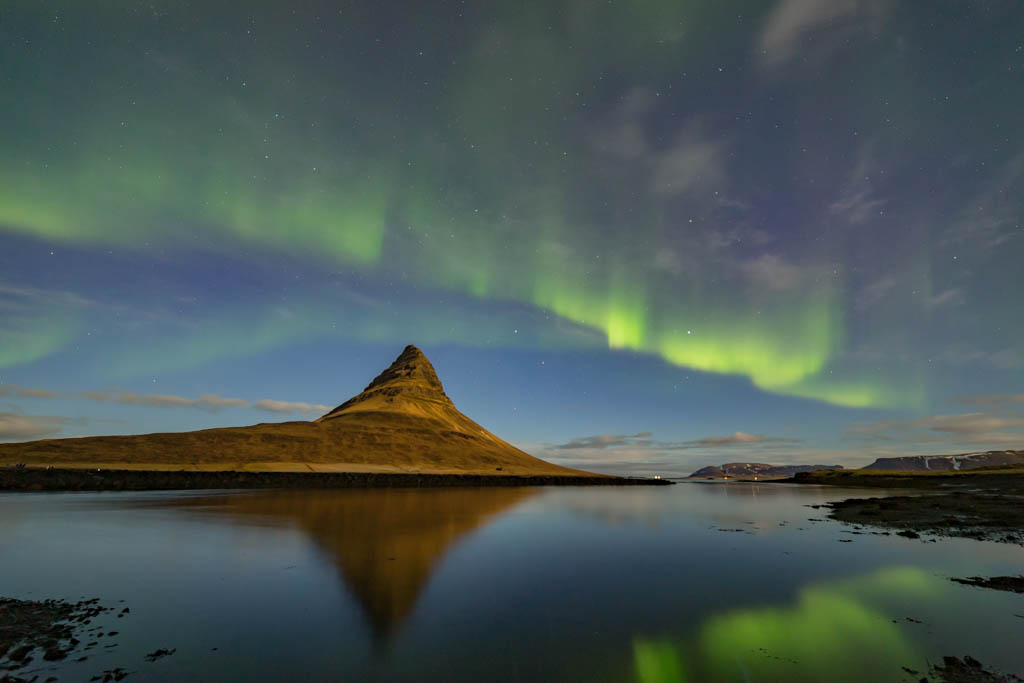
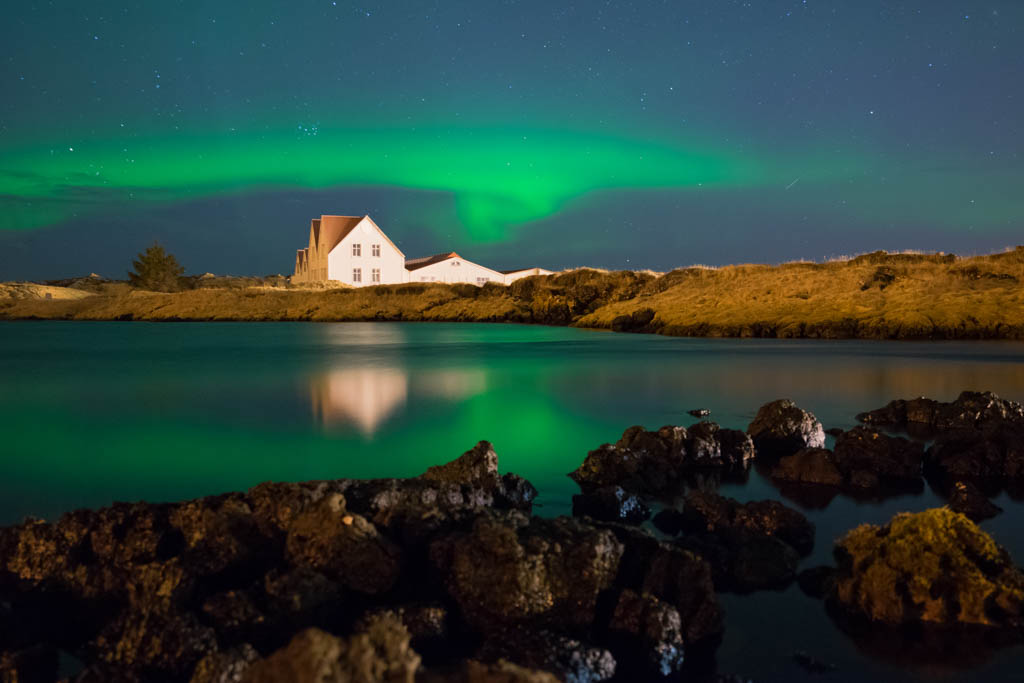
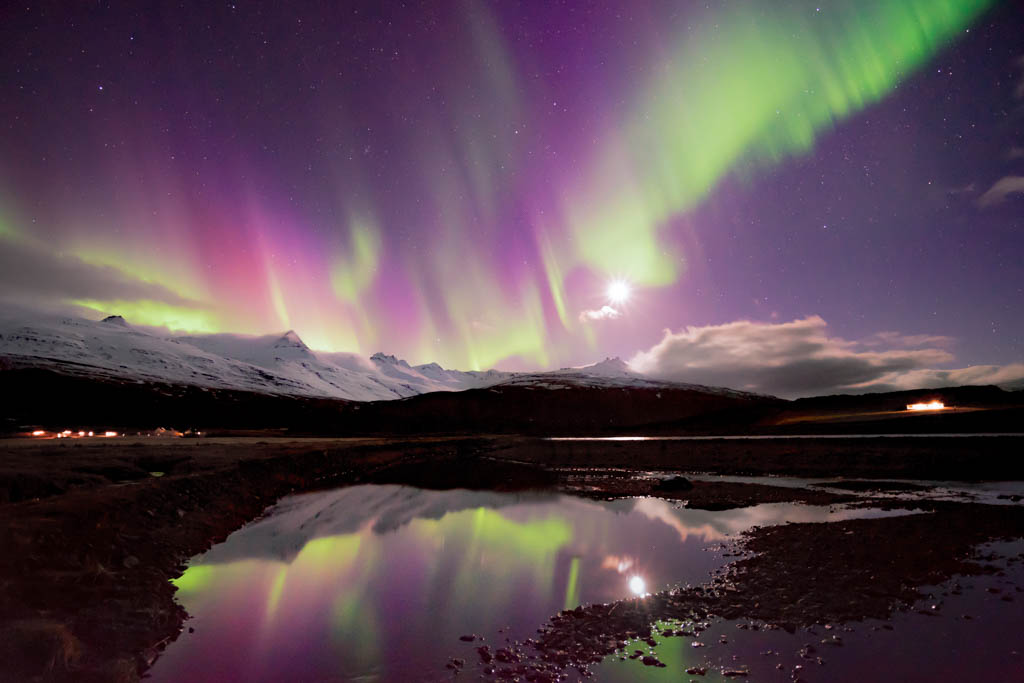
Cobertura de nubes
La norma básica: Cielos no despejados = Imposible ver auroras.
Existen diferentes tipos de nubes que afectan de manera distinta.
Utiliza las pestañas situadas encima del gráfico para seleccionar diferentes tipos de nubes.
Las nubes altas no suelen presentar problemas en Islandia. Nuestra principal preocupación son las nubes medias y bajas. Debemos buscar zonas despejadas (en blanco) en el mapa.
Actividad solar
La escala de 0 a 9 situada a la derecha es una manera sencilla de saber qué probabilidades hay de ver auroras.
0-2: Bajo, poca actividad. Las auroras que puedas ver parecerán más bien nubes.
2-3: Moderado, pero con altas probabilidades de ver auroras. Esta es la actividad solar habitual. ¡Sal a por ellas!
4-6: ¡Bravo! Se acerca una tormenta solar, ¡no pierdas esta oportunidad y sal a cazar auroras!
7-9: Extremadamente alto e inusual. Es posible que tus familiares y amigos también puedan verlas desde casa.
Leirvogur – Observatorio magnético
El observatorio magnético Leirvogur mide las alteraciones magnéticas en Islandia. Cuando las líneas se mueven es porque los vientos solares están sacudiendo el campo magnético terrestre, lo cual suele conllevar actividad auroral. Haz clic en la imagen para verlo en tiempo real.

Predicción meteorológica espacial – Space Weather Prediction Center
¡Déjate guiar en un tour de auroras!
Si quieres disfrutar de una experiencia de auroras completa, te recomendamos que vayas con un tour guiado. Te ahorrarás tiempo y preocupaciones, ya que los guías conocen las condiciones tanto meteorológicas como de actividad solar, y estarás rodeado de gente en busca de la misma aventura. Podemos recomendar cualquiera de las compañías indicadas más abajo, ya que seleccionamos cuidadosamente a nuestros colaboradores y podemos confiar plenamente en su profesionalidad.


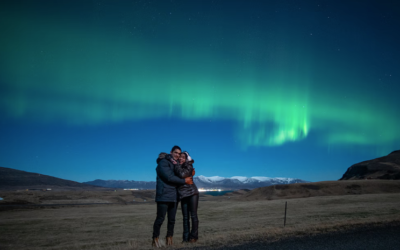
I 25 Luoghi Migliori Per Vedere L' Aurora Boreale In Islanda
Da appassionato dell'aurora boreale e fondatore di Aurora Reykjavík, ho trascorso innumerevoli notti a inseguire le aurore in giro per l'Islanda. Ogni esperienza è emozionante come la prima - una maestosa danza di colori e luci contro i vasti cieli islandesi. In questa guida condividerò i miei 25 luoghi preferiti per ammirare questa meraviglia naturale, dagli altopiani remoti alle gemme della costa. Che tu sia un visitatore alle prime armi o un esperto cacciatore di aurore, questi luoghi offrono qualcosa di veramente magico. Lascia che ti accompagni in un viaggio nelle località migliori d'Islanda per vedere l'aurora boreale. – Gretar Jónsson
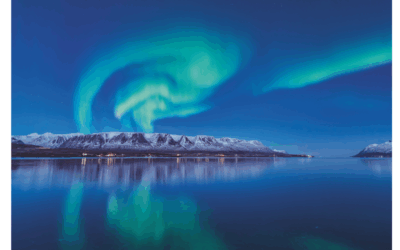
Northern Lights in Iceland in March & April: Why Spring Is an Underrated Aurora Season
Most travelers assume winter is the only serious northern lights season in Iceland.
In reality, March and early April can be one of the smartest times to hunt the aurora.
You still have dark nights long enough for aurora viewing, travel conditions are often easier than in deep winter, and the weeks around the spring equinox are statistically favorable for geomagnetic activity.
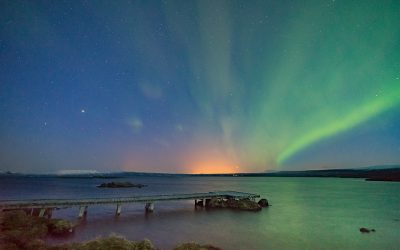
ISLANDA AD APRILE: METEO, AURORA BOREALE E LE MIGLIORI COSE DA FARE
Aprile in Islanda è un mese di transizione. L’inverno inizia ad allentare la sua presa, le ore di luce si allungano drasticamente e il paese comincia a risvegliarsi per la primavera. Per i viaggiatori, questo significa meno folla, cascate spettacolari alimentate dallo scioglimento della neve e un'ultima possibilità di vedere l’aurora boreale prima che la stagione finisca.
Se stai pensando di visitare l’Islanda ad aprile, ecco tutto quello che devi sapere, dalle condizioni meteo e le tradizioni pasquali al perché questo è ancora un ottimo periodo per andare a caccia dell’aurora.
EASTER IN ICELAND: TRADITIONS, OPENING HOURS & WHAT TO DO IN REYKJAVÍK
Easter is one of the most beautiful times to visit Iceland. Winter still lingers in the landscape, daylight is rapidly returning, and Reykjavík comes alive with locals enjoying the first real feeling of spring. Here is everything visitors need to know about spending Easter in Iceland — plus the best ways to enjoy Reykjavík during the holiday weekend.
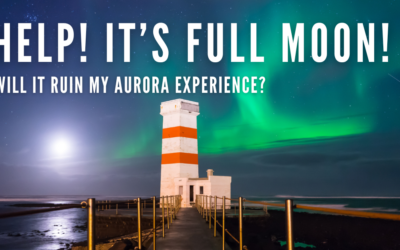
AIUTO, C'E' LA LUNA PIENA! ROVINERA' LA MIA ESPERIENZA DELL'AURORA?
La luna piena influisce sull’aurora boreale? Gli esperti di aurore spiegano come la luce della luna, la copertura nuvolosa e l’intensità dell’aurora influenzano davvero la tua esperienza di osservazione.
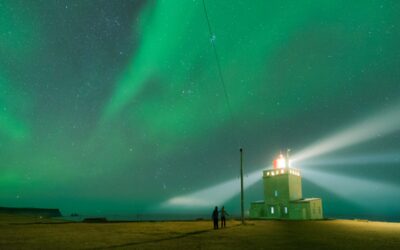
AURORE BOREALI DA REYKJAVÍK: CONSIGLI E TRUCCHI PER PIANIFICARE LA TUA CACCIA ALL’AURORA BOREALE
Vedere l’aurora boreale è una di quelle esperienze da lista dei desideri che l’Islanda rende indimenticabili. Con la giusta pianificazione, un abbigliamento caldo e confortevole e un pizzico di fortuna da Madre Natura, puoi ammirare il cielo notturno danzare in verde, viola e rosa proprio sopra di te. Che tu desideri una guida esperta o preferisca un’avventura in autonomia, ecco come pianificare il tuo viaggio a Reykjavík alla scoperta dell’aurora boreale come un professionista.
IL MITO DEL “SOLE DI MEZZANOTTE”: PUOI VEDERE L’AURORA IN ISLANDA IN ESTATE?
In inverno, le lunghe notti creano condizioni perfette per osservare l'aurora boreale. In estate, la stagione del sole di mezzanotte, il paesaggio è immerso in una luce quasi costante. Questo cambiamento drastico porta molti visitatori a porsi ogni anno la stessa domanda: è possibile vedere l'aurora boreale in Islanda durante l’estate?
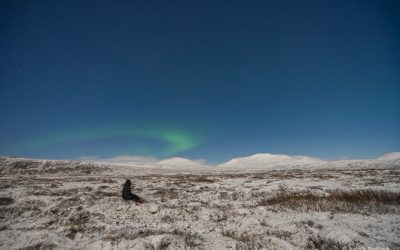
VISITARE L’ISLANDA A FEBBRAIO: TUTTO QUELLO CHE DEVI SAPERE
Febbraio è uno dei mesi più gratificanti per pianificare un viaggio in Islanda. Ben inserito nel cuore dell’inverno, offre un mix affascinante di giornate lunghe per visitare i luoghi d’interesse e notti prolungate per osservare l’aurora boreale, insieme a tradizioni culturali uniche che non si possono vivere in nessun altro periodo dell’anno. In questa guida spieghiamo perché febbraio è un mese speciale per visitare l’Islanda, cosa aspettarsi dalla natura e dalla cultura, e come sfruttare al meglio la propria avventura invernale.

ICELAND IN WINTER TRAVEL GUIDE: ROADS, CLOTHING, DAYLIGHT & NORTHERN LIGHTS
Winter in Iceland is a season of extremes: dramatic landscapes, long nights, and the possibility of witnessing one of nature’s most spectacular phenomena. While unforgettable, winter travel also requires preparation. This guide covers winter road conditions, what to wear, limited daylight, and how to improve your chances of seeing the Northern Lights.

THE BEST TIME TO SEE THE NORTHERN LIGHTS IN ICELAND (MONTH-BY-MONTH GUIDE)
There is no single perfect moment, but there is a clearly defined aurora season, and each part of it offers something different. In this guide, we’ll walk you through the best months to see the Northern Lights, explain common myths, and help you choose the season that fits your travel style best.
Solar stream forecast
The model shows the solar stream from the Sun alongside its 27-day rotation. The earth is the yellow dot.