|

On Wednesday, Sep 6th 2017, our sun unleashed two massive solar flares, the second of which was the most powerful we’ve seen in more than a decade. The burst of radiation was so intense, it caused high-frequency radio blackouts across the daytime side of Earth that lasted for about an hour.

Solar flares are giant explosions on the surface of the sun that occur when twisted magnetic field lines suddenly snap and release massive amounts of energy.

Space weather scientists classify flares based on their intensity, with X-class flares being the most powerful. These explosions can release as much energy as a billion hydrogen bombs.

The KP index jumped up to 9 with possible Aurora sightings at a latitude of 48.1°or lower, including the following countries:

North America:
San Francisco (CA, USA) Las Vegas (NV, USA) Albuquerque (NM, USA) Dallas (TX, USA) Jackson (MS, USA) Atlanta (GA, USA)

Europe:
Paris (France) Munich (Germany) Vienna (Austria) Bratislava (Slovakia) Kiev (Ukraine)

Asia:
Astana (Kazakhstan) Novosibirsk (Russia)

Southern Hemisphere:
Perth (Australia) Sydney (Australia) Auckland (New Zealand)

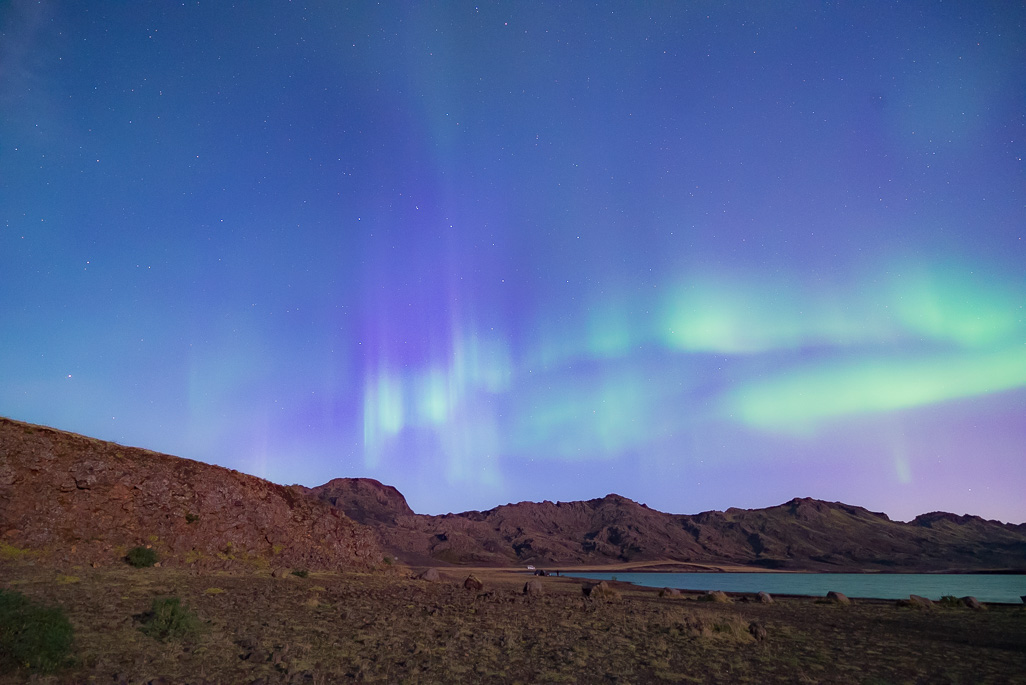
However, the Aurora display over Iceland caused by this solar flares was quiet decent, like you see in those two pictures.

What happened?

Scientists estimate that Iceland has been at a to high latitude for observing the Aurora caused by this X-class flare.

It is a common misunderstanding that we need a high KPI for strong displays over Iceland, since the KP index only indicates the latitude of possible sightings, but not it´s strength.

From our experience, a KP of 4-5 raises chances to see beautiful, fast dancing Auroras.

Let´s keep on hunting!
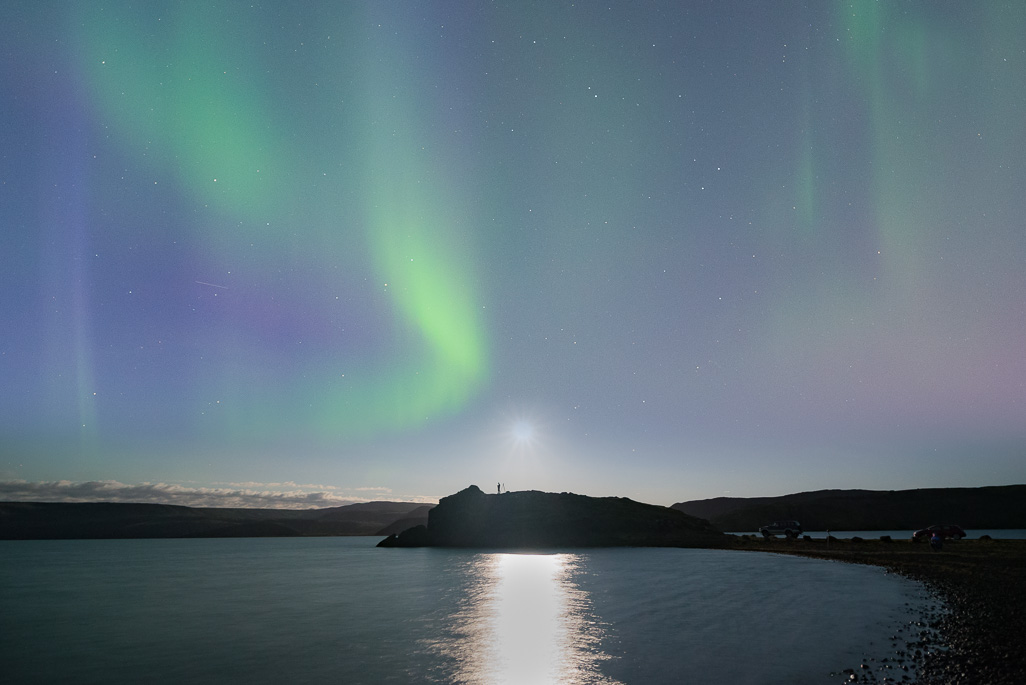
 

Kleifarvatn

Are you ready for your own Aurora Adventure?

Book your tour here!

Can´t catch the Northern Lights? Visit us at our Northern Lights Center – where the lights are always on display!

Aurora Reykjavik - The Northern Light Center

I 25 Luoghi Migliori Per Vedere L' Aurora Boreale In Islanda

As a lifelong Northern Lights enthusiast and founder of Aurora Reykjavík, I’ve spent countless nights chasing the auroras across Iceland. Each experience feels like the first—an awe-inspiring dance of color and light against the vast Icelandic skies. In this guide, I’ll share my 25 favorite spots to witness this natural wonder, from remote highlands to coastal gems. Whether you’re a first-time visitor or a seasoned aurora hunter, these locations offer something truly magical. Let me take you on a journey to the best places in Iceland to see the Northern Lights. – Grétar Jónsson

Northern Lights in Iceland in March & April: Why Spring Is an Underrated Aurora Season

Most travelers assume winter is the only serious northern lights season in Iceland.
In reality, March and early April can be one of the smartest times to hunt the aurora.
You still have dark nights long enough for aurora viewing, travel conditions are often easier than in deep winter, and the weeks around the spring equinox are statistically favorable for geomagnetic activity.

ISLANDA AD APRILE: METEO, AURORA BOREALE E LE MIGLIORI COSE DA FARE

Aprile in Islanda è un mese di transizione. L’inverno inizia ad allentare la sua presa, le ore di luce si allungano drasticamente e il paese comincia a risvegliarsi per la primavera. Per i viaggiatori, questo significa meno folla, cascate spettacolari alimentate dallo scioglimento della neve e un'ultima possibilità di vedere l’aurora boreale prima che la stagione finisca.

If you are considering visiting Iceland in April, here is everything you need to know – from weather conditions and Easter traditions to why this is still a great time to chase the aurora.

EASTER IN ICELAND: TRADITIONS, OPENING HOURS & WHAT TO DO IN REYKJAVÍK

Easter is one of the most beautiful times to visit Iceland. Winter still lingers in the landscape, daylight is rapidly returning, and Reykjavík comes alive with locals enjoying the first real feeling of spring. Here is everything visitors need to know about spending Easter in Iceland — plus the best ways to enjoy Reykjavík during the holiday weekend.

AIUTO, C'E' LA LUNA PIENA! ROVINERA' LA MIA ESPERIENZA DELL'AURORA?

La luna piena influisce sull’aurora boreale? Gli esperti di aurore spiegano come la luce della luna, la copertura nuvolosa e l’intensità dell’aurora influenzano davvero la tua esperienza di osservazione.

ISLANDA A MARZO: METEO, AURORA BOREALE E LE MIGLIORI ATTRAZIONI

Stai pianificando un viaggio in Islanda a marzo? Ottima idea! Marzo è uno dei periodi migliori per visitare se desideri paesaggi invernali, luce del giorno in crescita e ottime possibilità di vedere l’aurora boreale senza la folla dell’alta stagione. Se ti stai chiedendo del meteo in Islanda a marzo, delle probabilità di avvistare l’aurora e cosa mettere in valigia, questa guida completa su come viaggiare in Islanda a marzo copre tutto ciò che devi sapere.

We keep you updated! Follow us on our social media channels.