The Best Time to See Northern Lights in Iceland (Month-by-Month Guide)
Seeing the otherworldly Aurora Borealis, or northern lights, has been fascinating humans for centuries – and is a life-long dream of many travelers.
For each and every northern lights enthusiast, one question arises:
¿Cuál es el mejor momento para ver Auroras Boreales?

Contemplar Aurora Borealis, better known as the Northern Lights, has fascinated humans for centuries — and for many travelers, it is the single biggest reason to visit Iceland.
One question always comes up:
When is the best time to see the Northern Lights in Iceland?
The honest answer is: there is no single perfect moment — but there is a clearly defined aurora season, and each part of it offers something different.
In this guide, we’ll walk you through the best months to see the Northern Lights, explain common myths, and help you choose the season that fits your travel style best.
For a complete planning overview, we also recommend our
Ultimate Guide to Seeing the Northern Lights in Iceland
Let’s start by demystifying the most common myth about the Northern Lights:
“The Aurora can only be seen in winter – when it is very cold outside.”
This is not true.
The aurora happens far above Earth’s weather system, about 100–300 km up in the atmosphere.
Temperature on the ground has no direct effect on whether auroras appear.
What does matter:
-
Oscuridad
-
Clear skies
-
Actividad solar
Clear nights often feel colder because clouds trap heat — but cold itself does not cause auroras.
However, during summer month (May – Mid-August), the midnight sun keeps the sky too bright for seeing auroras.
That’s the real reason why you cannot see the Northern Lights in Iceland during summer:
In conclusion, the Aurora season in Iceland starts around the end of August and ends in mid-April, and if you visit for a few days during this time frame, you will have good chances of success.
However, any period within the Aurora season has its own peculiarities:
EXCURSIÓN DE AURORAS BOREALES EN SUPERJEEP
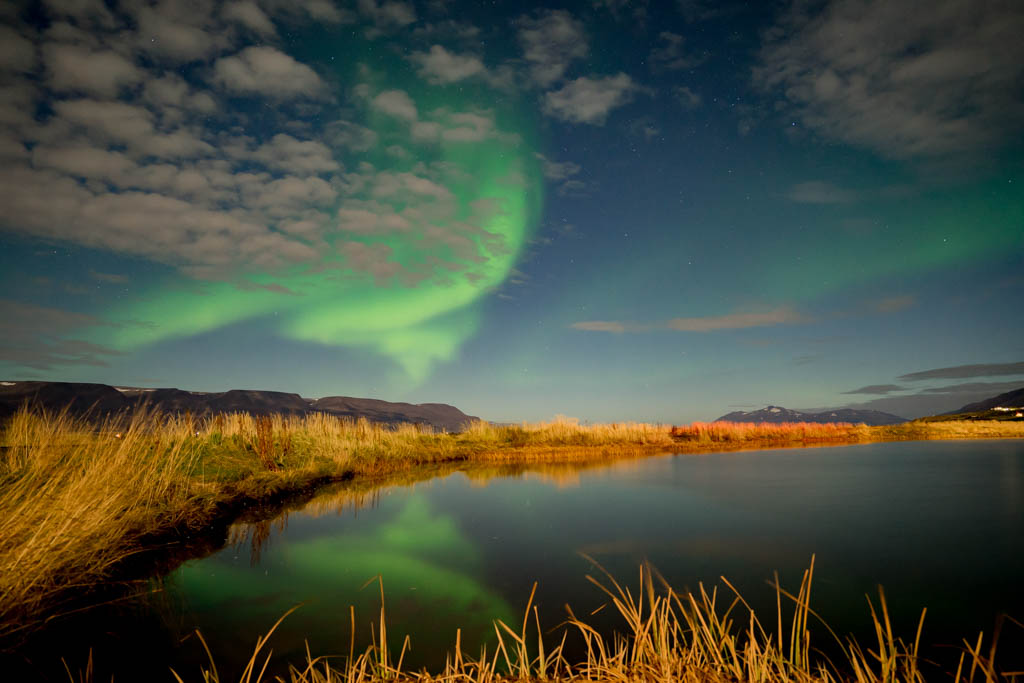
Indian summer aurora
NORTHERN LIGHTS SEASON IN ICELAND – LATE AUGUST TO MID-APRIL
If you visit Iceland for a few nights anywhere within this window, you already have a realistic chance of seeing the Northern Lights — especially if you understand how to read the forecast.
Before every outing, check:
-
The live Aurora Forecast for Iceland
-
Our guide on How to Read an Aurora Forecast
Now let’s look at what each part of the season offers.
SCENIC AUTUMN AURORAS – SEPTEMBER/ OCTOBER
As photographers, fall is one of our favorite times to go hunting for the Northern Lights. Here’s why:
- The Indian Summer Colors
Iceland in autumn is simply beautiful. Under the sugar-covered mountain tops, arctic moss, blueberry bushes and birch trees are painted in golds and reds, creating the perfect scenery for observing the first northern lights displays of the season.
- Temperatures are still reasonable
Yes, this is Iceland, and observing the Northern Lights comes for a price: it can be freezing!
In September though, temperatures usually don’t reach beneath 0°C yet, making it the perfect time to spend a night out under the arctic sky.
- Aurora loves Equinoxes
Summer officially turns into autumn on the autumn equinox, September 23rd. While the Aurora Borealis is visible from late August, it is the equinox that gives this cosmic light show an extra boost often producing some of the best northern lights activity of the season.
- Lakes and ponds are not frozen yet,
which increases the number of potential locations for beautiful reflection photos.
- Twilight Auroras are the most stunning
The Sun is still setting late in September, giving the chance of observing amazing twilight auroras. When the auroral activity is high, the northern lights often start dancing right after sunset, when the sky is still lit up in beautiful dark blue and orange colors on the horizon.
Some of the most impressive Aurora displays are captured in September and October – here is one of our real-time videos from the fall last year.
Looking for locations? See our guide to the
25 Best Places to See the Northern Lights in Iceland
Are you ready to see the lights this autumn? Take a look at our favorite tours here!
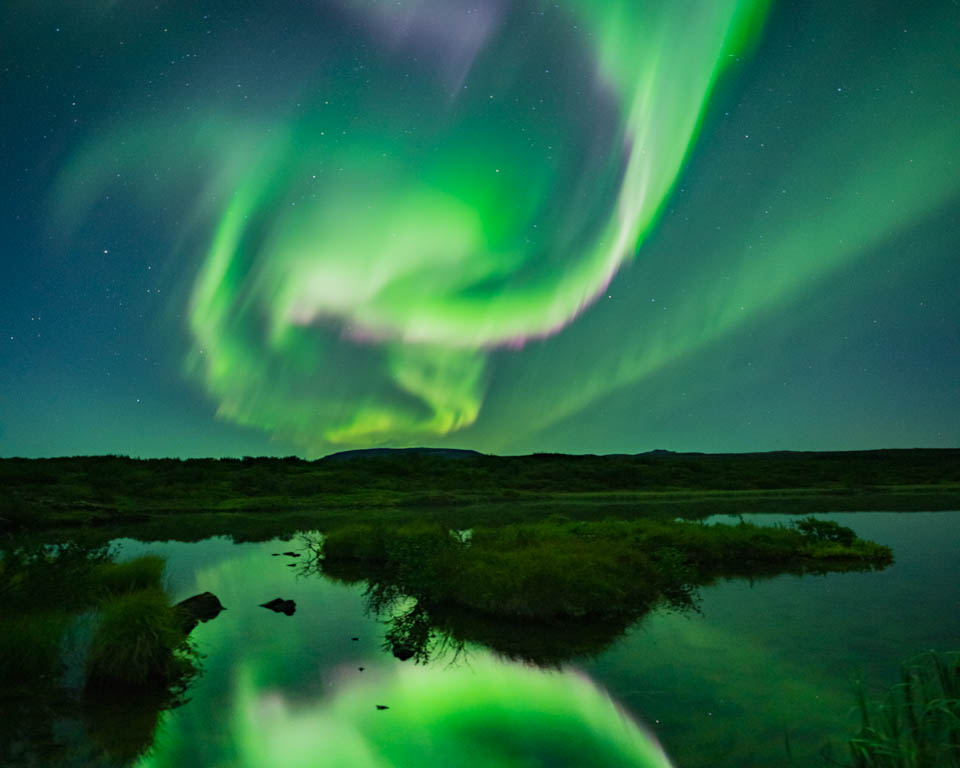


Northern Lights at different times of the year – from August til April
EXCURSIÓN DE AURORAS BOREALES EN SUPERJEEP
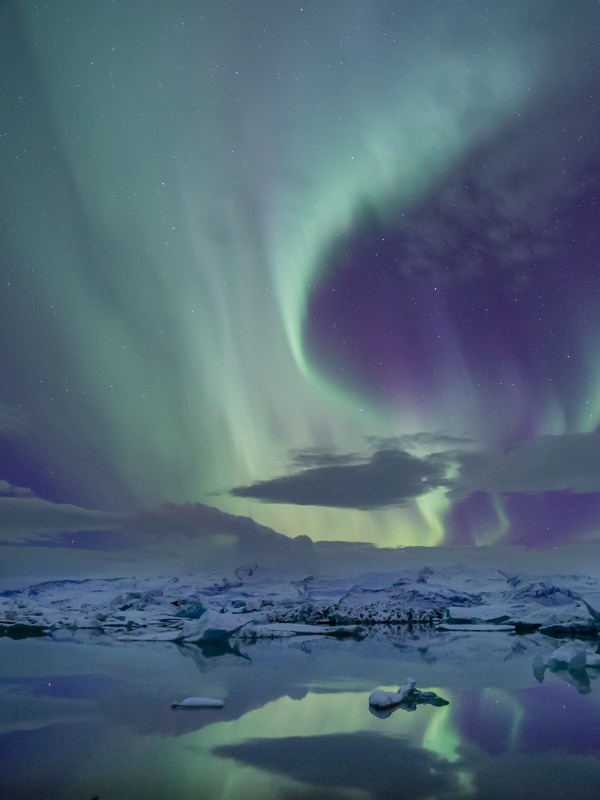
Winter Northern Lights at Jökulsárlón
ARCTIC NIGHTS AND WINTER WONDERLAND – DECEMBER AND JANUARY
Due to its location just below the Arctic Circle, Iceland does not get polar nights in the standard definition. Even though there is no total winter blackout, hours of daylight in December and January are very limited. Essentially, you’re getting between four to five hours of sunlight a day during the depths of winter in Iceland. It is therefore especially important to keep the light factor into consideration when planning activities and excursions.
To give you an idea, here are a few sunrise and sunset times in Reykjavik during the winter:
December 1st: Sunrise at 10:45 am and sunset at 3:45 pm
December 15th: Sunrise at 11:15 am and sunset at 3:30 pm
January 1st: Sunrise at 11:19 am and sunset at 3:42 pm
January 15th: Sunrise at 10:56 am and sunset at 4:18pm
This being said, there are of course several good reasons to plan your northern light trip to Iceland in winter:
1. Winter has arrived!
Cold temperatures start to settle in, and snow usually begins to accumulate in December. Aurora hunting in the snow-covered outback is a perfect way to enjoy the northern lights.
2. Long arctic nights
In order to see the Northern Lights, the most important factor is: Darkness. Of which we have plenty during the long winer month in the Nordics!
3. Romantic and fun seasonal holidays
In December, Iceland is the ultimate winter wonderland Christmas or New Year’s holiday destination!
4. Stargazing!
Due to the extended hours of darkness, winter in Iceland is the perfect time for observing the night sky. Almost no light pollution and crispy clear skies make Iceland an outstanding destination to discover our universe – and beyond.
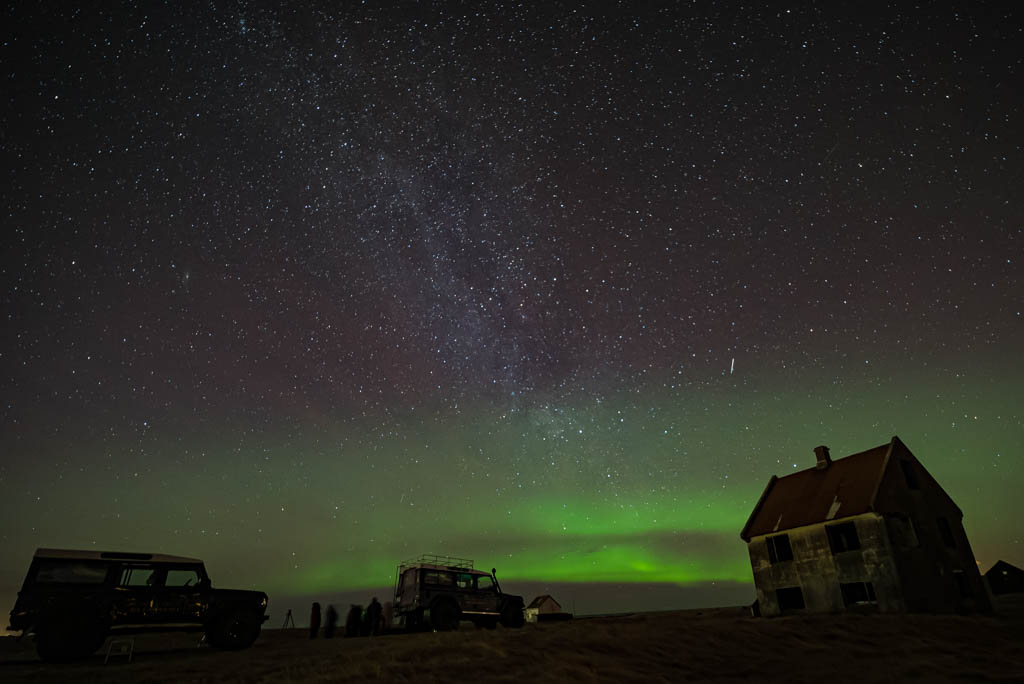
Check out this Northern Lights tour on modified Landrovers – those guys truly lead the pack when it comes to stargazing in Iceland
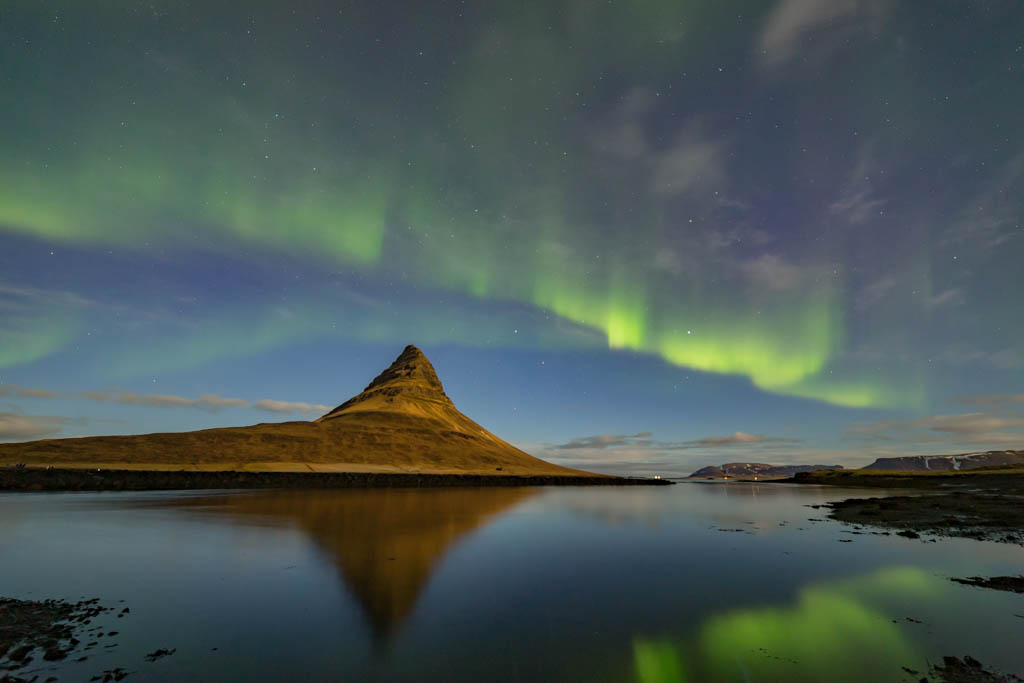
Auroras Boreales en Kirkjufell en marzo.
SPECTACULAR SPRING AURORAS – FEBRUARY, MARCH AND APRIL
Late winter and early spring are the most popular times to visit Iceland for the northern lights, and for good reasons:
-
Spring is Aurora season!
Geomagnetic disturbances are almost twice as likely in spring and fall compared to winter and summer, according to 75 years of historical records.
In spring, we often experience strong auroral outbursts, called auroral sub storms. Sub storms happen with little warning and sometimes outrageous intensity, turning the entire sky green. Be prepared for the most spectacular sightings!
-
The otherworldly snowy landscapes
Iceland is covered in snow – now the country truly honors its name. The combination of Northern Lights and deep powdery snow truly is a sight to behold. Lakes and ponds are frozen, and the views so stunningly unique to make for a real once-in-a-lifetime experience.
-
More hours of daylight
Days are extending quickly, opening a treasure trove of winter activities to choose from. For many of our guests, combining day-time winter activities, such as ice caving, dog sledding or snowshoe hiking, with night-time northern lights hunting is the perfect way to explore Iceland. Thanks to the increase in daylight, there is a plenty of extra time to travel the country during the day.
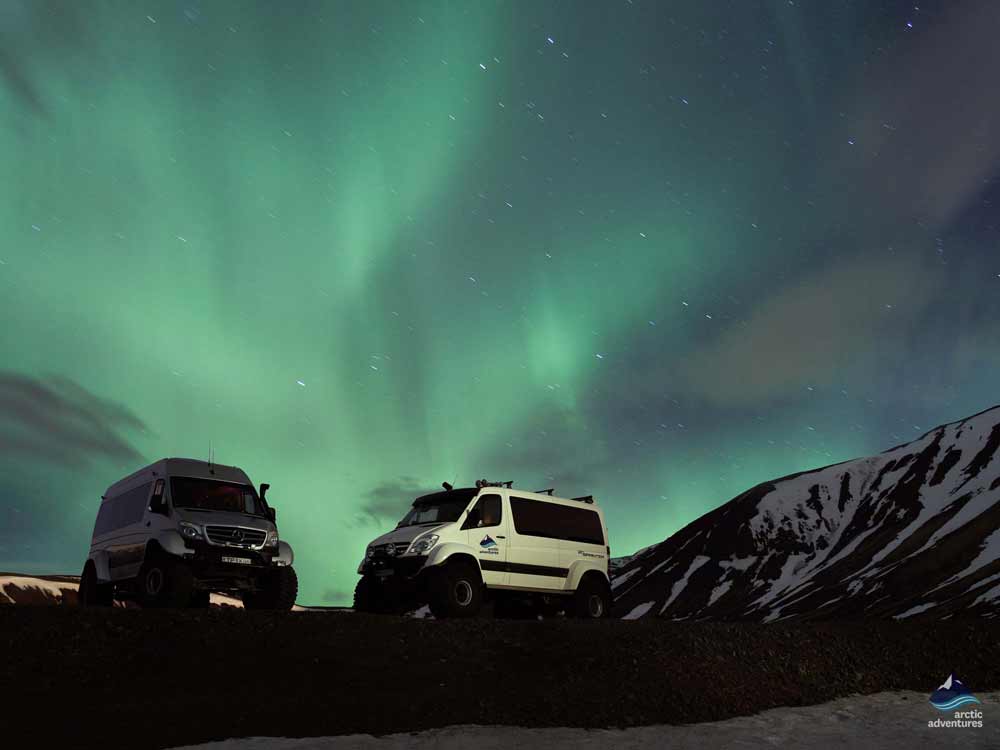
Photo from our 4 day northern lights winter package
FINAL THOUGHTS
The Northern Lights don’t have a perfect month or exact minute — they are living, dancing phenomena shaped by the sun, the Earth’s magnetic field, and the weather above your head.
1. En Islandia, la temporada de Auroras Boreales comienza alrededor de finales de agosto y termina a mediados de abril, y si visitas en cualquier momento dentro de este período durante unos pocos días, tendrás una buena probabilidad de éxito.
2. Contrario a la creencia común, el invierno profundo no es necesariamente el mejor momento para ver las auroras boreales, debido a la reducida actividad solar y las condiciones meteorológicas inestables. ¡Considera septiembre o marzo para aumentar tus posibilidades!
3. Ten en cuenta que la magnífica Aurora Boreal es un fenómeno natural, que no siempre aparece a la hora indicada. Incluso cuando las probabilidades parecen estar a tu favor, siempre considera ver las auroras boreales como la guinda del pastel de tu viaje.
4. Elige la temporada para tus vacaciones según tus preferencias y necesidades: ¿buscas una escapada invernal ártica con luces danzantes sobre tu jacuzzi, o prefieres más horas de luz diurna y temperaturas más cálidas para explorar los diversos paisajes y actividades del país?
And if the clouds don’t cooperate?
Come inside to Aurora Reykjavík — where the Northern Lights come to you.
¿Ya has decidido cuándo viajar al círculo ártico? Echa un vistazo a nuestra Guía definitiva para ver las Auroras Boreales – ¡te preparamos para la experiencia!
FAQ ABOUT THE NORTHERN LIGHTS
¿Cuándo puedo ver las Auroras Boreales en Islandia?
The northern lights season in Iceland begins in late August and continues through mid/late April.
During this long period, Iceland experiences sufficient darkness for the Aurora to be visible at night.
However, chances of experiencing the northern lights vary depending on the time of year. Find out which months are the best for seeing the Aurora aquí.
Why can't I see any northern lights in the summer ?
To be able to see the northern lights you need sufficient darkness. During summer we have what we call the “midnight sun”, meaning that there are no hours of actual nighttime darkness. These conditions are perfect for late night hiking and exploring, but make it impossible for us to observe the Aurora in Iceland between May and early August.
Want to know more about light conditions in Iceland? Check the sun graph and learn about twilight and dusk in Iceland.
What time do the northern lights show up?
Northern lights are statistically often seen between 9:00pm and 1:00am, but they may appear at any time as long as it is dark (and the sky clear).
During the winter months, when the hours of light are limited, the northern lights can often appear as early at 7:00pm.
As the exact time of an Aurora display cannot be predicted, keep your eyes at the sky. And remember, patience is key!
How long do the northern lights last?
Auroras can last any time between few minutes and hours.
Each northern lights display is different, and varies in duration. Furthermore, the northern lights are not always visible for the entire duration of a single Auroral episode: they often change in intensity throughout a single display, and can go from very bright to incredibly faint, to the point they are hardly visible at all any more.
Learn more about how the northern lights behave duration-wise aquí.
Can I see the northern lights when it is cloudy?
Well, that depends. First of all, Islandia is well-known for its clima impredecible: the fact that it is cloudy now does not mean that the sky will still be cloudy 5 minutes from now.
As long as we can find some gaps in the cloud cover, some windows of clear sky – there’s hope.
And, even when it’s cloudy, keep in mind that not all clouds are the same. For example, high clouds are often see-through and do not necessarily disrupt our view. Rule of thumb: if you can see the stars, you can potentially see the northern lights too.
Once again, keep your eyes at the sky y check the forecast regularly for the most reliable prediction.
Do the northern lights only appear when it is cold?
El northern lights season in Iceland starts in late summer.
As you can imagine, this means that you don’t need cold temperatures to see an Aurora (although you should not expect t-shirt weather at night in Iceland, not even in August).
The northern lights happen way above the weather systems, and are not influenced by weather systems and temperature fluctuations in the lower atmosphere.
Find out more aquí.
Are the northern lights visible all over Iceland?
Iceland is located within the so called “aurora belt“, the area where the northern lights are typically seen.
In the Arctic region, the belt extends between 60°N and 70°N latitude. As Islandia in its entirety is included between 63°N and 67°N, and therefore well within the aurora belt, chances of seeing the northern lights are virtually the same everywhere around the island – if weather allows.
That said, the likelihood of witnessing the northern lights is higher away from the city lights, and some areas around the country are especially scenic. Here are our favourite locations for northern lights spotting in Iceland.
Are the northern lights really colourful?
Are the northern lights going to disappear in future?
What is the BZ index?
ÚNETE A NOSOTROS EN UNA EXCURSION PARA VER AURORAS BOREALES
Skip the stress of winter driving in the dark and join a group of like-minded adventurers on a guided Northern Lights hunt.
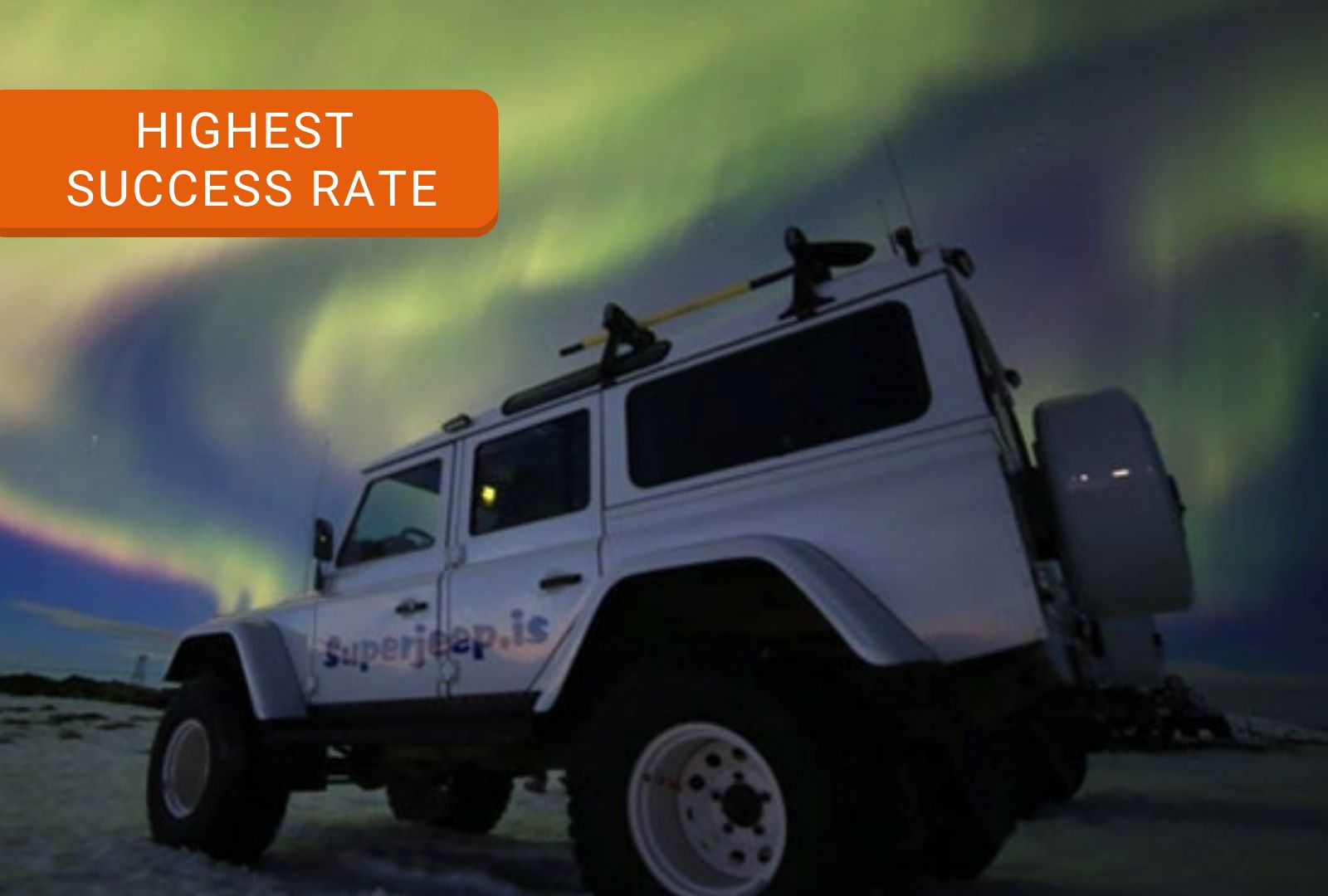
NORTHERN LIGHTS SUPER JEEP TOUR
ASPECTOS DESTACADOS:
✓ Tour guiado premium de Auroras Boreales en un super jeep
✓ Recogida y regreso gratuitos
✓ Fotografías gratuitas de calidad
✓ Chocolate caliente casero
✓ Vehículos con calefacción todo el viaje
TASA DE ÉXITO MÁS ALTA
ENTRADA A AURORA REYKJAVÍK INCLUIDA - AHORRA 3900 ISK
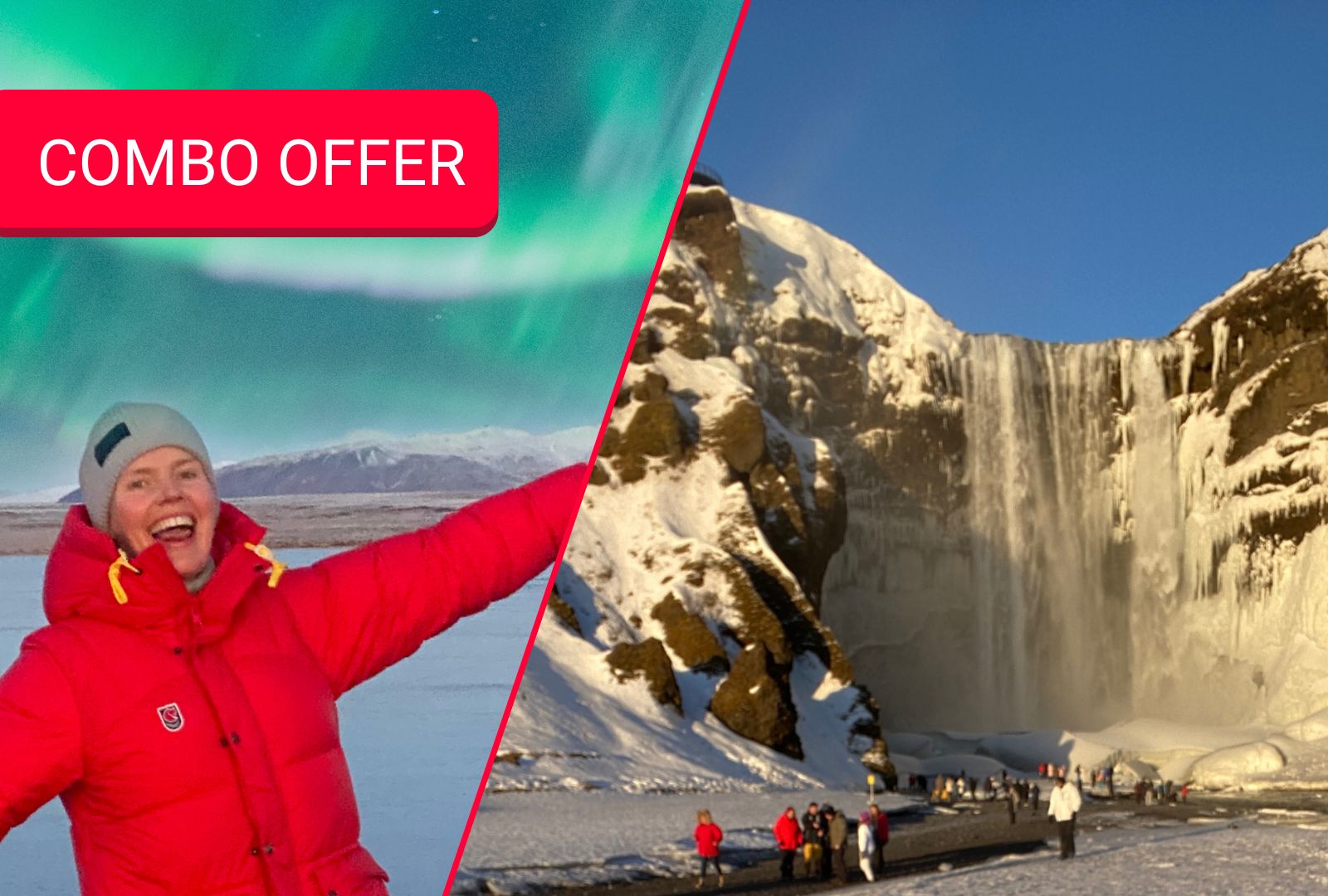
AURORA BOREAL Y COSTA SUR
ASPECTOS DESTACADOS:
✓ OFERTA 2 EN 1: AHORA MÁS DE 2000 ISK
✓ Visita el glaciar Sólheimarjökull
✓ Pasea por la ciudad de Vík
✓ Camina por la playa de arena negra
✓ Contempla las majestuosas cascadas Skógafoss y Seljalandsfoss
✓ Presencia la La danza de las Auroras Boreales
MEJOR RELACIÓN CALIDAD-PRECIO
AURORAS BOREALES GARANTIZADAS: REINTENTO GRATUITO SI NO SE VEN LAS LUCES
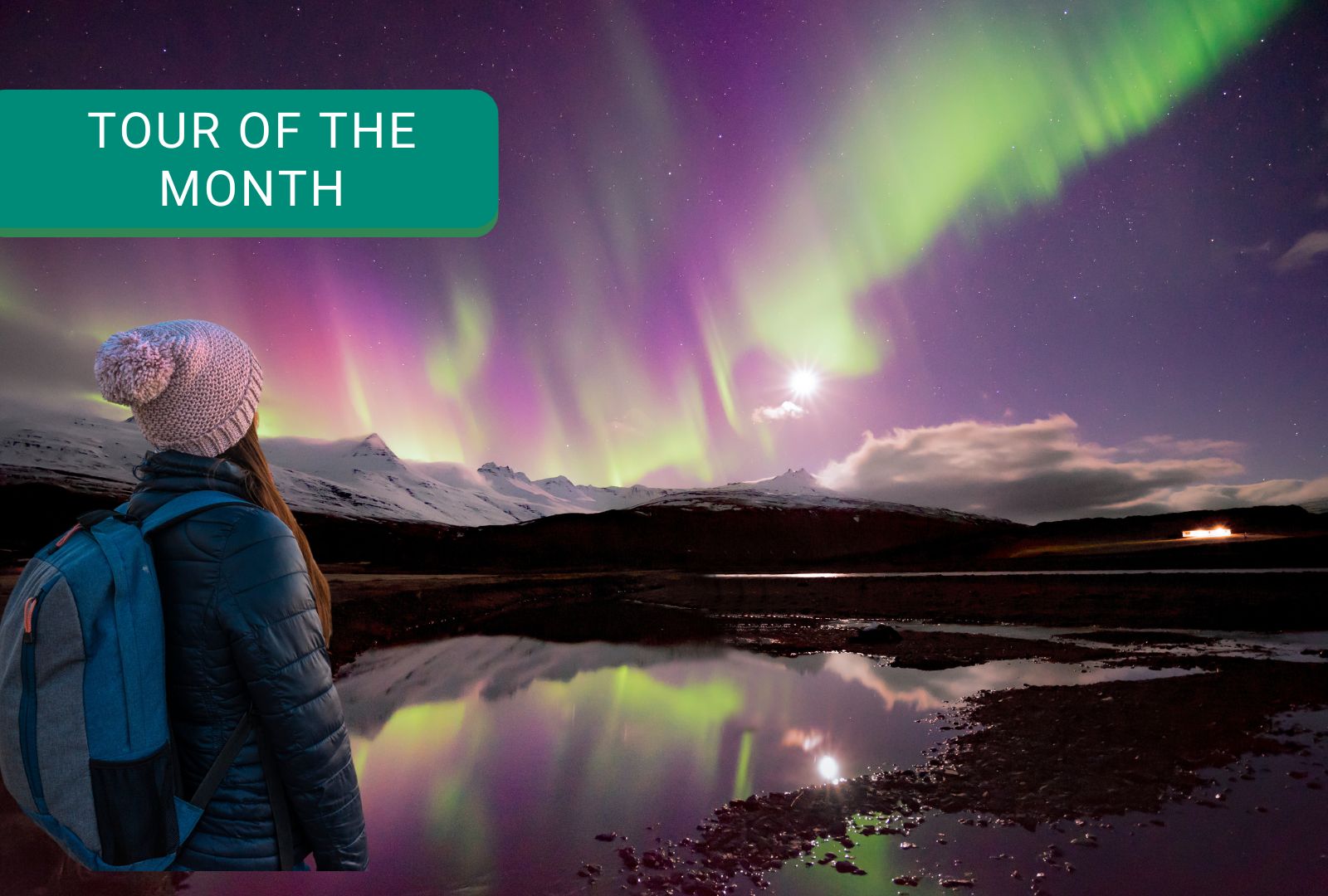
TOUR DE AURORAS BOREALES EN GRUPO REDUCIDO
ASPECTOS DESTACADOS:
✓ Tour de Auroras Boreales en minibus
✓ Fotografías gratuitas de ti bajo las Auroras Boreales
✓ Chocolate caliente y pasteles caseros
✓ Recogida y regreso gratuitos
EL TOUR MÁS POPULAR
Have a look at all our tours here!
I’m the founder of Aurora Reykjavík, and I’ve spent a big part of my life looking up at the Icelandic sky — often in the cold, usually at odd hours, and always hoping for that first green glow to appear.
Over the years, I’ve chased, photographed, studied, and explained the Northern Lights to thousands of visitors from all over the world. What started as curiosity turned into a lifelong passion and eventually into creating Iceland’s original Northern Lights Center, where I help people understand not just when the aurora appears, but why — and how to enjoy it even when nature doesn’t fully cooperate.