HELP! IT'S FULL MOON! WILL IT RUIN MY AURORA EXPERIENCE?
Does the full moon cancel the northern lights? No
Can you still see them? Yes, if strong
What matters most? Clear skies
Imagine this: you’ve arrived beneath the auroral oval, solar activity is increasing, and the forecast looks promising — only to discover the sky is dominated by a bright full moon. Many travelers panic at this point. Will the moon wash out the Northern Lights?
The short, science-based answer: no.
The full moon does not affect aurora activity itself. What it can affect is human perception of faint displays — and even that depends on aurora strength, sky conditions, and experience.
At Aurora Reykjavík, we’ve observed and photographed thousands of aurora displays across all lunar phases. In this guide, we explain exactly when the moon matters, when it doesn’t, and why full-moon nights can actually create some of the most memorable aurora experiences in Iceland.
Written by Katarina Raker, Northern Lights expert and co-founder of Aurora Reykjavík

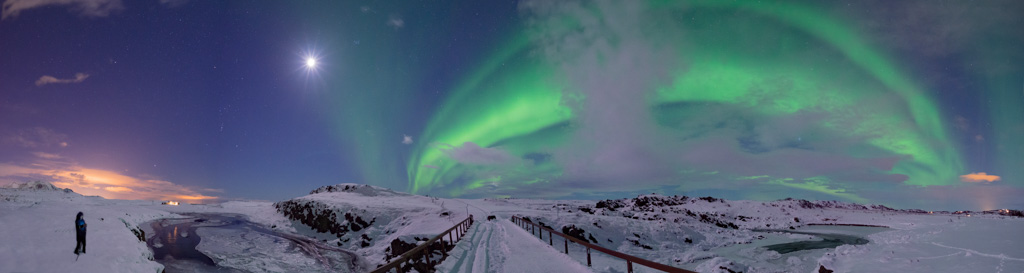
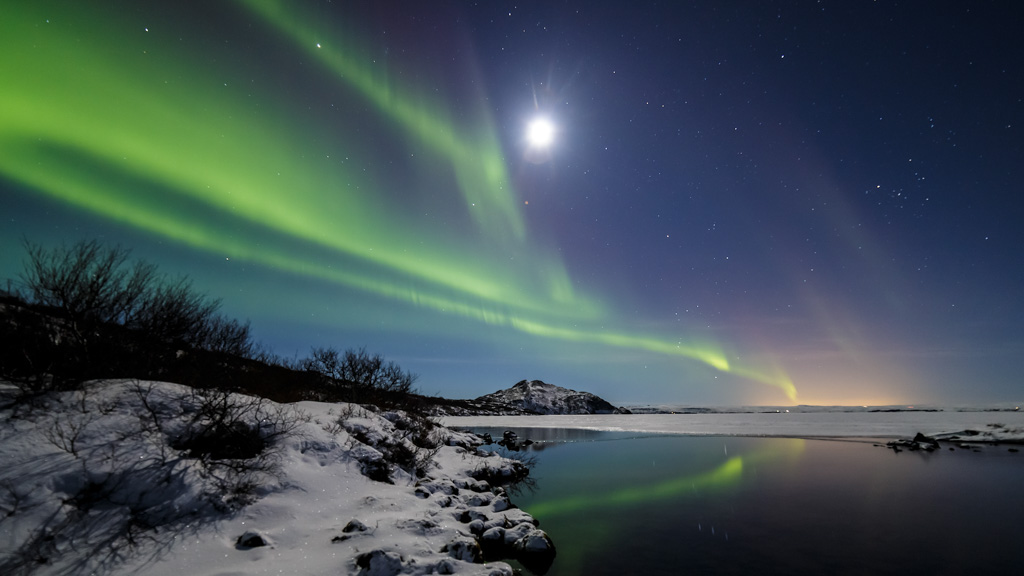
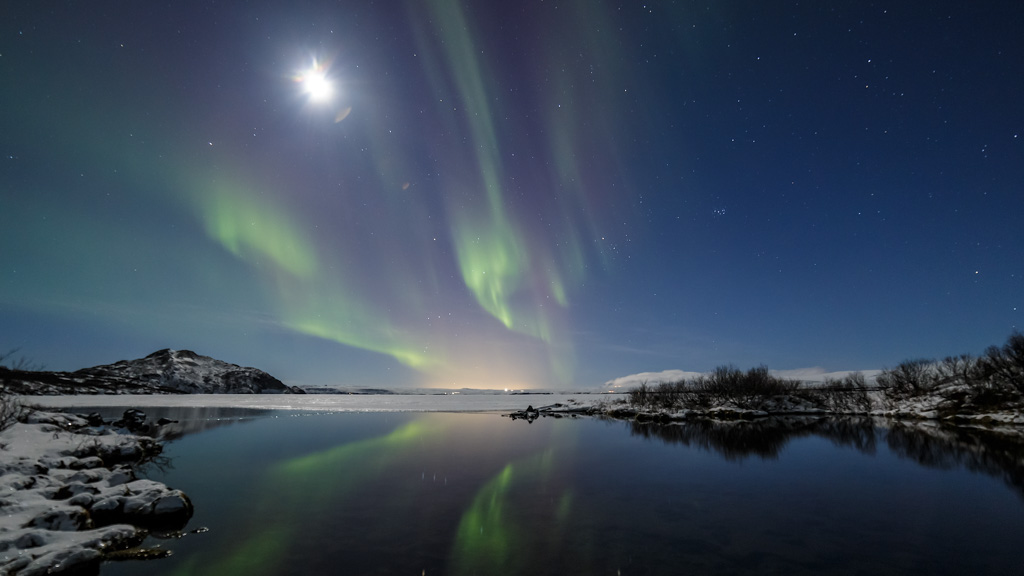
Luna llena en el Parque Nacional Thingvellir, Islandia
DOES THE FULL MOON EFFECT THE NORTHERN LIGHTS?
The moon has no physical effect on the Northern Lights.
Aurora borealis occurs when charged particles from the Sun interact with Earth’s magnetic field and atmosphere. This process is driven by solar wind and geomagnetic activity, not lunar phases.
A full moon only increases ambient light in the sky. This can make very faint auroras harder to notice, especially for inexperienced observers — similar to how moonlight reduces the visibility of dim stars.
FULL MOON – IT ALL DEPENDS ON THE STRENGTHS OF THE AURORA
Sin embargo, todo depende de la intensidad del espectáculo que estés presenciando. Una aurora débil podría quedar opacada por la luz brillante de la luna, pero si tienes un nivel de actividad solar moderado o alto, aún disfrutarás de una buena vista de las auroras boreales. Al contrario de lo que podrías haber oído, es posible ver la aurora boreal, o luces del norte, cuando hay una luna brillante, incluso una luna llena, en el cielo.
Moonlight matters when:
-
Aurora activity is weak (Kp 1–2)
-
The display is low on the horizon
-
The moon is very high up in the sky.
Moonlight does not matter when:
-
Aurora activity is moderate to strong (Kp 3+)
-
The aurora is overhead
-
Skies are clear and dark away from city lights
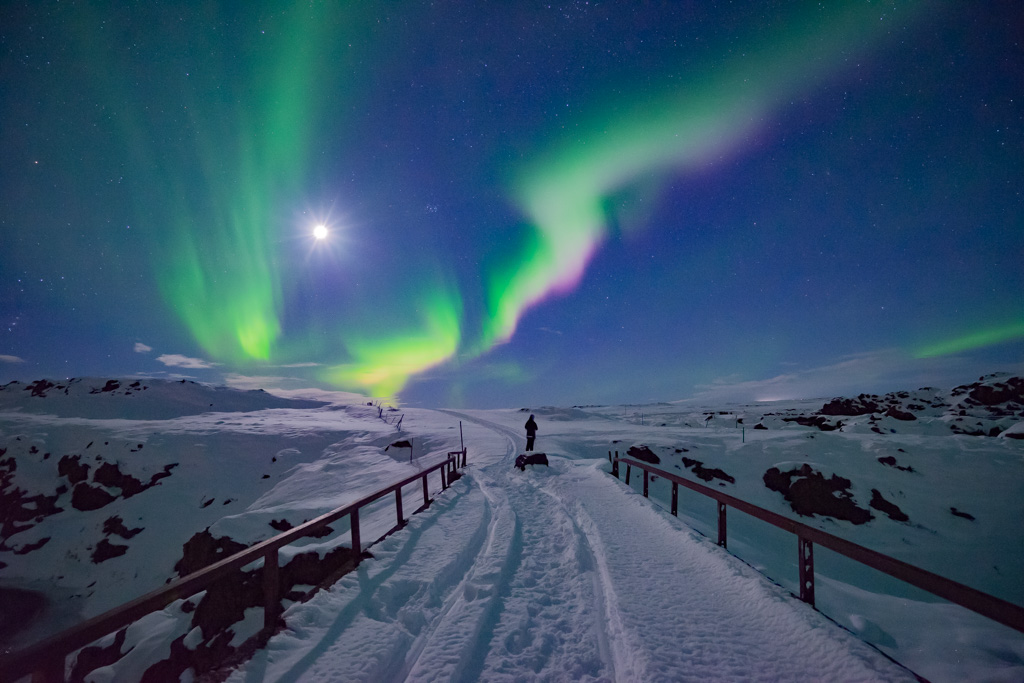
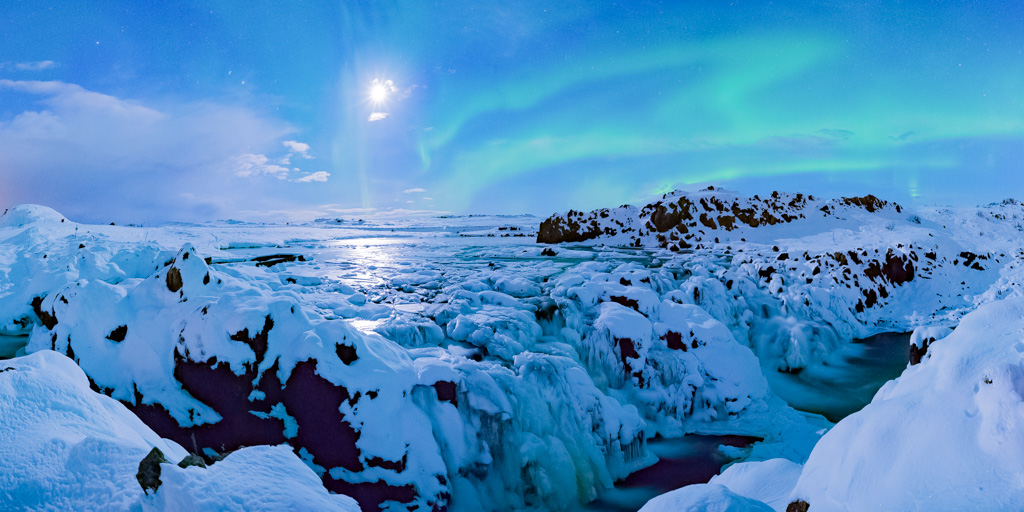
Luna llena en las tierras altas, Islandia
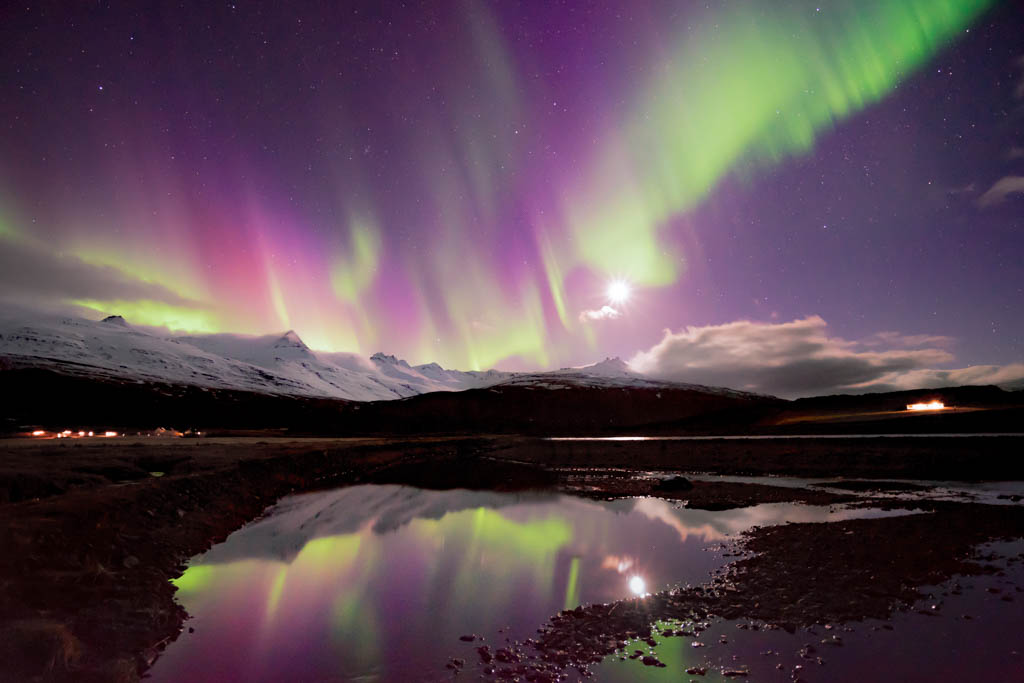
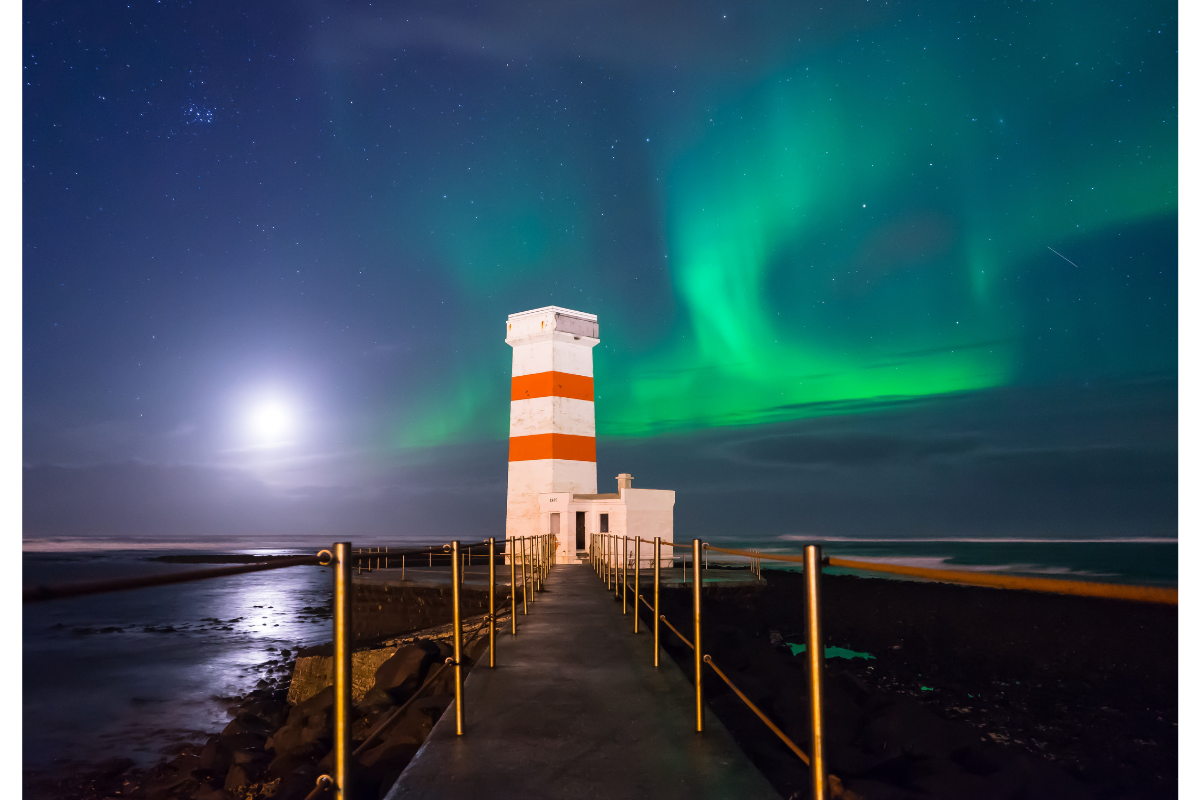
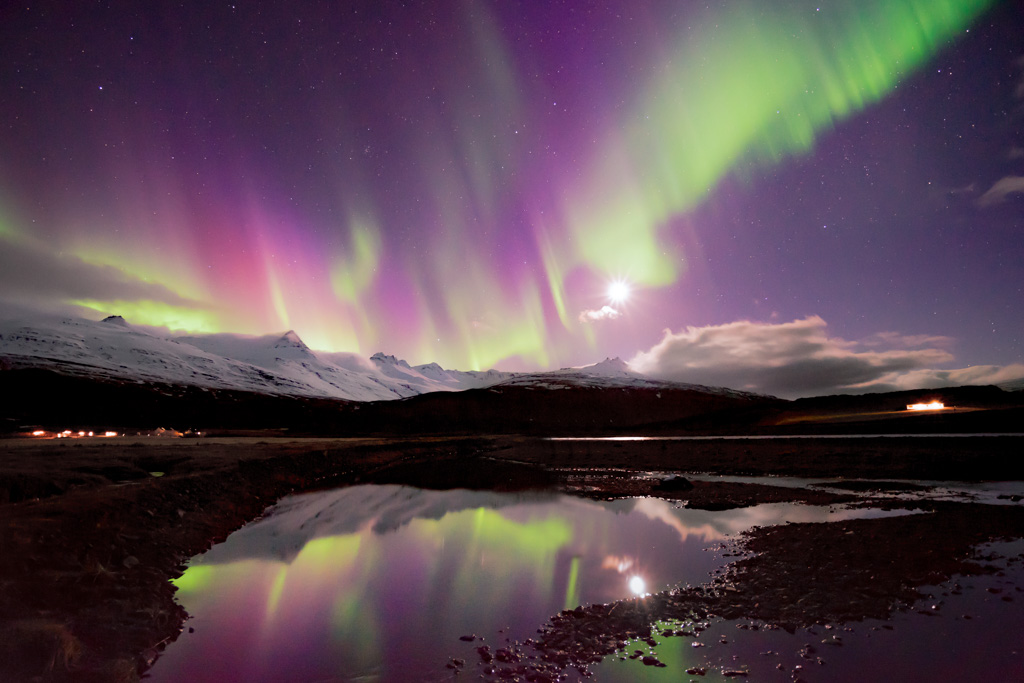
Aurora con Luna llena en los fiordos del este de Islandia
WHY WE LOVE FULL MOON FOR AURORA CHASING – AS PHOTOGRAPHERS
1. La luz de la luna realza el paisaje
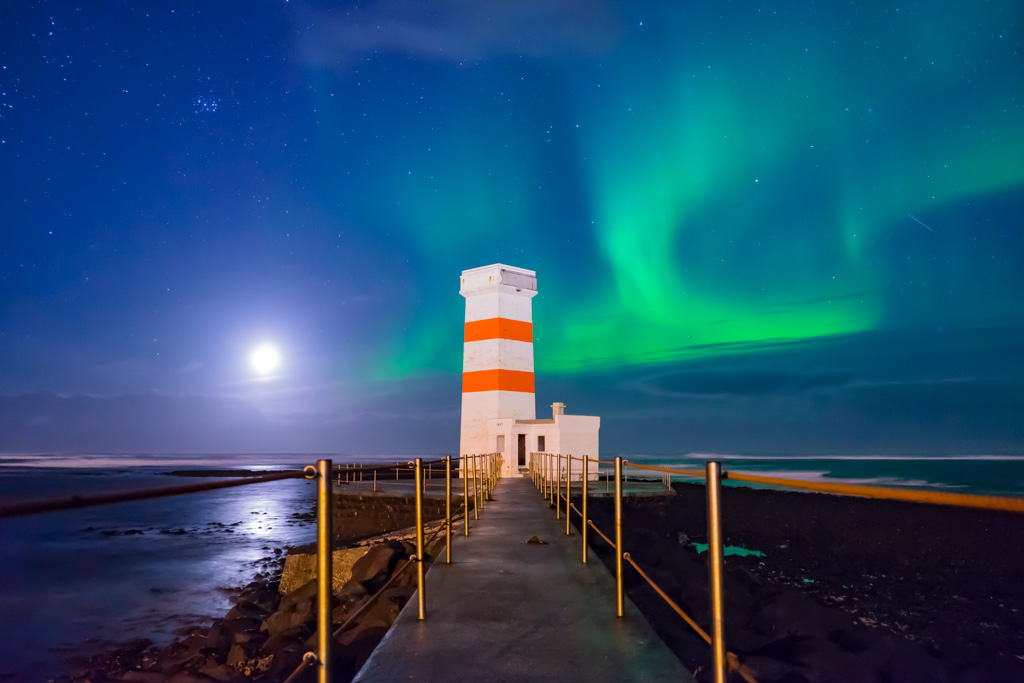
La luna ilumina suavemente el primer plano, creando un ambiente mágico. Las montañas cubiertas de nieve, los campos de lava y los glaciares islandeses se ven aún más impresionantes bajo la luz de la luna.
2. Cielos bellamente coloreados
En lugar de un negro profundo, el cielo nocturno aparece en tonos azules intensos y ricos, creando un fondo impresionante para la aurora.
3. Mejores retratos con las auroras
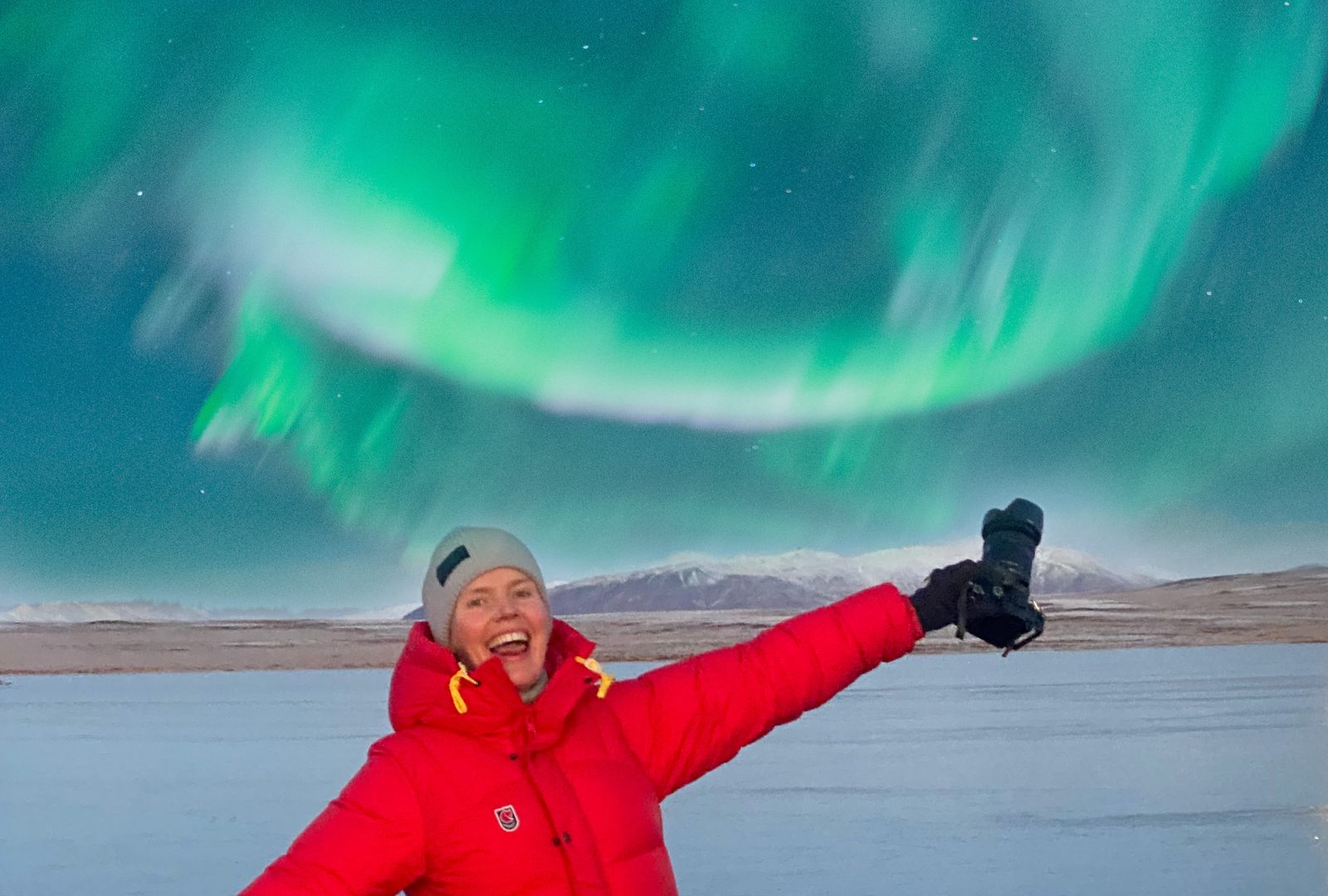
La luz de la luna añade justo la cantidad de luz necesaria para iluminar suavemente a las personas en las fotos, evitando el efecto de silueta mientras mantiene la belleza natural de la aurora.
4. Velocidades de obturación más cortas
La luz de la luna permite tiempos de exposición más cortos, lo que facilita capturar imágenes nítidas de las personas y lapso de tiempo realistas que imitan el movimiento de la aurora en tiempo real.
5. Formas de auroras más nítidas
Las velocidades de obturación más cortas también capturan las formas y patrones intrincados de la aurora con mayor claridad.
6. Condiciones más seguras y agradables
Navegar por los paisajes islandeses en la oscuridad puede ser complicado. Con una luna llena, es más fácil ver tu entorno y evitar peligros potenciales como cuevas de lava ocultas o senderos helados.
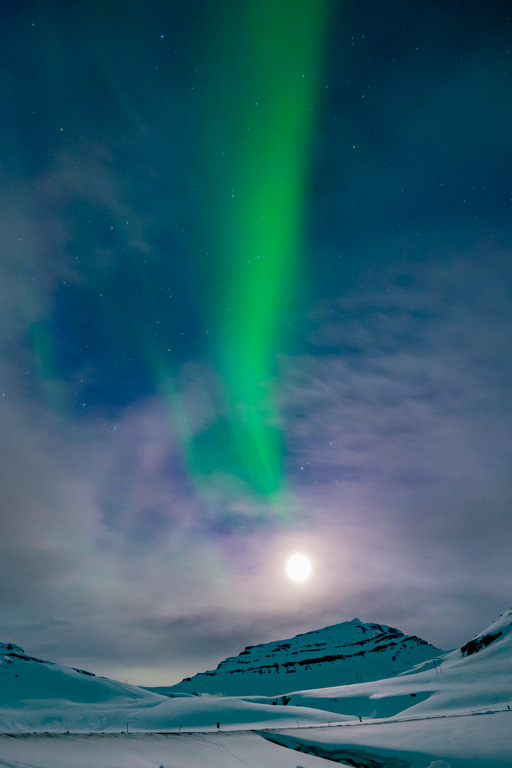
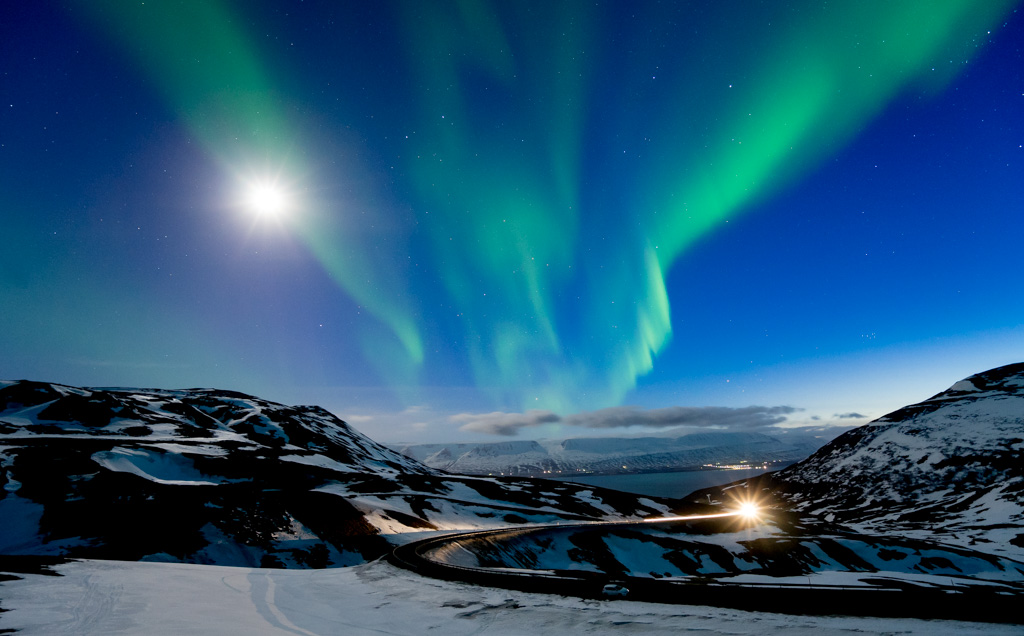
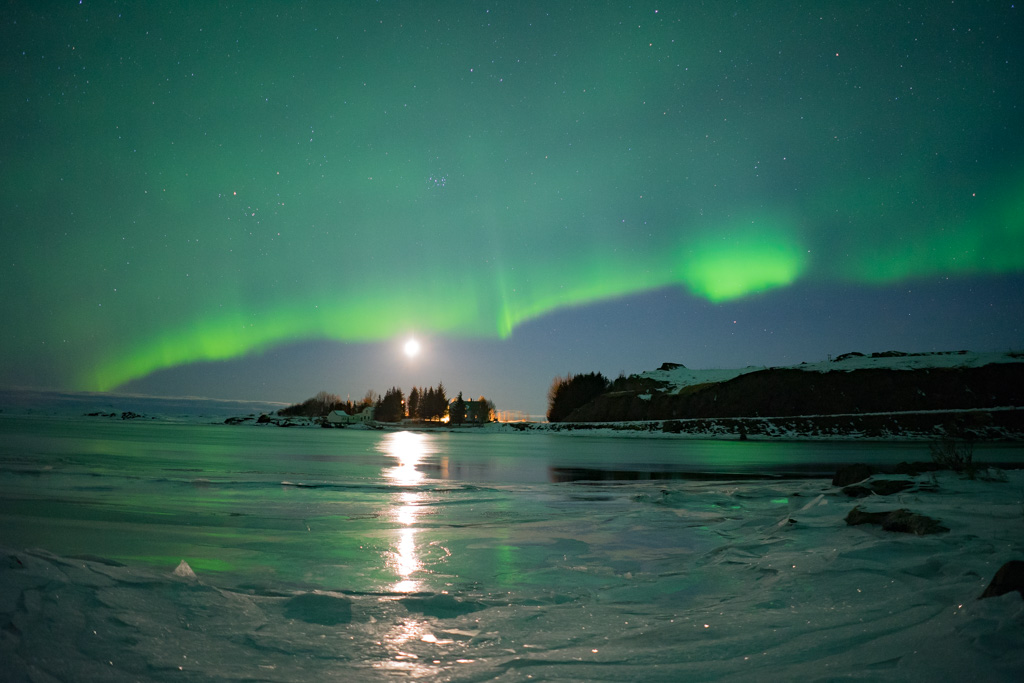
WHY THE MOON PHASE ALONE DOES NOT TELL THE WHOLE STORY
1. Moonrise and Moonset Matter More Than the Moon Phase
When planning a Northern Lights hunt, it’s not enough to look at the moon phase alone. Moonrise and moonset times are far more important. In many cases, especially around a full moon, the moon may set before aurora prime time – leaving the sky completely moonless during the best viewing hours around magnetic midnight. That’s why experienced aurora chasers always check when the moon is actually above the horizon. Tools like timeanddate.com provide precise moonrise and moonset times for any location and date.
A night labeled as “full moon” on the calendar can, in practice, have zero moonlight impact on your aurora experience.
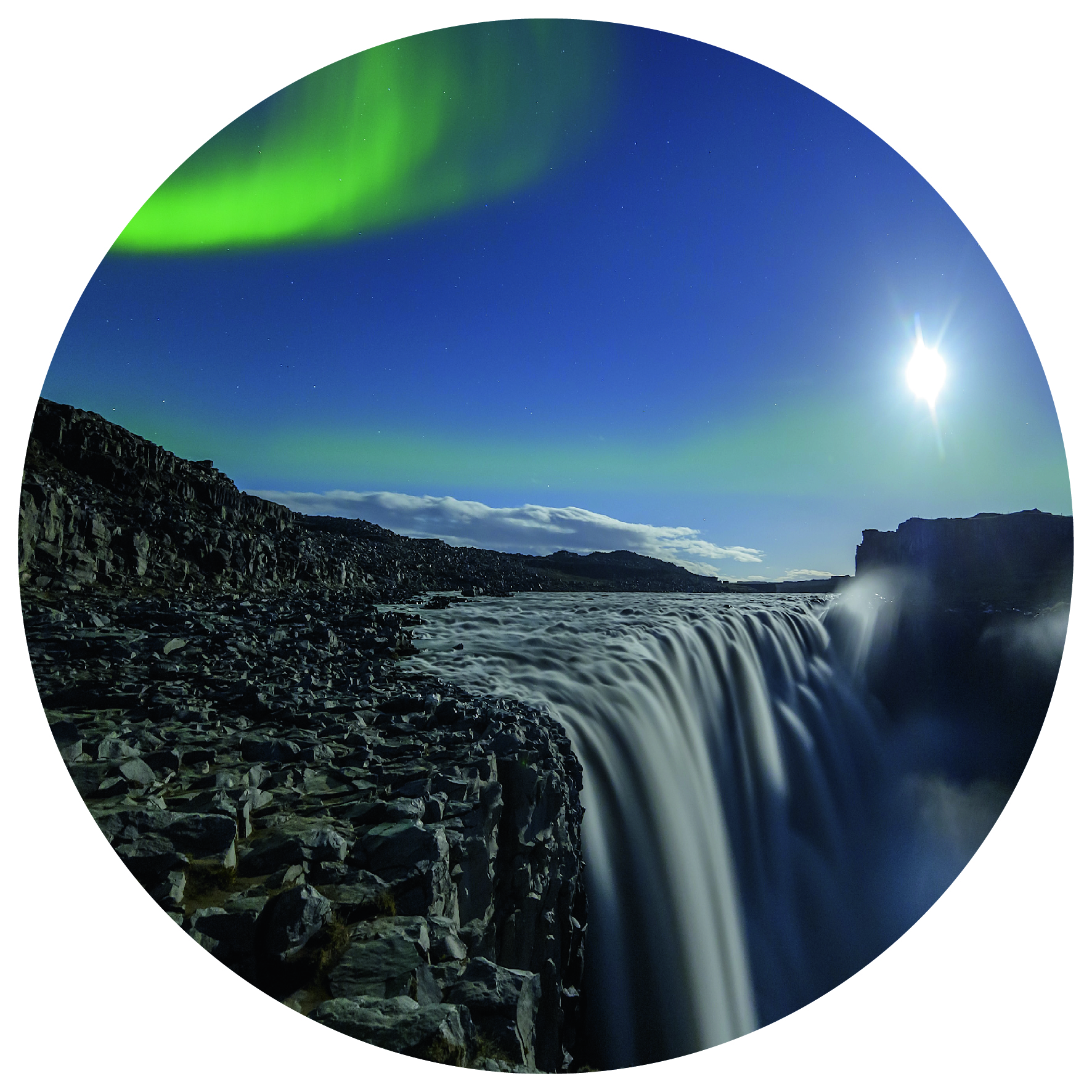
Dramatic full moon aurora at Dettifoss
2. Clouds Can Block the Moon While the Aurora Still Shines
Iceland’s weather adds another important variable: cloud cover.
It’s common to have partly cloudy skies, where low or mid-level clouds obscure the moon in one part of the sky, while clear gaps in another directions allow the aurora to shine through. In this situations, moonlight may be completely diffused or blocked, while the aurora remains visible – sometimes even more dramatically as green arcs illuminate breaks in the clouds. This is one of the reasons why cloud forecasts and on-site decisions matter far more than the moon phase alone.
3. Full Moon Nights Create Extra Opportunities for Astrophotography
For astrophotographers, full-moon nights offer additional creative opportunities beyond the aurora itself.
Moonrise and moonset during a full moon can produce:
- Dramatic low-angle moonlight over mountains and glaciers
- Golden or pastel tones near the horizon
- Unique compositions combining the aurora with lunar-lit landscapes
When times correctly, photographers can capture both aurora activity and moonrise or moonset at the same session, adding depth and storytelling in their images.
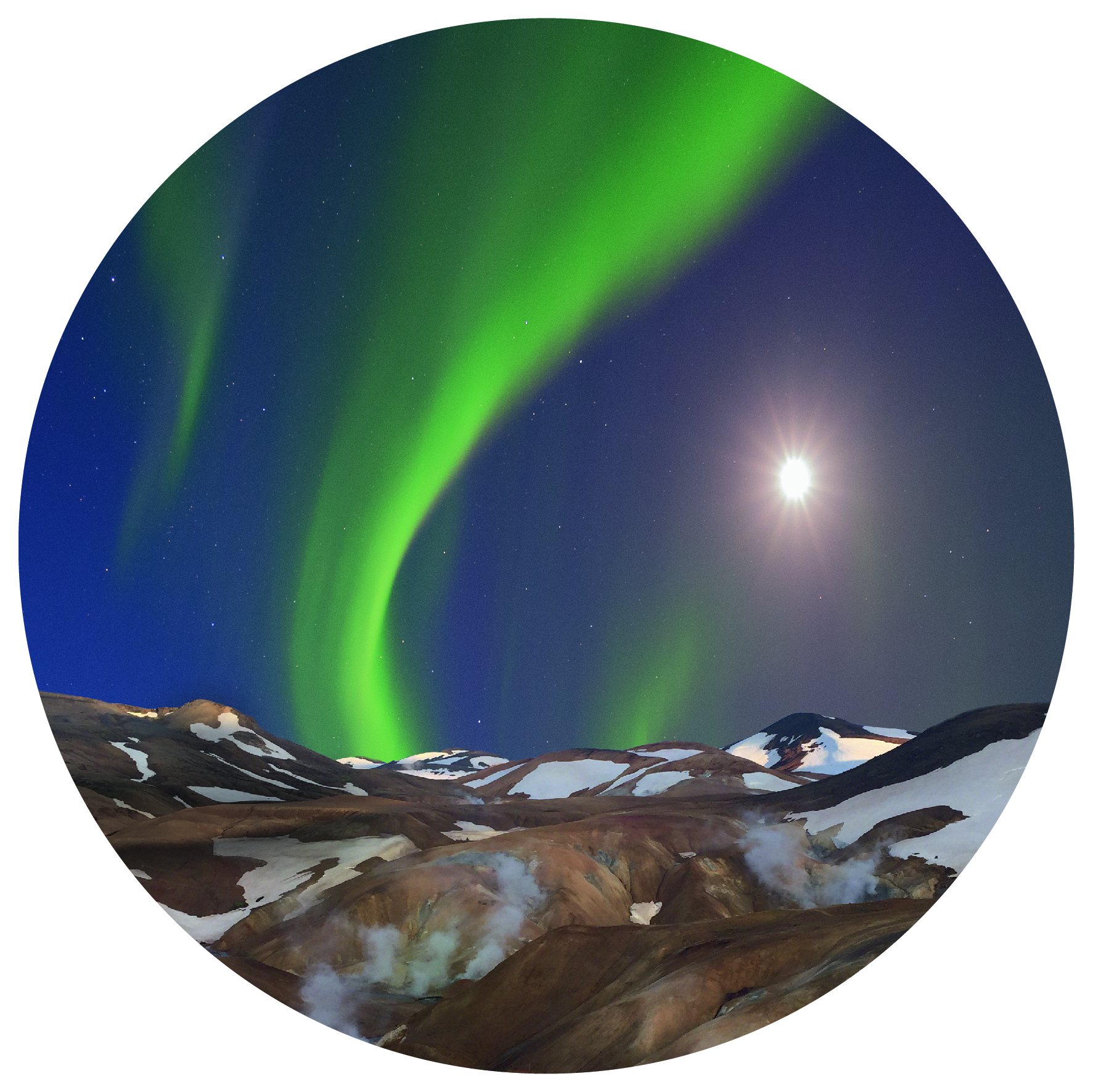
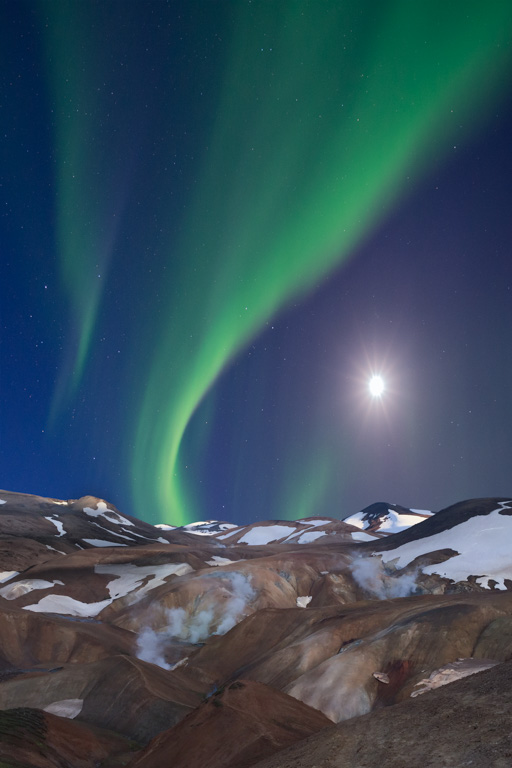
Aurora con luna llena en Kerlingarfjöll, Islandia
CONCLUSION: SHOULD YOU AVOID FULL MOON FOR NORTHERN LIGHTS CHASING?
Expert takeaway:
A full moon does not ruin Northern Lights viewing. What truly matters is:
-
Aurora strength
-
Cobertura de nubes
-
Light pollution
-
Whether the moon is actually above the horizon
Pro tip: Track the aurora forecast and cloud cover on reliable apps, like the ones mentioned in our guide to Northern Lights apps, to plan your chase effectively.
CAPTURE THE AURORA WITH US
En Aurora Reykjavík, sabemos cómo sacar el máximo provecho de cada fase lunar. Ya sea una noche iluminada por la luna o una sin luna, nuestros guías expertos te ayudarán a cazar la aurora bajo las mejores condiciones. Además, nuestro equipo de fotógrafos se asegurará de que te lleves a casa fotos impresionantes.
Echa un vistazo a nuestra selección cuidadosamente elegida de tours de auroras boreales y deja que te llevemos a una aventura inolvidable. Recuerda, la magia de la aurora no se desvanece bajo la luna llena—brilla de nuevas maneras.
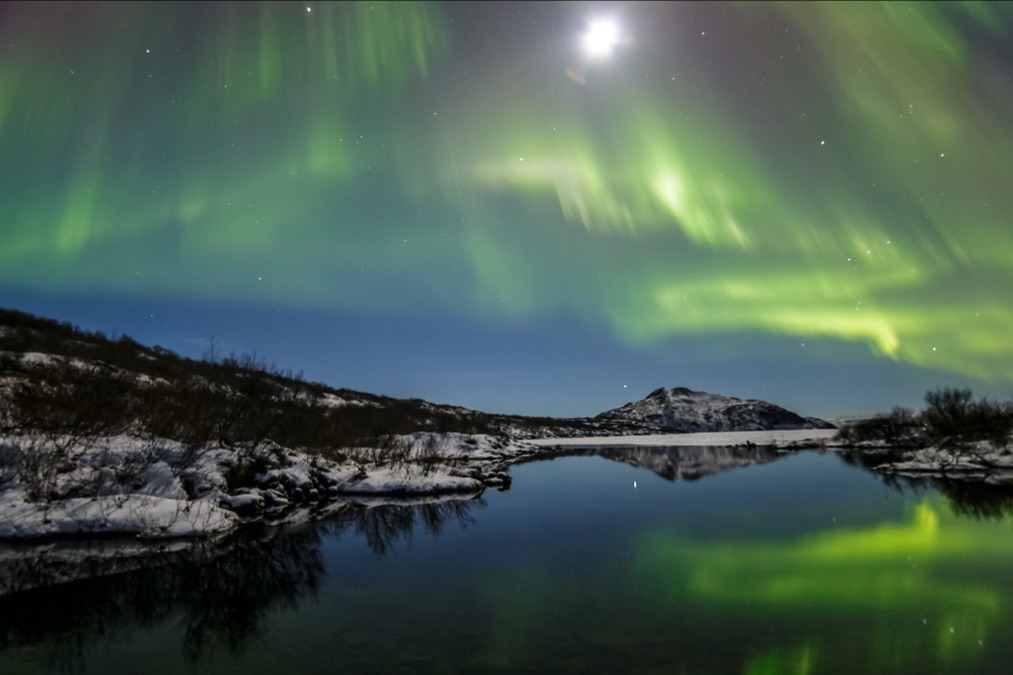
Aurora con luna llena en el Parque Nacional Thingvellir
EXPLORA MÁS EN AURORA REYKJAVÍK
- Visita nuestro Centro de Auroras Boreales para aprender todo sobre la aurora.
- Descubre los mejores consejos de fotografía de auroras boreales para tu próxima aventura.
- Descubre los mejores meses para ver la aurora boreal en nuestra guía.
ÚNETE AL MEJOR TOUR DE AURORAS BOREALES EN ISLANDIA
NUESTROS TOURS MÁS POPULARES
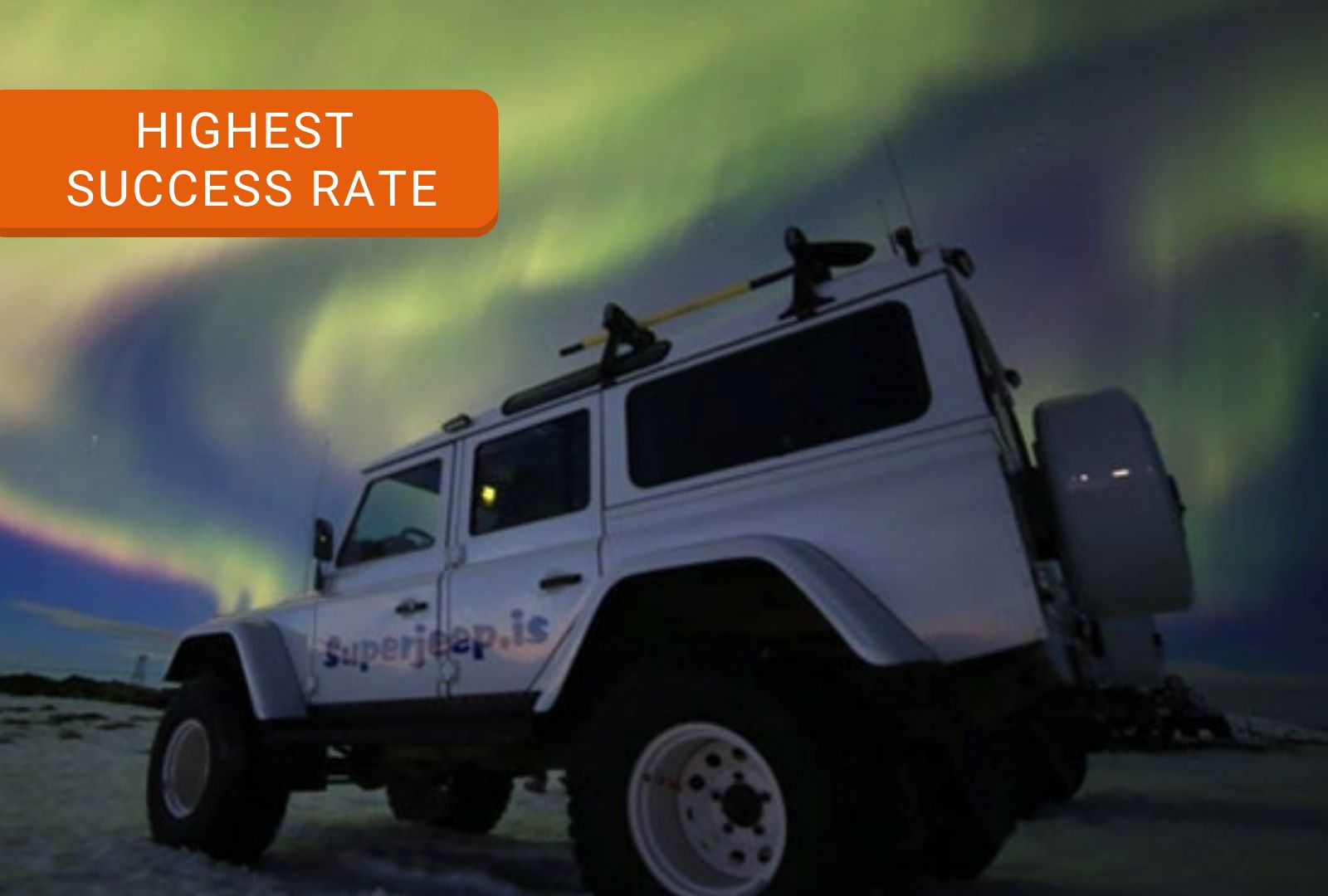
TOUR EN SUPER JEEP DE LA AURORA BOREAL
ASPECTOS DESTACADOS:
✓ Tour guiado premium de Auroras Boreales en un super jeep
✓ Recogida y regreso gratuitos
✓ Fotografías gratuitas de calidad
✓ Chocolate caliente chocolate casero
✓ Vehículos con calefacción todo el viaje
TASA DE ÉXITO MÁS ALTA
ENTRADA A AURORA REYKJAVÍK INCLUIDA - AHORRA 3900 ISK
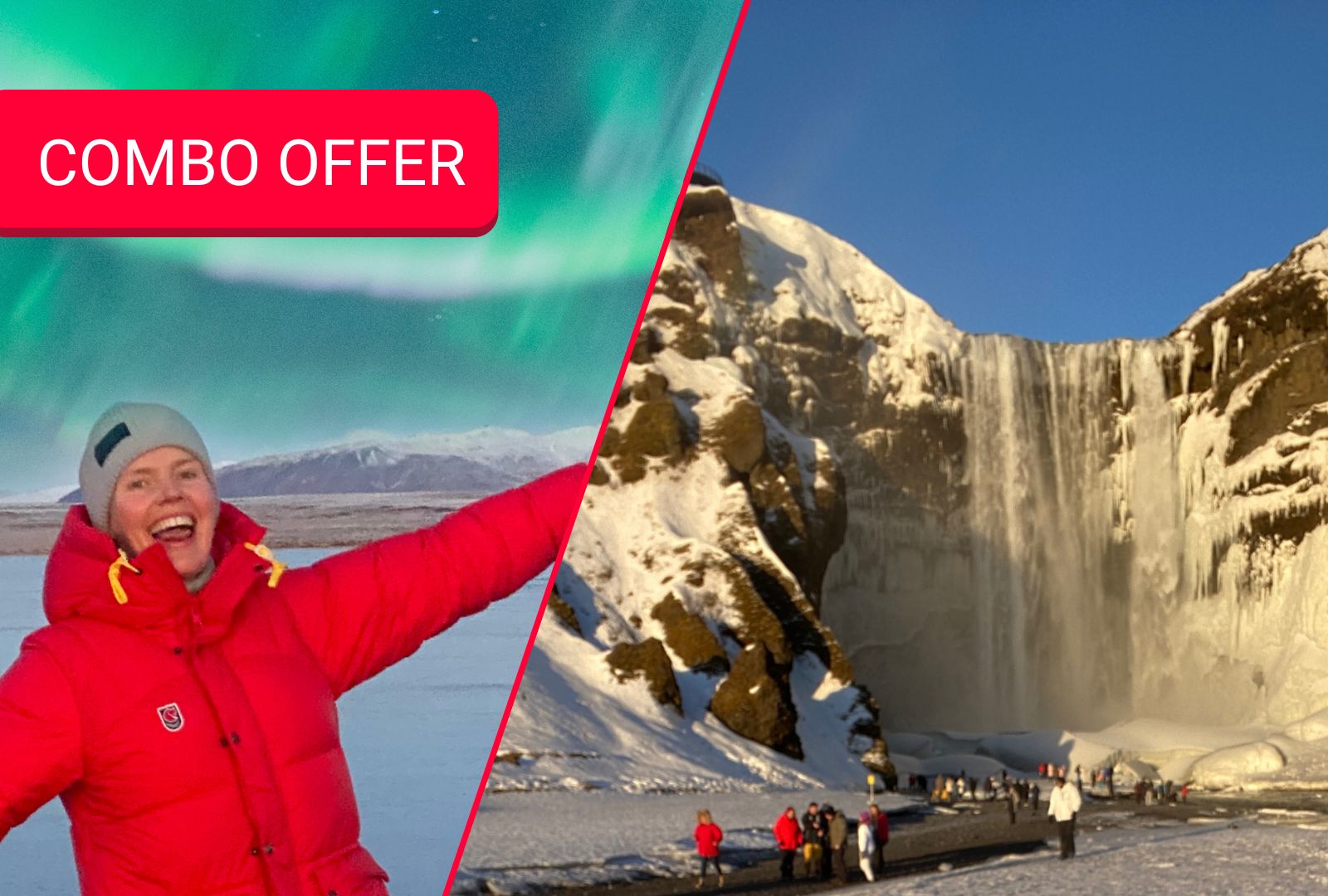
AURORA BOREAL Y COSTA SUR
ASPECTOS DESTACADOS:
✓ OFERTA 2 EN 1: AHORA MÁS DE 2000 ISK
✓ Visita el glaciar Sólheimarjökull
✓ Pasea por la ciudad de Vík
✓ Camina por la playa de arena negra
✓ Contempla las majestuosas cascadas Skógafoss y Seljalandsfoss
✓ Presencia la La danza de las Auroras Boreales
MEJOR RELACIÓN CALIDAD-PRECIO
AURORAS BOREALES GARANTIZADAS: REINTENTO GRATUITO SI NO SE VEN LAS LUCES
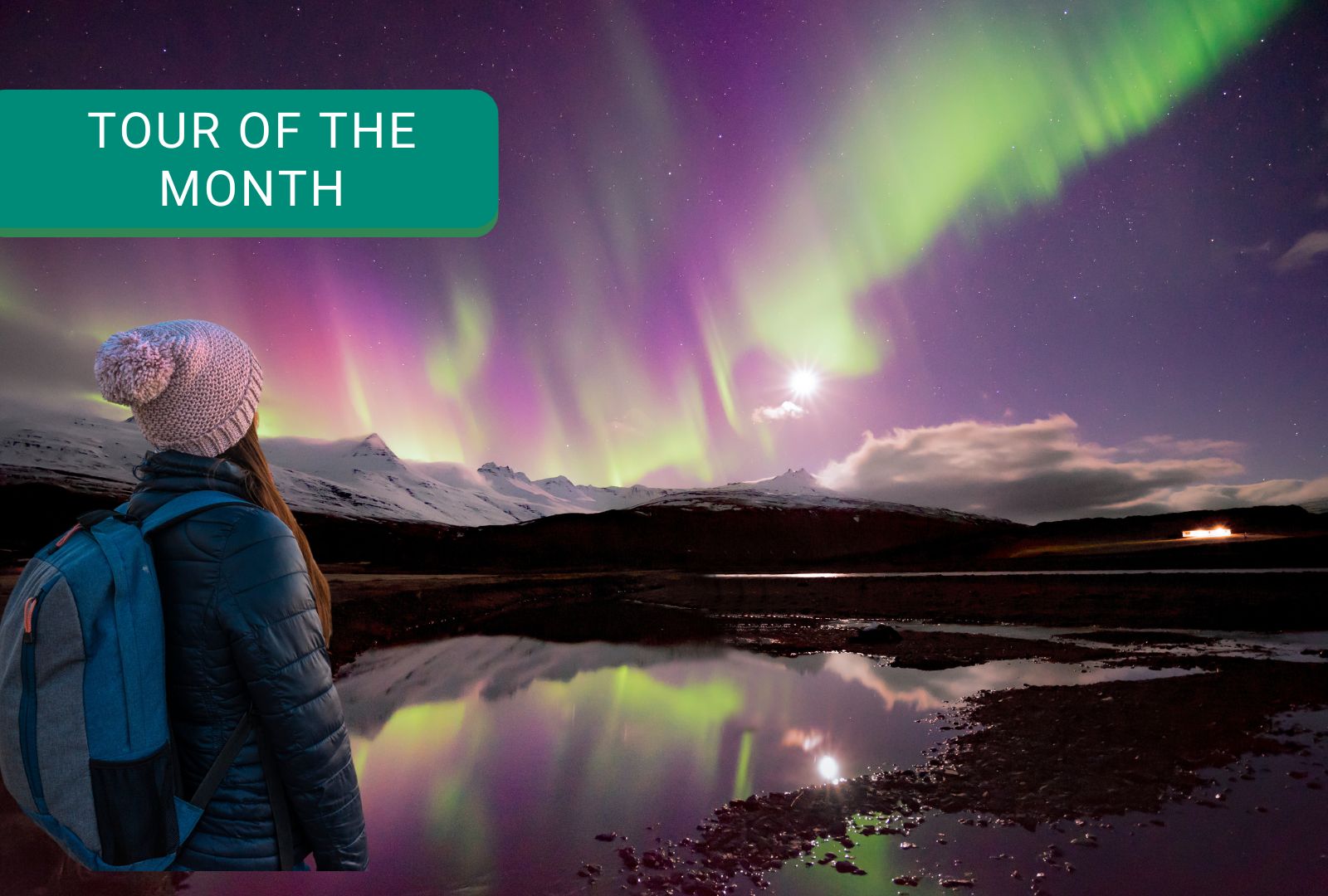
TOUR DE AURORAS BOREALES EN GRUPO REDUCIDO
ASPECTOS DESTACADOS:
✓ Tour de Auroras Boreales en minibus
✓ Fotografías gratuitas de ti bajo las Auroras Boreales
✓ Chocolate caliente y pasteles caseros
✓ Recogida y regreso gratuitos
EL TOUR MÁS POPULAR
PREGUNTAS FRECUENTES SOBRE LA AURORA BOREAL
¿Cuándo puedo ver las Auroras Boreales en Islandia?
¿Puedes ver la aurora boreal durante la luna llena?
¿A qué hora aparecen las auroras boreales?
Durante los meses de invierno, cuando las horas de luz son limitadas, las auroras boreales suelen aparecer incluso a las 7:00 pm.
Como no se puede predecir la hora exacta de una aurora , mantén, manten la vista en el cielo. ¡Y recuerda , la paciencia es clave!
¿Cuánto duran las auroras boreales?
¿Puedo ver la aurora boreal cuando está nublado?
¿Las auroras boreales sólo aparecen cuando hace frío?
¿Se ven las auroras boreales en toda Islandia?
¿Son realmente coloridas las auroras boreales?
¿Es mejor la luna nueva para ver auroras boreales?
¿Es la luna llena buena para fotografiar la aurora?
Katarina Raker
SOBRE LA AUTORA: KATARINA RAKER