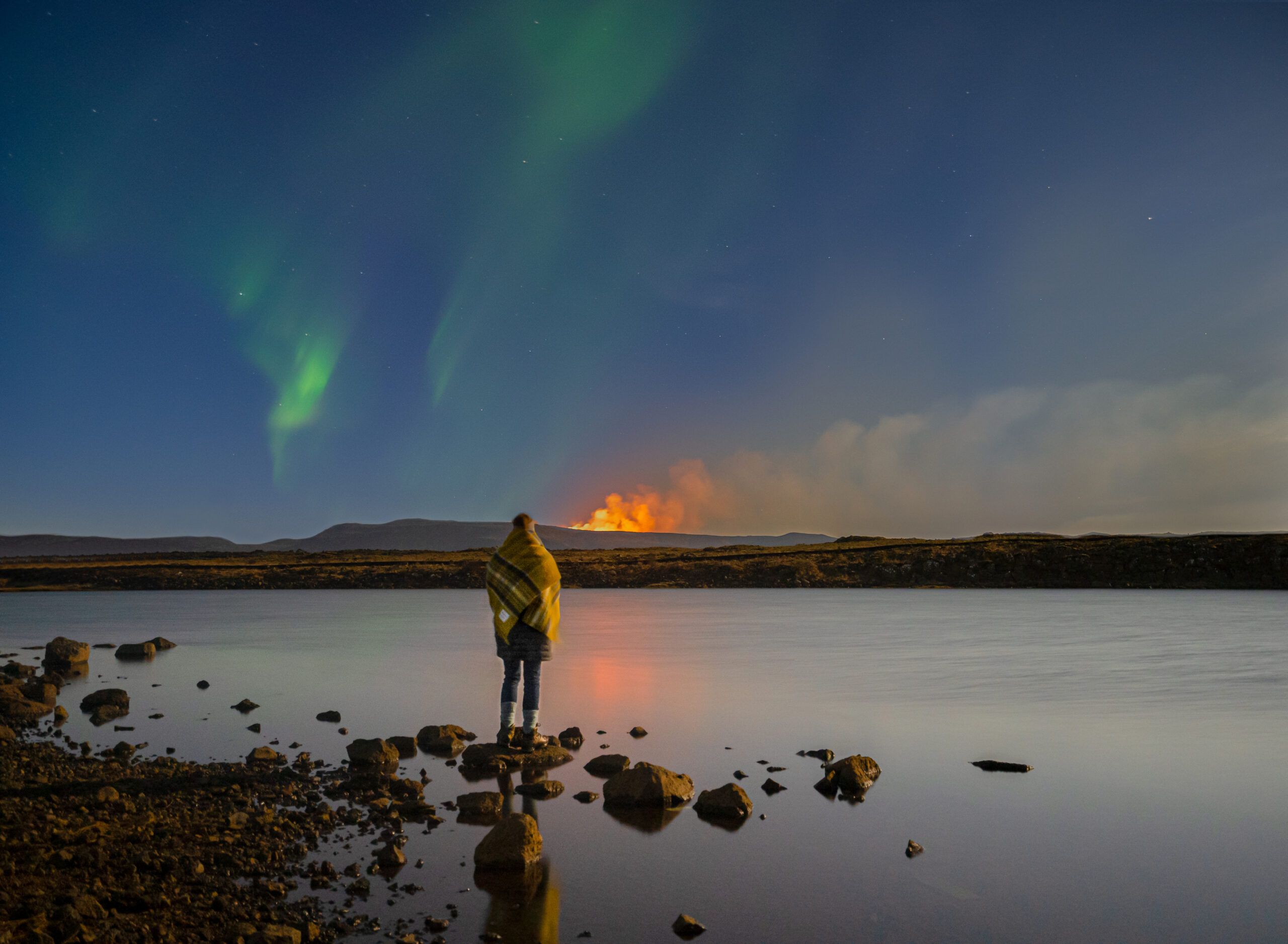
Conducir Para Ver la Aurora Boreal: Rutas Seguras, Consejos y Errores a Evitar (Guía de Islandia 2026)
Cómo planificar una Caza de Auroras Boreales en Carro de Forma Segura
Consejos de Seguridad para Conducir en Invierno en Islandia
Errores Comunes que se Deben Evitar
Cuándo NO Debes Conducir Tú Mismo
Comienza tu noche de auroras boreales en Aurora Reykjavík
La respuesta simple: Sí, pero sólo si te preparas bien.
Cada invierno, miles de visitantes en Islandia optan por conducir por su cuenta para búscar las auroras boreales. Te da libertad, flexibilidad y la magia de experimentar la aurora en completo silencio.
Pero las carreteras islandesas en invierno pueden estar cubiertas de nieve, expuestas a fuertes vientos, heladas e impredecibles, por lo que planificar es esencial. Esta guía te acompaña por rutas de conducción seguras, consejos locales, qué NO hacer, y cómo aumentar las posibilidades de ver las luces.
Cómo planificar una Caza de Auroras Boreales en Carro de Forma Segura
Paso 1 – Consultar el pronóstico del tiempo y las nubes
Un cielo despejado es lo más importante. Antes de conducir, siempre verifica:
- Mapa de nubes (nubes bajas, medias y altas)
- Velocidad del viento - cualquier cosa por encima de 15–18 m / s puede ser peligroso
- Condiciones de la carretera (caídas de rocas, hielo, nieve, carreteras cerradas)
- Advertencias de la Oficina Meteorológica de Islandia
💡 En Aurora Reykjavík, combinamos el pronóstico de nubes de Islandia con datos reales del clima espacial. Consulta nuestro pronóstico de auroras boreales en vivo antes de partir.
Paso 2: Elige rutas seguras y accesibles desde Reykjavík
Aquí se encuentran los mejores lugares para ver la aurora boreal en carro, todos ellos a entre 20 y 60 minutos de Reykjavík y con un acceso relativamente seguro.
Ruta A – Seltjarnarnes / Faro de Grótta (20 minutos)
- Zona de cielo oscuro más cercana a Reykjavík
- Carreteras llanas y fáciles
- Perfecto para un paseo corto por la tarde
- Ideal para familias
Si llegan las nubes, regresa a Reykjavík y visita Aurora Reykjavík, el único lugar de Islandia donde se puede ver la aurora boreal garantizada durante todo el año.
Ruta B – Parrque Nacional Þingvellir (45 minutos)
- Uno de los lugares más oscuros y tranquilos
- Amplios miradores y estacionamiento seguro
- Evite las carreteras secundarias empinadas; manténgase en la ruta principal
⚠️ Esté atento a los parches de hielo y la nieve acumulada en el tramo final.
Ruta C – Valle Mosfellsdalur (25 minutos)
- Cercano, resguardado, fácil de conducir en invierno
- Menos turistas
- Hermosas siluetas de montañas para fotografiar
Ruta D –Península de Reykjanes (40–50 minutos)
-
- Excelente visibilidad hacia el océano
- Poca contaminación lumínica
- Combinar con zonas geotérmicas como Gunnuhver
⚠️ Zona propensa a tormentas: Visita solo cuando el viento sea suave. La península puede experimentar vientos intensos con poca antelación.

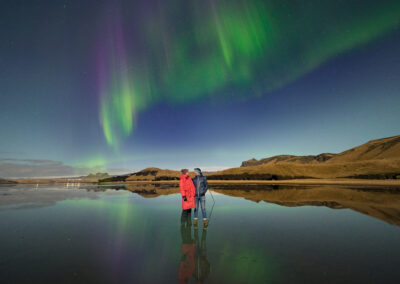
Auroras boreales sobre la costa sur
Consejos de Seguridad para Conducir en Invierno en Islandia
1. Reduzca la Velocidad: El Hielo no Siempre es Visible
El hielo negro es común, especialmente después del atardecer.
Conduzca más despacio de lo esperado y mantenga una distancia segura.
2. Nunca te Detengas en Medio del Camino
Este es el error más común que cometen los turistas.
Usa siempre las zonas de aparcamiento oficiales o los ensanchamientos de la vía.
Parar en la carretera en la oscuridad es extremadamente peligroso.
3. Lleva un Teléfono Completamente Cargado y una Batería Portátil
El frío agota las baterías rápidamente.
Descarga mapas sin conexión por si pierdes la señal.
4. Revisa el Viento
En Islandia, el viento suele ser más peligroso que la nieve.
Si te cuesta abrir la puerta del coche, regresa a casa.
Si ves nieve en la carretera, regresa.
5. Vístete para las Condiciones Árticas
Puede permanecer al aire libre durante largos periodos:
- Prendas interiores de lana
- Chaqueta de plumas
- Guantes y gorro
- Botas impermeables
6. No Busques "Números KP" Mientras Conduces
El índice KP NO determina la visibilidad en Islandia.
La nubosidad es más importante, y un KP 2-3 suele ser suficiente.
👉 Aprende la forma sencilla de leer los datos de las auroras en nuestra página de pronósticos.
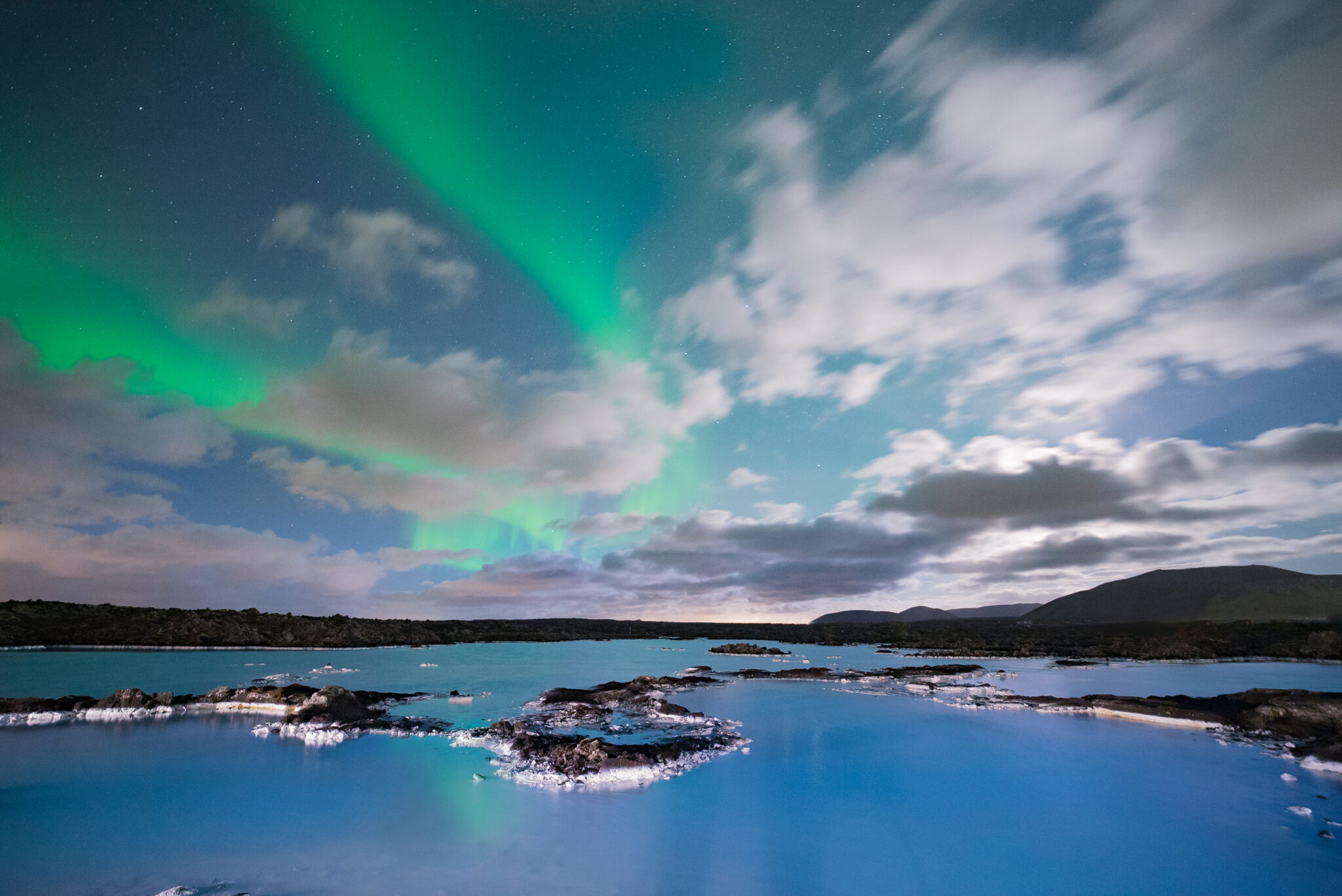
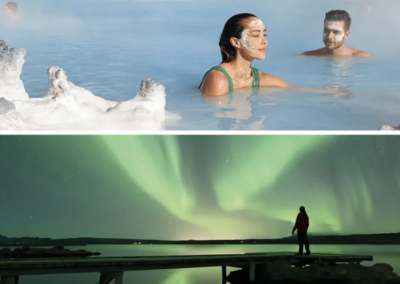
Auroras Boreales sobre Blue Lagoon
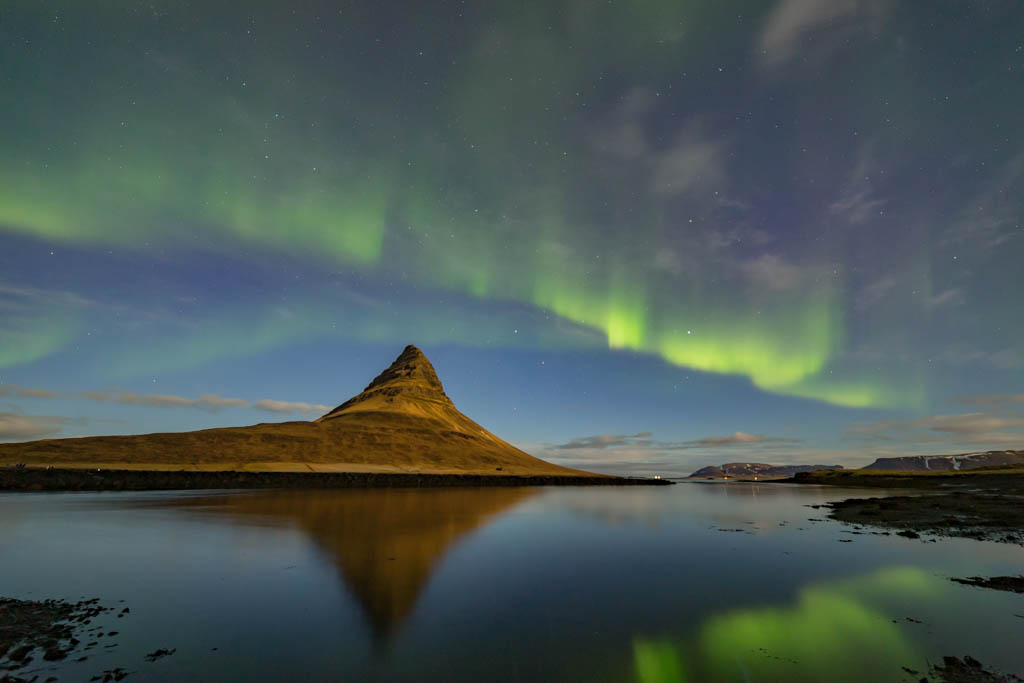
Auroras boreales con vista al mar
Errores Comunes que Cometen Quienes Conducen por Primera vez para Ver Auroras (y cómo evitarlos)
❌ Error 1: Conducir Demasiado lejos
Si la aurora aparece mientras conduces, podrías perderte el espectáculo.
Elige lugares seguros y cercanos en lugar de largas distancias.
❌ Error 2: Confiar Únicamente en el Spot de Instagram
Muchos "lugares secretos" en línea son peligrosos, callejones sin salida, o propiedad privada.
Permanece en los puntos oficiales de observación.
❌ Error 3 – Olvidarse de la Luz de la Luna
La luna puede iluminar el cielo, pero también crea hermosos contrastes.
No canceles una persecución sólo porque hay luna llena.
❌ Error 4: Rendirse Demasiado Pronto
Las auroras vienen en oleadas.
Si hay un claro entre las nubes, quédese al menos 20-30 minutos.
Cuándo NO Debes Conducir Tú Mismo
Hay días en los que conducir solo no es una buena idea:
- Avisos meteorológicos amarillos o rojos
- Vientos superiores a 20-25 m/s
- Lluvia helada
- Carreteras cerradas
- Poca visibilidad debido a la nieve en el suspensión
En esos días, únase a un tour de la aurora boreal: los conductores profesionales conocen las rutas y condiciones seguras.
👉 Consulta nuestra selección de tours para ver la aurora boreal
👉 Nuestro equipo en Aurora Reykjavík trabaja con las mejores y más seguras compañías de viajes de Islandia.
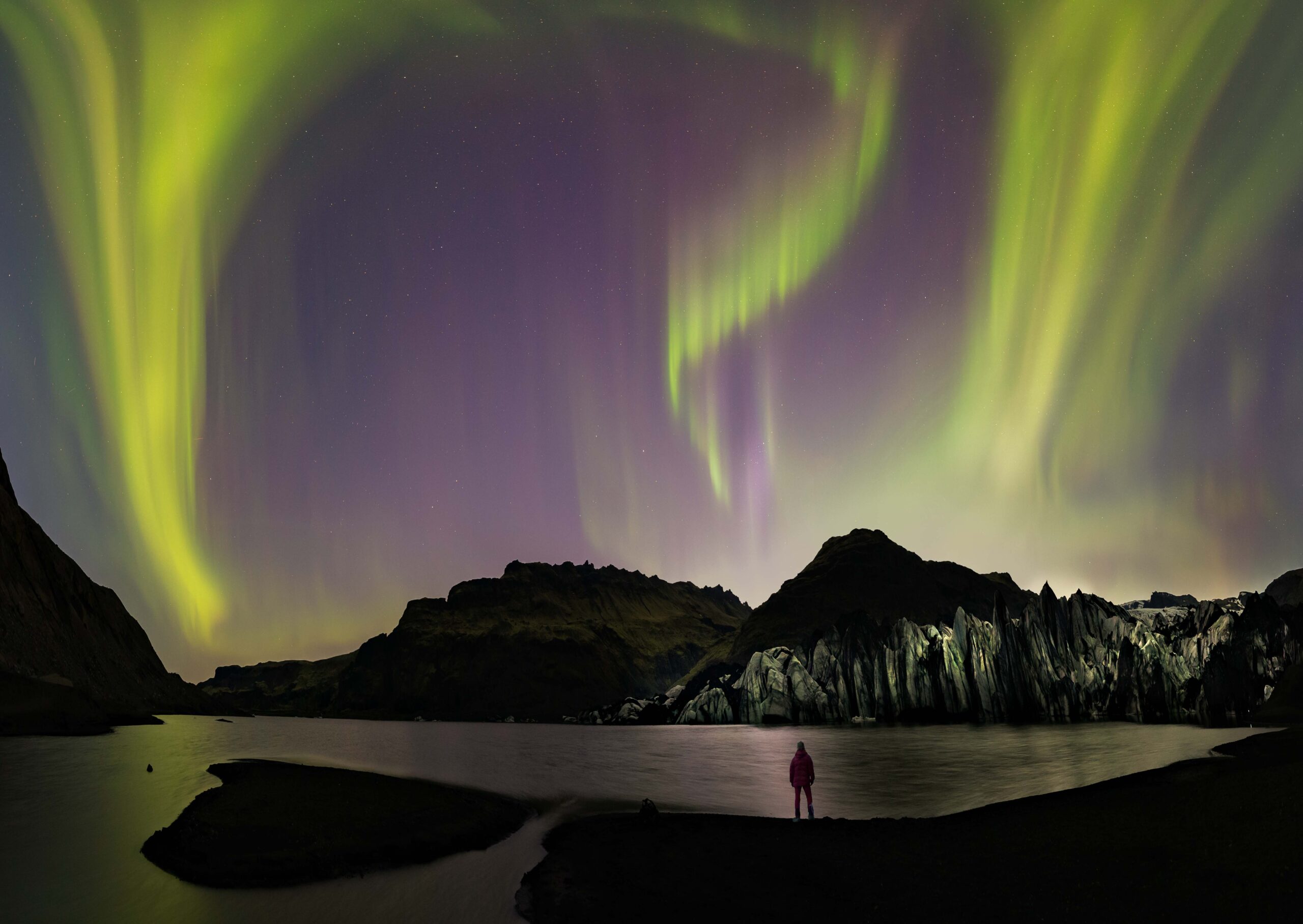
El experto en auroras Grétar Jónsson, propietario y director ejecutivo de AURORA REYKJAVÍK capturando la aurora boreal en Sólheimarjökull, Islandia
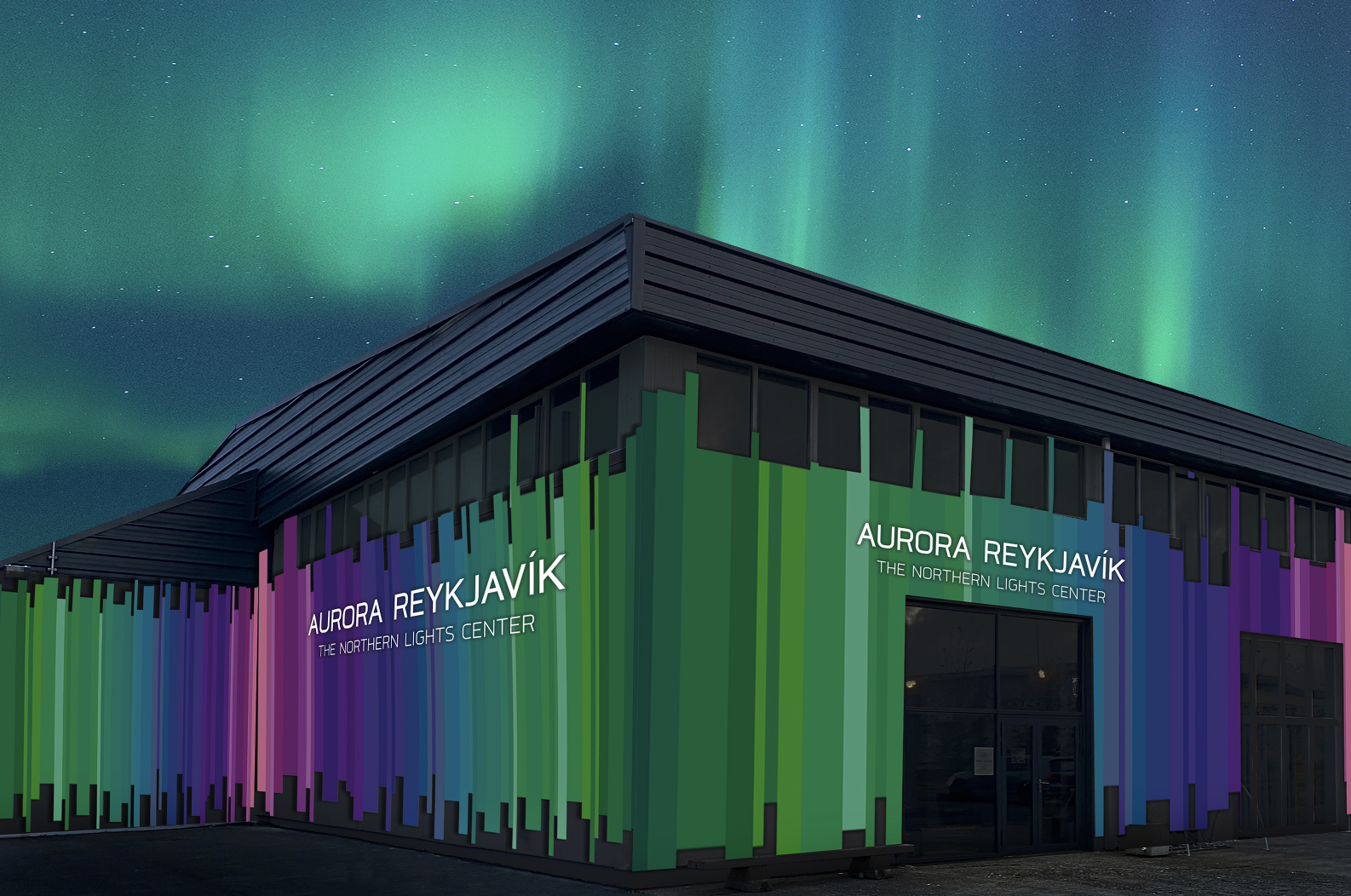
Aurora Boreal sobre Aurora Reykjavík
Comienza tu noche de auroras boreales en Aurora Reykjavík
✔ Pronósticos de auroras en vivo
✔ Consejos de expertos de verdaderos cazadores de auroras boreales
✔ Formación fotográfica en nuestra sala de fotografía Aurora
✔ Una experiencia garantizada de la aurora boreal en caso de que el clima cambie
👉 Reserva tu entrada aquí
👉 Abierto todos los días, ideal para entrar en calor antes de adentrarte en la oscuridad.
Conclusión
Conducir por tu cuenta para ver las auroras boreales en Islandia puede ser una experiencia mágica, siempre que elijas rutas seguras, revises cuidadosamente el clima y evites errores comunes. Con la preparación adecuada, tu caza de auroras se convertirá en una de las noches más inolvidables de tu viaje.
¿Y si el clima no coopera? No te preocupes…
Aurora Reykjavík es el único lugar de Islandia donde se puede ver la aurora boreal todos los días del año.
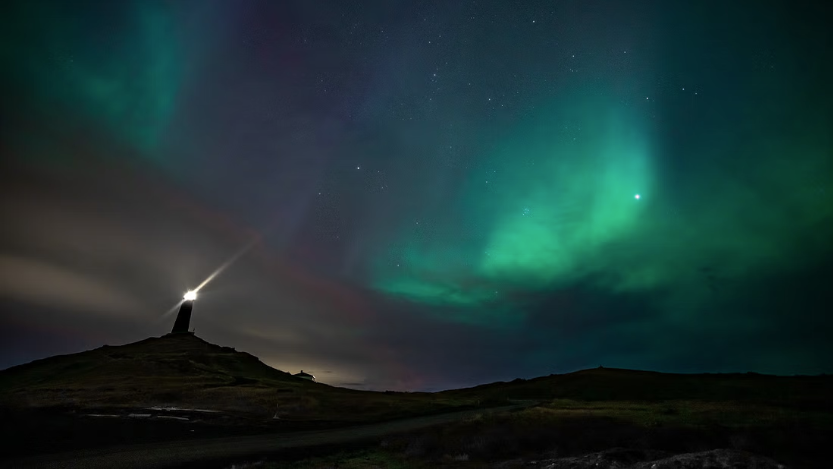
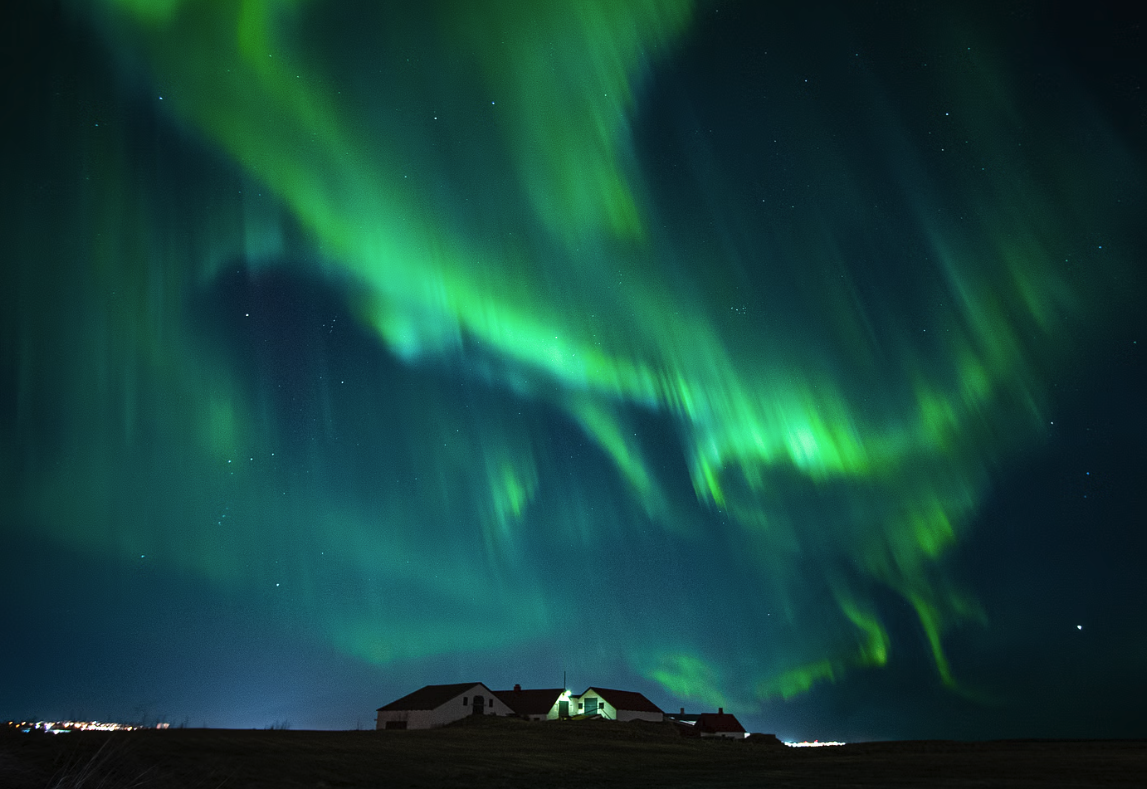
Auroras boreales verdes y estrellas sobre una colina, con un faro de fondo
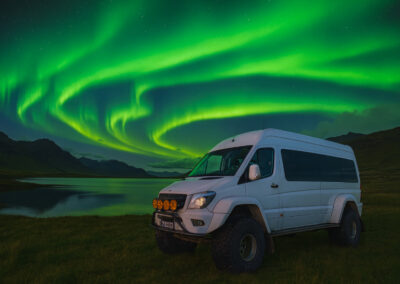
Únete a un tour guiado para ver Auroras Boreales
Evita el estrés de conducir en invierno de noche y únete a un grupo de aventureros con intereses similares en una caza guiada de auroras boreales.
Preguntas frecuentes sobre la Aurora Boreal
¿Cuándo puedo ver las Auroras Boreales en Islandia?
La temporada de auroras boreales en Islandia comienza a finales de Agosto y continúa hasta mediados o finales de Abril.
Durante este largo período, Islandia experimenta suficiente oscuridad para que la aurora sea visible por la noche.
Sin embargo, las probabilidades de ver la aurora boreal varían según la época del año. Descubra cuáles son los mejores meses para ver la aurora aquí.
¿Por qué no puedo ver la aurora boreal en verano?
Para poder ver la aurora boreal se necesita suficiente oscuridad. Durante el verano tenemos lo que llamamos“sol de medianoche“, lo que significa que no hay horas de oscuridad nocturna. Estas condiciones son perfectas para practicar senderismo y explorar a altas horas de la noche, pero nos impiden observar la aurora en Islandia entre mayo y principios de agosto..
¿Quieres saber más sobre las condiciones de luz en Islandia? Consulta el gráfico solar y aprende sobre el crepúsculo y el atardecer en Islandia.
¿A qué hora aparecen las auroras boreales?
Las auroras boreales se suelen ver estadísticamente entre las 9:00 pm y la 1:00 am,pero pueden aparecer en cualquier momento, siempre que esté oscuro (y el cielo esté despejado).
Durante los meses de invierno, cuando las horas de luz son limitadas, las auroras boreales suelen aparecer incluso a las 7:00 pm.
Como no se puede predecir la hora exacta de una aurora , mantén, manten la vista en el cielo. ¡Y recuerda , la paciencia es clave!
¿Cuánto duran las auroras boreales?
Las auroras pueden durar desde unos pocos minutos hasta horas..
Cada aurora boreal es diferente y su duración varía. Además, no siempre son visibles durante todo el episodio auroral: Usualmente, su intensidad suele cambiar a lo largo de un mismo espectáculo y pueden pasar de muy brillantes a increíblemente tenues, hasta el punto de ser prácticamente invisibles.
Descubre más sobre el comportamiento de las auroras boreales en términos de duración aquí.
¿Puedo ver la aurora boreal cuando está nublado?
Bueno, eso depende. En primer lugar, Islandia es conocida por su clima impredecible: que esté nublado ahora no significa que el cielo seguirá nublado dentro de 5 minutos.
Mientras podamos encontrar algunos huecos en la capa de nubes, algunas ventanas de cielo despejado , hay esperanza.
E incluso cuando esté nublado, tenga en cuenta que no todas las nubes son iguales. Por ejemplo, las nubes altas suelen ser transparentes y no necesariamente interfieren con nuestra visión. Como regla general: si se ven las estrellas, potencialmente puede ver la aurora boreal también.
Una vez más, manten la vista en el cielo y consulta el pronóstico regularmente para obtener la predicción más fiable.
¿Las auroras boreales sólo aparecen cuando hace frío?
El temporada de auroras boreales en Islandia comienza a finales del verano.
Como puedes imaginar, esto significa que no necesitas temperaturas frías para ver una aurora (aunque no deberías esperar un clima de camiseta por la noche en Islandia, ni siquiera en agosto).
Las auroras boreales ocurren muy por encima de los sistemas meteorológicosy no se ven afectadas por ellos ni por las fluctuaciones de temperatura en la atmósfera inferior.
Descubre más aquí.
¿Se ven las auroras boreales en toda Islandia?
Islandia se encuentra dentro del llamado “cinturón de auroras“, la zona donde suelen verse las auroras boreales.
En la región ártica, este cinturón se extiende entre los 60°N y los 70°N de latitud. Dado que Islandia Islandia en su totalidad se encuentra entre los 63°N y los 67°N, y por lo tanto dentro del cinturón de auroras, las probabilidades de ver las auroras boreales son prácticamente las mismas en toda la isla, si el clima lo permite.
Dicho esto, la probabilidad de verlas es mayor lejos de las luces de las ciudades, y algunas zonas del país son especialmente pintorescas. Aquí tienes nuestros lugares favoritos para avistar auroras boreales en Islandia.
¿Son realmente coloridas las auroras boreales?
Las auroras boreales se presentan en una variedad de colores. El verde es, con mucho , el más común, pero también pueden aparecer en vibrantes tonos de rosa, morado, rojo, violeta y azul.
Sin embargo, a simple vista , las auroras boreales pueden verse bastante tenuesy, en ocasiones, percibirse como blancas o grisáceas. Esto se debe a las limitaciones de nuestra visión nocturna..
Las cámaras , en cambio, pueden capturar una versión más fiel de los colores, ya que, en la mayoría de los casos, es posible ajustar la configuración del dispositivo para adaptarse mejor a las condiciones nocturnas.
Descubre más sobre cómo mejorar tu visión nocturna y aprender a tomar excelentes fotografías de auroras aquí.
¿Desaparecerán las auroras boreales en el futuro?
No, las auroras boreales no van a desaparecer!
La aurora boreal ha sido visible en el Ártico durante siglos, y eso no va a cambiar pronto.
Lo cierto es que la actividad solar, responsable de la aparición de las auroras boreales en nuestro planeta , cambia con el tiempo, siguiendo un ciclo de once años.
Durante cada ciclo solar, el Sol pasa de un pico a un mínimo de actividad. Durante el pico, el llamado"máximo solar", podemos esperar una mayor actividad y, potencialmente, auroras boreales más intensas visibles desde latitudes inusuales (en el hemisferio norte, esto significa que las auroras se avistan más al sur de lo habitual). Mientras que, durante el mínimo solar, estos fenómenos inusualmente intensos se vuelven más raros.
Aun así, en latitudes árticas , las auroras boreales se pueden ver con claridad durante todo el ciclo. E Islandia, al estar dentro del "cinturón de auroras", es y seguirá siendo el destino perfecto para la búsqueda de auroras boreales.!
¿Qué es el valor BZ?
El valor Bz forma parte del Campo Magnético Interplanetario (CMI), que es el campo magnético transportado por el viento solar proveniente del Sol.
¿Por qué es importante para la Aurora Boreal? El campo magnético de la Tierra apunta al norte. Si el campo magnético del viento solar (Bz) apunta al sur ( un Bz negativo), se conecta con el campo magnético terrestre y permite que partículas solares cargadas entren en la atmósfera. Esta interacción contribuye a la creación de la aurora boreal. Si, en cambio, Bz es positivo (hacia el norte), los campos no se conectan bien y entran menos partículas, lo que significa una aurora más débil o nula..
Piense en el Bz como un interruptor de encendido y apagado: Bz negativo (sur) = encendido , alta probabilidad de Auroras pronto. Bz positivo (norte) = apagado, Aurora menos probable.
Obtenga más información sobre el Bz y cómo funciona el pronóstico aquí.
¿Cuáles son las mejores aplicaciones y sitios web de pronóstico para la caza de Auroras Boreales?
Which are the best forecast apps and websites for northern lights hunting?
Para ver la aurora boreal, lo importante es el tiempo, cielos despejados y pronósticos actualizados. Estas herramientas te ayudan a saber cuándo y dónde hay una buena probabilidad de ver la aurora, para que puedas planificar tu noche de forma inteligente. Para obtener los mejores resultados, recomendamos usar más de una fuente, ya que los pronósticos interpretan los datos de forma diferente.
WEB FORECASTS
- Pronóstico oficial de auroras de AURORA REYKJAVÍK 👉 https://aurorareykjavik.is/aurora-forecast/
Nuestro pronóstico de 6 pasos combina actividad geomagnética, nubosidad y consejos de observación, diseñado para la planificación de la aurora boreal en tiempo real. - Clima espacial en vivo
Un sitio detallado sobre el clima espacial global con mapas de actividad auroral y parámetros solares. - Centro de Predicción del Clima Espacial (SWPC) de la NOAA
El modelo oficial de pronóstico del tiempo espacial de EE. UU. en el que muchas aplicaciones de auroras basan sus datos.
MEJORES APLICACIONES MÓVILES
- My Aurora Forecast – Ofrece índice KP en tiempo real, mapas globales de auroras, alertas push y pronósticos para varios días: ideal tanto para viajeros como para observadores serios de auroras.
Y no olvides activar las notificaciones para recibir alertas cuando aumente la actividad de la aurora.
📍App Store
📍 Google Play
Siguiendo esta guía, estarás bien preparado para experimentar uno de los espectáculos más mágicos de la naturaleza. Tanto si estás planeando tu viaje como si ya estás en Islandia, ¡la Aurora te espera!