Driving Yourself to See the Northern Lights: Safe Routes, Tips, and Mistakes to Avoid (Iceland 2026 Guide)
How to Plan a Safe Self-Drive Northern Lights Chase
Safety Tips for Winter Driving in Iceland
Common Mistakes To Avoid
When You Should NOT Drive Yourself
Start Your Northern Lights Night at Aurora Reykjavík
The simple answer: Yes — but only if you prepare well.
Every winter, thousands of visitors in Iceland choose a self-drive northern lights chase. It gives you freedom, flexibility, and the magic of experiencing the aurora in complete silence.
But Iceland’s winter roads can be snowy, windy, icy, and unpredictable, so planning is essential. This guide walks you through safe driving routes, real local tips, what NOT to do, and how to increase your chances of seeing the lights.
How to Plan a Safe Self-Drive Northern Lights Chase
Step 1 – Check the Weather and Cloud Forecast
Clear skies matter more than anything. Before driving, always check:
- Cloud map (low, mid, high clouds)
- Wind speed — anything above 15–18 m/s can be dangerous
- Road conditions (rockfalls, ice, snow, closed roads)
- Warnings from the Icelandic Met Office
💡 At Aurora Reykjavík, we combine Iceland’s cloud forecast with real space-weather data. Check our updated Northern Lights Forecast before you go.
Step 2 – Choose Safe and Accessible Routes From Reykjavík
Here are the best self-drive northern lights locations, all within 20–60 minutes of Reykjavík and with relatively safe access.
Route A – Seltjarnarnes / Grótta Lighthouse (20 minutes)
- Closest dark-sky area to Reykjavík
- Flat, easy roads
- Perfect for a short evening drive
- Great for families
👉 If clouds move in, return to Reykjavík and visit Aurora Reykjavík, Iceland’s only place to see the Northern Lights guaranteed all year.
Route B – Þingvellir National Park (45 minutes)
- One of the darkest and quietest locations
- Wide viewpoints and safe parking
- Avoid the steep side roads — stay on the main route
⚠️ Watch for icy patches and drifting snow on the final stretch.
Route C – Mosfellsdalur Valley (25 minutes)
- Close, sheltered, easy winter drive
- Meno turisti
- Beautiful mountain silhouettes for photography
Route D – Reykjanes Peninsula (40–50 minutes)
-
- Excellent visibility toward the ocean
- Little light pollution
- Combine with geothermal areas like Gunnuhver
⚠️ Storm-prone area — only go when wind is low. The peninsula can become extremely windy with little warning.

Northern Lights over the South Coast
Safety Tips for Winter Driving in Iceland
1. Slow Down — Ice Isn’t Always Visible
Black ice is common, especially after sunset.
Drive slower than you would expect and keep a safe distance.
2. Never Stop in the Middle of the Road
This is the most common mistake tourists make.
Always use official parking areas or wide lay-bys.
Stopping on the roadside in the dark is extremely dangerous.
3. Bring a Fully Charged Phone + Power Bank
Cold weather drains batteries quickly.
Download offline maps in case you lose signal.
4. Watch the Wind
In Iceland, wind is often more dangerous than snow.
If your car door is hard to open — go home.
If you see blowing snow across the road, turn back.
5. Dress for Arctic Conditions
You may stand outside for long periods:
- Wool base layers
- Down jacket
- Gloves + hat
- Waterproof boots
6. Don’t Chase “KP Numbers” While Driving
KP Index is NOT what determines visibility in Iceland.
Clouds matter more — and KP 2–3 is usually enough.
👉 Learn the easy way to read aurora data on our Forecast Page.
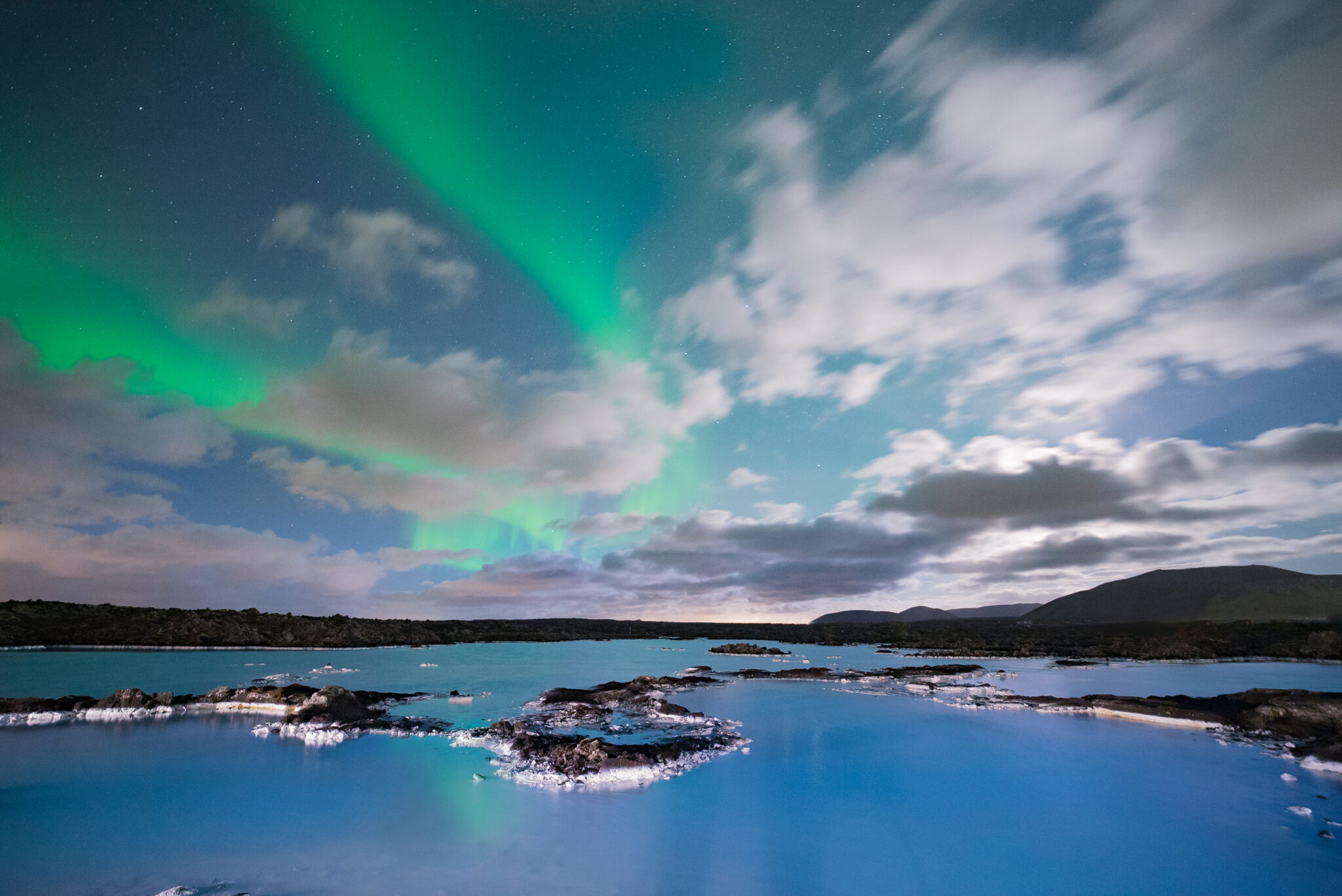
Northern Lights over the Blue Lagoon
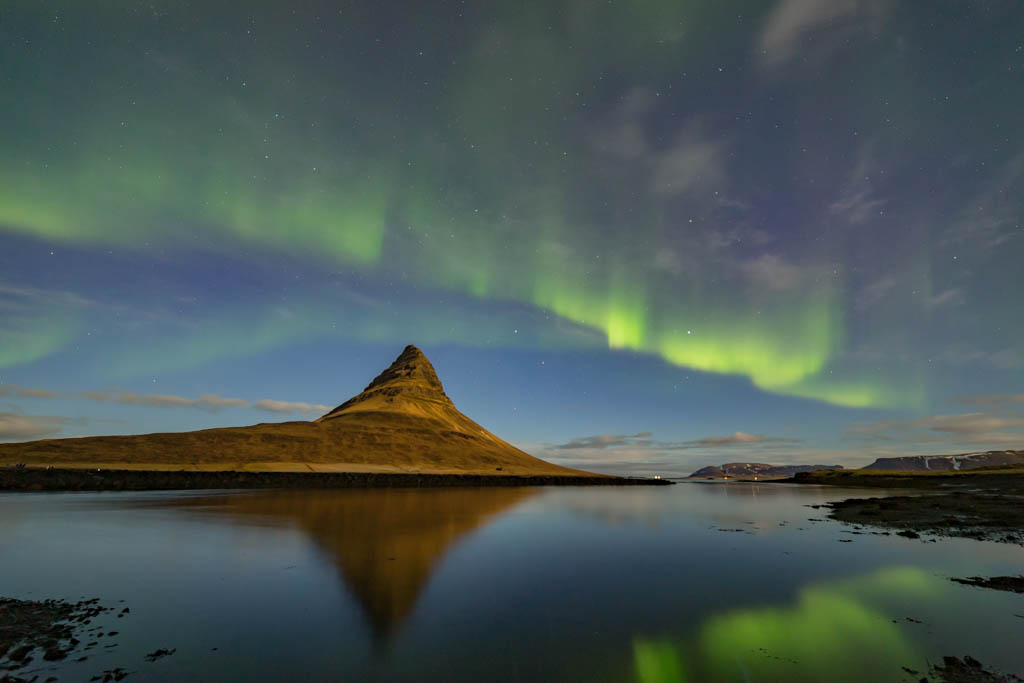
Northern Lights with ocean view
Common Mistakes First-Time Aurora Drivers Make (and How to Avoid Them)
❌ Mistake 1 – Driving Too Far
If the aurora appears while you drive, you might miss the show.
Choose a few nearby safe spots instead of long distances.
❌ Mistake 2 – Relying Only on Instagram Spot
Many “secret places” online are dangerous, dead ends, or private property.
Stick to official viewpoints.
❌ Mistake 3 – Forgetting About Moonlight
The moon can brighten the sky — but it also creates beautiful contrasts.
Don’t cancel a chase just because the moon is full.
❌ Mistake 4 – Giving Up Too Early
Auroras come in waves.
If there’s a break in the clouds, stay at least 20–30 minutes.
When You Should NOT Drive Yourself
There are days when self-driving is not a good idea:
- Yellow or red weather warnings
- Winds over 20–25 m/s
- Freezing rain
- Road closures
- Poor visibility from blowing snow
On those days, join a Tour dell'aurora boreale instead — professional drivers know safe routes and conditions.
👉 Check out our Northern Lights Tours selection
👉 Our team at Aurora Reykjavík works with the best and safest tour companies in Iceland.
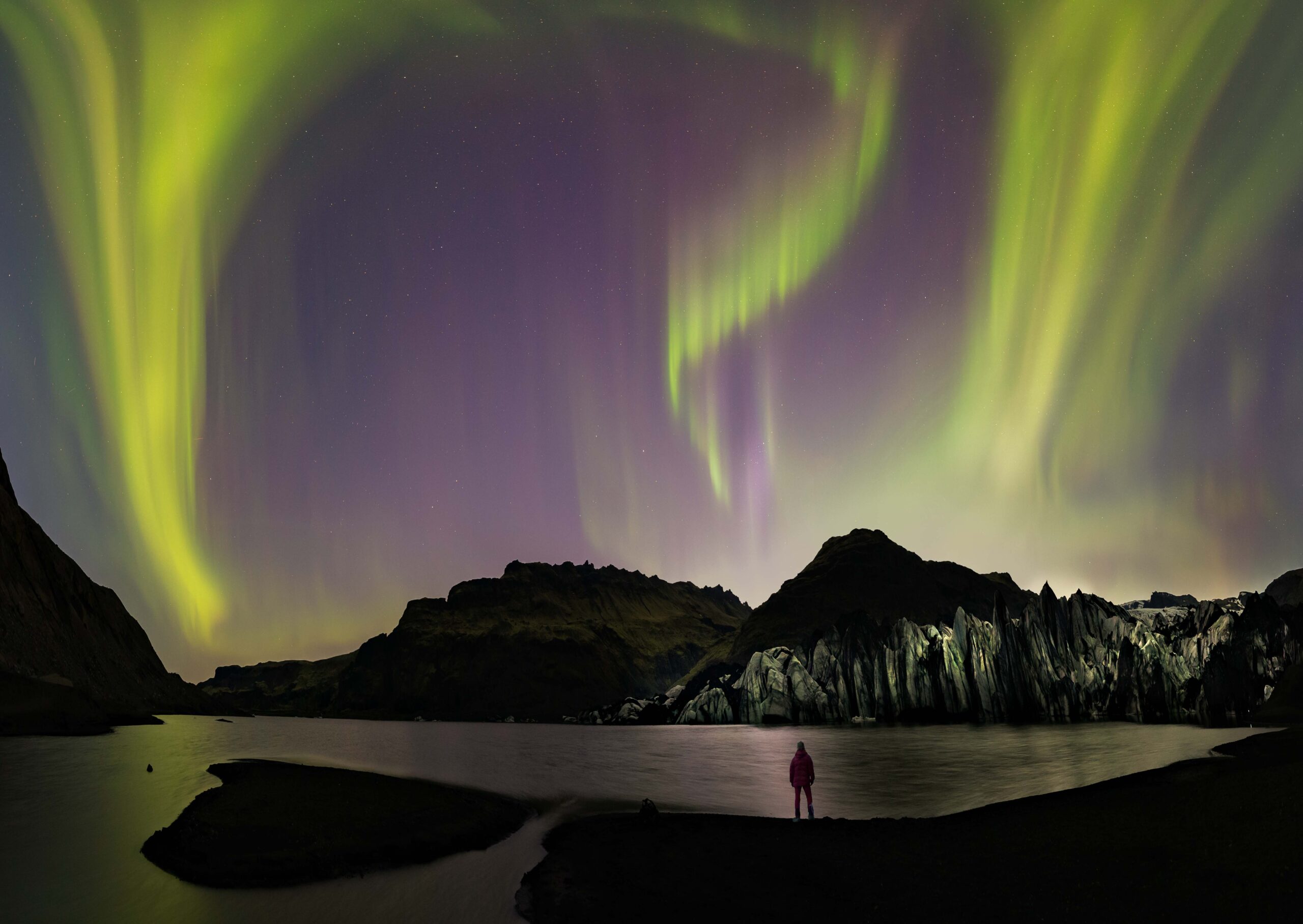
Aurora Expert Grétar Jónsson, owner and CEO of AURORA REYKJAVÍK capturing the Northern Lights at Sólheimarjökull, Iceland
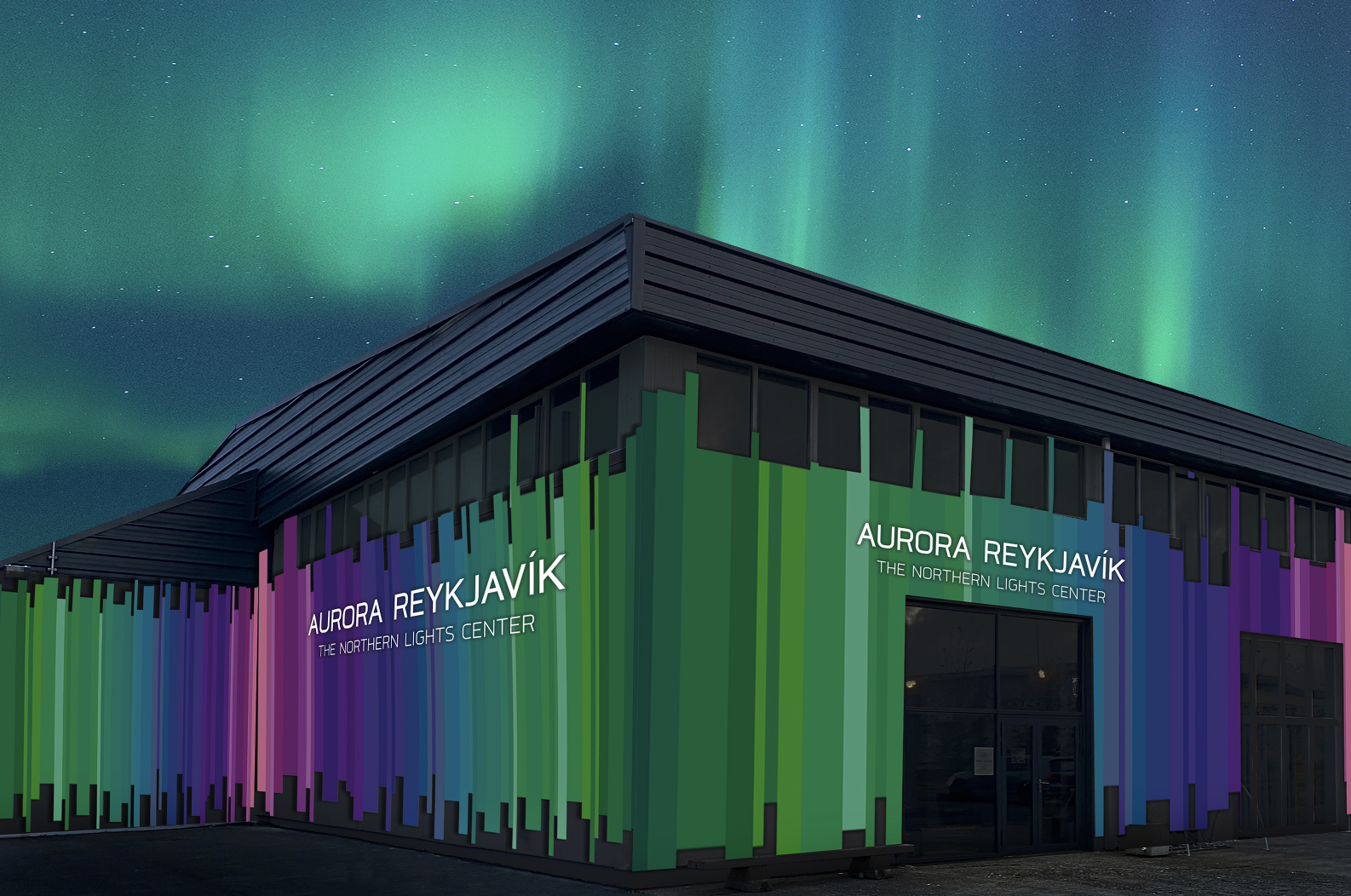
Aurora Boreale su Aurora Reykjavík
Start Your Northern Lights Night at Aurora Reykjavík
✔ Live aurora forecasts
✔ Expert tips from real Northern Lights hunters
✔ Photo training in our Aurora photography room
✔ A guaranteed Northern Lights experience in case the weather changes
👉 Book your ticket here
👉 Open every day – perfect warm-up before heading into the dark.
Conclusione
Self-driving to see the Northern Lights in Iceland can be magical — if you choose safe routes, check the weather carefully, and avoid common mistakes. With the right preparation, your Northern Lights chase will be one of the most unforgettable nights of your trip.
And if the weather doesn’t cooperate?
Aurora Reykjavík is the only place in Iceland where you can see the Northern Lights every day of the year.
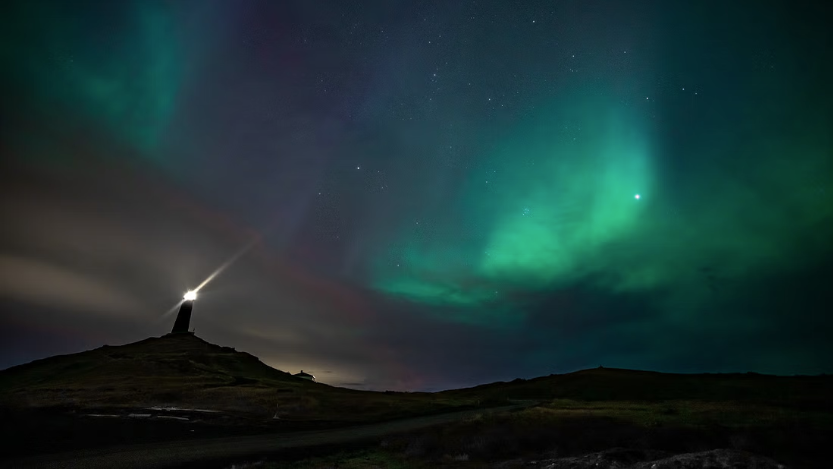
Green northern lights and stars over a hill, with lighthouse in backdrop
Unisciti a noi in un Tour per l'Aurora Boreale
Evita lo stress di guidare d’inverno al buio e unisciti a un gruppo di avventurieri con la tua stessa passione per un tour guidato dell’aurora boreale.

Domande frequenti sull'aurora boreale
Quando si può vedere l'aurora in Islanda?
La stagione dell’aurora boreale in Islanda inizia a fine agosto e continua fino a metà/fine aprile.
Durante questo lungo periodo, l’Islanda sperimenta abbastanza oscurità perché l’aurora sia visibile di notte.
Tuttavia, le probabilità di osservare l’aurora variano a seconda del periodo dell’anno. Scoprite quali mesi sono i migliori per vedere l’aurora qui.
Perché l'aurora non si vede d'estate?
Per poter vedere l'aurora boreale è necessaria sufficiente oscurità. Durante l'estate abbiamo il "sole di mezzanotte", il che significa che non ci sono ore di vero e proprio buio. Queste condizioni sono perfette per viaggiare per l'isola, ma rendono impossibile osservare l'aurora in Islanda tra maggio e inizio agosto.
Volete saperne di più sulle condizioni di luce in Islanda? Consultate il grafico del sole e scoprite di più sul crepuscolo in Islanda.
A che ora compare l'aurora boreale?
L'aurora boreale è statisticamente spesso visibile tra le 21:00 e l’1:00, ma può apparire in qualsiasi momento purché sia buio (e il cielo sia sereno). Durante i mesi invernali, quando le ore di luce sono limitate, l'aurora può comparire già dalle 19:00. Poiché l’orario esatto di una manifestazione aurorale non può essere previsto, tenete gli occhi puntati al cielo. E ricordate, la pazienza è fondamentale!
Quanto dura l'aurora boreale?
L'aurora può durare da pochi minuti a diverse ore. Ogni spettacolo aurorale è diverso e varia nella durata. Inoltre, l'aurora non è sempre visibile per l’intera durata di un singolo episodio: spesso cambia di intensità durante lo spettacolo, passando da molto luminosa a quasi impercettibile. Scoprite di più su come si comportano le aurore in termini di durata qui.
È possibile vedere l'aurora boreale quando il cielo è nuvoloso?
Dipende. Innanzitutto, l’Islanda è famosa per il suo meteo imprevedibile: il fatto che ora sia nuvoloso non significa che lo sarà ancora tra cinque minuti. Finché si riescono a trovare degli spazi tra le nuvole, finestre di cielo sereno, c’è speranza. E anche quando è nuvoloso, tenete presente che non tutte le nuvole sono uguali. Per esempio, le nuvole alte spesso sono trasparenti e non interrompono necessariamente la vista. Regola generale: se riuscite a vedere le stelle, potreste anche vedere l'aurora boreale. Ancora una volta, tenete gli occhi puntati al cielo e controllate regolarmente le previsioni per avere la stima più affidabile.
L'aurora boreale appare solo quando fa freddo?
La stagione dell'aurora boreale in Islanda inizia alla fine dell’estate. Come potrete immaginare, questo significa che non servono temperature fredde per vedere un’aurora (ma non aspettatevi temperature da t-shirt di notte in Islanda, nemmeno ad agosto). L'aurora avviene molto al di sopra dei sistemi meteorologici e non è influenzata dal tempo o dalle variazioni di temperatura nella bassa atmosfera. Scoprite di più qui.
L'aurora boreale è visibile in tutta l’Islanda?
L’Islanda si trova all’interno del cosiddetto “ovale aurorale”, l’area in cui l'aurora boreale è tipicamente visibile. Nella regione artica, la cintura si estende tra le 60°N e 70°N di latitudine. Poiché l’Islanda intera si trova tra i 63°N e 67°N, e quindi ben all’interno dell'ovale, le probabilità di vedere l'aurora sono praticamente le stesse in tutta l’isola – se il tempo lo permette. Detto ciò, la possibilità di assistere all'aurora è maggiore lontano dalle luci della città, e alcune zone del paese offrono scenari particolarmente suggestivi. Qui trovate le nostre località preferite per osservare l'aurora in Islanda.
L'aurora boreale è davvero colorata?
L'aurora boreale si presenta in una varietà di colori. Il verde è di gran lunga il più comune, ma l'aurora può apparire anche in vivaci sfumature di rosa, viola, rosso, violetto e blu.
A occhio nudo, tuttavia, l'aurora boreale può apparire piuttosto debole e a volte essere percepita come bianca o grigiastra. Ciò è dovuto alle limitazioni della nostra visione notturna.
I dispositivi fotografici, invece, possono catturare una versione più fedele dei colori, poiché, nella maggior parte dei casi, è possibile regolare le impostazioni del dispositivo per adattarsi meglio alle condizioni notturne.
Scoprite di più su come migliorare la vostra visione notturna e scattare fantastiche foto dell'aurora boreale qui.
L'aurora è destinata a scomparire in futuro?
No, the northern lights are not going anywhere!
The Aurora has been visible in the Arctic for centuries, and that is not going to change any times soon.
What is true is that the solar activity, which is responsabile for the occurrence of the northern lights on our planet, changes over time, following an eleven-year cycle.
During each solar cycle, the Sun goes from a peak to a minimum of activity. During the peak, the so called “solar maximum“, we can expect enhanced activity and, potentially, stronger northern lights visible from unusual latitudes (in the northern hemisphere, this means Auroras being spotted further south than usual). While, during the solar minimum, such unusually strong occurrences become rarer.
Still, at Arctic latitudes the northern lights can be see clearly throughout the whole cycle. And Islanda, being well within the “Aurora belt”, is and will remain the perfect destination for northern lights hunting!
Cos'è il valore BZ?
The Bz value is part of the Interplanetary Magnetic Field (IMF), which is the magnetic field carried by the solar wind coming from the Sun.
Why does it matter for the Northern Lights? Earth’s magnetic field points north. If the solar wind’s magnetic field (Bz) points south (a negative Bz), it connects with Earth’s field and lets charged solar particles into the atmosphere. This interaction helps create the northern lights. If instead, Bz is positive (northward), the fields don’t connect well, and fewer particles get in — meaning weaker or no aurora.
Think of Bz like an ON/OFF switch: negative Bz (south) = ON, good chance of Aurora soon. Positive Bz (north) = OFF, Aurora less likely.
Learn more about Bz and how the forecast works qui.
Which are the best forecast apps and websites for Northern Lights hunting?
Quali sono le app e i siti di previsione dell'aurora boreale migliori?
Chasing the Northern Lights is all about timing, clear skies, and up-to-date aurora forecasts. These tools help you know when and where there’s a good chance of seeing the aurora — so you can plan your night the smart way. For the best results, we recommend using more than one source, as different forecasts interpret data differently.
PREVISIONI ONLINE
- Previsione ufficiale di AURORA REYKJAVÍK 👉 https://aurorareykjavik.is/aurora-forecast/
La nostra previsione degli esperti in 6 punti combina attività geomagnetica, copertura nuvolosa e consigli per l'osservazione, pensati per pianificare l'avvistamento dell'aurora boreale in tempo reale. - SpaceWeatherLive
Un sito web dettagliato sulle condizioni meteorologiche spaziali globali, con mappe dell'attività aurorale e parametri solari. - NOAA Space Weather Prediction Center (SWPC)
Il modello ufficiale statunitense di previsione meteorologica spaziale su cui si basano i dati di molte app per l'osservazione dell'aurora boreale.
MIGLIORI APP
- My Aurora Forecast – Offers real-time KP index, global aurora maps, push alerts and multi-day forecasts — great for travelers and serious aurora watchers alike.
And don’t forget to abilitare le notifiche in questo modo riceverete un avviso quando l'attività aurorale aumenta.
📍App Store
📍 Google Play
Seguendo questa guida, sarete ben preparati per assistere a uno degli spettacoli più magici della natura. Che stiate pianificando il vostro viaggio o che siate già in Islanda, l'aurora boreale vi aspetta!