|

The big final – Northern Lights at Þingvellir Nationalpark

Abr 24, 2017

Goodbye Northern Lights – hello Midnight Sun!

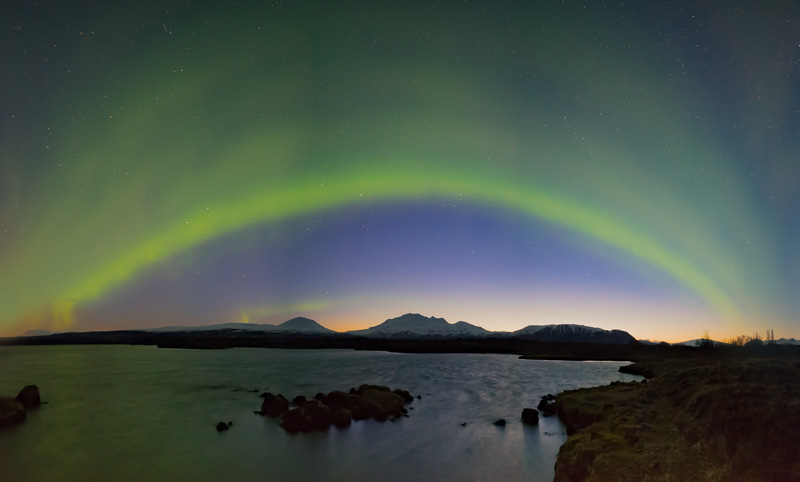
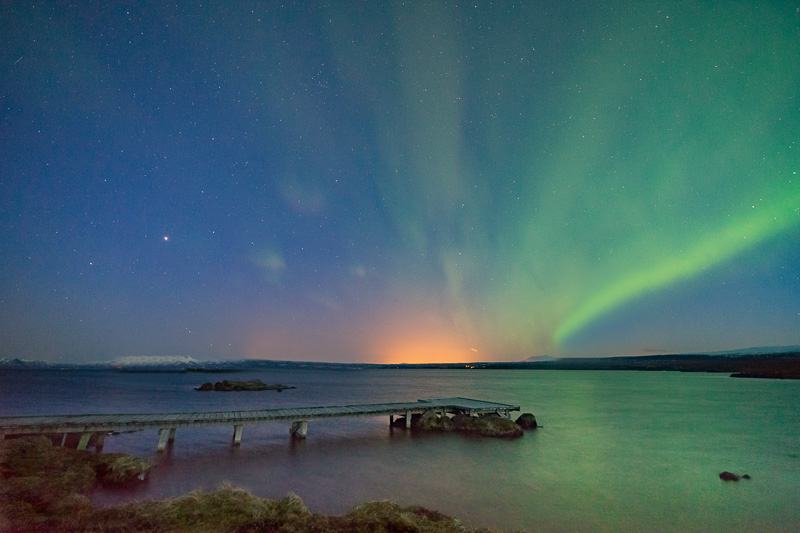
Last night we were heading out for this season´s big final. It is already unusual late, but since we were expecting a G2 solar storm with an KP index of 5-7, we just could´t stay home and had to try our luck at our – maybe? – very last hunt.

The midnight sun is already there; we only have a 1,5 hours window of astro twilight where it is dark enough to see the Northern Lights at our latitude of 63 degrees North – so chances were not very promising, but….

Once again, we were lucky!

We head to þingvellir Nationalpark, one of our most famous photographing spots, because it has soo much to offer:

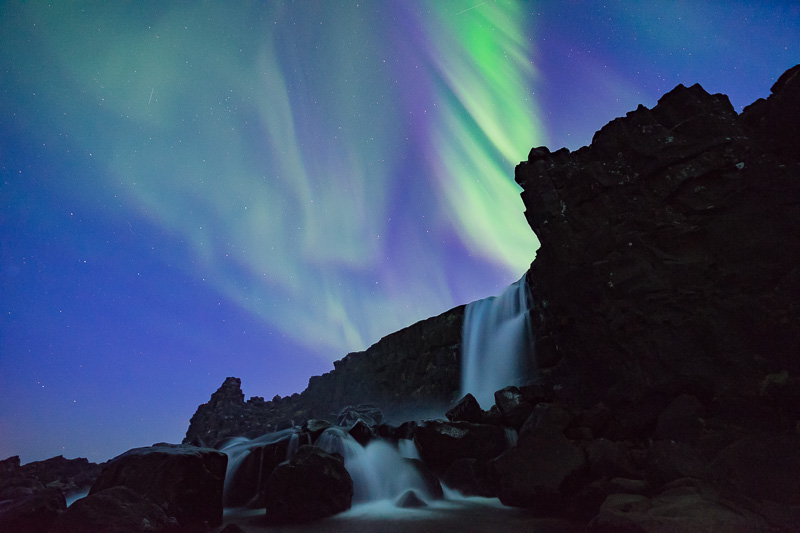
The cliff between the continents, the lave fields, the beautiful lake and even a great waterfall.

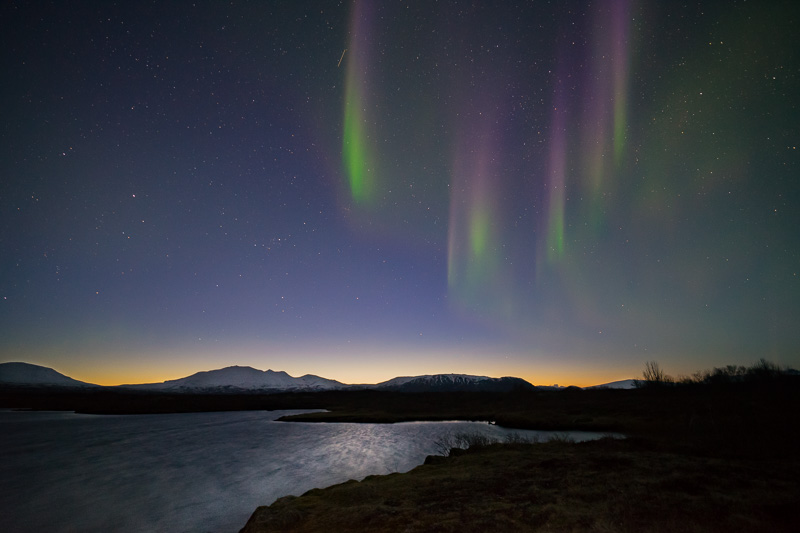
Right after midnight it got dark enough and Lady Aurora occurred, ready for her last dance in her most colourful dress…

We had to fight with heavy winds (always take some extra weight for your tripod!) and freezing cold of -6 °C, but no matter what – it was once again SO.MUCH.WORTH.IT!

As you see on the pictures, sunrise was close when we stopped capturing – and we´re getting ready now for our summer adventures!

More to come soon – the videos of this night will soon be to see at our Cinema and on our DVD Volume 2.


PS: The lights will come back beginning of September – until than get prepared and visit us at our Northern Lights Center – where the lights are always on display!


Dreaming about seeing the Aurora?

Tours will restart in September - book now and make sure to get seated!
Book

Can´t catch the Northern Lights? Give us a visit at our Northern Lights Center – where the lights are always on display!
Aurora Reykjavik - the Northern Lights Center

Are you ready for your summer adventure?

Book your day tour now!
Book

WHY ICELAND IS THE WORLD BEST DESTINATION TO OBSERVE THE NORTHERN LIGHTS

    1. Iceland's pristine landscape and diversity of places With its massive glaciers, volcanic landscapes, geothermal hot springs, and majestic waterfalls, Iceland is more than just an aurora hotspot – it's pure magic. Here the aurora can be spotted from...

DISCOVER GRANDI DISTRICT: TOP ATTRACTIONS AND ACTIVITIES IN REYKJAVIK

  Descubre el Distrito Grandi: Principales Atracciones y Actividades en Reikiavik ¿Estás planeando un viaje al distrito Grandi en Reikiavik? Ya sea que busques actividades en interiores para un día lluvioso o quieras explorar las principales atracciones, Grandi tiene algo para todos. Aquí tienes tu guía para aprovechar al máximo tu visita...

Aurora at Álftanes 17.08.2017

The lights are back! Earlier than usual, we experienced tonight the first Aurora after a couple of month midnight sun. A KP2 solar storm was predicted, and we have been observing the sunspot for a couple of days... will it be dark enough already? Yes, it was! Still a...

Conducir Para Ver la Aurora Boreal: Rutas Seguras, Consejos y Errores a Evitar (Guía de Islandia 2026)

Is It Safe to Drive to See the Northern Lights? The simple answer: Yes — but only if you prepare well.
Every winter, thousands of visitors in Iceland choose a self-drive northern lights chase. It gives you freedom, flexibility, and the magic of experiencing the aurora in complete silence.
But Iceland’s winter roads can be snowy, windy, icy, and unpredictable, so planning is essential. This guide walks you through safe driving routes, real local tips, what NOT to do, and how to increase your chances of seeing the lights.

¿Cuánto tiempo duran las auroras boreales?

Las exhibiciones de las auroras boreales son tan impredecibles como impresionantes. Algunas noches, iluminan todo el cielo durante horas, mientras que otras veces, pueden aparecer solo unos minutos, a veces con un resplandor más suave. Sin embargo, con más frecuencia, las auroras se presentan en oleadas de intensidad conocidas como Subtormentas.

Vamos a sumergirnos en la ciencia, horarios y algunos de los aspectos más emocionantes para ayudarte a entender qué determina la duración de un espectáculo de auroras, y tal vez darte una mejor oportunidad de presenciar uno de los mayores espectáculos de la naturaleza.

¿OCURRE LA AURORA BOREAL EN OTROS PLANETAS?

Las auroras boreales son uno de los fenómenos naturales más impresionantes que experimenta nuestro planeta. Dado que su principal combustible es el plasma solar que viaja a través del Sistema Solar, ¿tienen auroras nuestros planetas vecinos también? ¿Y en qué se diferencian de las de la Tierra? Descubre más sobre las auroras extraterrestres aquí.

We keep you updated! Follow us on our social media channels.