AIUTO, C'E' LA LUNA PIENA! ROVINERA' LA MIA ESPERIENZA DELL'AURORA?
La luna piena annulla le aurore boreali? No
Si possono comunque vedere? Sì, se intense
Cosa conta di più? Cieli sereni
Immagina: sei arrivato sotto l’ovale aurorale, l’attività solare sta aumentando e le previsioni sembrano promettenti — solo per scoprire che il cielo è dominato da una luminosa luna piena. Molti viaggiatori vanno nel panico a questo punto. La luna annullerà le aurore boreali?
La risposta breve, basata sulla scienza: no.
La luna piena non influisce sull’attività dell’aurora in sé. Ciò che può influenzare è la percezione umana di spettacoli deboli — e anche questo dipende dall’intensità dell’aurora, dalle condizioni del cielo e dall’esperienza.
Ad Aurora Reykjavík, abbiamo osservato e fotografato migliaia di aurore in tutte le fasi lunari. In questa guida spieghiamo esattamente quando la luna conta, quando non conta e perché le notti di luna piena possono effettivamente creare alcune delle esperienze aurorali più memorabili in Islanda.
Scritto da Katarina Raker, esperta di aurore boreali e co-fondatrice di Aurora Reykjavík

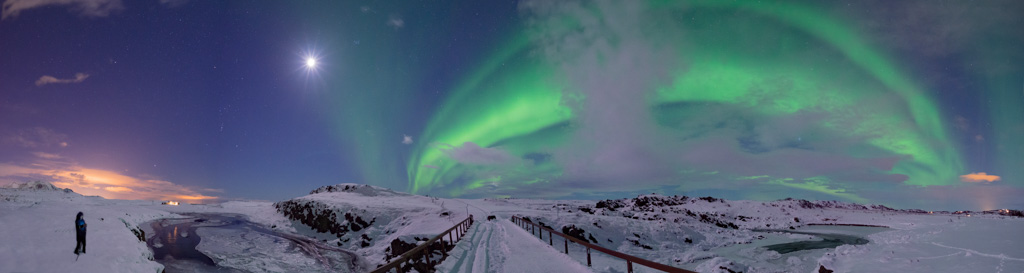
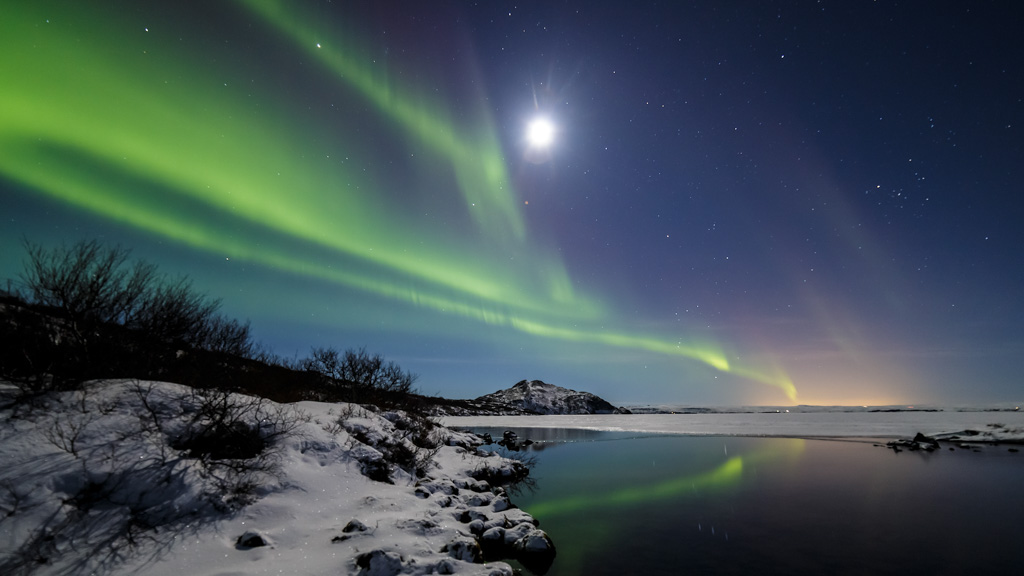
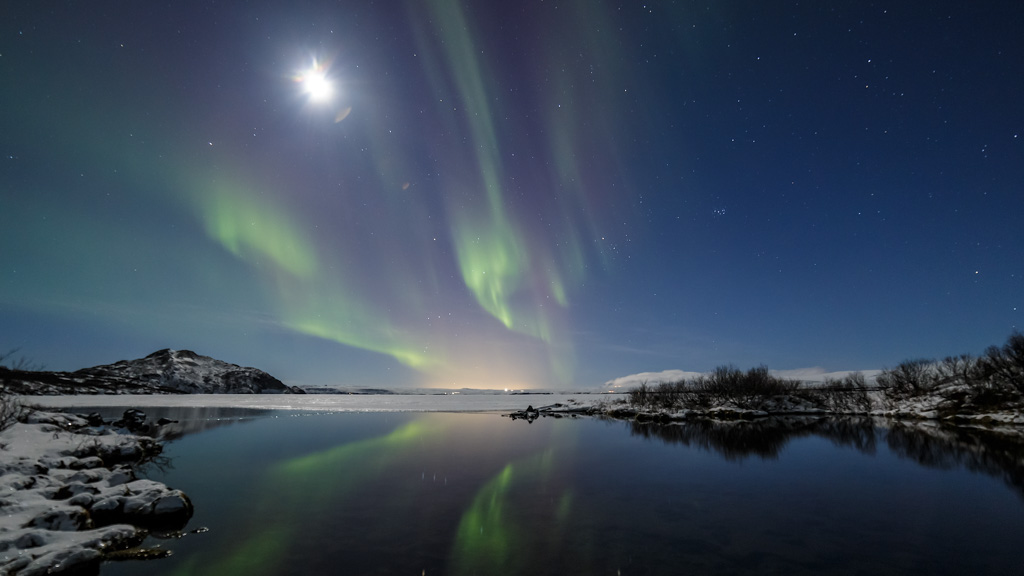
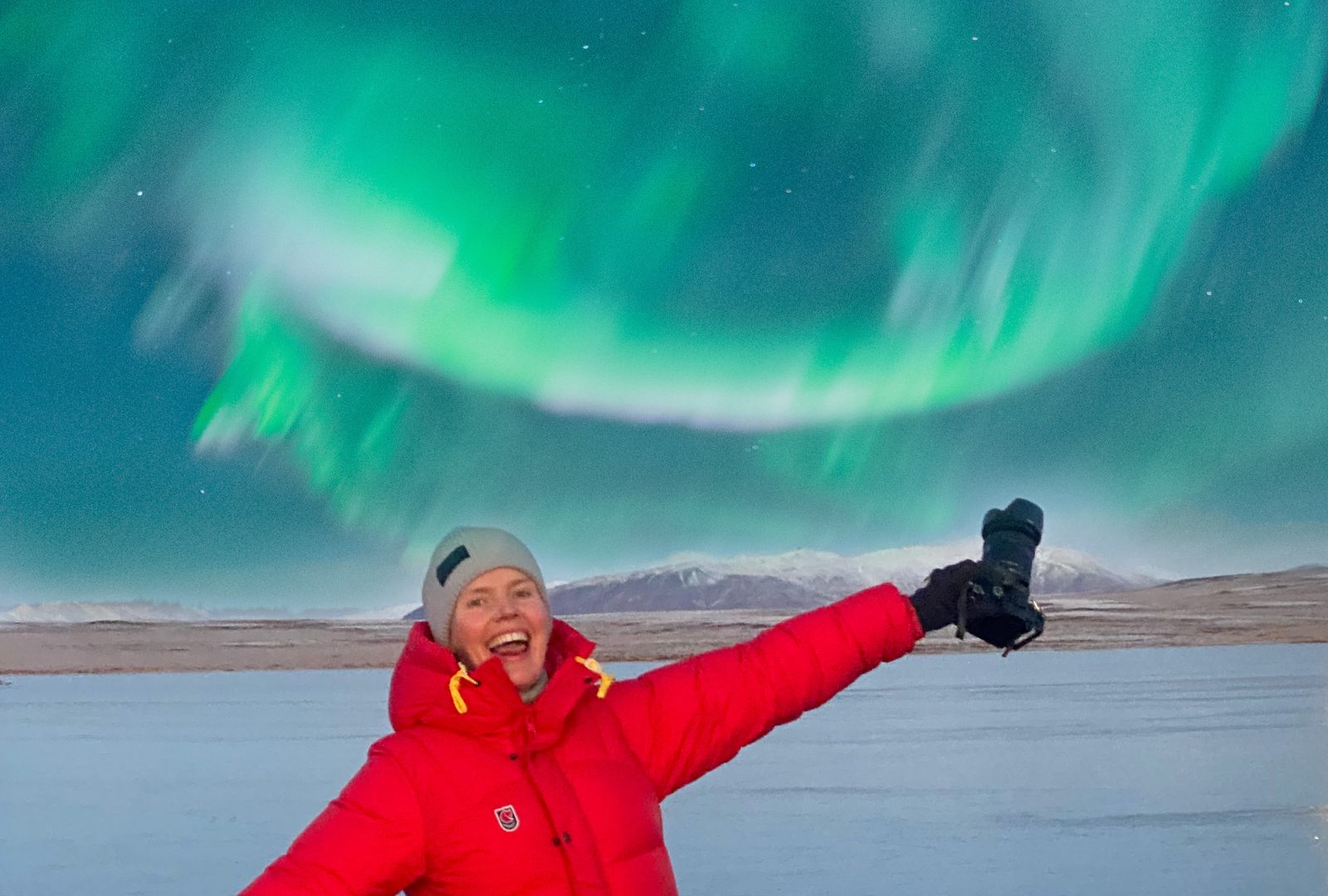
Aurora e luna piena al Parco Nazionale Þingvellir, Islanda
LA LUNA PIENA INFLUISCE SULL'AURORA BOREALE?
La luna non ha alcun effetto fisico sulle aurore boreali.
L’aurora boreale si verifica quando particelle cariche provenienti dal Sole interagiscono con il campo magnetico e l’atmosfera terrestre. Questo processo è guidato dal vento solare e dall’attività geomagnetica, non dalle fasi lunari.
La luna piena aumenta solo la luce ambientale nel cielo. Questo può rendere le aurore molto deboli più difficili da notare, soprattutto per osservatori inesperti — simile a come la luce lunare riduce la visibilità delle stelle deboli.
LUNA PIENA – TUTTO DIPENDE DALLA FORZA DELL'AURORA
Tuttavia, tutto dipende da quanto è forte lo spettacolo a cui stai assistendo. Un'aurora debole potrebbe essere oscurata dalla brillante luce lunare, ma se c'è un livello di attività solare da moderato a elevato, ci sarà comunque una buona visione dell'aurora boreale. Contrariamente a quanto potresti aver sentito, è possibile vedere l’aurora boreale anche quando c’è una luna molto brillante nel cielo.
La luce della luna influisce quando:
-
L’attività aurorale è debole (Kp 1–2)
-
Lo spettacolo è basso sull’orizzonte
-
La luna è molto alta nel cielo
La luce della luna non conta quando:
-
L’attività aurorale è da moderata a intensa (Kp 3+)
-
L’aurora si trova direttamente sopra la testa
-
I cieli sono sereni e bui, lontano dalle luci della città
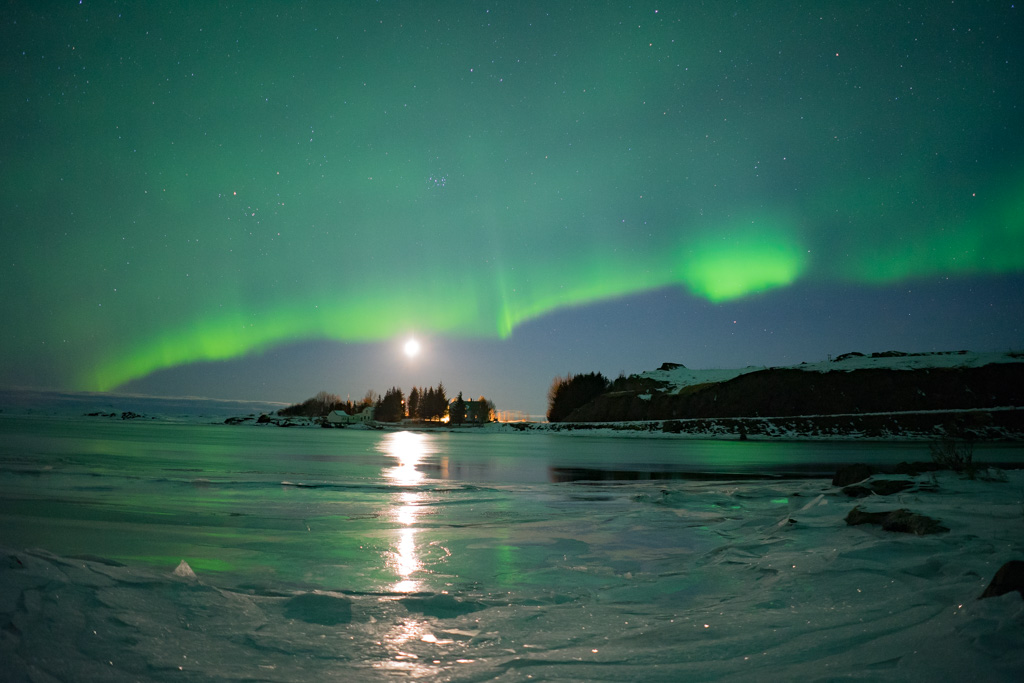
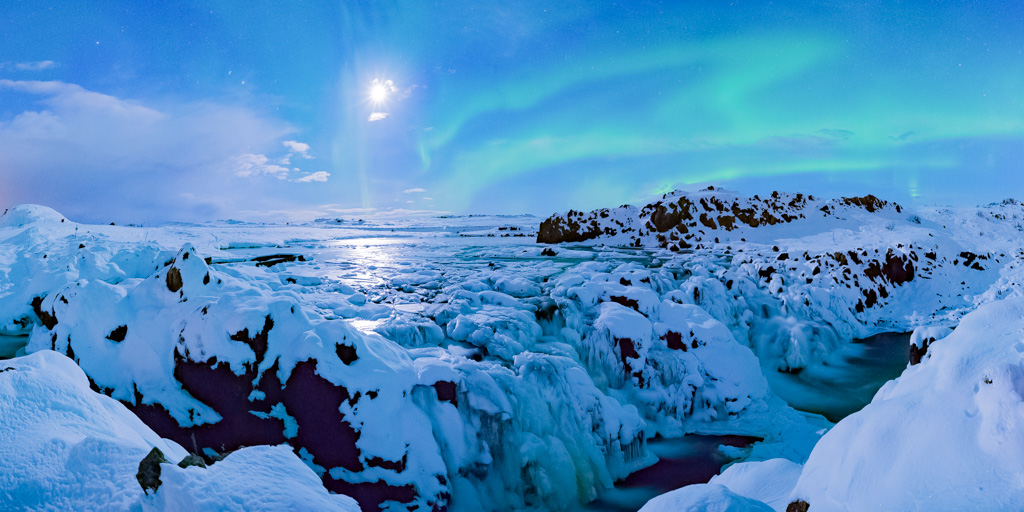
Aurora e luna piena nell'entroterra islandese
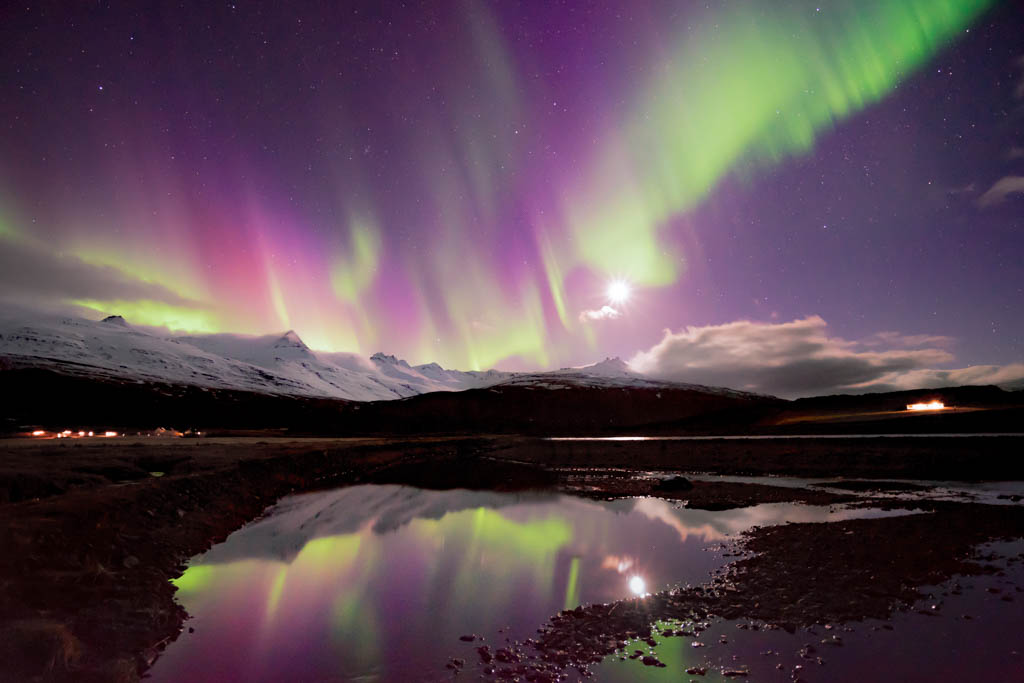
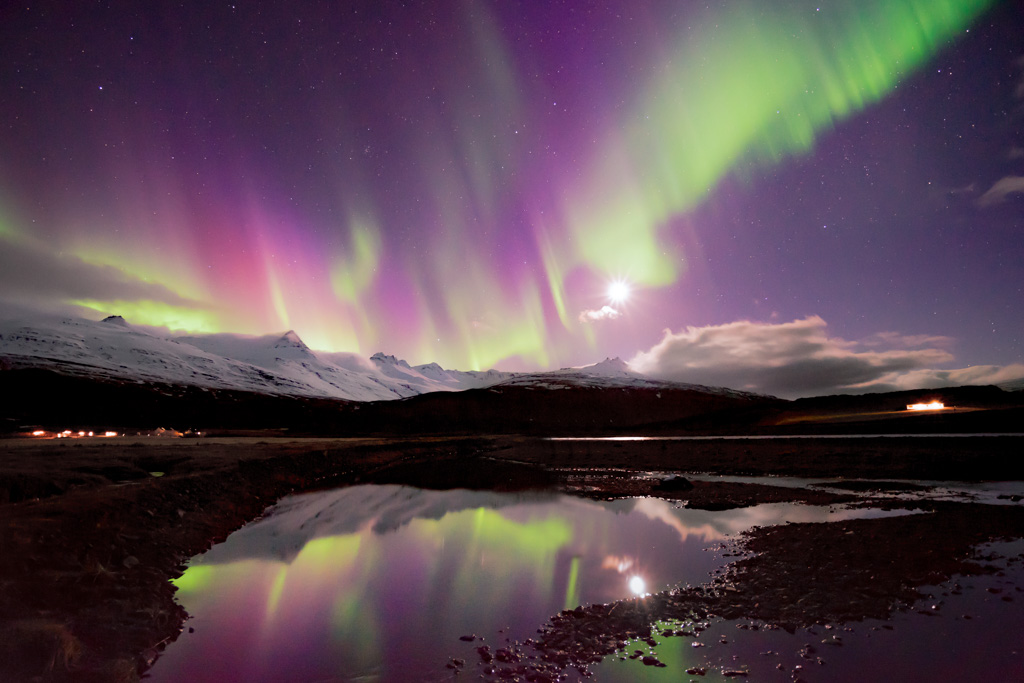
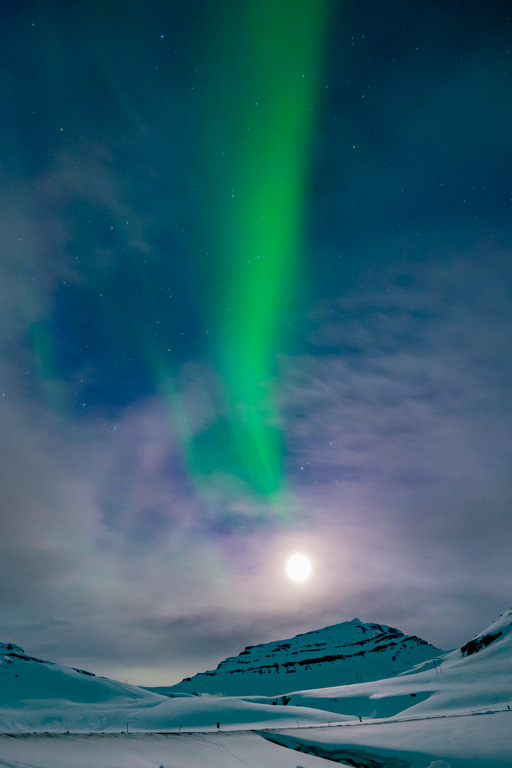
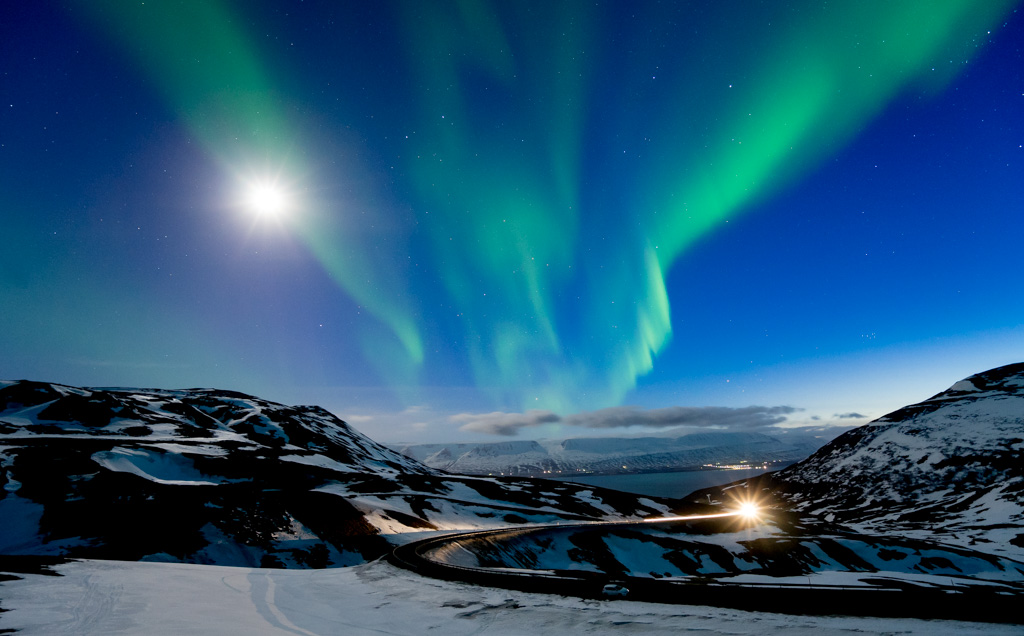
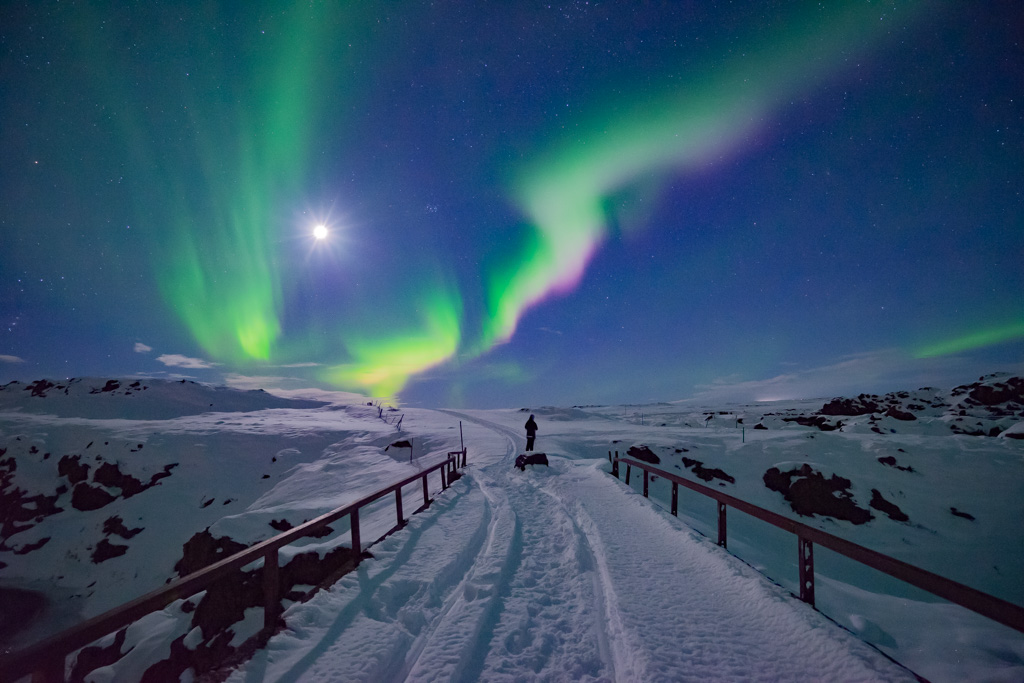
Aurrora durante una notte di luna piena nei fiordi orientali, Islanda
PERCHÉ DA FOTOGRAFI AMIAMO LA LUNA PIENA PER LA CACCIA ALL’AURORA
1. La luce della luna migliora il paesaggio
La luna illumina dolcemente il primo piano, creando un'ambientazione magica. Montagne innevate, campi di lava e ghiacciai islandesi appaiono ancora più sorprendenti al chiaro di luna.
2. Cieli meravigliosamente colorati
Invece del nero pece, il cielo notturno appare in tonalità blu profonde e intense, uno sfondo sorprendente per l’aurora
3. Migliori foto con l'aurora
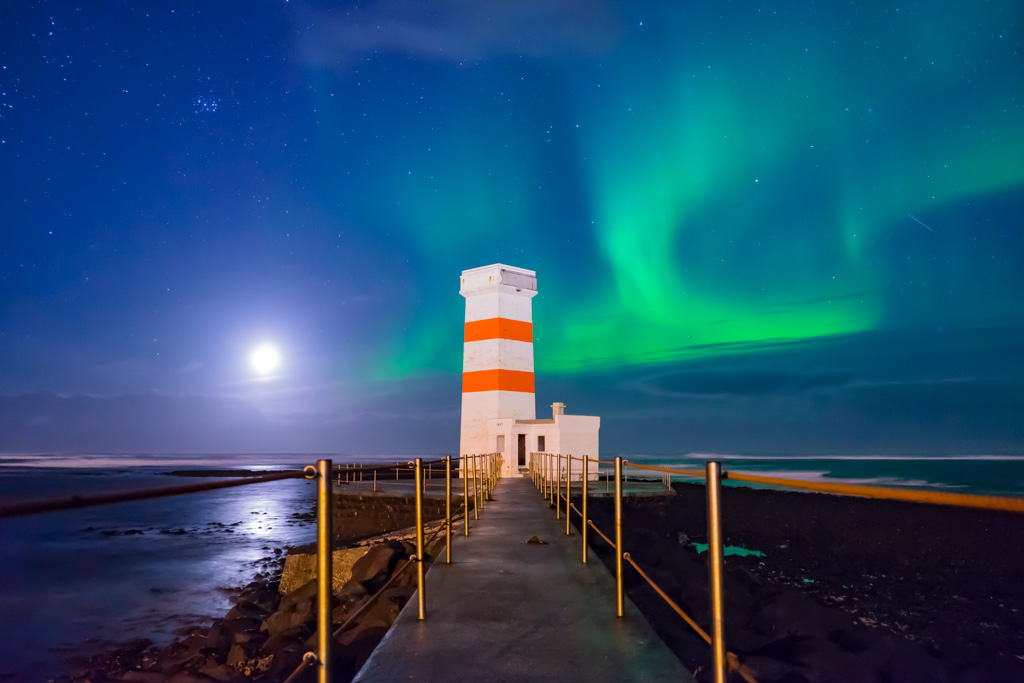
La luna aggiunge luce sufficiente per illuminare delicatamente le persone nelle foto, evitando l'effetto silhouette e mantenendo la bellezza naturale dell'aurora.
4. Minore velocità dell'otturatore
La luce della luna consente tempi di esposizione più brevi, rendendo più semplice catturare immagini nitide di persone e time-lapse realistici che mostrano i movimenti dell'aurora in tempo reale.
5. Forme aurorali più nitide
Tempi di posa più brevi catturano anche le forme e i motivi intricati dell'aurora con maggiore chiarezza
6. Condizioni più sicure e piacevoli
Addentrarsi nei paesaggi islandesi al buio può essere complicato. Con la luna piena, è più facile vedere l'ambiente circostante ed evitare potenziali pericoli come cave di lava nascoste o sentieri ghiacciati.
PERCHÉ LA SOLA FASE LUNARE NON E' TUTTO
1. Il sorgere e il tramonto della Luna contano più della fase lunare
Quando si pianifica una caccia all’aurora boreale, non basta guardare solo la fase lunare. Gli orari di sorgere e tramontare della Luna sono molto più importanti. In molti casi, soprattutto intorno alla luna piena, la Luna può tramontare prima dell’orario migliore per l’aurora – lasciando il cielo completamente senza luna durante le ore di osservazione ideali intorno alla mezzanotte magnetica. Ecco perché i cacciatori di aurore esperti controllano sempre se la Luna è effettivamente sopra l’orizzonte. Strumenti come timeanddate.com forniscono orari precisi di sorgere e tramontare della Luna per qualsiasi luogo e data.
Una notte indicata come “luna piena” sul calendario può, in pratica, non avere alcun impatto luminoso sulla tua esperienza di osservazione dell’aurora.
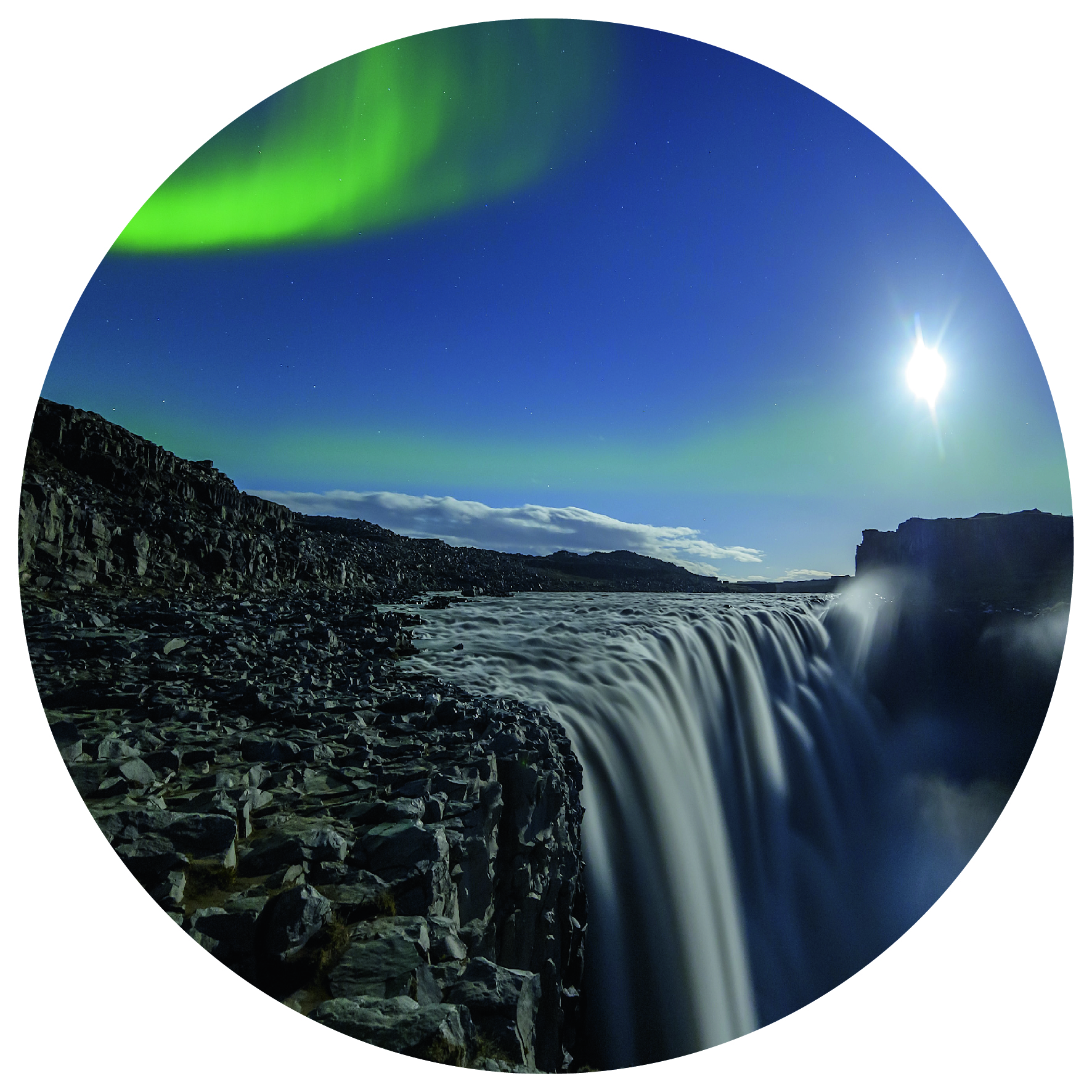
Aurora con luna piena a Dettifoss
2. Le nuvole possono bloccare la Luna mentre l’aurora continua a brillare
Il meteo islandese ha un’altra variabile importante: la copertura nuvolosa.
È comune avere cieli parzialmente nuvolosi, in cui nubi basse o di media quota oscurano la luna in una parte del cielo, mentre aperture serene in altre direzioni permettono all’aurora di brillare. In queste situazioni, la luce lunare può essere completamente diffusa o bloccata, mentre l’aurora rimane visibile – talvolta in modo ancora più spettacolare, quando archi verdi illuminano le aperture tra le nuvole. Questo è uno dei motivi per cui le previsioni di copertura nuvolosa e le decisioni sul posto contano molto più della sola fase lunare.
3. Le notti di luna piena creano opportunità extra per l’astrofotografia
Per gli astrofotografi, le notti di luna piena offrono ulteriori opportunità creative oltre all’aurora stessa.
Il sorgere e il tramontare della luna piena possono creare:
- Una luce lunare drammatica a bassa angolazione su montagne e ghiacciai
- Toni dorati o pastello vicino all’orizzonte
- Composizioni uniche che combinano l’aurora con paesaggi illuminati dalla luna
When times correctly, photographers can capture both aurora activity and moonrise or moonset at the same session, adding depth and storytelling in their images.
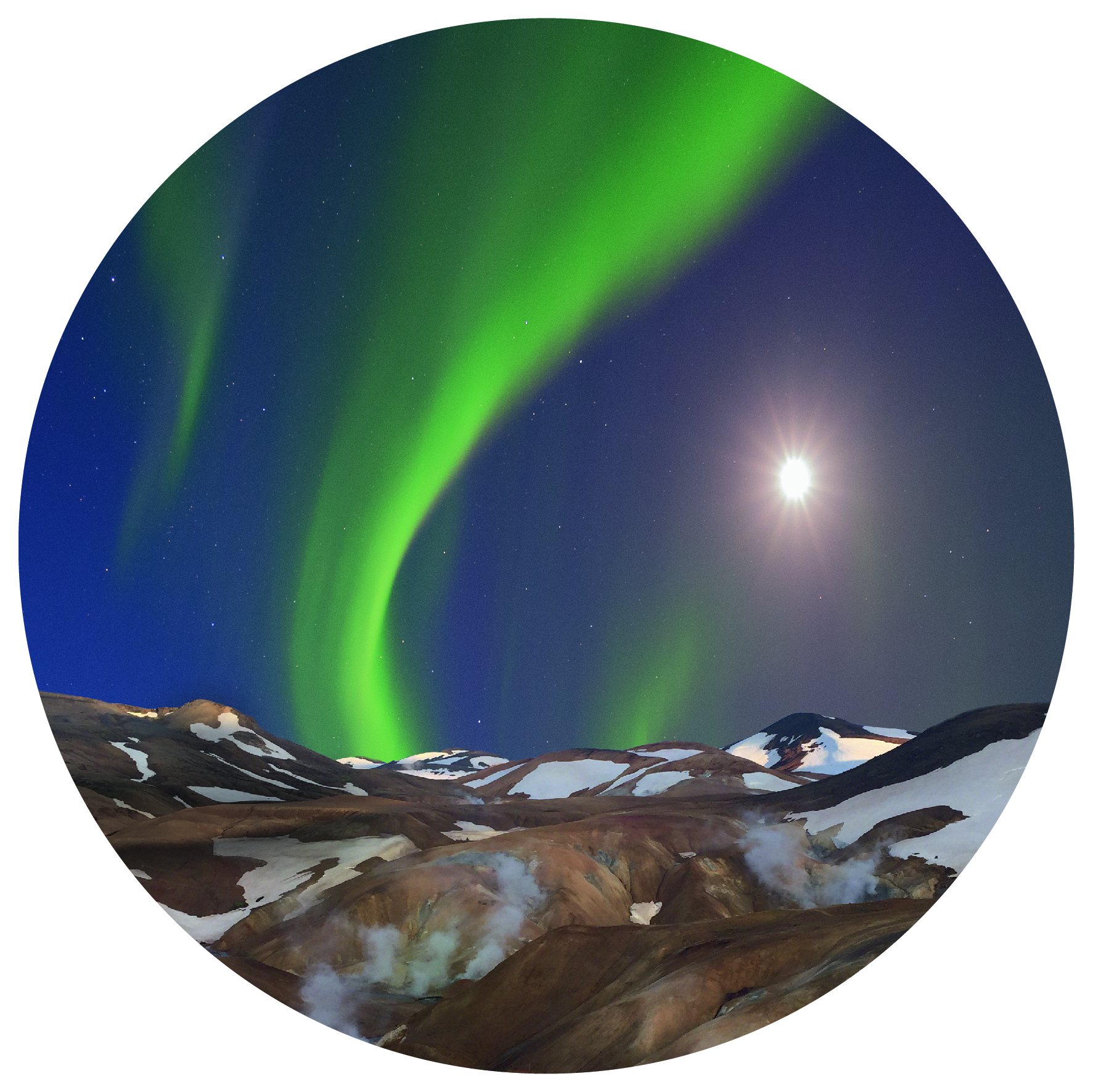
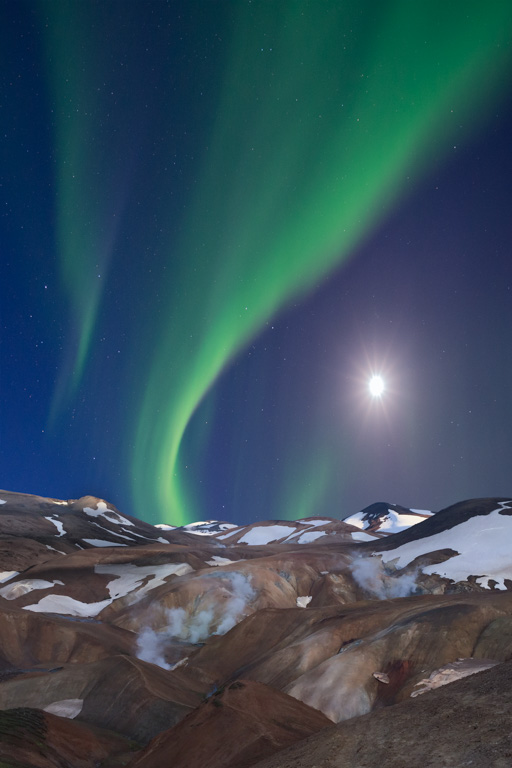
Aurora sotto la luna piena a Kerlingarfjöll, Islanda
CONCLUSION: SHOULD YOU AVOID FULL MOON FOR NORTHERN LIGHTS CHASING?
Expert takeaway:
A full moon does not ruin Northern Lights viewing. What truly matters is:
-
Aurora strength
-
Copertura Nuvole
-
Light pollution
-
Whether the moon is actually above the horizon
Pro tip: Track the aurora forecast and cloud cover on reliable apps, like the ones mentioned in our guide to Northern Lights apps, to plan your chase effectively.
CAPTURE THE AURORA WITH US
Ad Aurora Reykjavík sappiamo come sfruttare al meglio ogni fase lunare. Che si tratti di una notte illuminata dalla luna o senza luna, le nostre guide esperte ti aiuteranno a inseguire l'aurora nelle migliori condizioni. Inoltre, il nostro team di fotografi ti assicurerà di tornare a casa con foto mozzafiato.
Dai un'occhiata alla nostra selezione di tour dell'aurora boreale e lasciati accompagnare in un'avventura indimenticabile. Ricorda, la magia dell'aurora non svanisce sotto la luna piena: brilla in modi nuovi.
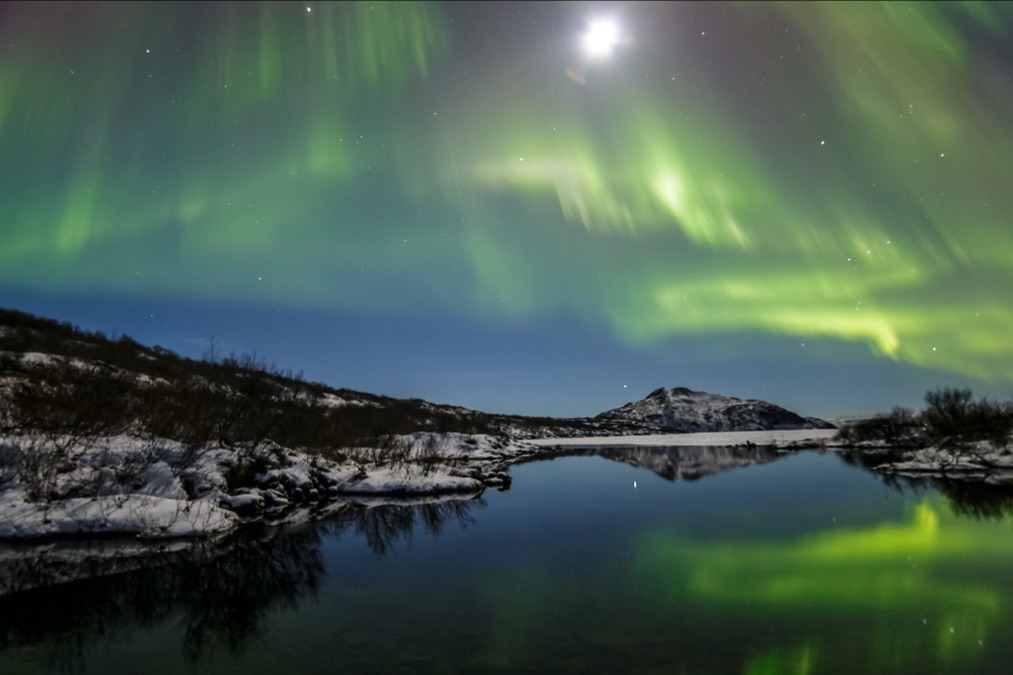
Aurora e luna piena al Parco Nazionale Þingvellir
ESPLORA DI PIÙ CON AURORA REYKJAVÍK
- Visita il nostro Centro dell'Aurora Boreale per scoprire tutto sull'aurora.
- Scopri i migliori consigli per fotografare l’aurora boreale per la tua prossima avventura.
- Scopri i mesi migliori per vedere l’aurora boreale nella nostra guida.
UNISCITI A NOI NEL MIGLIOR TOUR DELL’AURORA BOREALE IN ISLANDA
I NOSTRI BESTSELLER
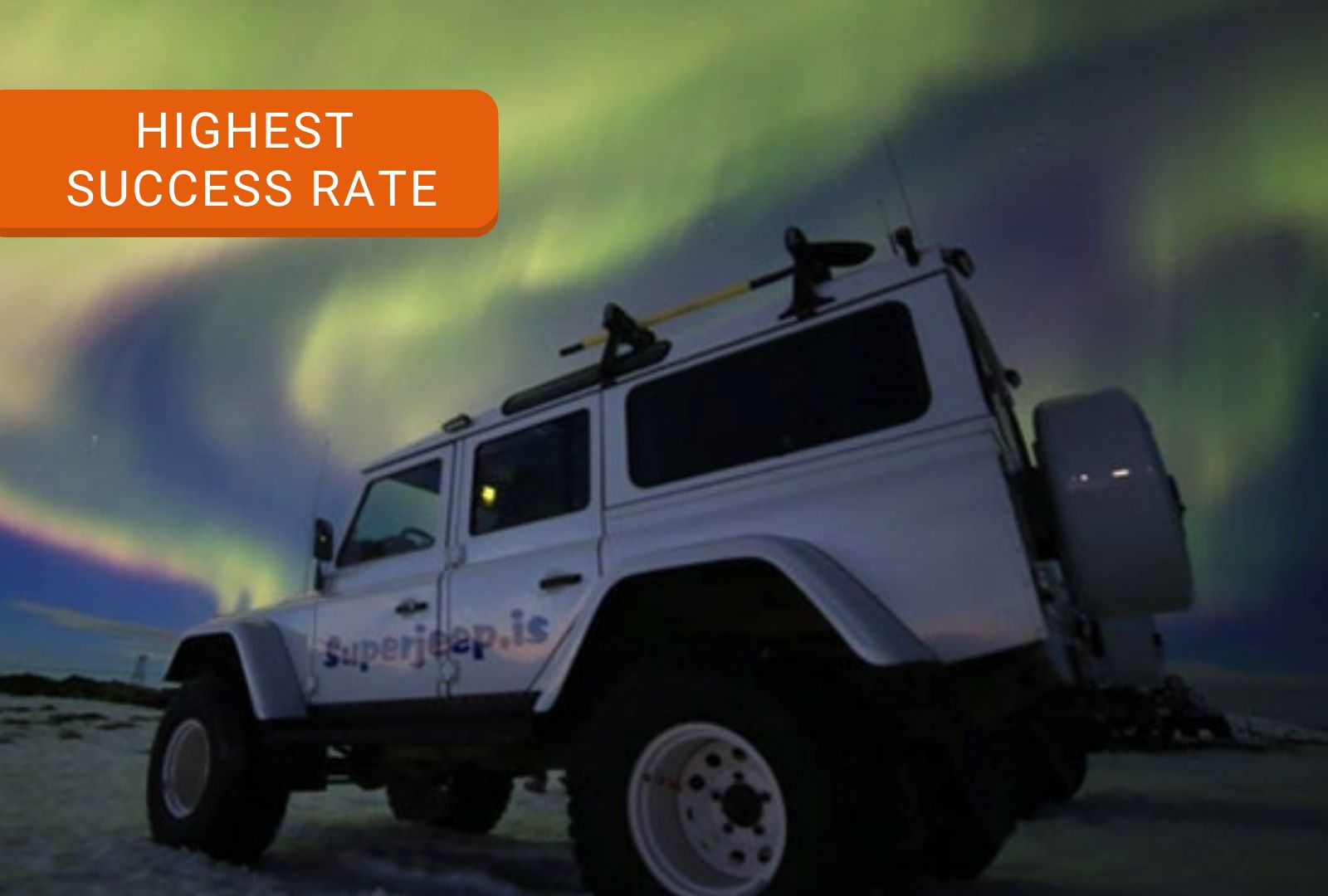
NORTHERN LIGHTS SUPER JEEP TOUR
PUNTI SALIENTI:
✓ Tour dell'aurora boreale in super jeep
✓ Pick-up e drop off gratuiti
✓ Foto di qualità gratuite
✓ cioccolata calda
✓ Veicoli riscaldati
ALTISSIMA PERCENTUALE DI SUCCESSO
INGRESSO AD AURORA REYKJAVÍK INCLUSO NEL PREZZO - RISPARMIA 3900 ISK
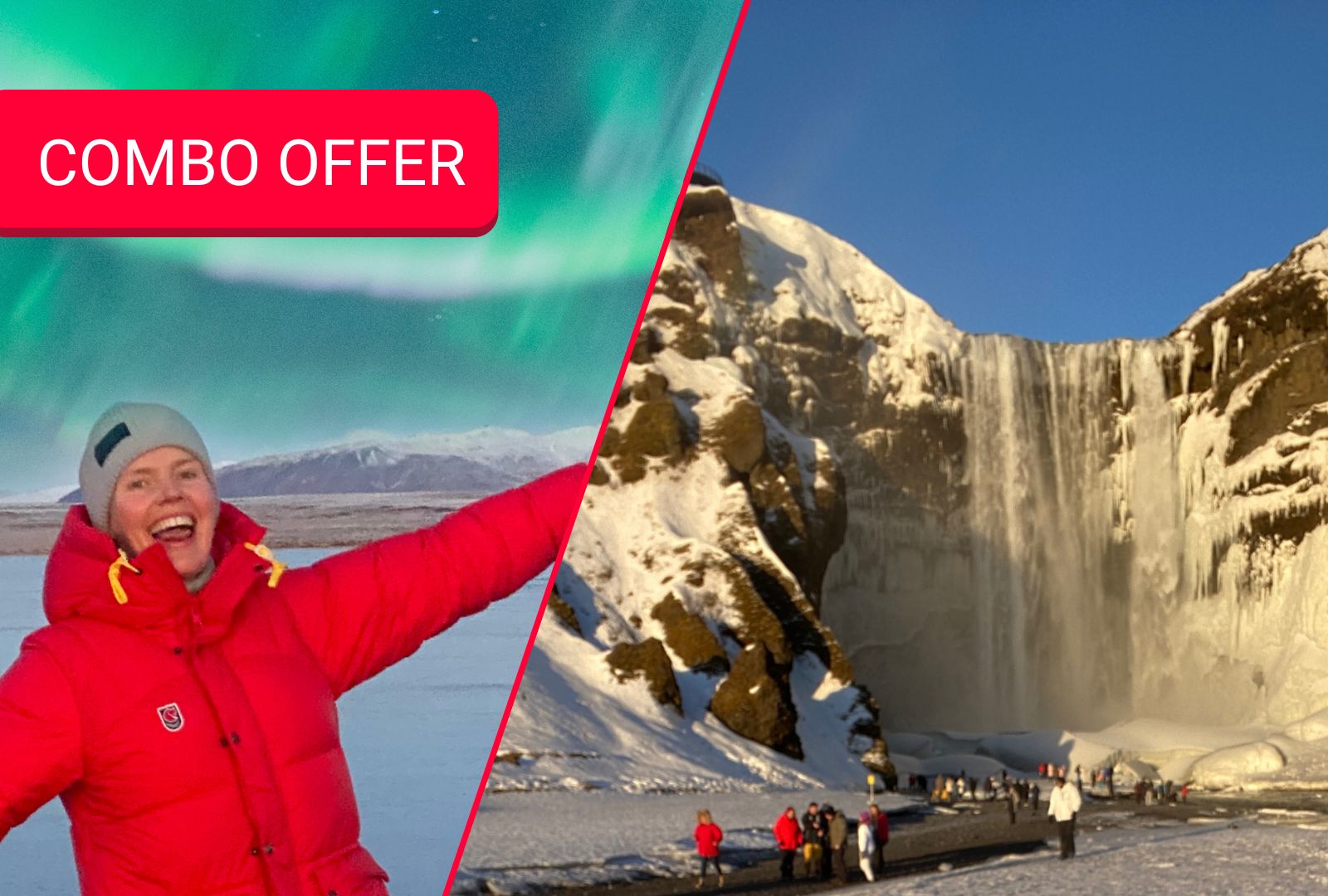
COSTA SUD E AURORA BOREALE
PUNTI SALIENTI:
✓ OFFERTA 2 PER 1: RISPARMIA OLTRE 2000 ISK
✓ Visita il ghiacciaio Sólheimarjökull
✓ Passeggia per la cittadina di Vík
✓ Cammina sulla spiaggia nera
✓ Vedi le cascate di Skógafoss e Seljalandsfoss
✓ Osserva L' Aurora Boreale danzare
MIGLIOR RAPPORTO QUALITÀ PREZZO
GARANZIA AURORA BOREALE: SECONDO TENTATIVO GRATUITE SE L'AURORA NON È VISIBILE DURANTE IL TOUR
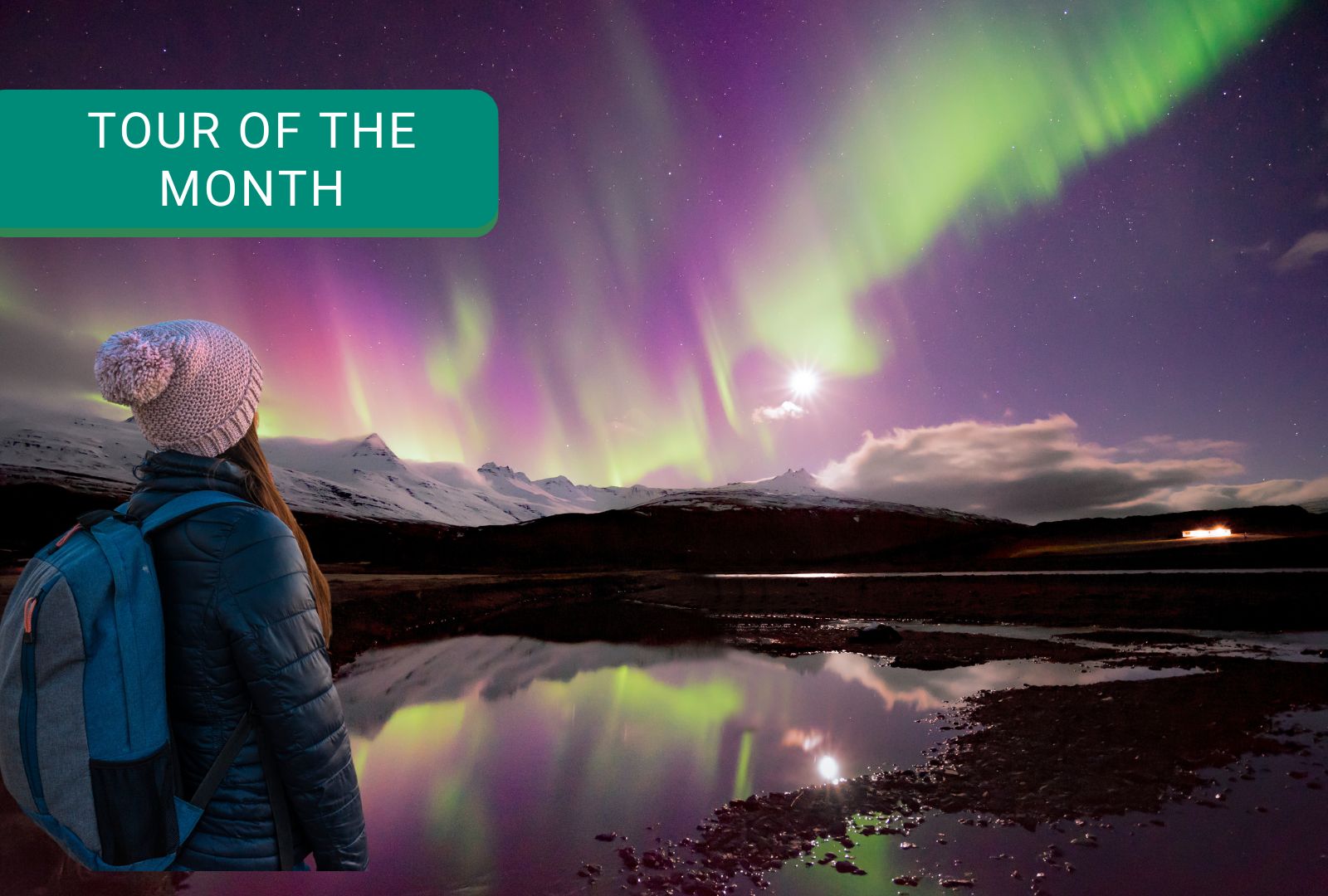
TOUR DELL' AURORA IN MINIBUS
PUNTI SALIENTI:
✓ Tour dell'aurora boreale in un autobus di piccole dimensioni
✓ Foto gratuite con l'aurora boreale
✓ Homemade hot Chocolate e Dolci
✓ Pick-up incluso
TOUR PIÙ VENDUTO
DOMANDE FREQUENTI SULL’AURORA BOREALE
Quando si può vedere l'aurora in Islanda?
Durante questo lungo periodo, l’Islanda sperimenta abbastanza oscurità perché l’aurora sia visibile di notte.
Tuttavia, le probabilità di osservare l’aurora variano a seconda del periodo dell’anno. Scopri quali mesi sono i migliori per vedere l’aurora qui.
Si può vedere l'aurora boreale con la luna piena?
A che ora compaiono le aurore boreali?
During the winter months, when the hours of light are limited, the northern lights can often appear as early at 7:00pm.
As the exact time of an Aurora display cannot be predicted, keep your eyes at the sky. And remember, patience is key!
Quanto durano le aurore boreali?
Posso vedere le aurore boreali quando il cielo è nuvoloso?
Le aurore boreali appaiono solo quando fa freddo?
Le aurore boreali sono visibili in tutta l’Islanda?
Le aurore boreali sono davvero multicolore?
Il novilunio è migliore per osservare le aurore boreali?
La luna piena è adatta per fotografare le aurore boreali?
Katarina Raker
SULL’AUTRICE: KATARINA RAKER