ICELAND IN WINTER TRAVEL GUIDE: ROADS, CLOTHING, DAYLIGHT & NORTHERN LIGHTS
Winter Roads in Iceland
What To Wear in Winter
How to Chase the Northern Lights
Winter in Iceland is a season of extremes: dramatic landscapes, long nights, and the possibility of witnessing one of nature’s most spectacular phenomena.
While unforgettable, winter travel also requires preparation.
This guide covers winter road conditions, what to wear, limited daylight, and how to improve your chances of seeing the Northern Lights.
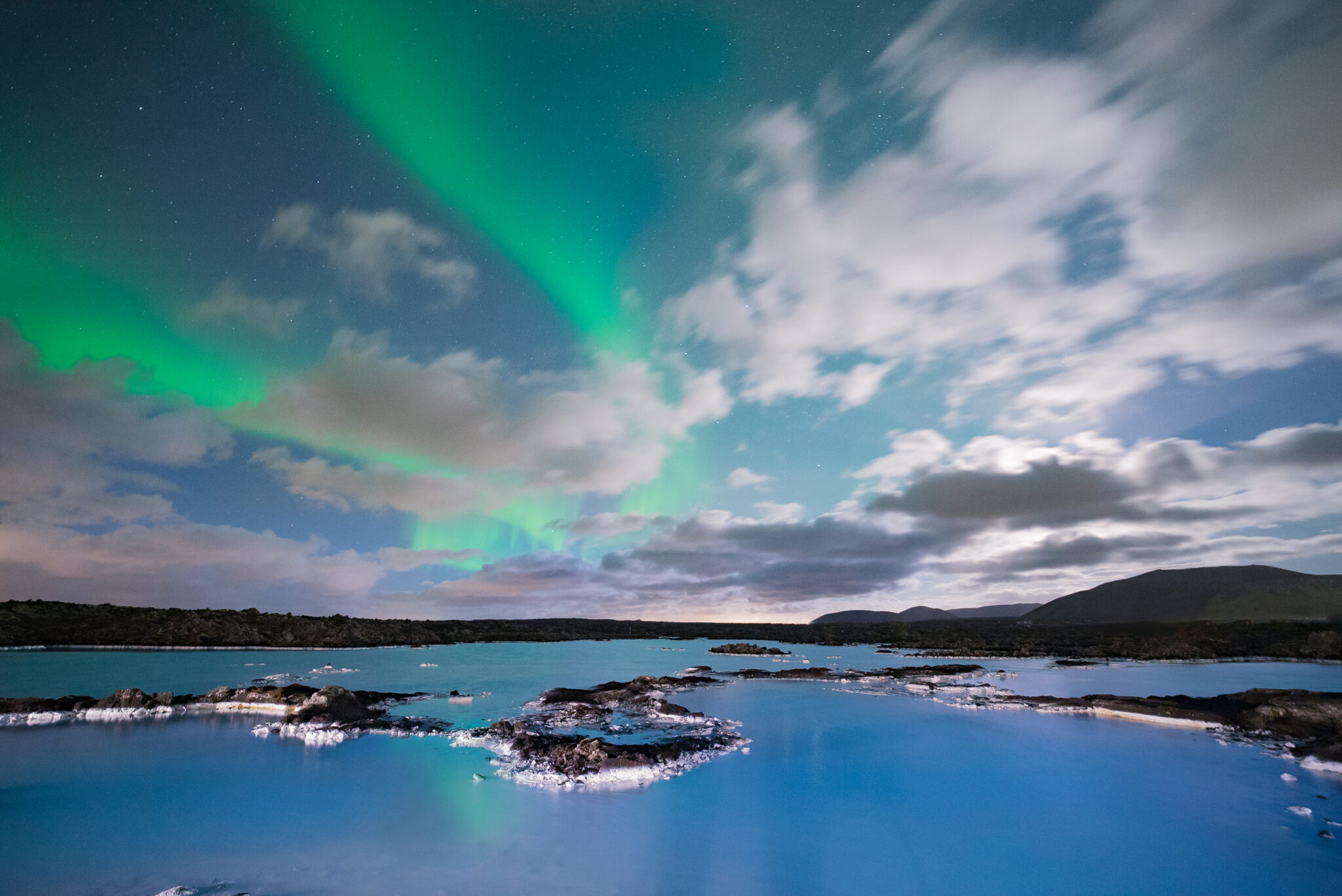
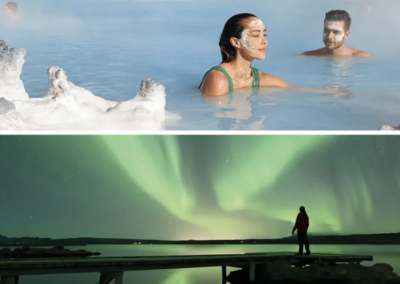
Join our Blue Lagoon & Northern Lights Tour for the ultiimate Icelandic winter experience
Winter Roads in Iceland
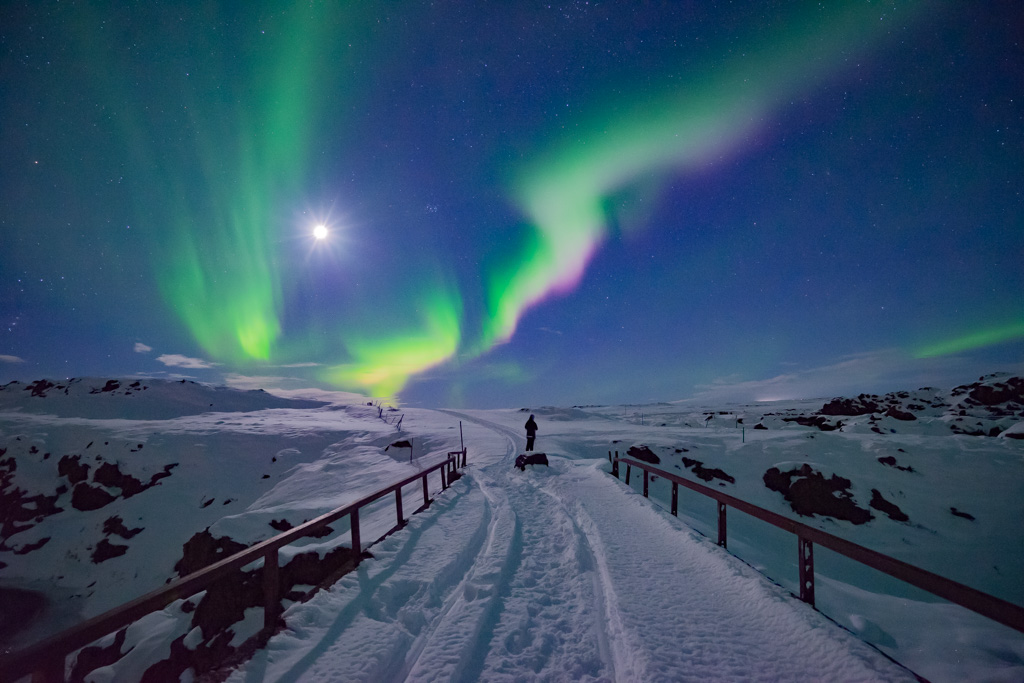
Driving in Iceland during winter can be beautiful but challenging. Snow-covered roads, icy patches, strong winds, and rapidly changing weather are common, especially outside populated areas.
Travelers planning to look for the aurora on their own should understand safe winter routes and common driving mistakes, particularly when heading away from city lights late at night. It is always best to consult our guide on driving yourself to see the Northern Lights in Iceland, to discover why wind, visibility, and stopping in unsafe places are among the biggest winter risks, and learn how to avoid them.
Checking road conditions in advance and driving conservatively are essential parts of winter travel in Iceland.
What to Wear in Iceland in Winter
Staying warm in Iceland is less about extreme cold and more about wind, moisture, and time spent outdoors.
A proper winter outfit starts with thermal base layers, ideally wool, followed by an insulating mid-layer such as fleece or down. A waterproof and windproof outer shell is essential, as Icelandic wind can significantly lower perceived temperatures. Warm socks, insulated gloves, and waterproof boots are especially important when standing still outdoors.
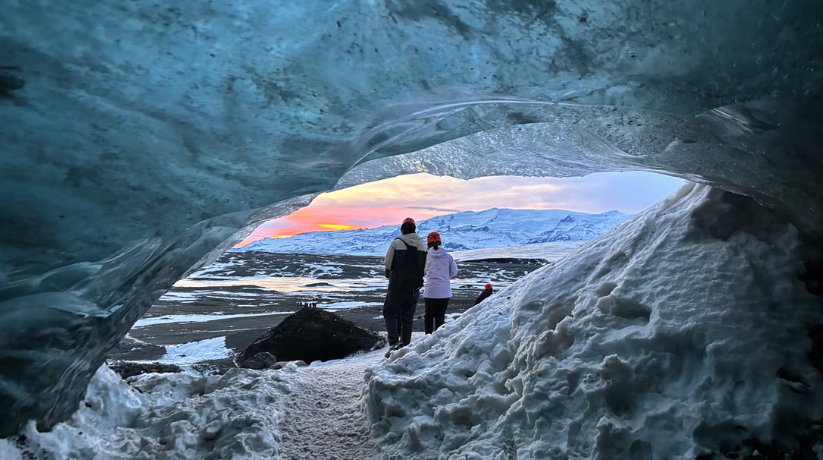
Gear Up and brave the Glacier in the winter, with our 2-day winter South Coast package
This becomes particularly important during Northern Lights watching, which often involves waiting outside for long periods. Being dressed correctly allows you to stay out longer and enjoy the experience rather than cutting the night short.
Check out our Ultimate Guide to Seeing the Northern Lights in Iceland for more information on how to make your Aurora dream come true.
Looking for the best Northern Lights Tour? Let us help you choose the perfect experience here.
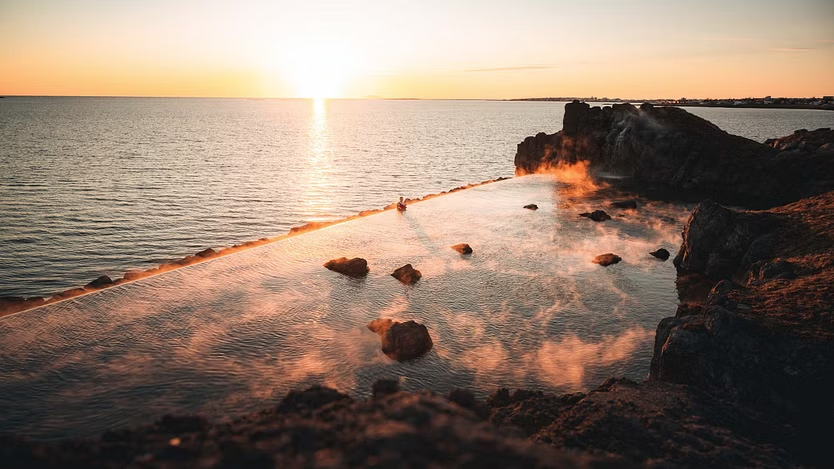
Sunset at the Sky Lagoon
Daylight Hours During Winter
Winter daylight in Iceland is limited but atmospheric.
From late November through January, daylight may last only four to five hours, creating long twilight periods ideal for photography. As winter progresses, daylight increases quickly, allowing more time for sightseeing while still preserving long, dark evenings: perfect for aurora viewing.
Because of this balance, many visitors plan their sightseeing during the day and reserve evenings specifically for watching the sky.
Make the most out of your northern lights experience with our expert´s guide on How to Photograph the Northern Lights
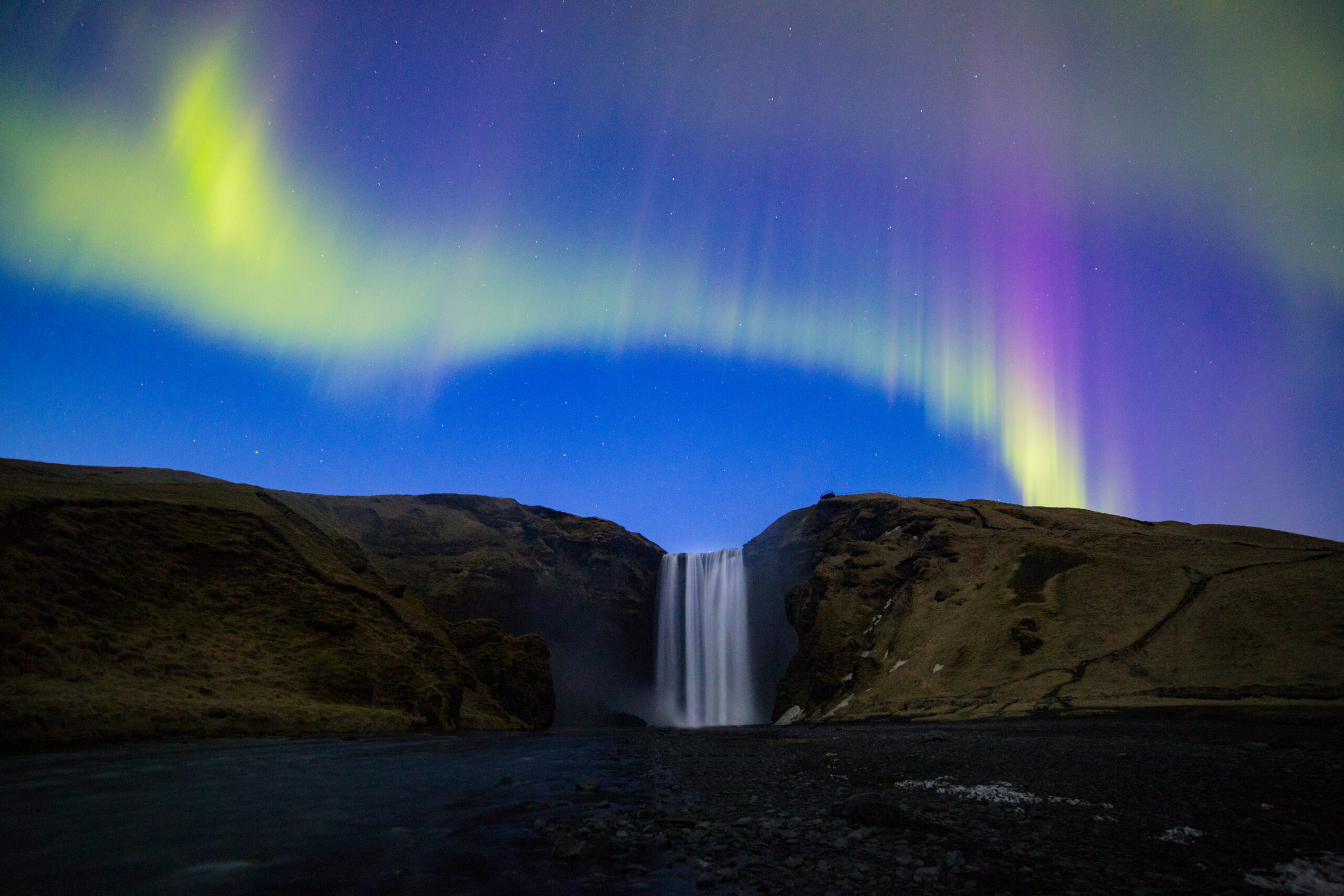
Join our superjeep tour and get a chance to see the Northern Lights over the Icelandic wilderness
Northern Lights in Iceland
The Northern Lights, or aurora borealis, occur when charged particles from the sun interact with Earth’s atmosphere, creating shimmering waves of light across the night sky.
The aurora season in Iceland typically runs from late August until mid-April, with winter offering the longest and darkest nights. Displays can appear suddenly, fade, and return again — making patience essential.
Understanding how the aurora works, when it appears, and what conditions affect visibility can greatly improve your chances of seeing it. A detailed explanation of these factors, including solar activity, cloud cover, and darkness, is available in our overview of All you need to know about the Northern Lights.
Guided Tours or Independent Aurora Hunting?
Some travelers prefer the flexibility of searching for the aurora independently, while others choose guided excursions to avoid winter driving and benefit from local expertise.
If renting a car is your favoured option, keep in mind the potential challenges of the Icelandic winter. Check out our Driving Yourself to See the Northern Lights: Safe Routes, Tips, and Mistakes to Avoid guide and learn more about independent travelling in the Arctic.
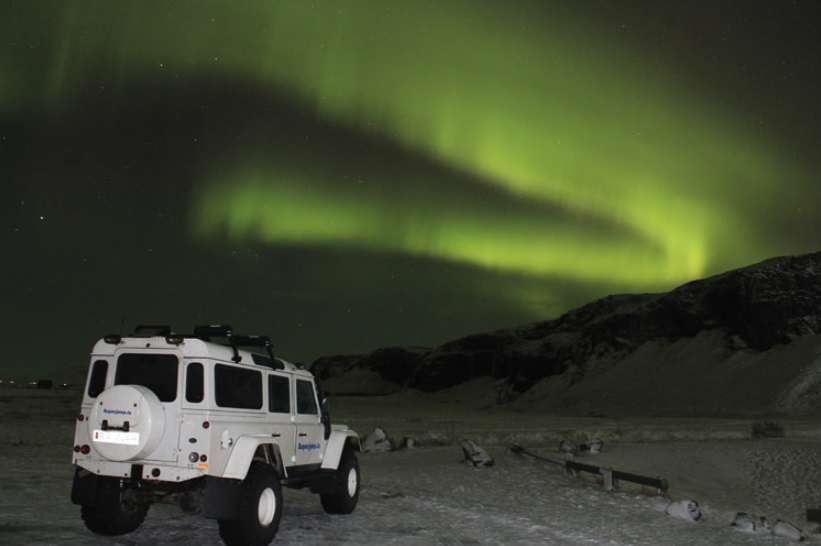
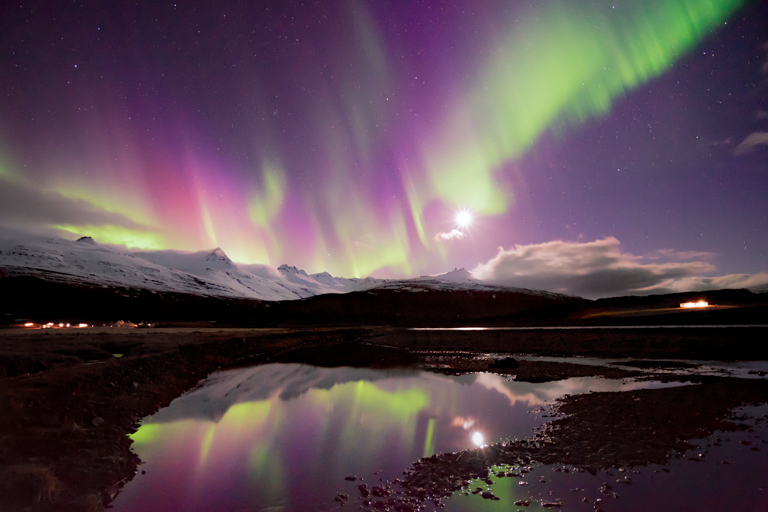
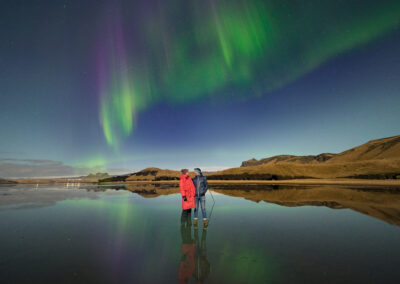
Auroras in the east fjords of Iceland
For those who prefer the comfort of a guided tour, there are many types of Northern Lights excursions possible. Availabilities include small-group minibus tours, superjeep adventures into remote areas, photography-focused tours, and even boat tours that offer darker skies away from city lights.
Those looking specifically for organized excursions can also explore a selection of Northern Lights excursions from Reykjavík, covering land- and sea-based experiences.
Final Thoughts
Winter in Iceland offers fewer crowds, dramatic landscapes, and some of the best conditions in the world for Northern Lights viewing. With the right clothing, careful road planning, and a realistic understanding of winter conditions, it can be an extraordinary experience.
Whether you explore independently or join a guided Northern Lights tour, Iceland in winter rewards preparation with silence, darkness, and skies that often come alive with color.
Rejoignez-nous pour une excursion guidée à la découverte des aurores boréales.
FAQ about the Northern Lights
Quand puis-je voir les aurores boréales en Islande ?
Pourquoi ne puis-je pas voir d’aurores boréales en été ?
Want to know more about light conditions in Iceland? Check the sun graph and learn about twilight and dusk in Iceland.
What time do the northern lights show up?
How long do the northern lights last?
Can I see the northern lights when it is cloudy?
Do the northern lights only appear when it is cold?
Are the northern lights visible all over Iceland?
Are the northern lights really colourful?
To the naked eye though, the northern lights can look quite faint, and at times be perceived as white or grey-ish. This is due to limitations in our night vision.
Camera devices instead can capture a more truthful version of the colours, as, in most cases, it possible to adjust the device settings in order to better adapt to the night time conditions.
Find more about how to improve your night vision and learn how to take great Aurora shots here.
Are the northern lights going to disappear in future?
The Aurora has been visible in the Arctic for centuries, and that is not going to change any times soon.
What is true is that the solar activity, which is responsabile for the occurrence of the northern lights on our planet, changes over time, following an eleven-year cycle.
During each solar cycle, the Sun goes from a peak to a minimum of activity. During the peak, the so called “solar maximum“, we can expect enhanced activity and, potentially, stronger northern lights visible from unusual latitudes (in the northern hemisphere, this means Auroras being spotted further south than usual). While, during the solar minimum, such unusually strong occurrences become rarer.
Still, at Arctic latitudes the northern lights can be see clearly throughout the whole cycle. And Islande, being well within the “Aurora belt”, is and will remain the perfect destination for northern lights hunting!
What is the BZ value?
Why does it matter for the Northern Lights? Earth’s magnetic field points north. If the solar wind’s magnetic field (Bz) points south (a negative Bz), it connects with Earth’s field and lets charged solar particles into the atmosphere. This interaction helps create the northern lights. If instead, Bz is positive (northward), the fields don’t connect well, and fewer particles get in — meaning weaker or no aurora.
Think of Bz like an ON/OFF switch: negative Bz (south) = ON, good chance of Aurora soon. Positive Bz (north) = OFF, Aurora less likely.
Learn more about Bz and how the forecast works here.
Which are the best forecast apps and websites for Northern Lights hunting?
Chasing the Northern Lights is all about timing, clear skies, and up-to-date aurora forecasts. These tools help you know when and where there’s a good chance of seeing the aurora — so you can plan your night the smart way. For the best results, we recommend using more than one source, as different forecasts interpret data differently.
WEB FORECASTS
- Official AURORA REYKJAVÍK Aurora Forecast 👉 https://aurorareykjavik.is/aurora-forecast/
Our 6-step expert forecast combines geomagnetic activity, cloud cover, and viewing tips — designed for real-time Northern Lights planning. - SpaceWeatherLive
A detailed global space weather site with auroral activity maps and solar parameters. - NOAA Space Weather Prediction Center (SWPC)
The official US space weather forecast model that many aurora apps base their data on.
TOP MOBILE APPS
- My Aurora Forecast – Offers real-time KP index, global aurora maps, push alerts and multi-day forecasts — great for travelers and serious aurora watchers alike.
And don’t forget to unable notifications, so you’ll get alerts when aurora activity spikes.
📍App Store
📍 Google Play
By following this guide, you’ll be well-prepared to experience one of nature’s most magical displays. Whether you’re planning your trip or already in Iceland, the Aurora awaits!