Northern Lights in Iceland in Spring: Why March and Early April Are Underrated
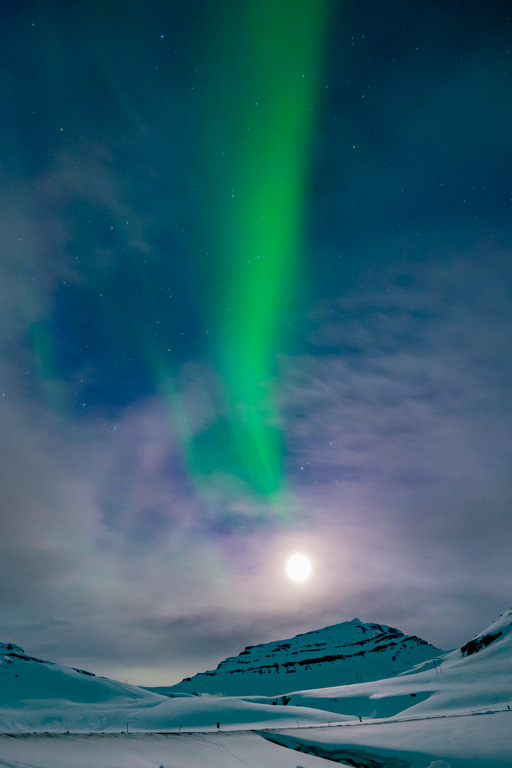
Does the full moon cancel auroras? No
Can you still see them? Yes, if strong
What matters most? Clear skies
Most travelers assume winter is the only serious northern lights season in Iceland.
In reality, March and early April can be one of the smartest times to hunt the aurora.
You still have dark nights long enough for aurora viewing, travel conditions are often easier than in deep winter, and the weeks around the spring equinox are statistically favorable for geomagnetic activity.
For many visitors, spring offers a perfect balance:
dark skies, snowy landscapes, comfortable temperatures, and excellent chances of seeing the northern lights.
En Aurora Reykjavík, we work with aurora forecasting and education every day, and spring consistently surprises visitors with spectacular displays.
Written by Katarina Raker, Northern Lights expert and co-founder of Aurora Reykjavík
Can You See the Northern Lights in Iceland in Spring?
Why March Is One of the Best Months for Aurora in Iceland
Best Time of Night to See the Northern Lights in Spring
What You Actually Need to See the Northern Lights
Is Spring Better Than Winter for Northern Lights?
Northern Lights Photography in Spring
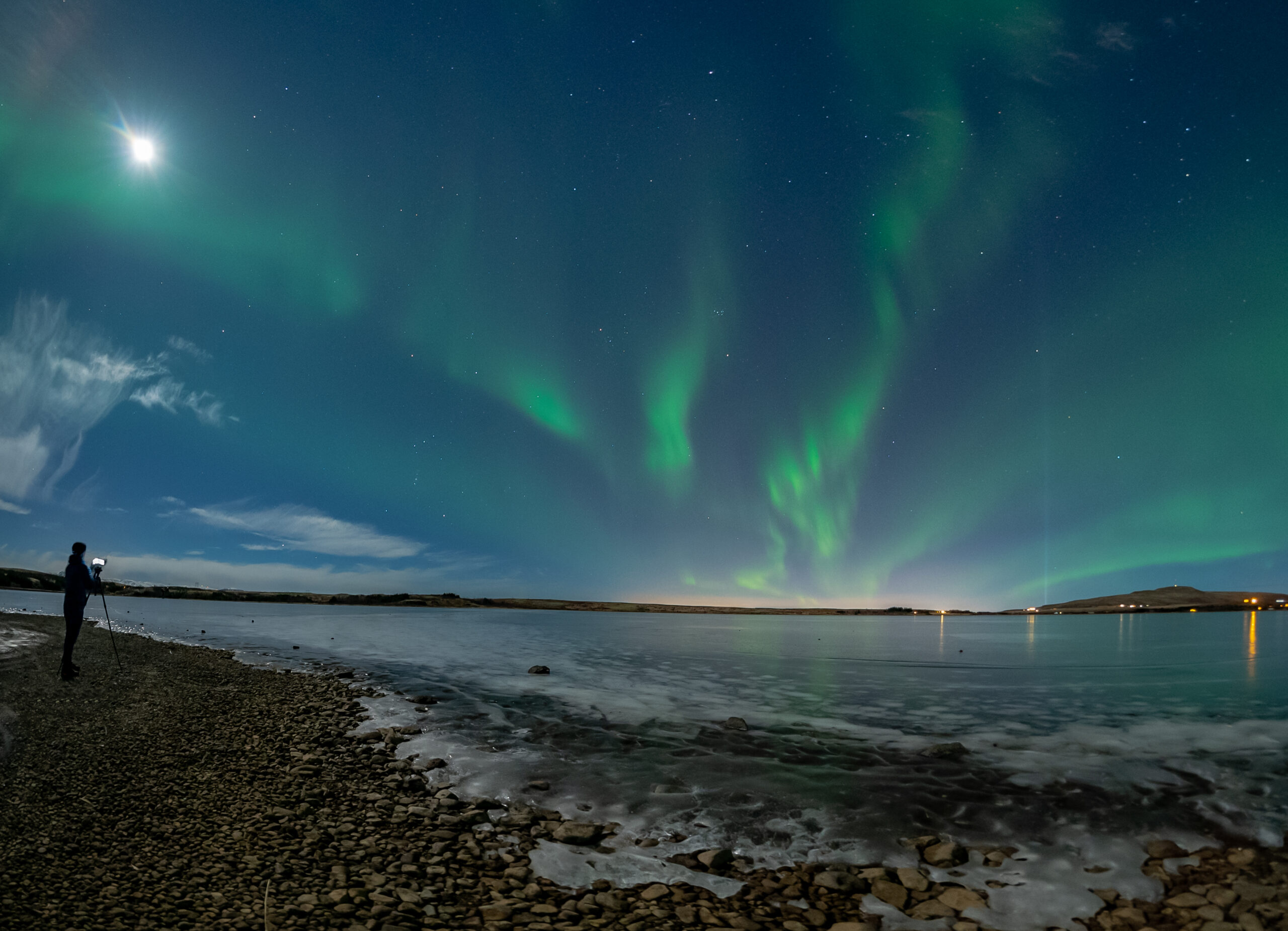
Luna llena en el Parque Nacional Thingvellir, Islandia
Can You See the Northern Lights in Iceland in Spring?
Yes — especially in March and early April.
The aurora can appear any time the following three conditions occur simultaneously:
-
Dark skies
-
Clear or partly clear skies
-
Geomagnetic activity from solar wind
In Iceland, darkness remains sufficient well into April.
Typical viewing potential:
| Month | Aurora visibility potential |
|---|---|
| March | Excellent |
| Early April | Still good |
| Late April | Possible but increasingly difficult |
| May–July | Too bright for aurora viewing |
So while winter has longer nights, spring still provides plenty of darkness — with some added advantages.
Why March Is One of the Best Months for Aurora in Iceland
Several factors make March particularly attractive for northern lights travelers.
The Equinox Effect
Around the spring and autumn equinoxes, aurora activity tends to increase due to a phenomenon called the Russell–McPherron effect.
In simple terms:
-
Earth’s magnetic field interacts with the solar wind.
-
Near the equinoxes, the orientation of Earth’s magnetic field makes it easier for solar wind energy to enter the magnetosphere.
-
This can increase the likelihood of geomagnetic storms.
This does not guarantee stronger auroras every night, but statistically the equinox season tends to produce more geomagnetic disturbances.
For aurora chasers, this means March and September are often very active months.
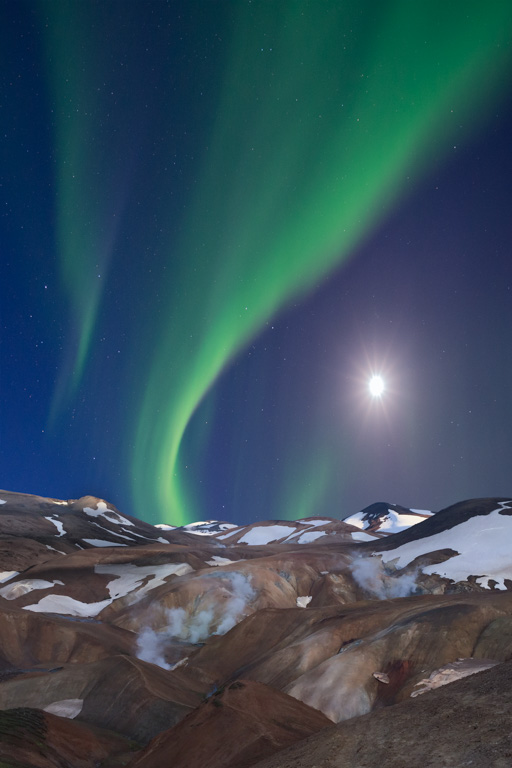
Luna llena en las tierras altas, Islandia
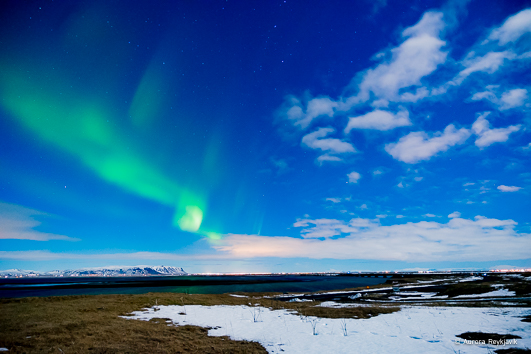
Temperatures rising make spring landscapes ever changing
Comfortable Conditions Compared to Deep Winter
Winter aurora tours can involve temperatures of −10°C or lower.
Spring usually brings:
-
milder temperatures
-
safer road conditions
-
longer daylight for sightseeing
-
less severe storms
For many visitors, this makes aurora hunting far more enjoyable.
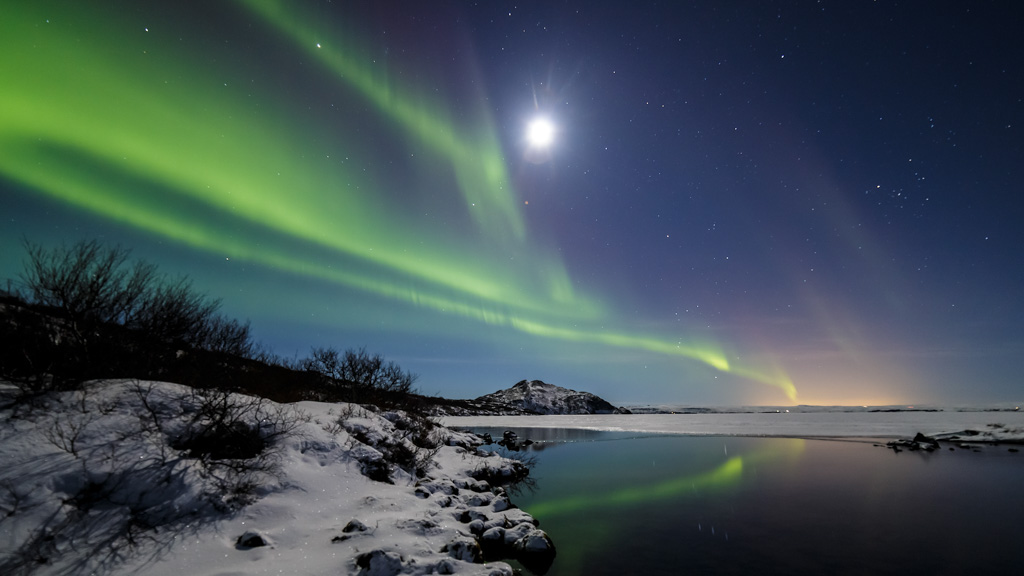
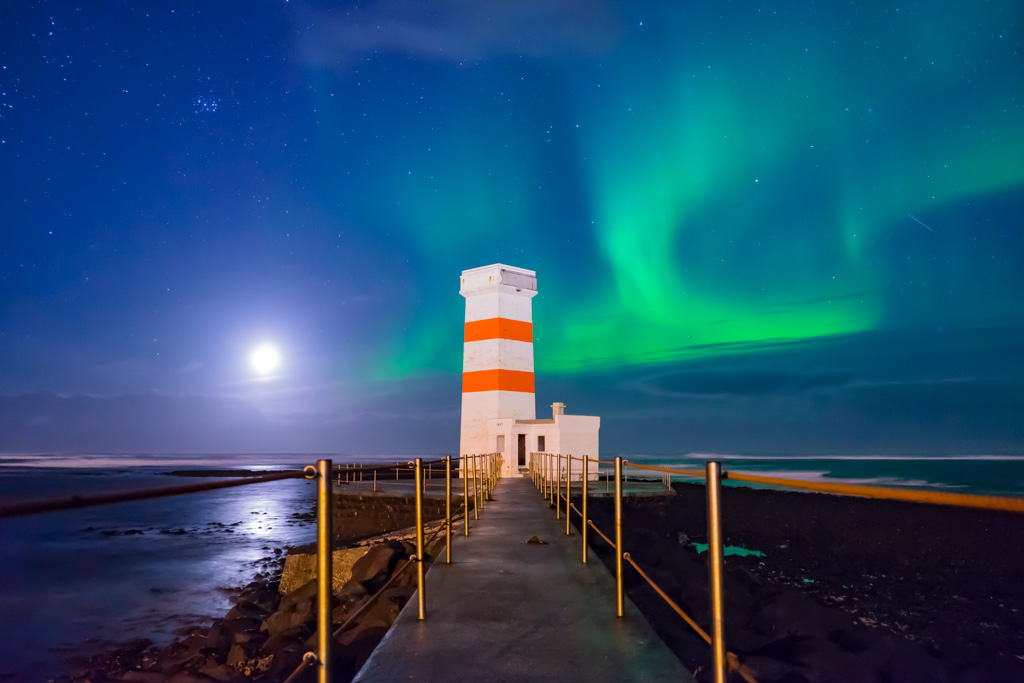
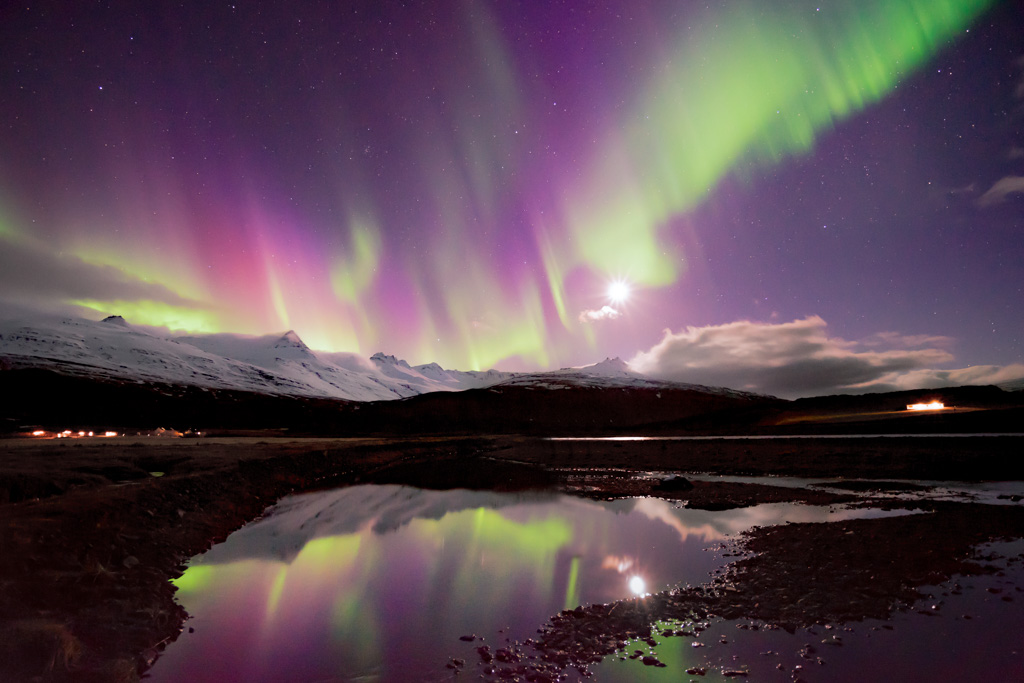
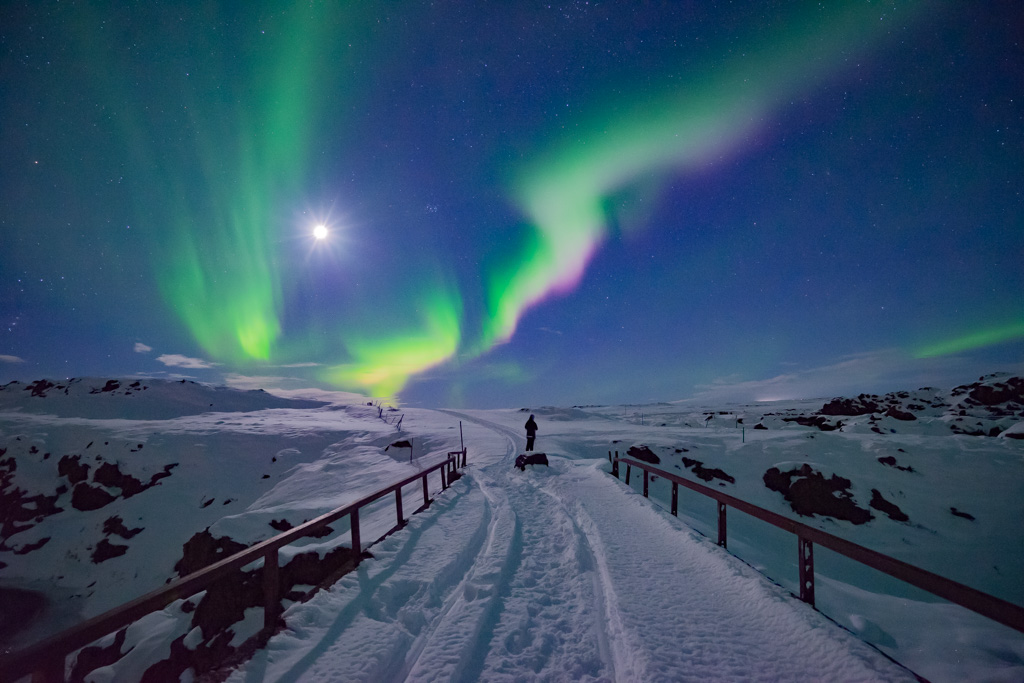
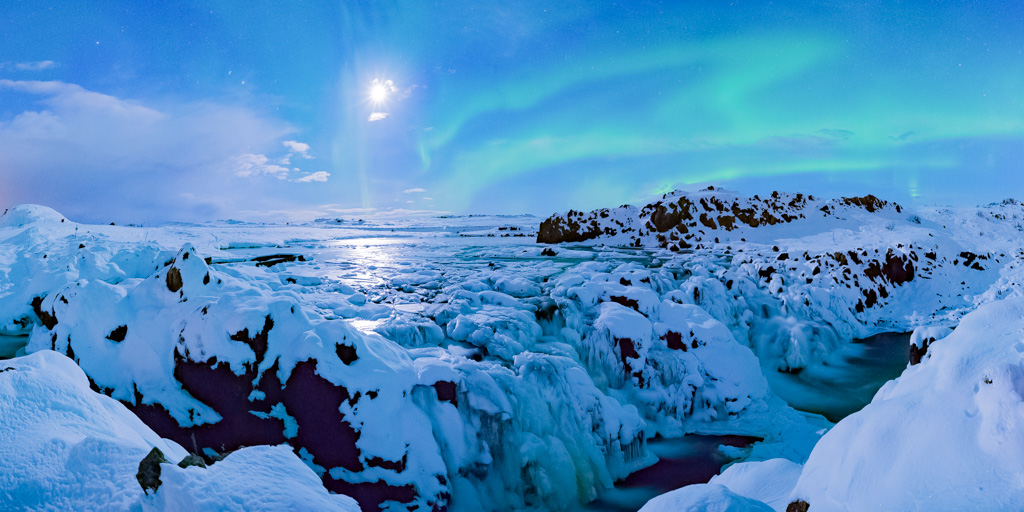
Snowy Landscapes With Better Light for Photography
March still offers winter scenery across much of Iceland.
Snow-covered landscapes can dramatically enhance aurora photography by reflecting light and illuminating foregrounds.
But spring also brings an advantage many photographers love:
Long twilight periods.
The sky may retain subtle blue tones rather than turning completely black, allowing foregrounds to appear naturally in photos without artificial lighting.
Learn more about northern lights photography with our experts here: https://aurorareykjavik.is/2025/12/03/how-to-photograph-the-northern-lights/
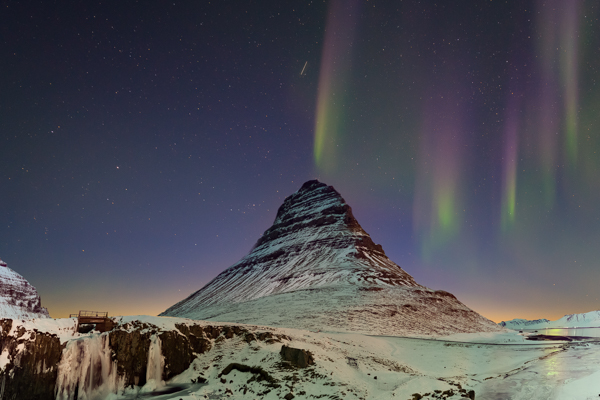
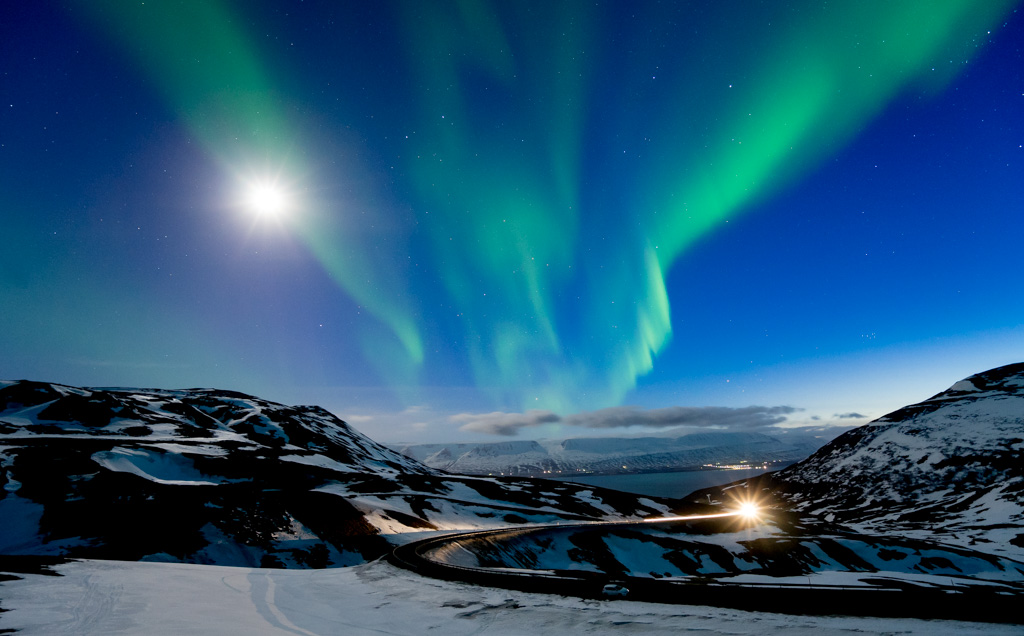
Snowy panorama at Kirkjufell
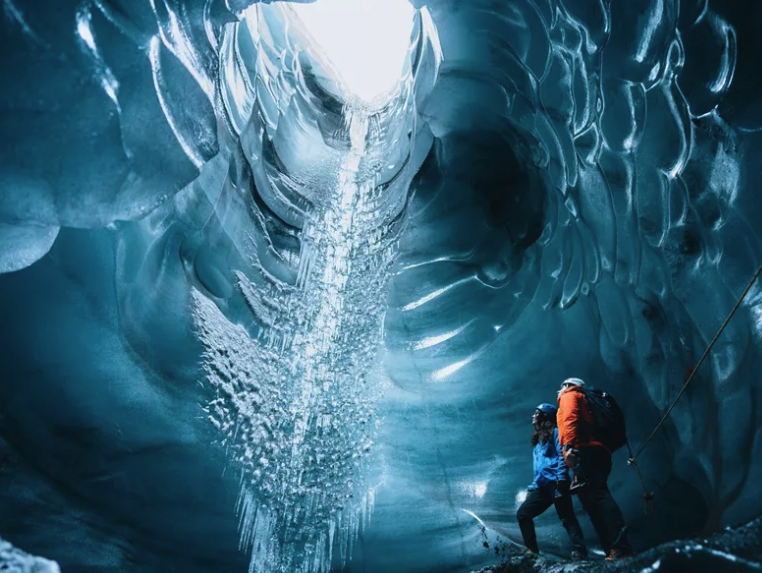
Katla, cueva natural de hielo en el Sur de Islandia
More Daytime Activities
Unlike midwinter, spring in Iceland offers longer days for exploring.
Visitors can combine aurora hunting with:
-
cultural experiences in Reykjavík
One of the best places to start your aurora adventure is Aurora Reykjavík, where you can learn how the northern lights work, how to read aurora forecasts, and how to photograph them.
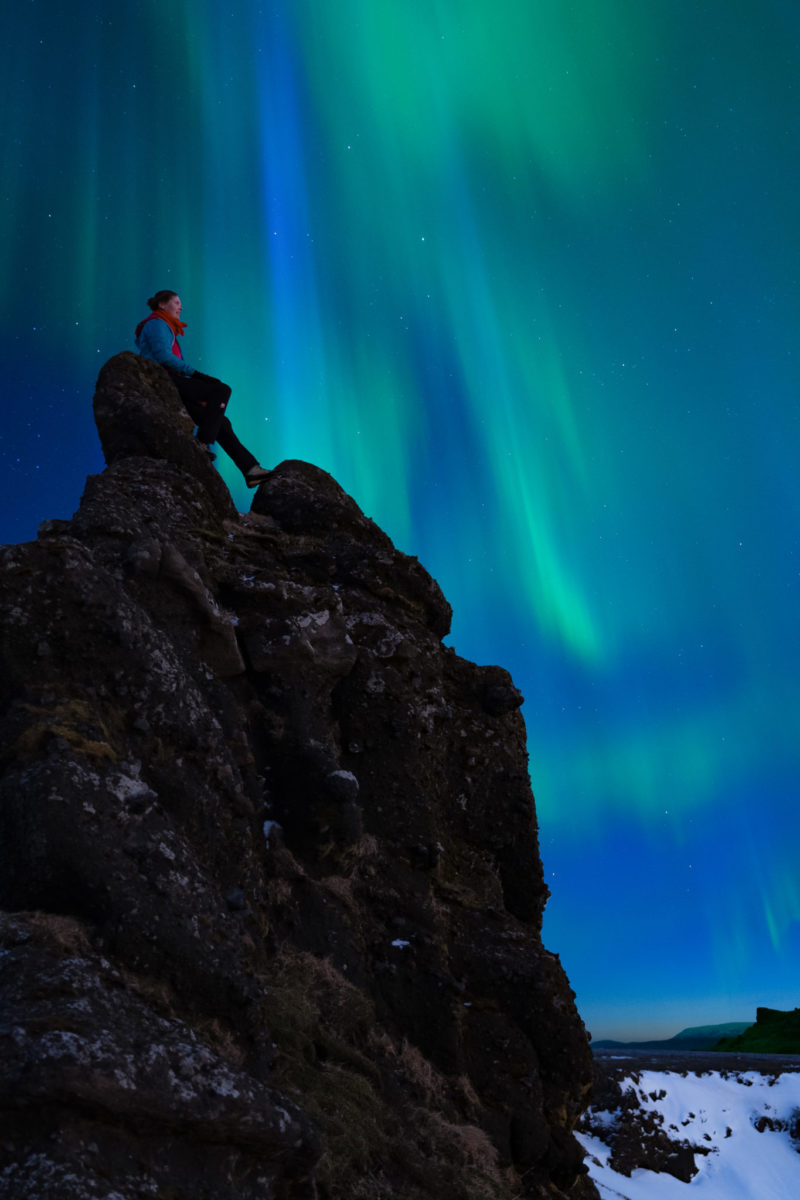
This could be you! Join us off-the-beaten-path on one of our superjeep tours
Best Time of Night to See the Northern Lights in Spring
Auroras can technically appear at any time during dark hours, but in Iceland the most common viewing window is roughly:
9 PM – 2 AM
However, timing depends entirely on solar activity and cloud cover.
The most important strategy is monitoring forecasts and being ready to move when conditions improve.
What You Actually Need to See the Northern Lights
Many myths surround aurora viewing. In reality, you only need three ingredients.
Oscuridad
The sky must be dark enough.
This is why the aurora season runs roughly fianles de agosto a mediados de abril.
Clear skies
Clouds block aurora completely.
Many successful aurora chases involve driving away from cloud cover.
Actividad solar
Auroras occur when charged particles from the sun interact with Earth’s magnetic field.
The strength of this activity is often summarized by the Kp index, though in Iceland even Kp 2–3 can produce visible aurora if skies are clear.
Find out more on how to read the Aurora forecast here: https://aurorareykjavik.is/2025/12/05/how-to-read-an-aurora-forecast-your-complete-guide-to-not-miss-the-northern-lights/
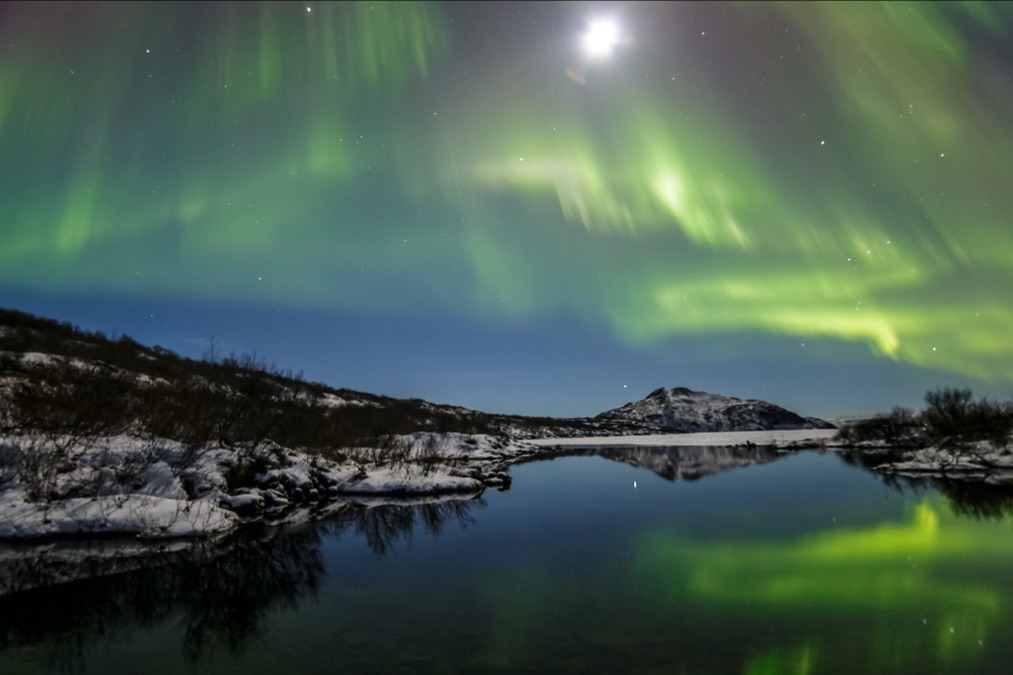
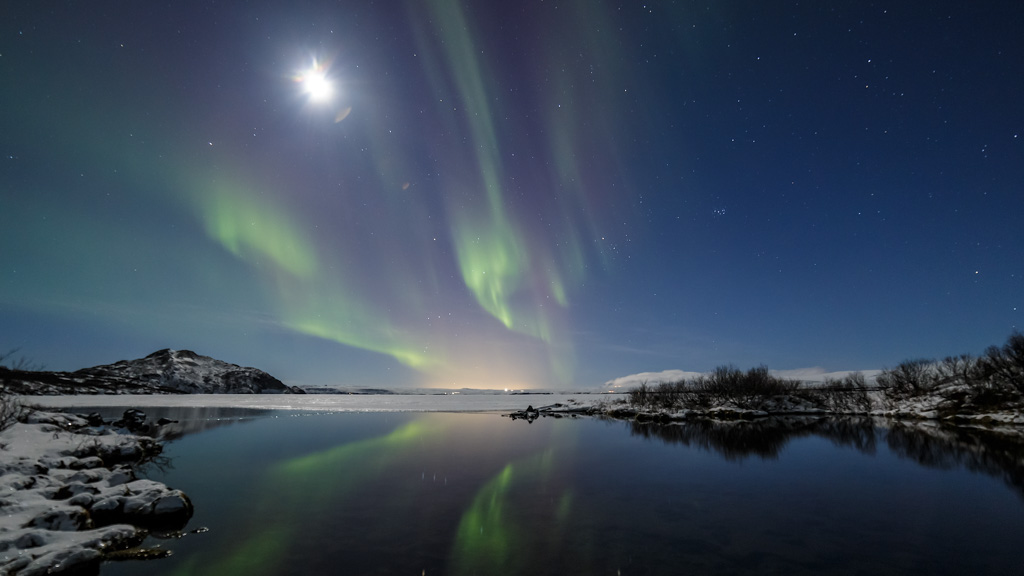
Aurora con luna llena en el Parque Nacional Thingvellir
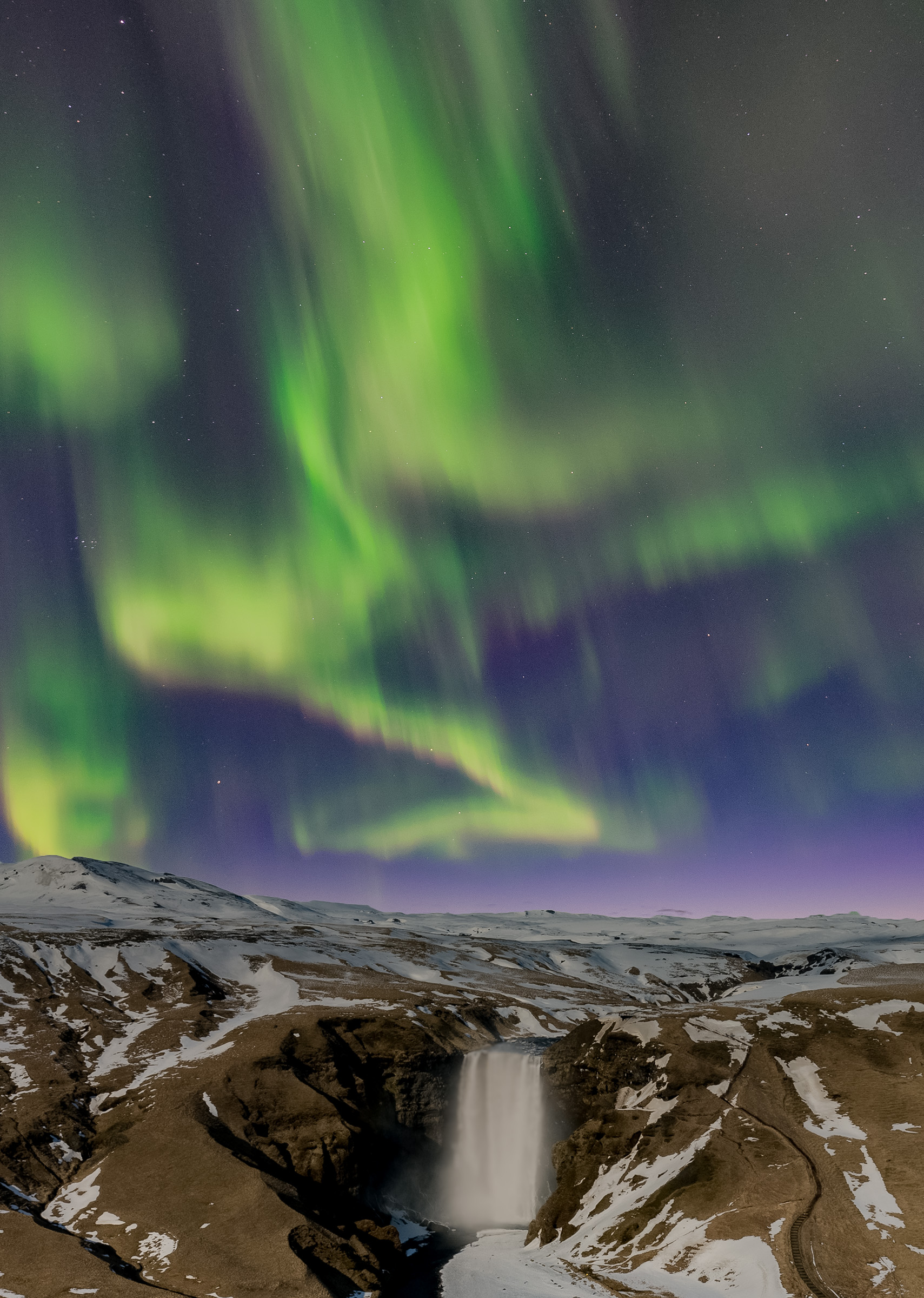
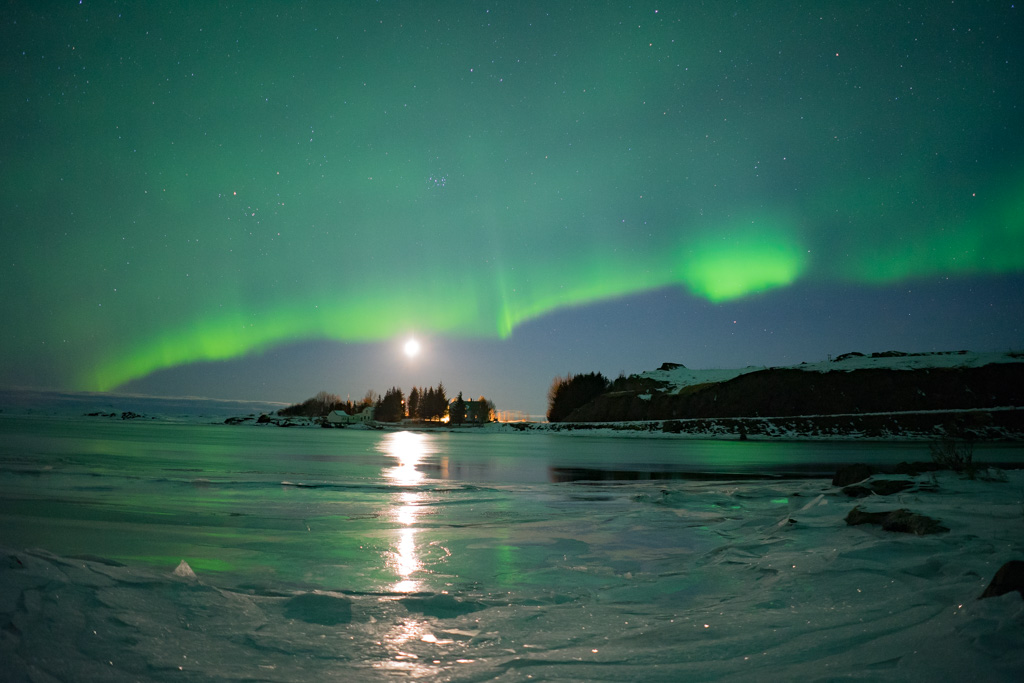
Early spring northern lights over Skógafoss, a convenient day tour from Reykjavík
Is Spring Better Than Winter for Northern Lights?
Both seasons have advantages.
Winter offers:
- longer nights
- more hours of darkness
Spring offers:
- equinox aurora activity
- milder temperatures
- easier travel conditions
- excellent photography light
For many visitors, March is one of the best compromises between comfort and aurora potential.
Further reading about early spring in Iceland:
Frequently Asked Questions
Can you see the northern lights in Iceland in March?
Yes. March is widely considered one of the best months of the aurora season.
Can you see the northern lights in April?
Yes, especially in early April.
By late April the nights become too bright for reliable viewing.
Do you need cold temperatures for aurora?
No. Auroras are caused by solar particles interacting with Earth’s magnetic field — temperature is irrelevant.
Can you see aurora from Reykjavík?
Yes, during strong displays.
However, darker locations outside the city usually provide better visibility.
Reflexiones Finales
Spring is often overlooked by northern lights travelers — but it shouldn’t be.
With dark skies still available, the potential boost from the equinox season, and far more comfortable travel conditions, March and early April can be excellent times to see the aurora in Iceland.
If you want to understand how the northern lights work — and how to maximize your chances of seeing them — visit Aurora Reykjavík, Iceland’s dedicated Northern Lights Center.
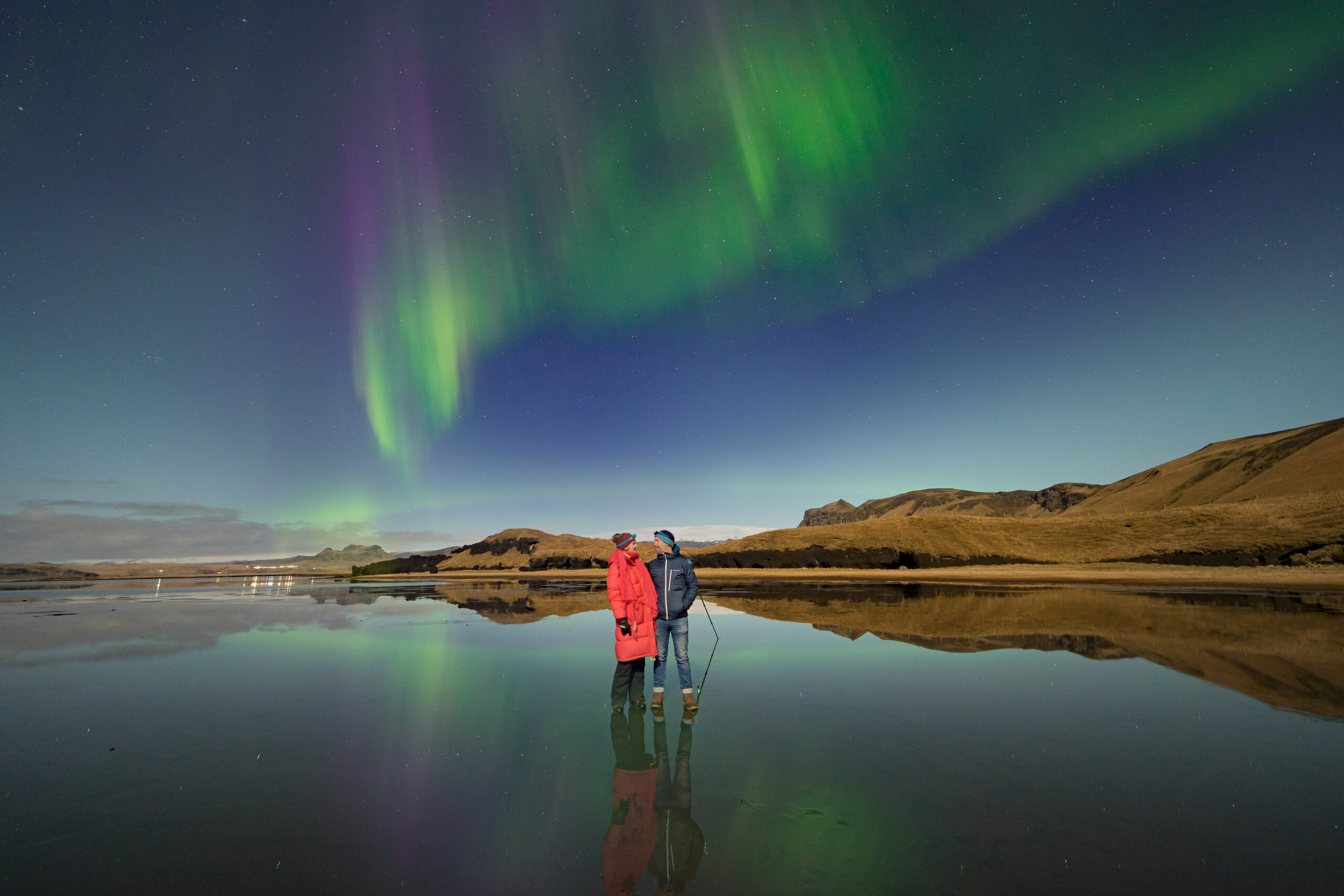
Our Aurora Reykjavík photographers and experts under the northern lights
EXPLORA MÁS EN AURORA REYKJAVÍK
- Visita nuestro Centro de Auroras Boreales para aprender todo sobre la aurora.
- Descubre los mejores consejos de fotografía de auroras boreales para tu próxima aventura.
- Descubre los mejores meses para ver la aurora boreal en nuestra guía.
ÚNETE AL MEJOR TOUR DE AURORAS BOREALES EN ISLANDIA
Así que, si puedes, compra el billete, sube al viaje. Encontrarás nuestra selección de tours aquí:
NUESTROS TOURS MÁS POPULARES
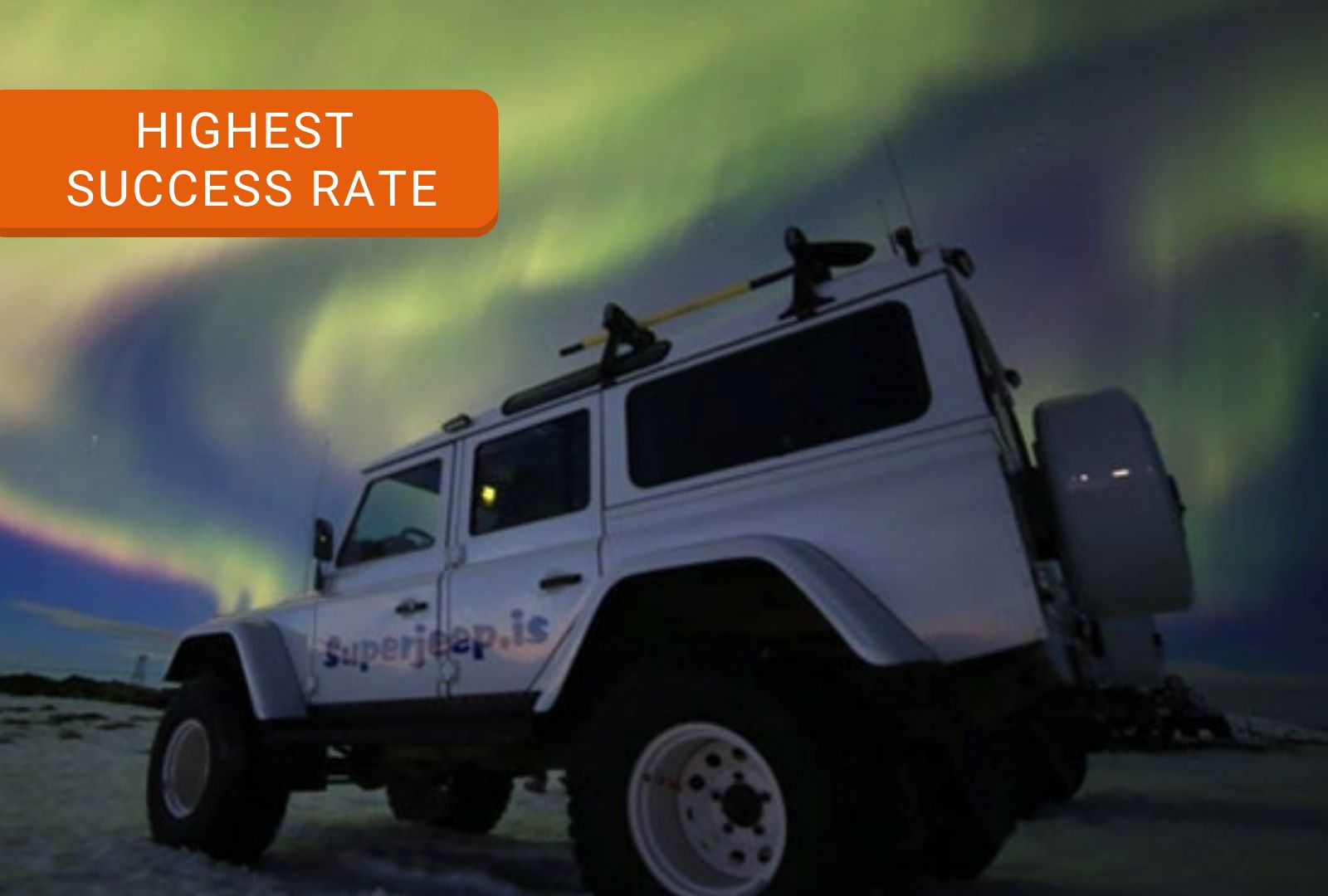
TOUR EN SUPER JEEP DE LA AURORA BOREAL
ASPECTOS DESTACADOS:
✓ Tour guiado premium de Auroras Boreales en un super jeep
✓ Recogida y regreso gratuitos
✓ Fotografías gratuitas de calidad
✓ Chocolate caliente chocolate casero
✓ Vehículos con calefacción todo el viaje
TASA DE ÉXITO MÁS ALTA
ENTRADA A AURORA REYKJAVÍK INCLUIDA - AHORRA 3900 ISK

AURORA BOREAL Y COSTA SUR
ASPECTOS DESTACADOS:
✓ OFERTA 2 EN 1: AHORA MÁS DE 2000 ISK
✓ Visita el glaciar Sólheimarjökull
✓ Pasea por la ciudad de Vík
✓ Camina por la playa de arena negra
✓ Contempla las majestuosas cascadas Skógafoss y Seljalandsfoss
✓ Presencia la La danza de las Auroras Boreales
MEJOR RELACIÓN CALIDAD-PRECIO
AURORAS BOREALES GARANTIZADAS: REINTENTO GRATUITO SI NO SE VEN LAS LUCES
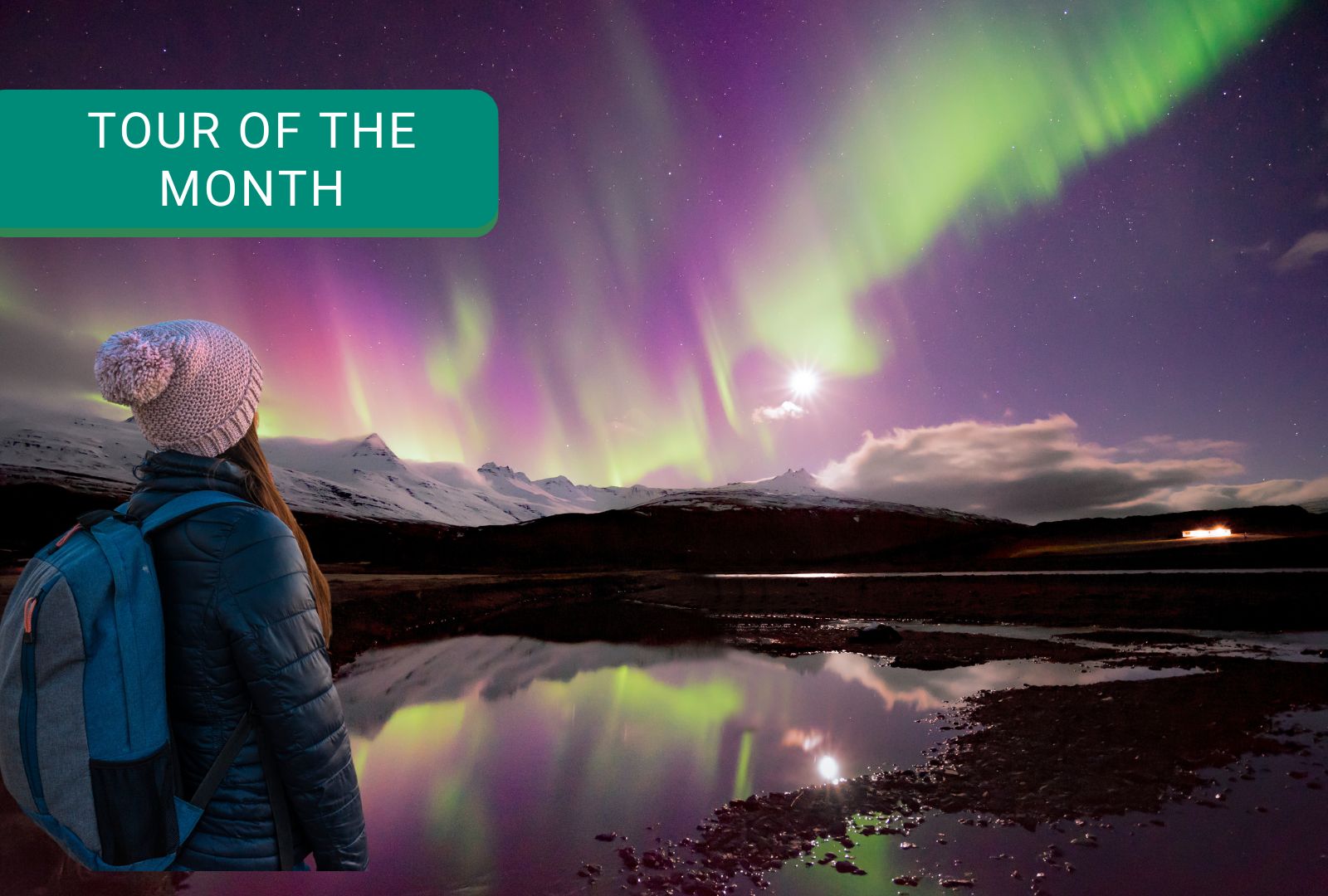
TOUR DE AURORAS BOREALES EN GRUPO REDUCIDO
ASPECTOS DESTACADOS:
✓ Tour de Auroras Boreales en minibus
✓ Fotografías gratuitas de ti bajo las Auroras Boreales
✓ Chocolate caliente y pasteles caseros
✓ Recogida y regreso gratuitos
EL TOUR MÁS POPULAR
PREGUNTAS FRECUENTES SOBRE LA AURORA BOREAL
¿Cuándo puedo ver las Auroras Boreales en Islandia?
¿Puedes ver la aurora boreal durante la luna llena?
¿A qué hora aparecen las auroras boreales?
Durante los meses de invierno, cuando las horas de luz son limitadas, las auroras boreales suelen aparecer incluso a las 7:00 pm.
Como no se puede predecir la hora exacta de una aurora , mantén, manten la vista en el cielo. ¡Y recuerda , la paciencia es clave!
¿Cuánto duran las auroras boreales?
¿Puedo ver la aurora boreal cuando está nublado?
¿Las auroras boreales sólo aparecen cuando hace frío?
¿Se ven las auroras boreales en toda Islandia?
¿Son realmente coloridas las auroras boreales?
¿Es mejor la luna nueva para ver auroras boreales?
¿Es la luna llena buena para fotografiar la aurora?
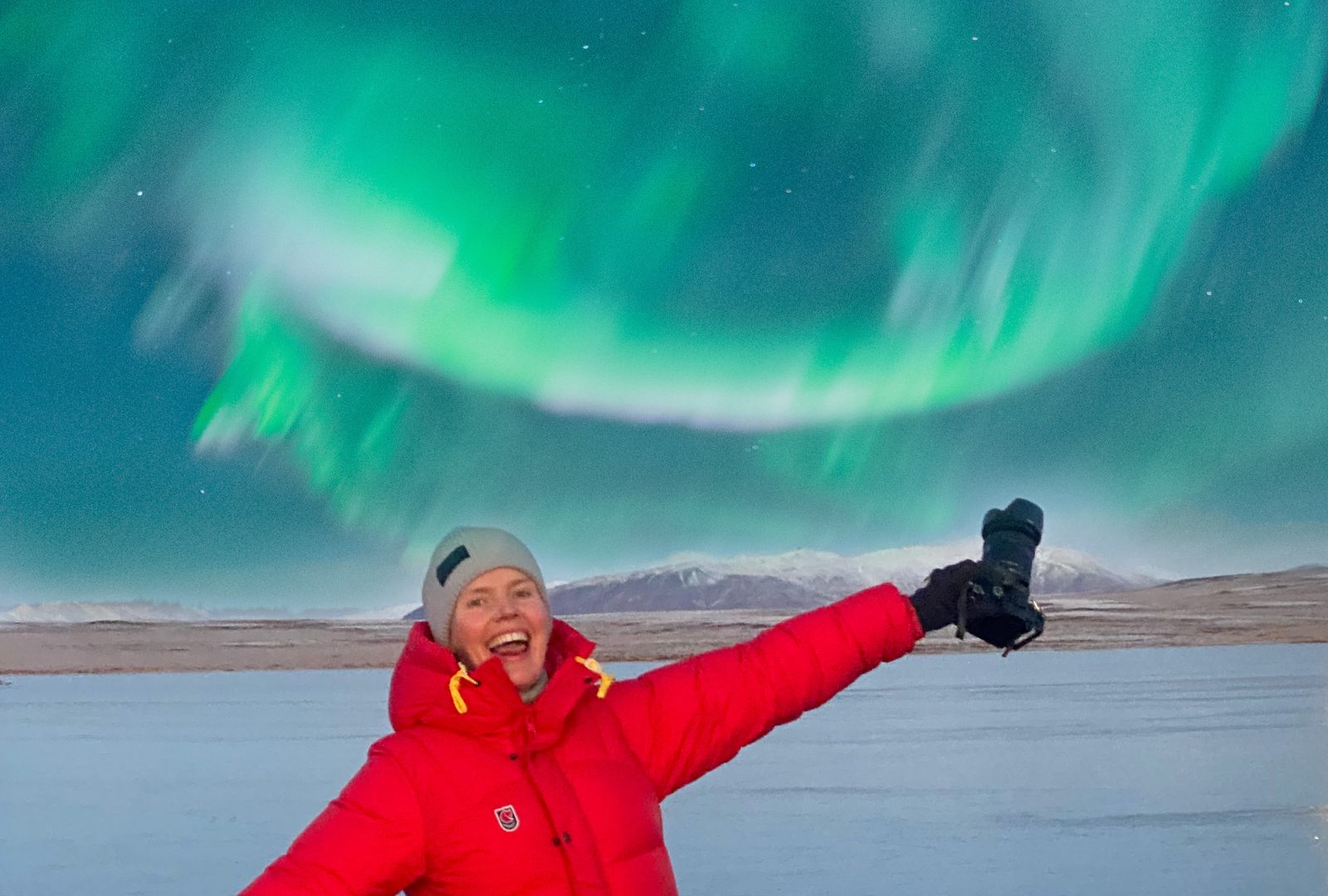
Katarina Raker
SOBRE LA AUTORA: KATARINA RAKER
Katarina Raker es una apasionada experta en auroras boreales y fotógrafa galardonada residente en Islandia. Con años de experiencia persiguiendo auroras boreales por el Ártico, combina su pasión por la narración con un profundo conocimiento de la ciencia que las sustenta. Como miembro del equipo de Aurora Reykjavík, Katarina se dedica a ayudar a los viajeros a experimentar la magia de la aurora boreal mediante consejos de expertos, visitas guiadas y fotografías impresionantes. Cuando no está capturando los espectáculos más deslumbrantes del cielo, Katarina disfruta explorando los impresionantes paisajes de Islandia y compartiendo sus aventuras con el mundo.