Fuego en el Cielo del Norte: Mitología de la Aurora y Sagas medievales Islandesas
Mitos y Significados Alrededor del Mundo
Folclore Islandés
El Curioso Caso de las Sagas Islandesas
Cuando el Mito se Encuentra con la Ciencia
Las Luces del Norte o aurora boreal, con sus brillantes tonos verdes, rojos y violetas, han fascinado a la humanidad durante milenios. Para las personas alrededor del Ártico, eran señales divinas, mensajes de los muertos o incluso fuerzas de suerte y peligro. Sin embargo, para una tierra como Islandia, con sus cielos espectaculares y frecuentes auroras, existen sorprendentemente pocas referencias a las auroras boreales en su literatura medieval, incluidas las famosas sagas islandesas.
Mitos y Significados Alrededor del Mundo
En todas las culturas que vivieron bajo cielos aurorales, los pueblos antiguos desarrollaron explicaciones bien elaboradas para las luces:
- Antigüedad Griega y Romana: El término aurora boreal proviene de la mitología romana y griega. Aurora era la diosa romana del amanecer y Boreas el dios griego del viento del norte. Posteriormente, los observadores europeos combinaron estos nombres para describir el fenómeno.
- Creencias Indígenas del Ártico: Algunas culturas del norte veían a las auroras como espíritus ancestrales, presagios de fortuna o desgracia.
- En otras partes del mundo: Las tradiciones míticas chinas y rusas a veces interpretaban la luminiscencia similar a la de la aurora como dragones o serpientes celestiales.
Estas mitologías muestran el impulso permanente de la humanidad de comprender los fenómenos extraordinarios a través de la narrativa y el espíritu, mucho antes de que la ciencia moderna ofreciera explicaciones.
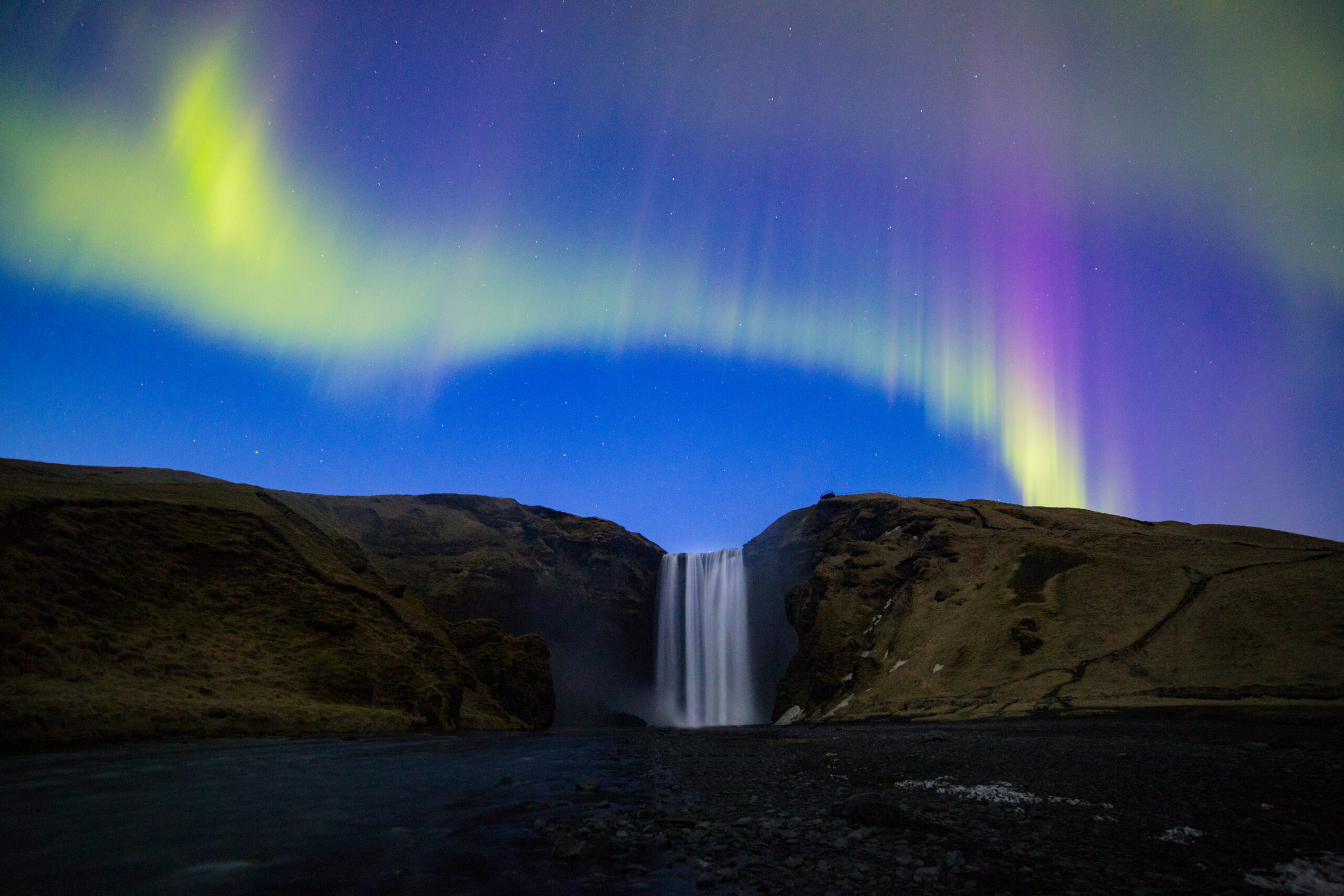
Northern Lights over Skógafoss
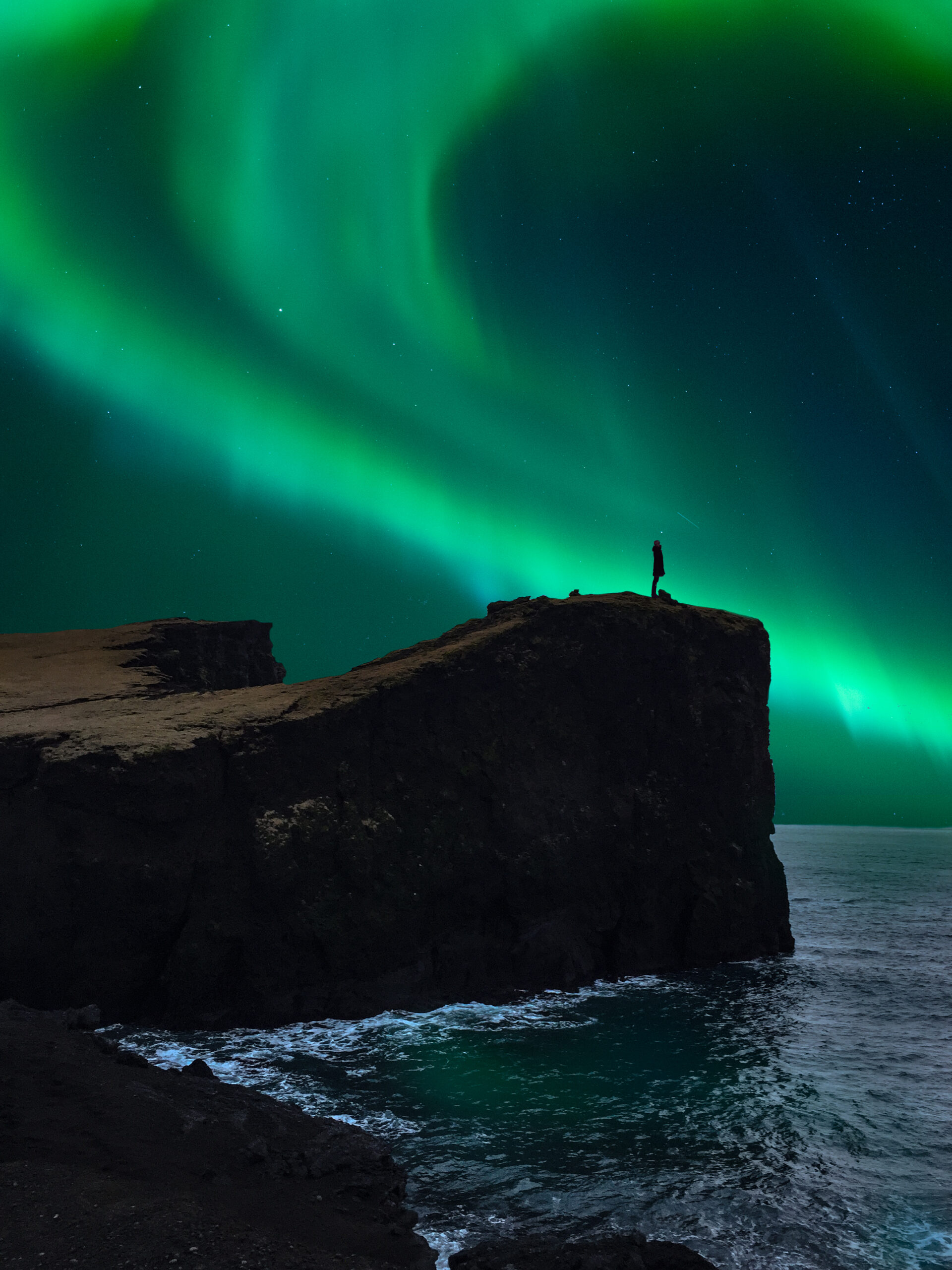
Auroras boreales en Reykjanes
Folclore Islandés: Fascinación Fragmentada
Si bien Islandia cuenta con folclore sobre las auroras borealesSi bien Islandia cuenta con folclore sobre las auroras boreales, estas historias tienden a ser supersticiones locales más que tradición mitológica estructurada, y provienen de tradiciones posteriores más que de textos medievales: local superstitions rather than structured mythological lore, and from later traditions rather than medieval texts:
- Se decía que las luces aliviaban los dolores del parto, pero se advertía a las mujeres embarazadas que no las miraran o se arriesgaban a tener bebés bizcos.
- Las auroras se consideraban predictoras del tiempo, a veces anunciando la llegada de una tormenta.
- El folclore también relacionaba las auroras boreales con elfos y pueblos ocultos (huldufólk) que celebraban festejos secretos en los cielos oscuros.
Estos relatos, por encantadores que sean, son interpretaciones folclóricas posteriores más que marcos mitológicos profundos similares a los mitos épicos de dioses como Óðinn, Loki o Þór.
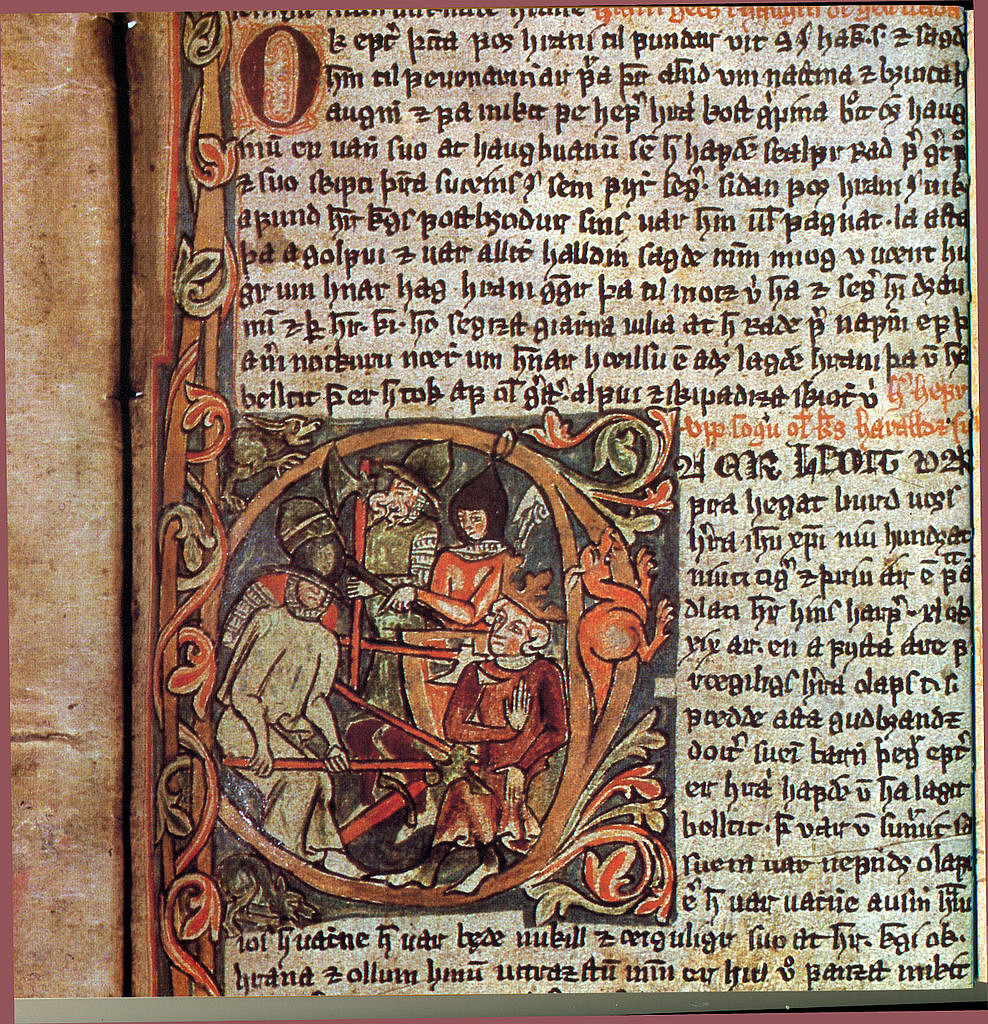
El manuscrito de la saga islandesa Flateyjarbók
El Curioso Caso de las Sagas Islandesas
A pesar de la riqueza de la literatura medieval islandesa (sagas, þættiry las Eddas), las referencias explícitas a la aurora boreal son extremadamente escasas o inexistentes..
Pero ¿Por qué las sagas medievales islandesas no la mencionan de forma destacada?
Académicos y entusiastas han propuesto varias hipótesis para explicarlo.
- Rareza o invisibilidad en ciertas épocas: Algunas investigaciones sugieren que, debido a los cambios en el campo magnético terrestre, la actividad auroral pudo haber sido menos común o visible en Islandia y Escandinavia durante la época vikinga y el período medieval temprano.
- Percepciones de normalidad: Es posible que para los islandeses medievales, que vivían en una región donde la aurora podía aparecer con cierta regularidad, las luces no fueran tan inusuales como para requerir una explicación narrativa. En otras palabras: si ves algo con frecuencia, deja de ser digno de ser narrado.
- Enfoque de la literatura de sagas: Las sagas tienden a centrarse en el drama humano, la ley, el honor, la exploración y los eventos históricos. Los fenómenos naturales se contextualizan principalmente cuando afectan directamente a esas preocupaciones humanas. La aurora pudo haber sido vista como un telón de fondo (atmosférico más que narrativo), incluso si inspiraba asombro.
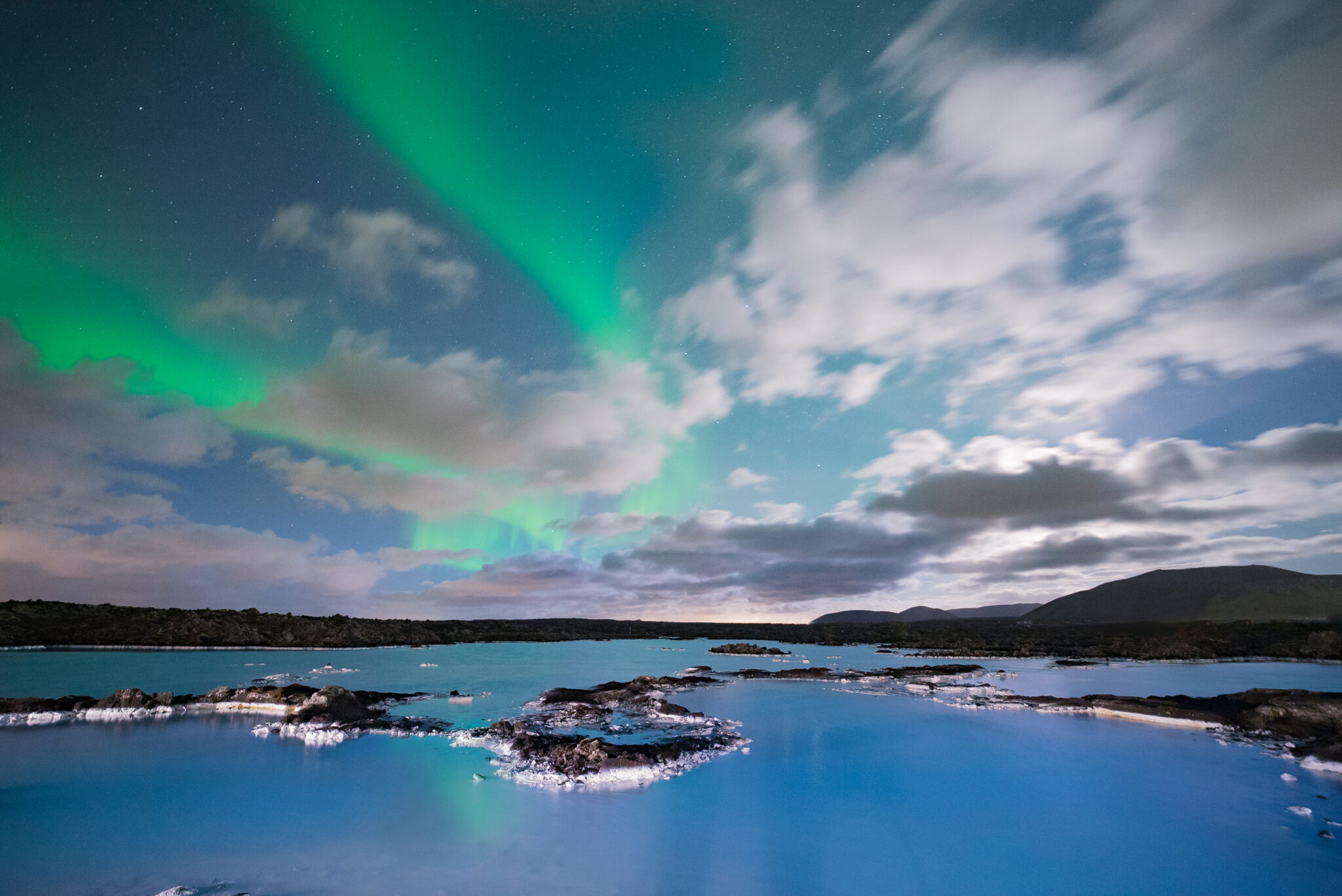
Northern Lights at the Laguna Azul
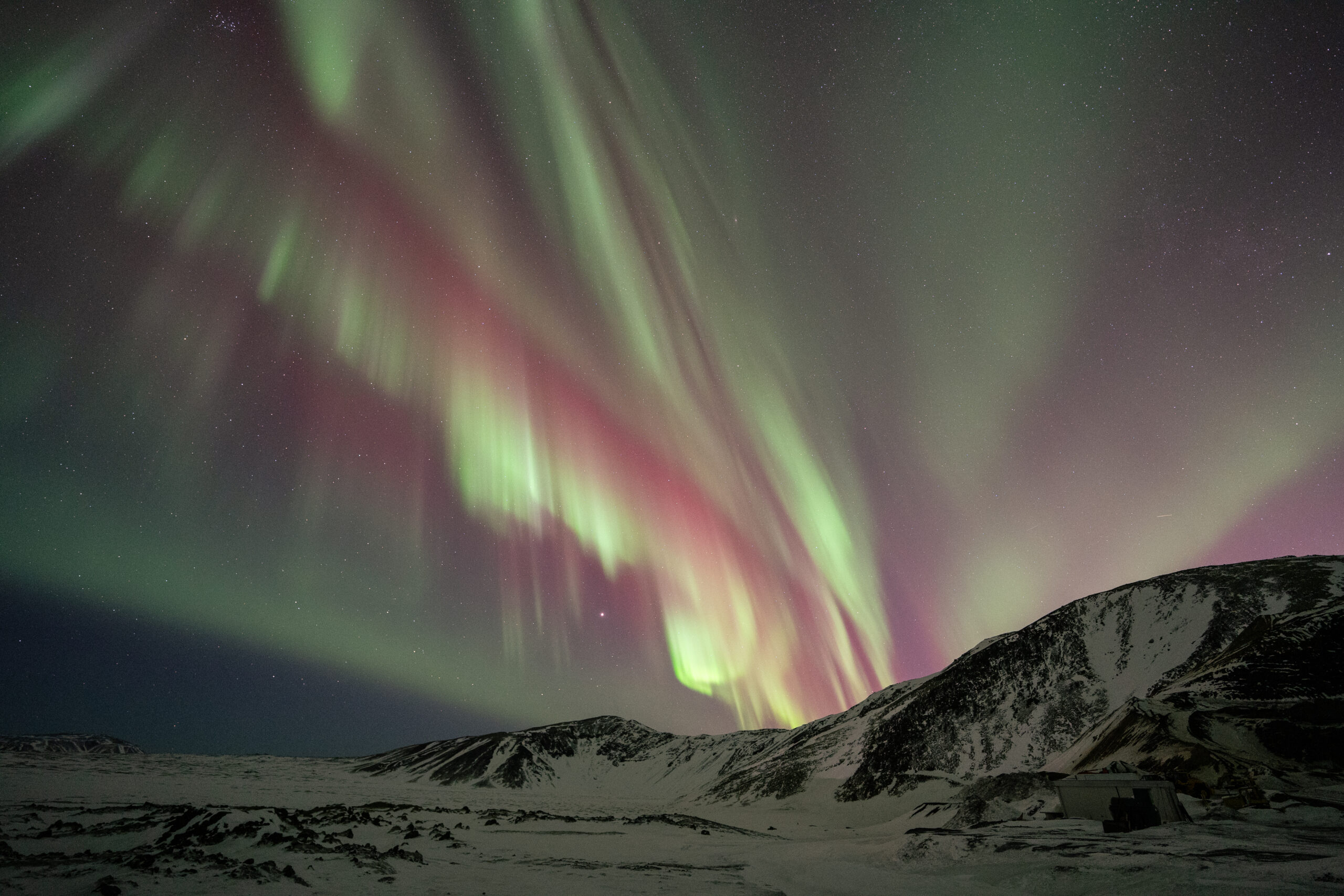
Auroras rojas iluminando el cielo islandés
Cuando el Mito se Encuentra con la Ciencia
Hoy en día, entendemos la aurora boreal como partículas cargadas del sol que interactúan con el campo magnético terrestre y la atmósfera superior.Pero el mito, como intento humano de explicar lo inexplicable, aún resuena al observar esas ondas de luz ondear en los cielos islandeses.
Quizás la ausencia de grandes relatos míticos en las sagas nos muestre algo sobre la vida islandesa medieval: que la gente podía reconocer el misterio, pero no siempre lo entrelazaba en sus historias épicas. O tal vez esos relatos simplemente se perdieron, narrados por narradores alrededor de una fogata, pero nunca plasmados en pergamino.
Sea cual sea la razón, la aurora boreal sigue siendo para nosotros una maravilla científica y un legado de la imaginación humana. Su brillo etéreo continúa inspirando asombro, recordándonos la belleza y el misterio que existen más allá de nuestra vida cotidiana. A través de culturas y generaciones, sirve de puente entre el mundo natural y nuestra capacidad de asombro, fomentando tanto la curiosidad como la creatividad en quienes la contemplan.
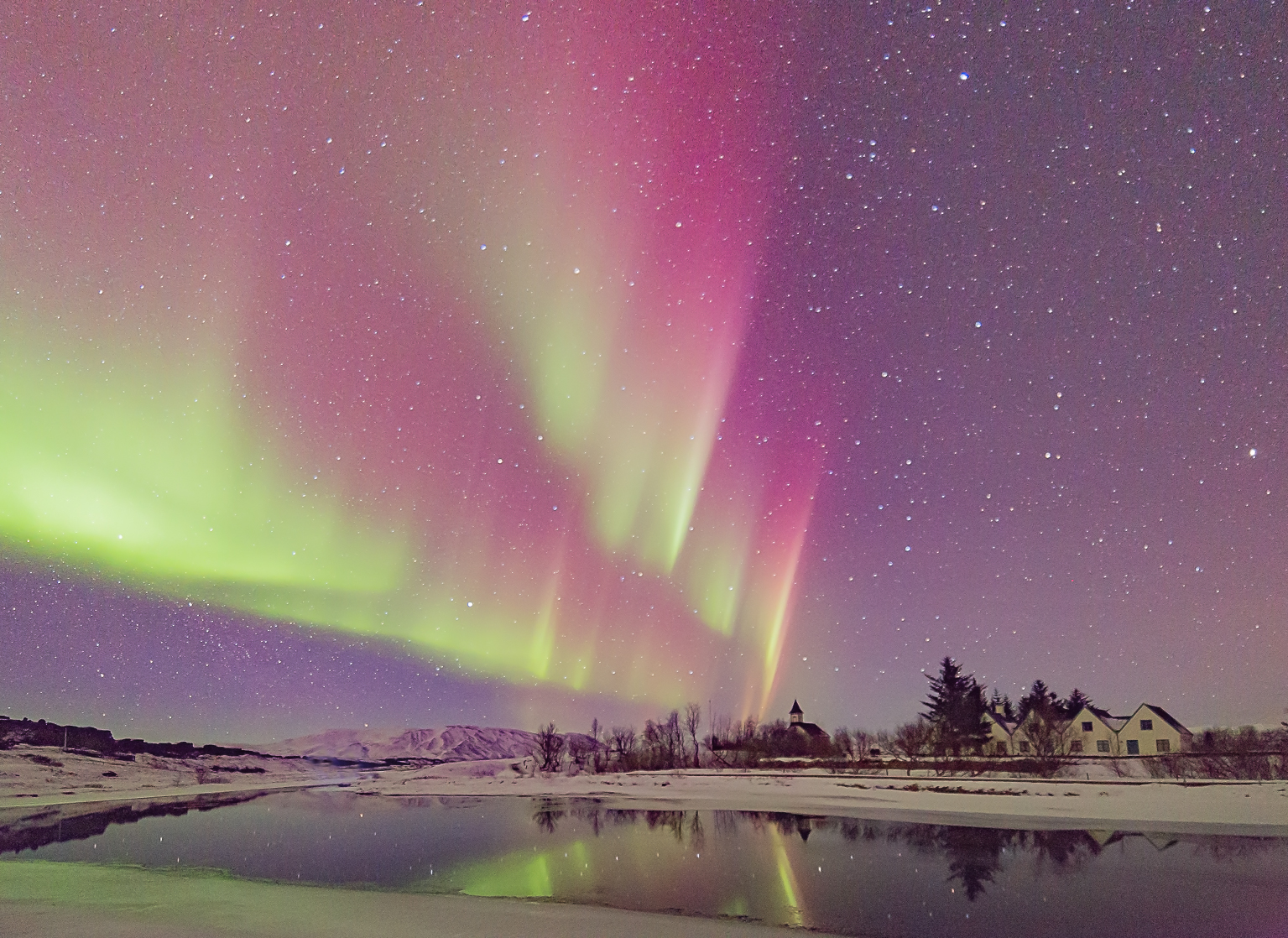
Auroras boreales de color rosa brillante y verde
Únete a un tour guiado para ver Auroras Boreales
Evita el estrés de conducir en invierno de noche y únete a un grupo de aventureros con intereses similares en una caza guiada de auroras boreales.

Preguntas frecuentes sobre la Aurora Boreal
¿Cuándo puedo ver las Auroras Boreales en Islandia?
¿Por qué no puedo ver la aurora boreal en verano?
¿A qué hora aparecen las auroras boreales?
Durante los meses de invierno, cuando las horas de luz son limitadas, las auroras boreales suelen aparecer incluso a las 7:00 pm.
Como no se puede predecir la hora exacta de una aurora , mantén, manten la vista en el cielo. ¡Y recuerda , la paciencia es clave!
¿Cuánto duran las auroras boreales?
¿Puedo ver la aurora boreal cuando está nublado?
¿Las auroras boreales sólo aparecen cuando hace frío?
¿Se ven las auroras boreales en toda Islandia?
¿Son realmente coloridas las auroras boreales?
Las auroras boreales se presentan en una variedad de colores. El verde es, con mucho , el más común, pero también pueden aparecer en vibrantes tonos de rosa, morado, rojo, violeta y azul.
Sin embargo, a simple vista , las auroras boreales pueden verse bastante tenuesy, en ocasiones, percibirse como blancas o grisáceas. Esto se debe a las limitaciones de nuestra visión nocturna..
Las cámaras , en cambio, pueden capturar una versión más fiel de los colores, ya que, en la mayoría de los casos, es posible ajustar la configuración del dispositivo para adaptarse mejor a las condiciones nocturnas.
Descubre más sobre cómo mejorar tu visión nocturna y aprender a tomar excelentes fotografías de auroras aquí.
¿Desaparecerán las auroras boreales en el futuro?
No, las auroras boreales no van a desaparecer!
La aurora boreal ha sido visible en el Ártico durante siglos, y eso no va a cambiar pronto.
Lo cierto es que la actividad solar, responsable de la aparición de las auroras boreales en nuestro planeta , cambia con el tiempo, siguiendo un ciclo de once años.
Durante cada ciclo solar, el Sol pasa de un pico a un mínimo de actividad. Durante el pico, el llamado"máximo solar", podemos esperar una mayor actividad y, potencialmente, auroras boreales más intensas visibles desde latitudes inusuales (en el hemisferio norte, esto significa que las auroras se avistan más al sur de lo habitual). Mientras que, durante el mínimo solar, estos fenómenos inusualmente intensos se vuelven más raros.
Aun así, en latitudes árticas , las auroras boreales se pueden ver con claridad durante todo el ciclo. E Islandia, al estar dentro del "cinturón de auroras", es y seguirá siendo el destino perfecto para la búsqueda de auroras boreales.!
¿Qué es el valor BZ?
El valor Bz forma parte del Campo Magnético Interplanetario (CMI), que es el campo magnético transportado por el viento solar proveniente del Sol.
¿Por qué es importante para la Aurora Boreal? El campo magnético de la Tierra apunta al norte. Si el campo magnético del viento solar (Bz) apunta al sur ( un Bz negativo), se conecta con el campo magnético terrestre y permite que partículas solares cargadas entren en la atmósfera. Esta interacción contribuye a la creación de la aurora boreal. Si, en cambio, Bz es positivo (hacia el norte), los campos no se conectan bien y entran menos partículas, lo que significa una aurora más débil o nula..
Piense en el Bz como un interruptor de encendido y apagado: Bz negativo (sur) = encendido , alta probabilidad de Auroras pronto. Bz positivo (norte) = apagado, Aurora menos probable.
Obtenga más información sobre el Bz y cómo funciona el pronóstico aquí.
¿Cuáles son las mejores aplicaciones y sitios web de pronóstico para la caza de Auroras Boreales?
Para ver la aurora boreal, lo importante es el tiempo, cielos despejados y pronósticos actualizados. Estas herramientas te ayudan a saber cuándo y dónde hay una buena probabilidad de ver la aurora, para que puedas planificar tu noche de forma inteligente. Para obtener los mejores resultados, recomendamos usar más de una fuente, ya que los pronósticos interpretan los datos de forma diferente.
WEB FORECASTS
- Pronóstico oficial de auroras de AURORA REYKJAVÍK 👉 https://aurorareykjavik.is/aurora-forecast/
Nuestro pronóstico de 6 pasos combina actividad geomagnética, nubosidad y consejos de observación, diseñado para la planificación de la aurora boreal en tiempo real. - Clima espacial en vivo
Un sitio detallado sobre el clima espacial global con mapas de actividad auroral y parámetros solares. - Centro de Predicción del Clima Espacial (SWPC) de la NOAA
El modelo oficial de pronóstico del tiempo espacial de EE. UU. en el que muchas aplicaciones de auroras basan sus datos.
MEJORES APLICACIONES MÓVILES
- My Aurora Forecast – Ofrece índice KP en tiempo real, mapas globales de auroras, alertas push y pronósticos para varios días: ideal tanto para viajeros como para observadores serios de auroras.
Y no olvides activar las notificaciones para recibir alertas cuando aumente la actividad de la aurora.
📍App Store
📍 Google Play
Siguiendo esta guía, estarás bien preparado para experimentar uno de los espectáculos más mágicos de la naturaleza. Tanto si estás planeando tu viaje como si ya estás en Islandia, ¡la Aurora te espera!