LAS MEJORES LAGUNAS GEOTÉRMICAS DE ISLANDIA: ¿CUÁL DEBERÍAS VISITAR?
Explicación de los baños geotermales de Islandia
¿Cuál deberías elegir?
Consejos para su visita
Islandia es una tierra de fuego y hielo, donde los glaciares se encuentran con los volcanes, y la energía geotérmica burbujea justo bajo la superficie. Entre sus atractivos más irresistibles se encuentran sus lagunas geotérmicas, aguas termales naturales (y a veces lujosas) que ofrecen la combinación perfecta de relajación, aventura y paisajes impresionantes. Desde resorts de fama mundial hasta joyas ocultas en plena naturaleza, cada laguna tiene su propio encanto único, lo que dificulta la elección de cuál visitar. En esta guía, compararemos cinco de las mejores lagunas de Islandia: Laguna Azul , Sky Lagoon, Hvammsvík, Laguna Laugarás , and Laguna Secreta . ¡Te ayudaremos a decidir cuál es el baño más adecuado para ti!
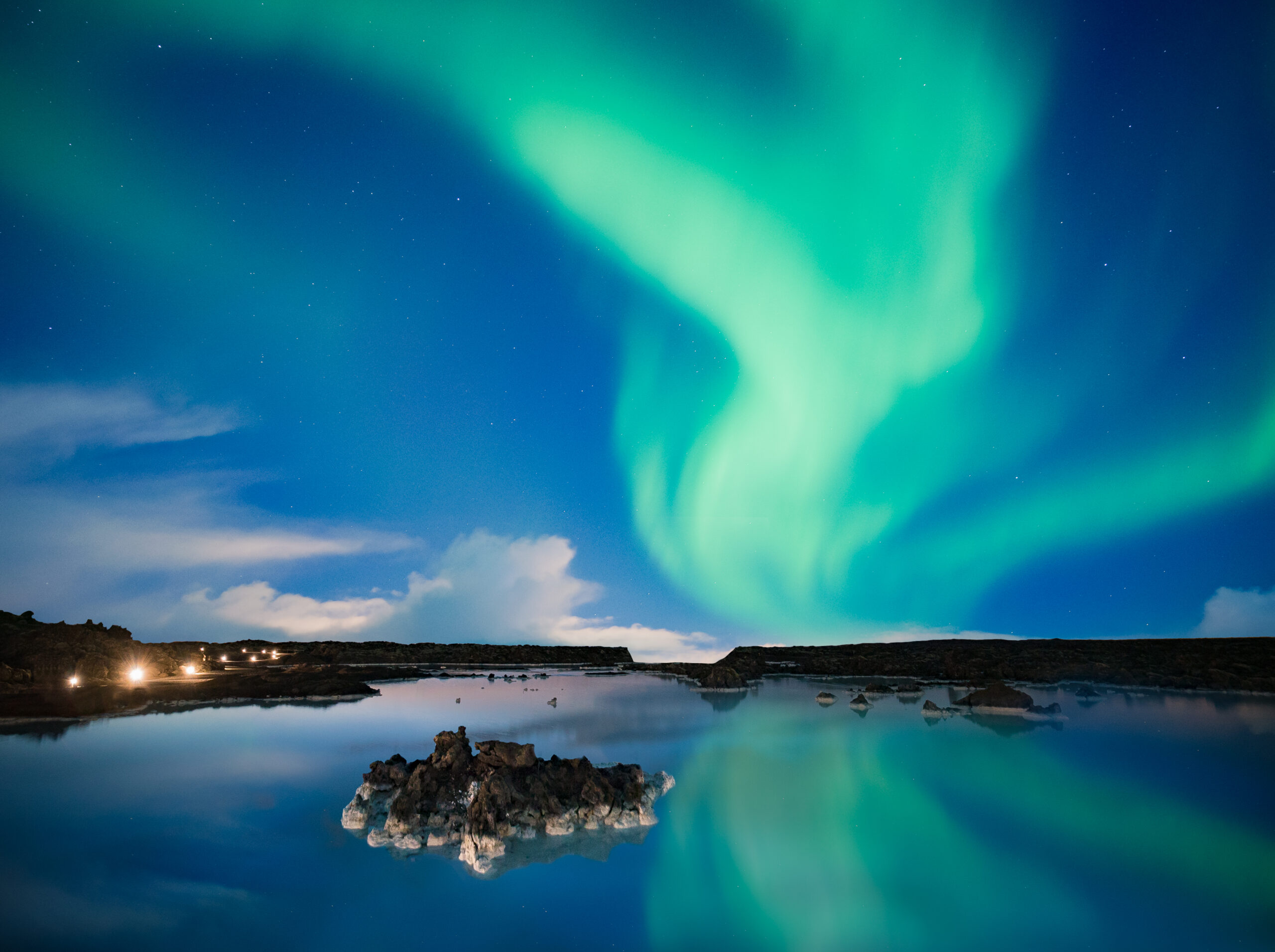
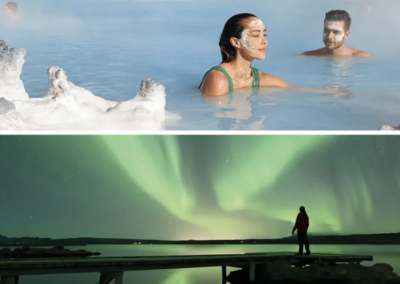
Auroras Boreales sobre La Laguna Azul
1. Laguna Azul: la experiencia de spa más icónica
Si hay un nombre que todos conocen, es la Laguna Azul, el balneario geotermal más famoso de Islandia. Ubicada en un campo de lava cerca de Grindavík, esta impresionante piscina de color azul lechoso se alimenta de agua geotermal rica en sílice, minerales y algas, legendarias para la piel.
Por qué es genial
- Laguna enorme y mundialmente famosa con aguas azules surrealistas.
- Includes a silica mud mask with most tickets.
- Restaurants, bars, and luxury spa add-ons make it more than just a soak.
- Cerca del aeropuerto de Keflavík: ¡Ideal para una escala!
Ideal para: Quienes visitan el país por primera vez, amantes del spa y cualquiera que busque una experiencia icónica en Islandia.
2. Sky Lagoon: Bienestar islandés moderno
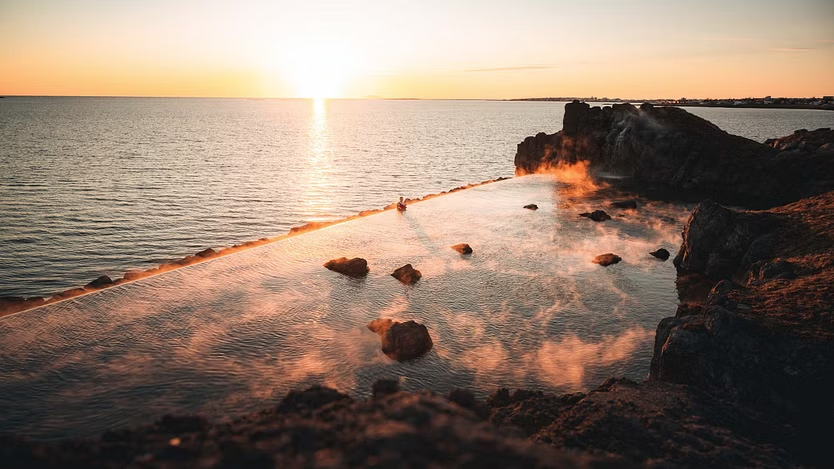
A las afueras de Reikiavik, Sky Lagoon combina baños geotérmicos con la tradición islandesa y vistas impresionantes al océano. Es famoso por el Ritual de 7 Pasos, una serie de saunas, baños fríos y experiencias de vapor diseñadas para elevar el bienestar.
Por qué es genial
- Espectacular piscina de borde infinito con vista al mar.
- El Ritual hace que la experiencia se sienta más como un viaje de bienestar que un simple baño.
- Tiende a sentirse más tranquilo y más centrado en los adultos que Blue Lagoon.
Ideal para: Visitantes que priorizan el bienestar y quienes desean vistas espectaculares directamente al océano.
La piscina infinita de Sky Lagoon
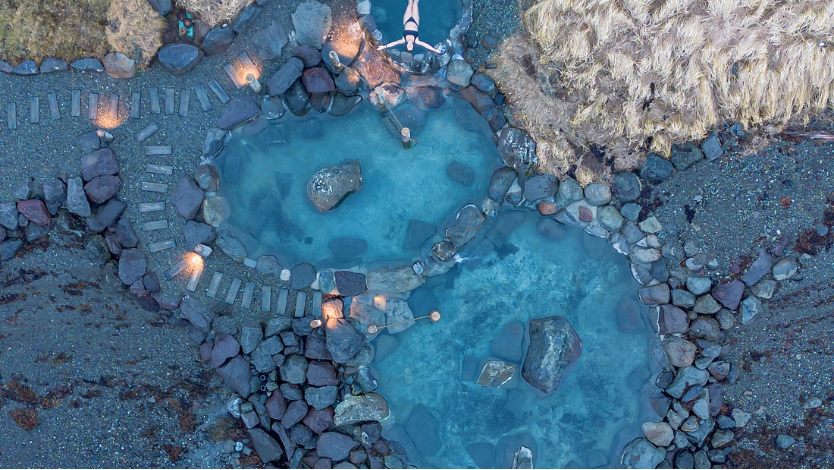
Las piscinas termales de Hvammsvík vistas desde arriba
3. Aguas termales de Hvammsvík: jacuzzis de la naturaleza
¿Buscas naturaleza pura y relax? Las Aguas Termales de Hvammsvík se encuentran a orillas del Hvalfjörður (Fiordo de las Ballenas), con múltiples piscinas naturales, baños de vapor e incluso acceso a baños en el mar. Es menos sofisticado que los grandes balnearios, pero eso forma parte de su encanto.
Por qué es genial
- Múltiples piscinas a diversas temperaturas, algunas climatizadas, otras refrigeradas por el océano.
- Impresionantespaisajes de los fiordosy a menudo muy tranquilos.
- Las rutas de senderismo y las opciones al aire libre cercanas lo convierten en una aventura de día completo.
Ideal para: Amantes de la naturaleza y viajeros que desean paisajes islandeses junto con su baño.
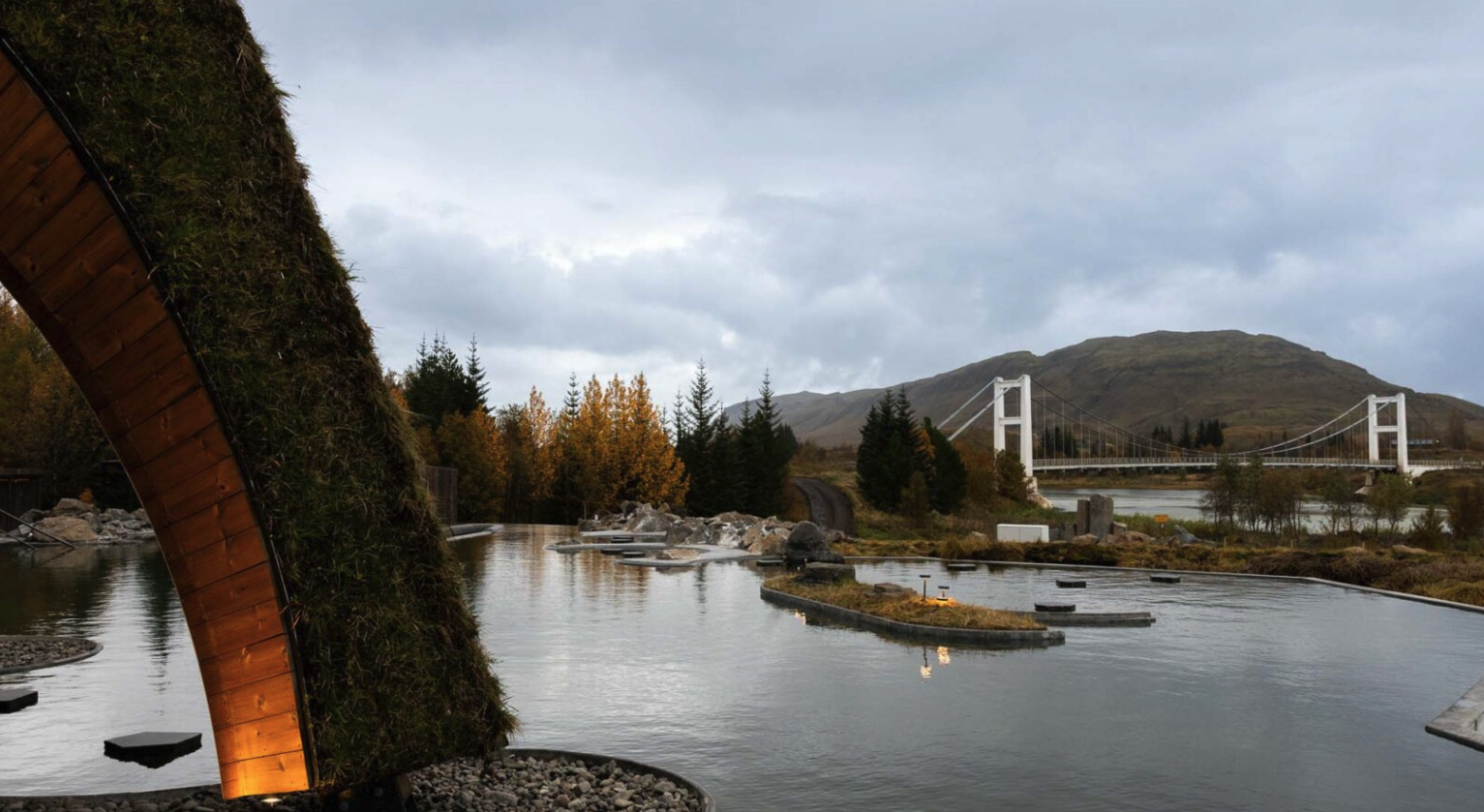
Laguna de Laugarás
4. Laguna Laugarás: La nueva joya de la experiencia del Círculo Dorado
Una de las lagunas geotérmicas más nuevas de Islandia, la laguna Laugarás ofrece una laguna de dos niveles, una cascada, una piscina en medio del bosque, saunas y bares dentro del agua, convirtiéndose rápidamente en una parada obligatoria en la ruta del Círculo Dorado.
Por qué es genial
- Disfrútalo en combinación con el Oferta combinada Círculo Dorado + Laguna Laugarás
- Característica única de cascada.
- Múltiples experiencias de baño en un mismo lugar (sauna, piscina de agua fría, piscina en el bosque).
- Servicio de restaurante en el mismo lugar realza la experiencia.
Ideal para: Viajeros del Círculo Dorado y aquellos que desean una experiencia fresca y variada.
5. Laguna Secreta: Clásica y económica
Si buscas autenticidad, la Laguna Secreta (Gamla Laugin) en Flúðir es el lugar de baño geotérmico más antiguo de Islandia, que data de 1891. Es sencillo, rústico y está integrado en la naturaleza, con aguas termales burbujeando constantemente e incluso un mini géiser cerca. ¡Muy fácil de disfrutar como una parada relajante en la ruta del Círculo Dorado!
Por qué es genial
- Un complemento relajante para tu Paquete combinado Círculo Dorado + Laguna Secreta
- Más asequible que los mega resorts.
- Ambiente islandés clásico:vapor natural,instalaciones más sencillas,encanto rural.
- Fácil de combinar con visitas turísticas al Círculo Dorado.
Ideal para: Viajeros con presupuesto ajustado y amantes de la auténtica cultura de aguas termales.
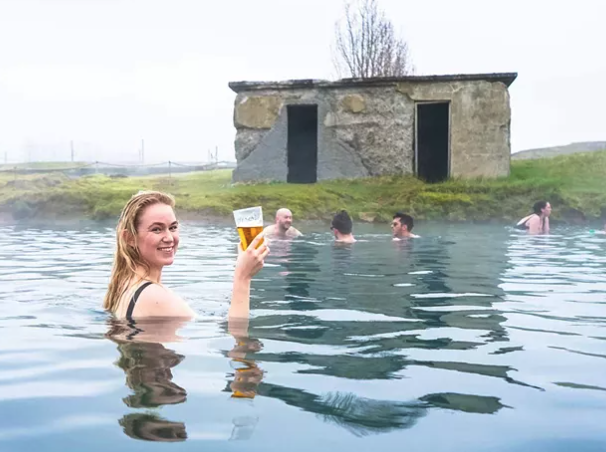
Visitante disfrutando de una bebida en Secret Lagoon
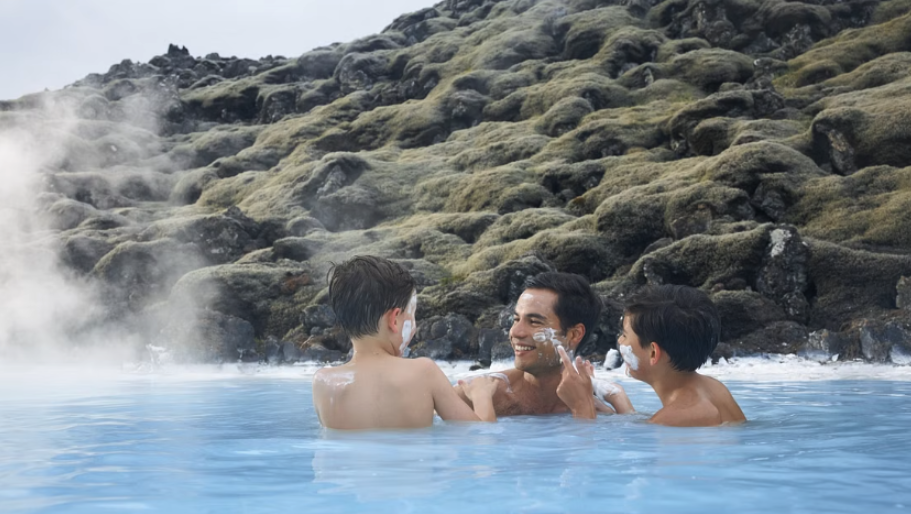
Familia relajándose en la Laguna Azul
Entonces… ¿Cuál es la mejor laguna?
No existe una respuesta que sirva para todos los casos; depende de tus prioridades:
- Ideal para una experiencia icónica: Laguna Azul
- La mejor para el bienestar y las vistas: Sky Lagoon
- Ideal para la inmersión en la naturaleza: Aguas termales de Hvammsvík
- El mejor destino nuevo + variedad: Círculo Dorado + Laguna de Laugarás
- Lo mejor en relación calidad-precio y autenticidad: Círculo Dorado + Laguna Secreta
Consejor para Tu Visita
- Reserva con antelación: Las lagunas alcanzan su capacidad máxima rápidamente, por lo que siempre es mejor asegurar tu franja horaria con tiempo
- Combínalo con visitas turísticas: Algunas lagunas combinan a la perfección con las ofertas combinadas del Círculo Dorado.
- Ve al atardecer para disfrutar de vistas inolvidables, especialmente en Sky Lagoon o Hvammsvík.
Si tienes poco tiempo, haz Laguna Azul o Sky Lagoon . Si tienes planes un poco más aventureros, Hvammsvík, el Círculo Dorado con la Laguna Secreta o el Círculo Dorado con la Laguna Laugarás podrían robarte el corazón.
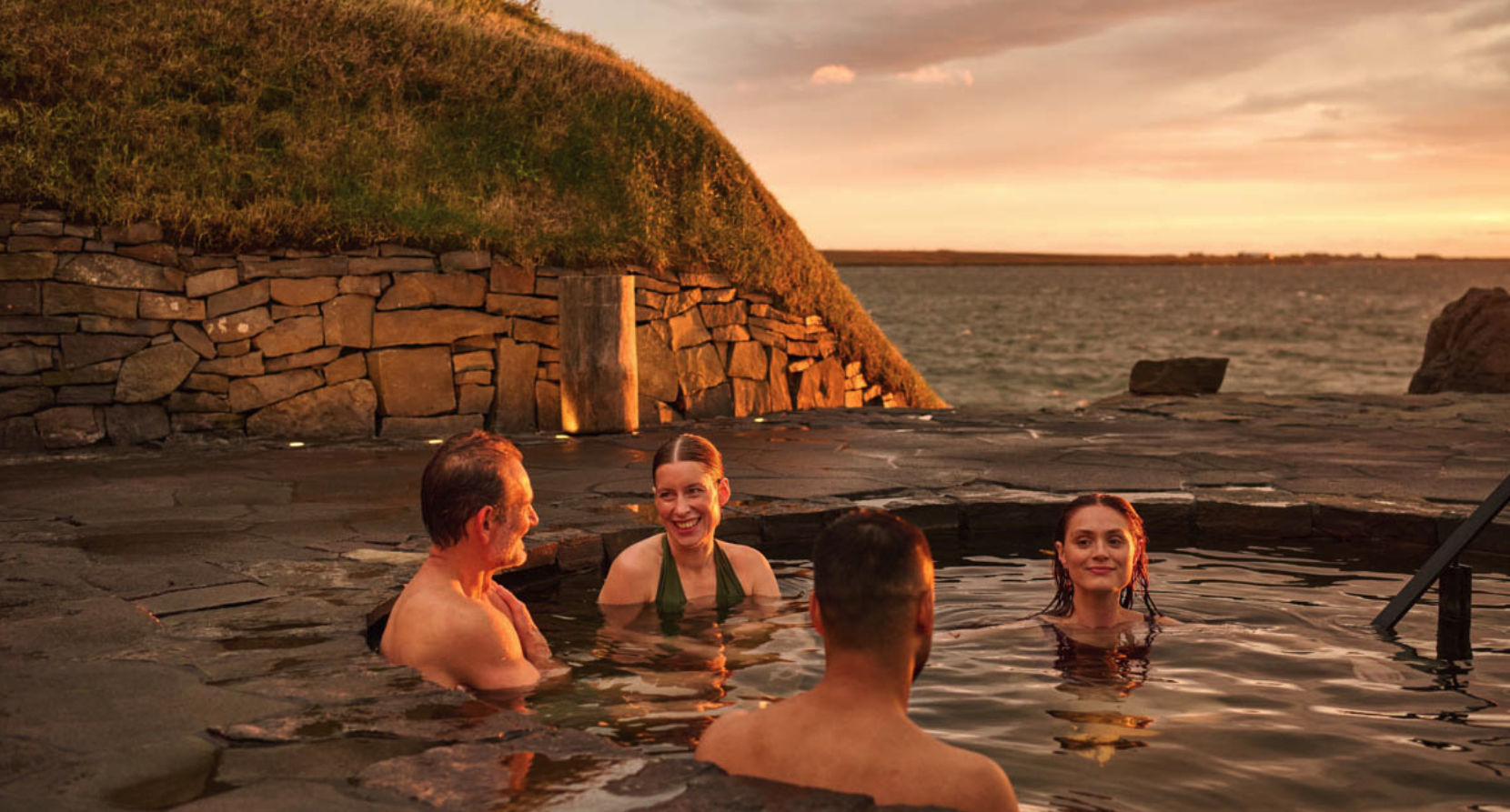
Relajante puesta de sol en Sky Lagoon
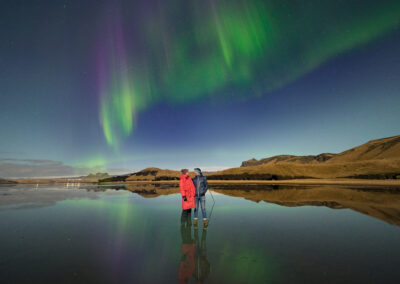
Únete a un tour guiado para ver Auroras Boreales

Preguntas frecuentes sobre la Aurora Boreal
¿Cuándo puedo ver las Auroras Boreales en Islandia?
¿Por qué no puedo ver la aurora boreal en verano?
¿A qué hora aparecen las auroras boreales?
¿Cuánto duran las auroras boreales?
¿Puedo ver la aurora boreal cuando está nublado?
¿Las auroras boreales sólo aparecen cuando hace frío?
¿Se ven las auroras boreales en toda Islandia?
¿Son realmente coloridas las auroras boreales?
Sin embargo, a simple vista , las auroras boreales pueden verse bastante tenuesy, en ocasiones, percibirse como blancas o grisáceas. Esto se debe a las limitaciones de nuestra visión nocturna..
Las cámaras , en cambio, pueden capturar una versión más fiel de los colores, ya que, en la mayoría de los casos, es posible ajustar la configuración del dispositivo para adaptarse mejor a las condiciones nocturnas.
Descubre más sobre cómo mejorar tu visión nocturna y aprender a tomar excelentes fotografías de auroras aquí.
¿Desaparecerán las auroras boreales en el futuro?
La aurora boreal ha sido visible en el Ártico durante siglos, y eso no va a cambiar pronto.
Lo cierto es que la actividad solar, responsable de la aparición de las auroras boreales en nuestro planeta , cambia con el tiempo, siguiendo un ciclo de once años.
Durante cada ciclo solar, el Sol pasa de un pico a un mínimo de actividad. Durante el pico, el llamado"máximo solar", podemos esperar una mayor actividad y, potencialmente, auroras boreales más intensas visibles desde latitudes inusuales (en el hemisferio norte, esto significa que las auroras se avistan más al sur de lo habitual). Mientras que, durante el mínimo solar, estos fenómenos inusualmente intensos se vuelven más raros.
Aun así, en latitudes árticas , las auroras boreales se pueden ver con claridad durante todo el ciclo. E Islandia, al estar dentro del "cinturón de auroras", es y seguirá siendo el destino perfecto para la búsqueda de auroras boreales.!
¿Qué es el valor BZ?
¿Por qué es importante para la Aurora Boreal? El campo magnético de la Tierra apunta al norte. Si el campo magnético del viento solar (Bz) apunta al sur ( un Bz negativo), se conecta con el campo magnético terrestre y permite que partículas solares cargadas entren en la atmósfera. Esta interacción contribuye a la creación de la aurora boreal. Si, en cambio, Bz es positivo (hacia el norte), los campos no se conectan bien y entran menos partículas, lo que significa una aurora más débil o nula..
Piense en el Bz como un interruptor de encendido y apagado: Bz negativo (sur) = encendido , alta probabilidad de Auroras pronto. Bz positivo (norte) = apagado, Aurora menos probable.
Obtenga más información sobre el Bz y cómo funciona el pronóstico aquí.
¿Cuáles son las mejores aplicaciones y sitios web de pronóstico para la caza de Auroras Boreales?
Para ver la aurora boreal, lo importante es el tiempo, cielos despejados y pronósticos actualizados. Estas herramientas te ayudan a saber cuándo y dónde hay una buena probabilidad de ver la aurora, para que puedas planificar tu noche de forma inteligente. Para obtener los mejores resultados, recomendamos usar más de una fuente, ya que los pronósticos interpretan los datos de forma diferente.
WEB FORECASTS
- Pronóstico oficial de auroras de AURORA REYKJAVÍK 👉 https://aurorareykjavik.is/aurora-forecast/
Nuestro pronóstico de 6 pasos combina actividad geomagnética, nubosidad y consejos de observación, diseñado para la planificación de la aurora boreal en tiempo real. - Clima espacial en vivo
Un sitio detallado sobre el clima espacial global con mapas de actividad auroral y parámetros solares. - Centro de Predicción del Clima Espacial (SWPC) de la NOAA
El modelo oficial de pronóstico del tiempo espacial de EE. UU. en el que muchas aplicaciones de auroras basan sus datos.
MEJORES APLICACIONES MÓVILES
- My Aurora Forecast – Ofrece índice KP en tiempo real, mapas globales de auroras, alertas push y pronósticos para varios días: ideal tanto para viajeros como para observadores serios de auroras.
Y no olvides activar las notificaciones para recibir alertas cuando aumente la actividad de la aurora.
📍App Store
📍 Google Play
Siguiendo esta guía, estarás bien preparado para experimentar uno de los espectáculos más mágicos de la naturaleza. Tanto si estás planeando tu viaje como si ya estás en Islandia, ¡la Aurora te espera!