GOLDEN CIRCLE VS SOUTH COAST: ICELAND'S ULTIMATE DAY TOUR SHOWDOWN
The Must-See Golden Circle
The Unmissable South Coast
Elige el Tour Perfecto Para Ti
Iceland is a land of staggering beauty, and two of its most iconic sightseeing routes offer very different ways to experience it: the Golden Circle and the South Coast. Whether you’re planning a short trip or deciding which guided tour to book, this comparison will help you choose the perfect adventure.
The Golden Circle — Classic Iceland
The South Coast — Wild and Dramatic
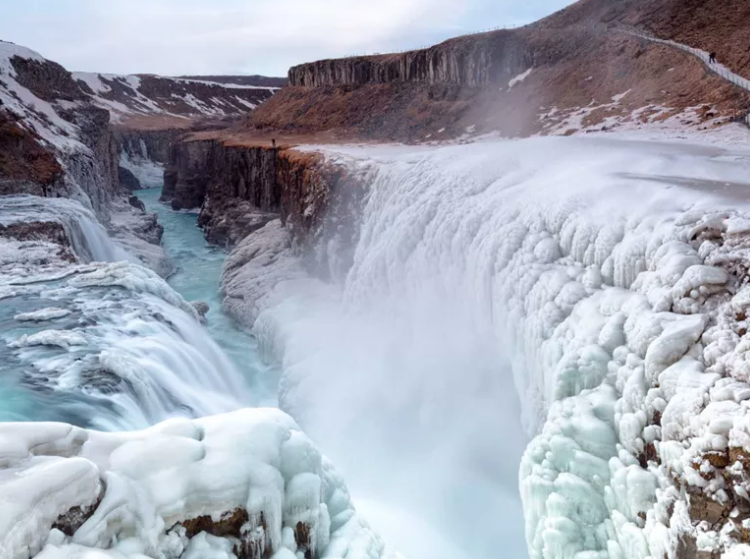
Cascada Gullfoss congelada en un día de invierno
The Golden Circle — Classic Iceland
What You’ll See
- Þingvellir National Park — A UNESCO World Heritage site.
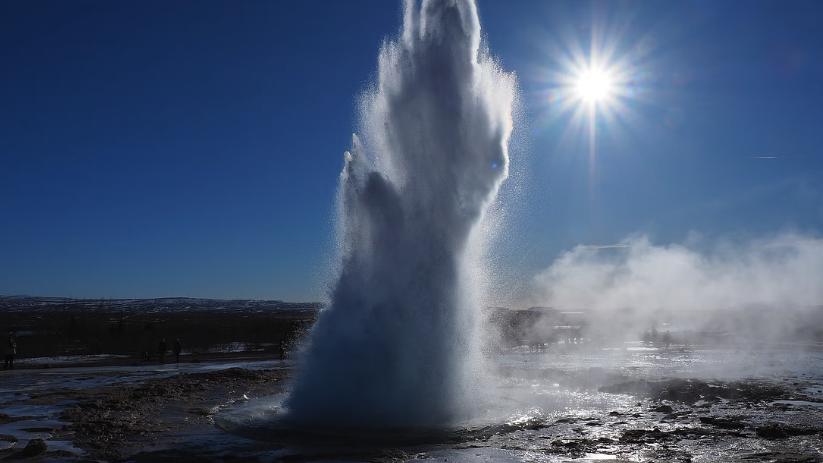
Home of the first modern Parliament, and the site of the rift where the Eurasian and North American tectonic plates meet. - Geysir Geothermal Area — Home to Strokkur, the world famous hot spring which erupts every 7 to 10mins.
- Gullfoss Waterfall — The Golden fall, one of Iceland’s most famous waterfalls.
Typical Duration
- 8hr for a Classic Golden Circle Tour.
- Up to 10hrs for a Golden Circle Tour including a Geothermal Spa (Choose among Blue Lagoon, Sky Lagoon, Secret Lagoon or Laugarás Lagoon), or snowmobiling on Langjökull glacier.
Why It’s Popular
- Quick & rewarding: Big sights in relatively close proximity.
- History + geology + waterfall: Great for first-timers.
- Accessible year-round: Roads are maintained even in winter.
Puntos de interés
- Easy walks and boardwalks.
- Great photography stops.
- Good for all ages and fitness levels.
Mejor para
✔ First-time visitors
✔ Short stays
✔ Families and groups with varied interests
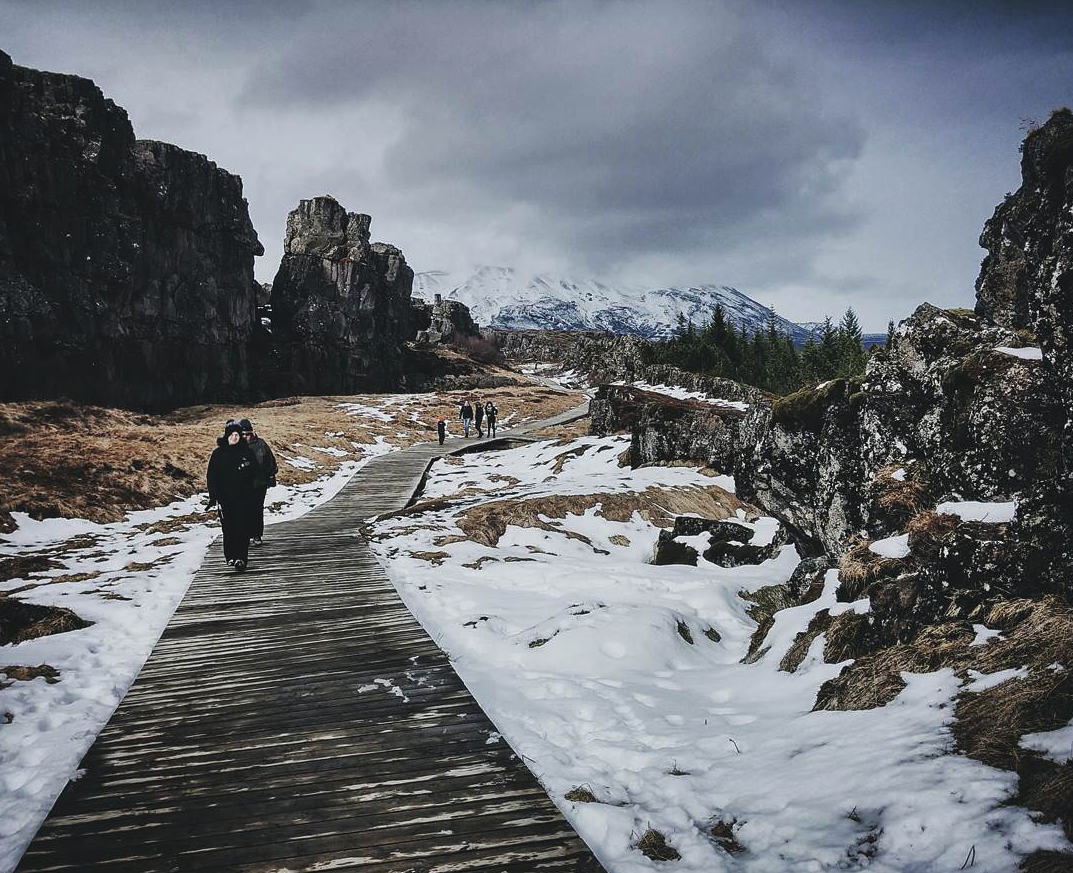
Path among the tectonic plates at Þingvellir
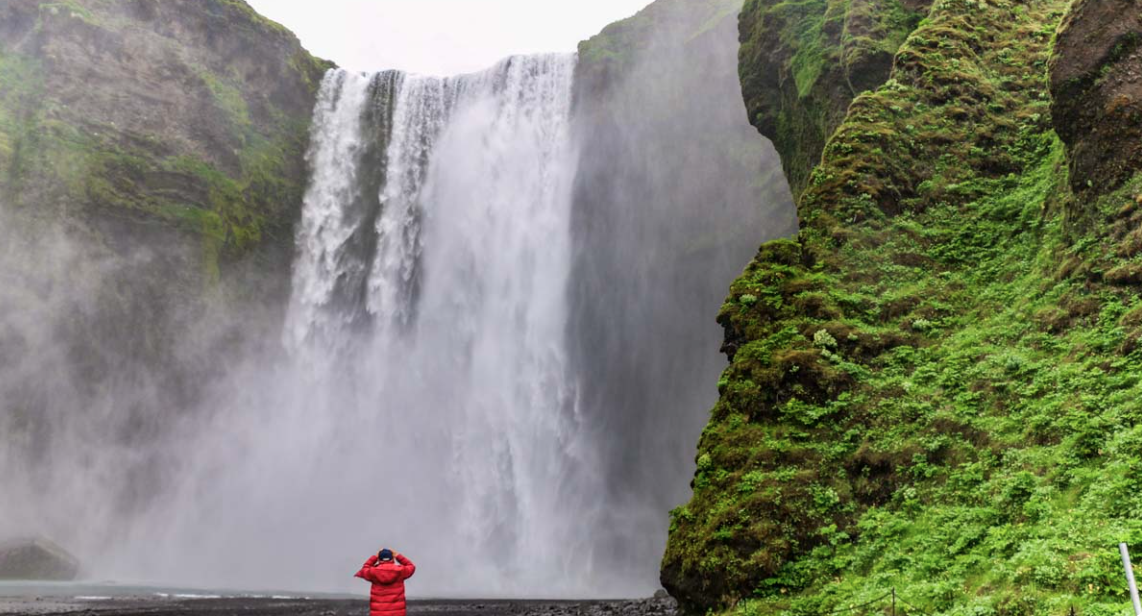
The majestic Skógafoss
The South Coast — Wild and Dramatic
What You’ll See
- Seljalandsfoss & Skógafoss — Two of Iceland’s most iconic waterfalls.
- Reynisfjara Black Sand Beach — Striking basalt columns and roaring Atlantic waves.
- Views of Eyjafjallajökull & Mýrdalsjökull — Majestic glaciers visible on the road.
Typical Duration
10 hrs for the Classic South Coast Tour.
Up to 12hrs for a South Coast adventure including a glacier hike, a visit to the Katla natural ice cave or geothermal pampering at Sky Lagoon.
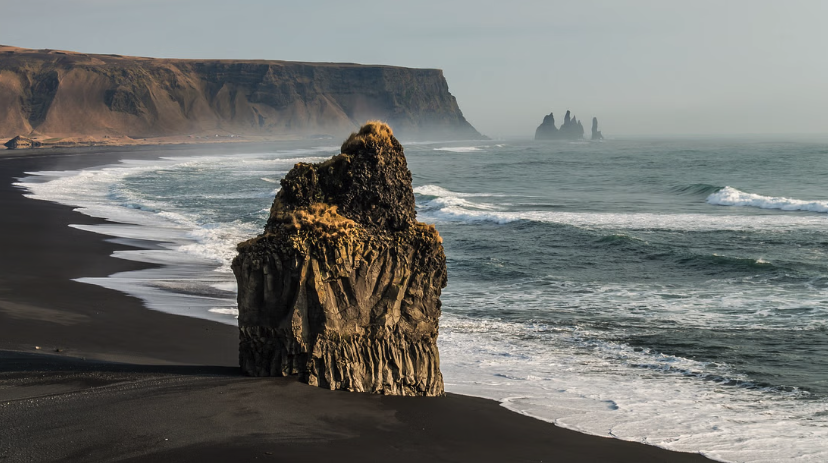
View over Reynisfjara black beach
Puntos de interés
- Easy walks and boardwalks.
- Great photography stops.
- Good for all ages and fitness levels.
Mejor para
✔ First-time visitors
✔ Short stays
✔ Families and groups with varied interests
Why It’s Popular
- Phenomenal variety: Waterfalls, coastlines, glaciers — all in one stretch.
- Photographer’s paradise: Endless dramatic landscapes.
- More to explore: Add to the adventure with a Sólheimajökull glacier walk or a visit to the mesmerizing Katla Ice Cave
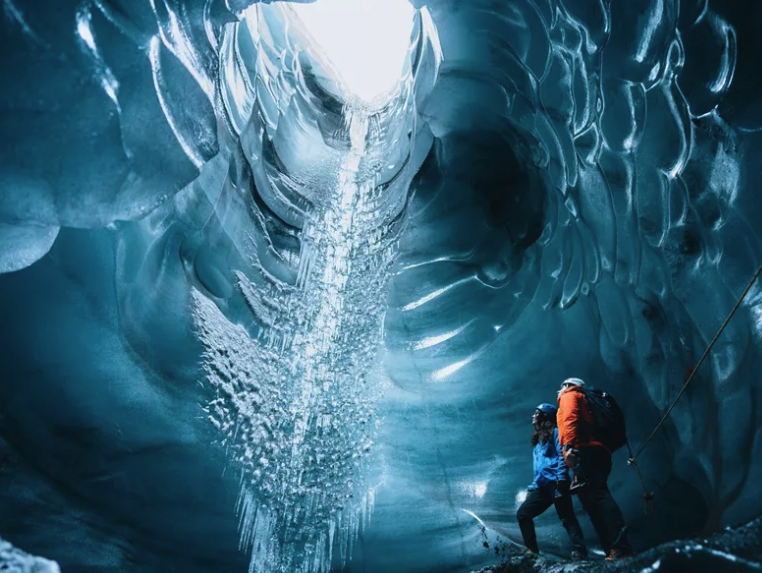
Ice formations at the Katla ice cave
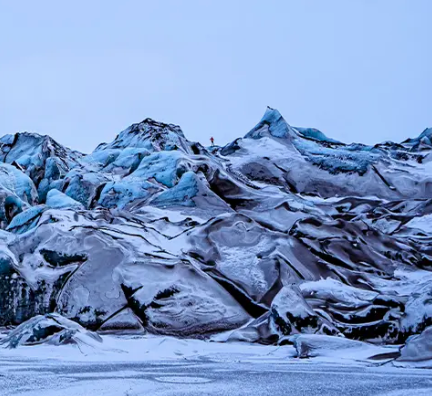
el glaciar Sólheimarjökull
Puntos de interés
- Walking paths to the falls and dramatic seascapes.
- Optional glacier hikes or ice-caving in winter.
- Longer distances between highlights (more time on the road).
Mejor para
✔ Nature lovers
✔ Photography enthusiasts
✔ Visitors with a full day to spare
Golden Circle vs South Coast — Quick Comparison
When choosing between the Golden Circle and the South Coast, the biggest difference comes down to pace, distance, and the type of scenery you want to experience.
The Golden Circle is widely considered the more accessible option. The route stays relatively close to Reykjavík, with short driving distances between major attractions.
By contrast, the South Coast covers a much longer stretch of road and typically requires a full day of travel. While the driving time is greater, the reward is a sense of vastness and variety. Landscapes change dramatically as you move along the coast.
The Golden Circle is perfect for travelers seeking a well-rounded introduction to Iceland in a shorter time frame, while the South Coast is better suited for those who want a deeper dive into Iceland’s wild, cinematic landscapes and don’t mind a longer, more adventurous day.
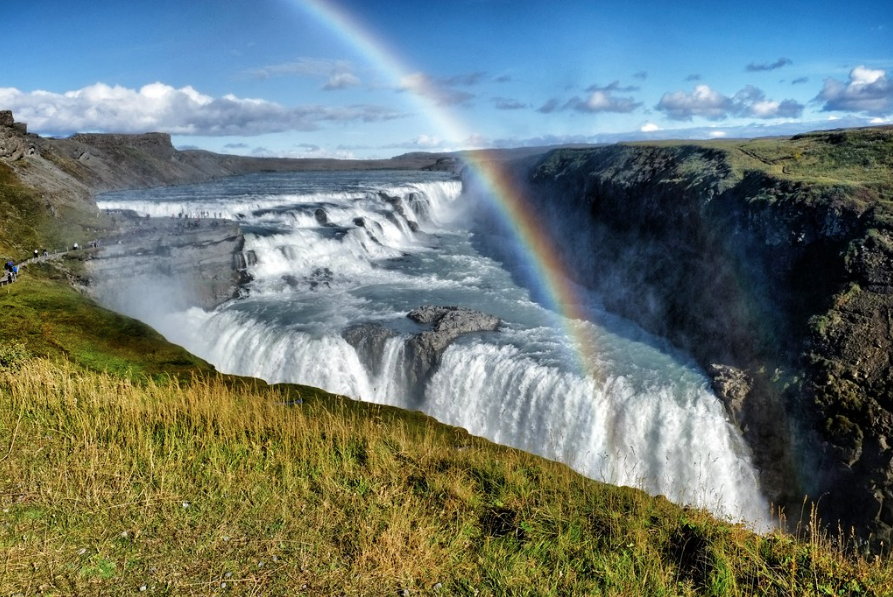
Cascada Gullfoss
When to Choose Which
If you’re short on time or visiting Iceland for just a day or two, the Golden Circle is often the most practical choice. Its proximity to Reykjavík and shorter driving distances make it easy to fit into a tight itinerary while still delivering a classic Icelandic experience.
If you have a full day available and want to immerse yourself in Iceland’s dramatic natural beauty, the South Coast is the better option. The longer journey rewards you with towering waterfalls, expansive coastal views, and landscapes that feel wilder and more remote.
That said, if your schedule allows, the real answer is: CHOOSE BOTH. The Golden Circle and the South Coast showcase completely different sides of Iceland, and together they offer a far more complete picture of the country’s natural and cultural heritage. Many travelers find that doing both tours transforms their trip from a quick visit into a truly unforgettable experience.
Rather than viewing them as alternatives, it helps to think of the Golden Circle as your introduction to Iceland and the South Coast as the adventure that follows. Experiencing both routes allows you to appreciate Iceland’s incredible diversity, from geological wonders and history to vast, unforgettable landscapes. All within a relatively short distance from Reykjavík!
Conclusión
Both tours offer memorable experiences, it just depends on what kind of adventure you want. The Golden Circle is the quintessential Iceland introduction, while the South Coast is a bit wilder and dramatic.
If time allows, doing both on separate days unlocks the full spectrum of Iceland’s natural wonders.
Check out our perfect 2-day Itinerary and discover how to best combine Golden Circle and South Coast for an all-round Icelandic adventure.
Or pick our Best of Iceland 3-or-1 offer, a budget alternative that will take you to Iceland´s iconic Golden Circle, South Coast and on a northern lights hunt – all in one package!
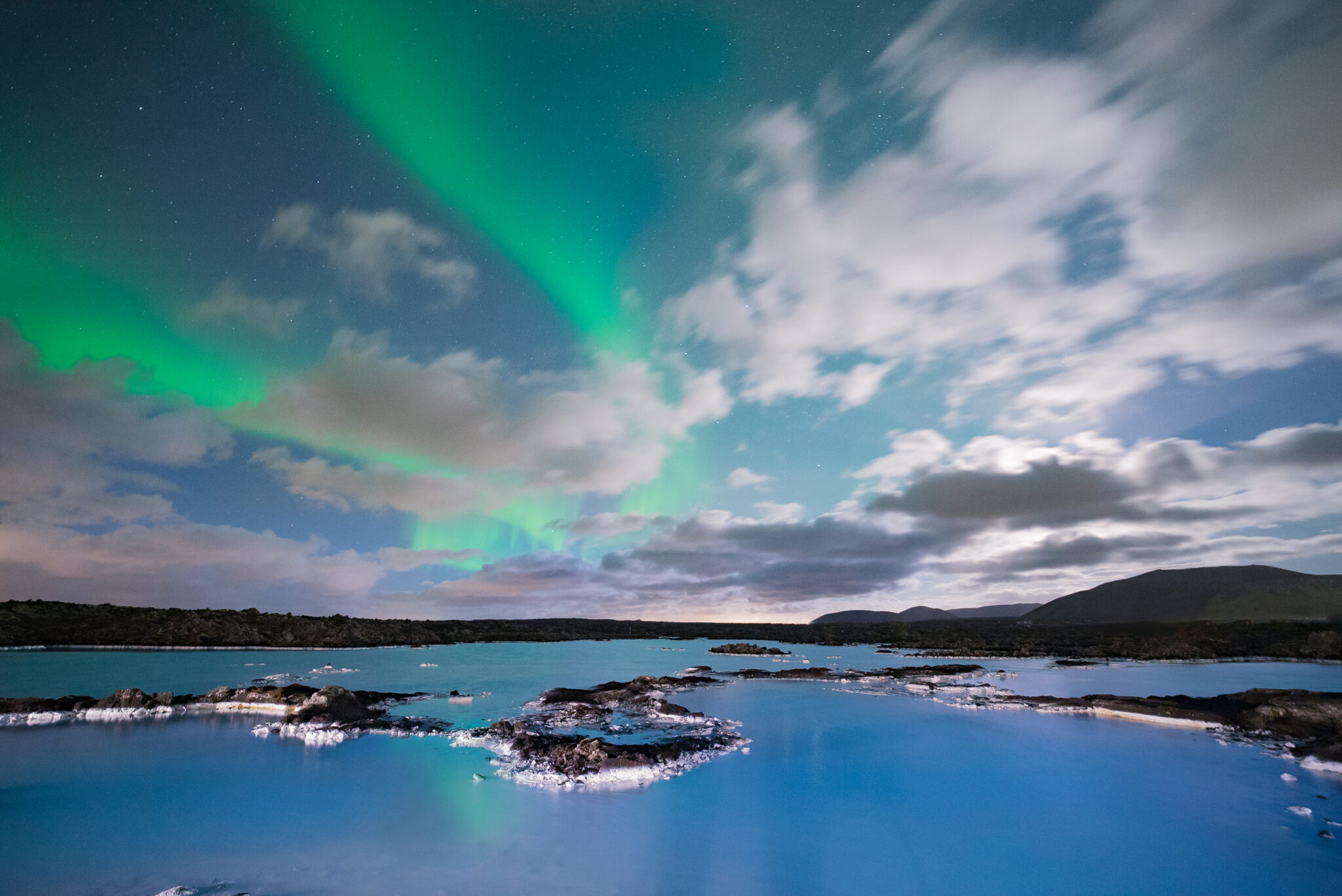
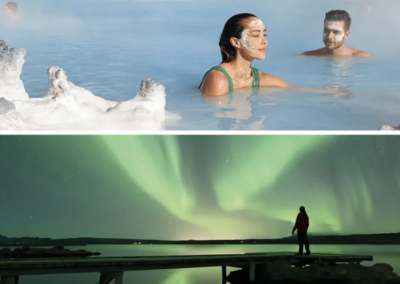
Auroras Boreales sobre la Laguna Azul
Únete a un tour guiado para ver Auroras Boreales
Evita el estrés de conducir en invierno de noche y únete a un grupo de aventureros con intereses similares en una caza guiada de auroras boreales.

Preguntas frecuentes sobre la Aurora Boreal
¿Cuándo puedo ver las Auroras Boreales en Islandia?
¿Por qué no puedo ver la aurora boreal en verano?
¿A qué hora aparecen las auroras boreales?
Durante los meses de invierno, cuando las horas de luz son limitadas, las auroras boreales suelen aparecer incluso a las 7:00 pm.
Como no se puede predecir la hora exacta de una aurora , mantén, manten la vista en el cielo. ¡Y recuerda , la paciencia es clave!
¿Cuánto duran las auroras boreales?
¿Puedo ver la aurora boreal cuando está nublado?
¿Las auroras boreales sólo aparecen cuando hace frío?
¿Se ven las auroras boreales en toda Islandia?
¿Son realmente coloridas las auroras boreales?
Las auroras boreales se presentan en una variedad de colores. El verde es, con mucho , el más común, pero también pueden aparecer en vibrantes tonos de rosa, morado, rojo, violeta y azul.
Sin embargo, a simple vista , las auroras boreales pueden verse bastante tenuesy, en ocasiones, percibirse como blancas o grisáceas. Esto se debe a las limitaciones de nuestra visión nocturna..
Las cámaras , en cambio, pueden capturar una versión más fiel de los colores, ya que, en la mayoría de los casos, es posible ajustar la configuración del dispositivo para adaptarse mejor a las condiciones nocturnas.
Descubre más sobre cómo mejorar tu visión nocturna y aprender a tomar excelentes fotografías de auroras aquí.
¿Desaparecerán las auroras boreales en el futuro?
No, las auroras boreales no van a desaparecer!
La aurora boreal ha sido visible en el Ártico durante siglos, y eso no va a cambiar pronto.
Lo cierto es que la actividad solar, responsable de la aparición de las auroras boreales en nuestro planeta , cambia con el tiempo, siguiendo un ciclo de once años.
Durante cada ciclo solar, el Sol pasa de un pico a un mínimo de actividad. Durante el pico, el llamado"máximo solar", podemos esperar una mayor actividad y, potencialmente, auroras boreales más intensas visibles desde latitudes inusuales (en el hemisferio norte, esto significa que las auroras se avistan más al sur de lo habitual). Mientras que, durante el mínimo solar, estos fenómenos inusualmente intensos se vuelven más raros.
Aun así, en latitudes árticas , las auroras boreales se pueden ver con claridad durante todo el ciclo. E Islandia, al estar dentro del "cinturón de auroras", es y seguirá siendo el destino perfecto para la búsqueda de auroras boreales.!
¿Qué es el valor BZ?
El valor Bz forma parte del Campo Magnético Interplanetario (CMI), que es el campo magnético transportado por el viento solar proveniente del Sol.
¿Por qué es importante para la Aurora Boreal? El campo magnético de la Tierra apunta al norte. Si el campo magnético del viento solar (Bz) apunta al sur ( un Bz negativo), se conecta con el campo magnético terrestre y permite que partículas solares cargadas entren en la atmósfera. Esta interacción contribuye a la creación de la aurora boreal. Si, en cambio, Bz es positivo (hacia el norte), los campos no se conectan bien y entran menos partículas, lo que significa una aurora más débil o nula..
Piense en el Bz como un interruptor de encendido y apagado: Bz negativo (sur) = encendido , alta probabilidad de Auroras pronto. Bz positivo (norte) = apagado, Aurora menos probable.
Obtenga más información sobre el Bz y cómo funciona el pronóstico aquí.
¿Cuáles son las mejores aplicaciones y sitios web de pronóstico para la caza de Auroras Boreales?
Para ver la aurora boreal, lo importante es el tiempo, cielos despejados y pronósticos actualizados. Estas herramientas te ayudan a saber cuándo y dónde hay una buena probabilidad de ver la aurora, para que puedas planificar tu noche de forma inteligente. Para obtener los mejores resultados, recomendamos usar más de una fuente, ya que los pronósticos interpretan los datos de forma diferente.
WEB FORECASTS
- Pronóstico oficial de auroras de AURORA REYKJAVÍK 👉 https://aurorareykjavik.is/aurora-forecast/
Nuestro pronóstico de 6 pasos combina actividad geomagnética, nubosidad y consejos de observación, diseñado para la planificación de la aurora boreal en tiempo real. - Clima espacial en vivo
Un sitio detallado sobre el clima espacial global con mapas de actividad auroral y parámetros solares. - Centro de Predicción del Clima Espacial (SWPC) de la NOAA
El modelo oficial de pronóstico del tiempo espacial de EE. UU. en el que muchas aplicaciones de auroras basan sus datos.
MEJORES APLICACIONES MÓVILES
- My Aurora Forecast – Ofrece índice KP en tiempo real, mapas globales de auroras, alertas push y pronósticos para varios días: ideal tanto para viajeros como para observadores serios de auroras.
Y no olvides activar las notificaciones para recibir alertas cuando aumente la actividad de la aurora.
📍App Store
📍 Google Play
Siguiendo esta guía, estarás bien preparado para experimentar uno de los espectáculos más mágicos de la naturaleza. Tanto si estás planeando tu viaje como si ya estás en Islandia, ¡la Aurora te espera!