Northern Lights in Iceland in Spring: Why March and Early April Are Underrated
Does the full moon cancel auroras? No
Si possono comunque vedere? Sì, se intense
Cosa conta di più? Cieli sereni
Most travelers assume winter is the only serious northern lights season in Iceland.
In reality, March and early April can be one of the smartest times to hunt the aurora.
You still have dark nights long enough for aurora viewing, travel conditions are often easier than in deep winter, and the weeks around the spring equinox are statistically favorable for geomagnetic activity.
For many visitors, spring offers a perfect balance:
dark skies, snowy landscapes, comfortable temperatures, and excellent chances of seeing the northern lights.
At Aurora Reykjavík, we work with aurora forecasting and education every day, and spring consistently surprises visitors with spectacular displays.
Scritto da Katarina Raker, esperta di aurore boreali e co-fondatrice di Aurora Reykjavík
Can You See the Northern Lights in Iceland in Spring?
Why March Is One of the Best Months for Aurora in Iceland
Best Time of Night to See the Northern Lights in Spring
What You Actually Need to See the Northern Lights
Is Spring Better Than Winter for Northern Lights?
Northern Lights Photography in Spring
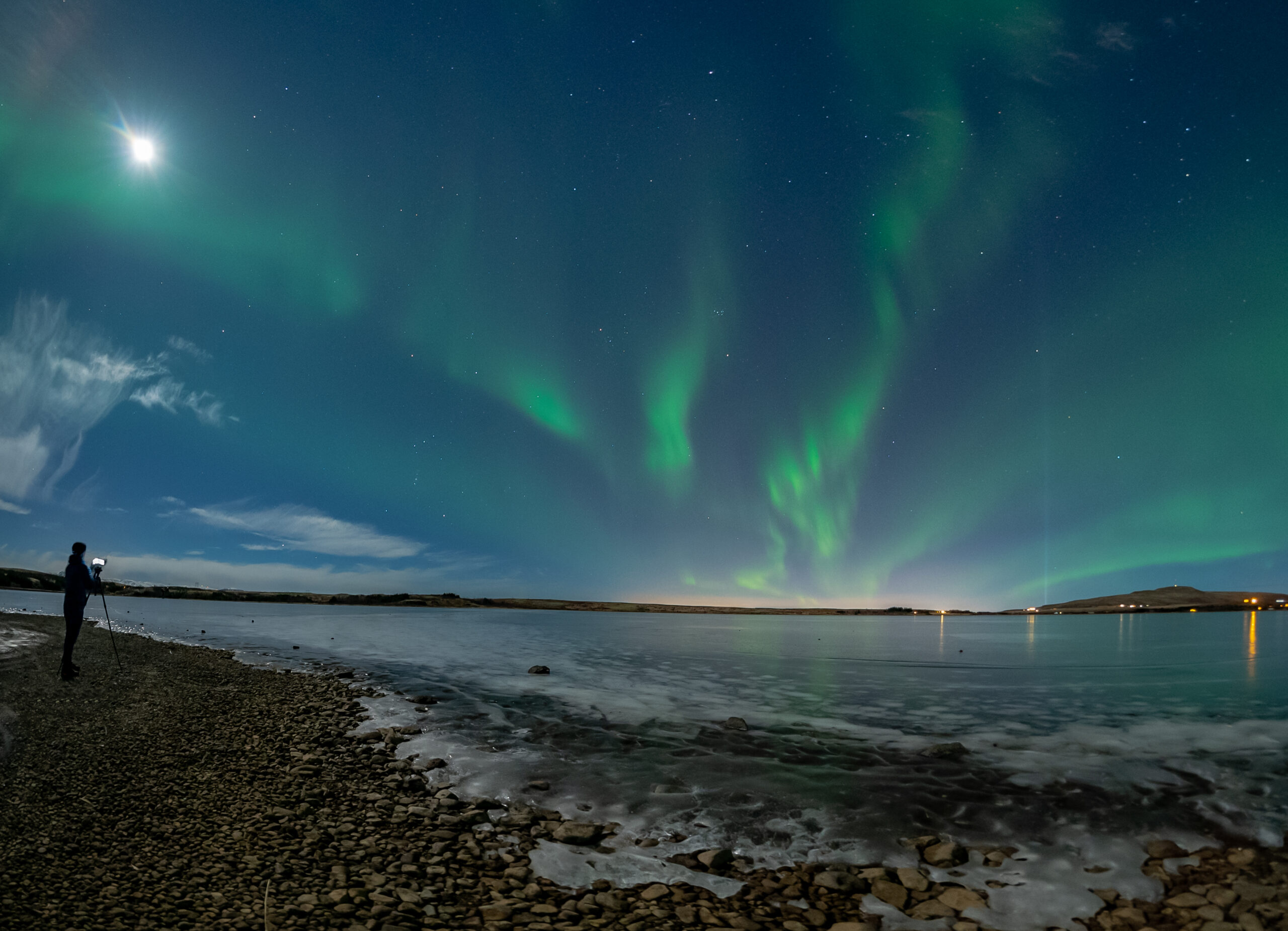
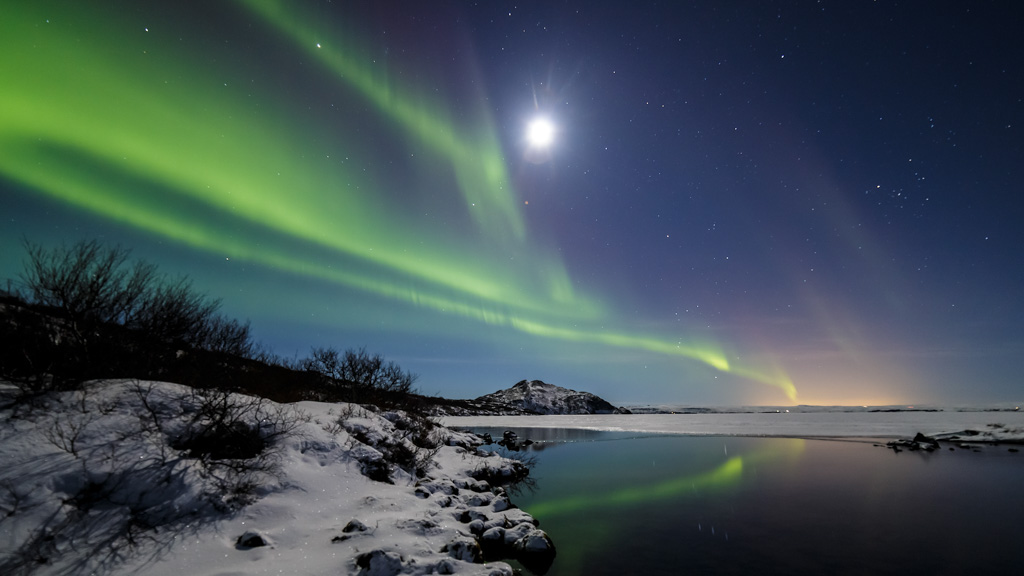
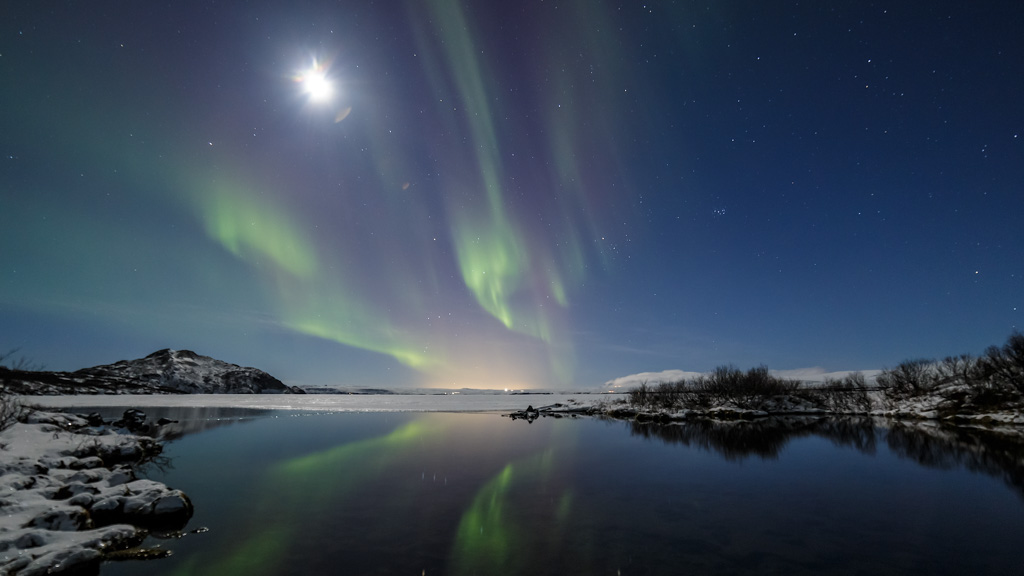
Aurora e luna piena al Parco Nazionale Þingvellir, Islanda
Can You See the Northern Lights in Iceland in Spring?
Yes — especially in March and early April.
The aurora can appear any time the following three conditions occur simultaneously:
-
Dark skies
-
Clear or partly clear skies
-
Geomagnetic activity from solar wind
In Iceland, darkness remains sufficient well into April.
Typical viewing potential:
| Month | Aurora visibility potential |
|---|---|
| March | Excellent |
| Early April | Still good |
| Late April | Possible but increasingly difficult |
| May–July | Too bright for aurora viewing |
So while winter has longer nights, spring still provides plenty of darkness — with some added advantages.
Why March Is One of the Best Months for Aurora in Iceland
Several factors make March particularly attractive for northern lights travelers.
The Equinox Effect
Around the spring and autumn equinoxes, aurora activity tends to increase due to a phenomenon called the Russell–McPherron effect.
In simple terms:
-
Earth’s magnetic field interacts with the solar wind.
-
Near the equinoxes, the orientation of Earth’s magnetic field makes it easier for solar wind energy to enter the magnetosphere.
-
This can increase the likelihood of geomagnetic storms.
This does not guarantee stronger auroras every night, but statistically the equinox season tends to produce more geomagnetic disturbances.
For aurora chasers, this means March and September are often very active months.
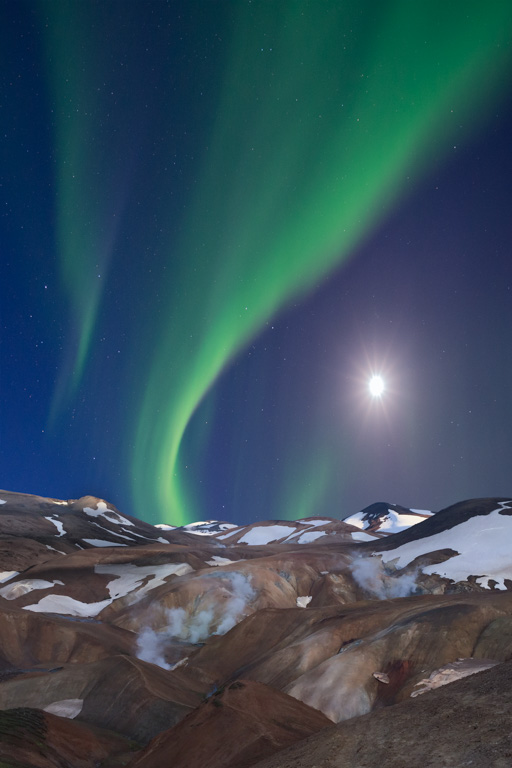
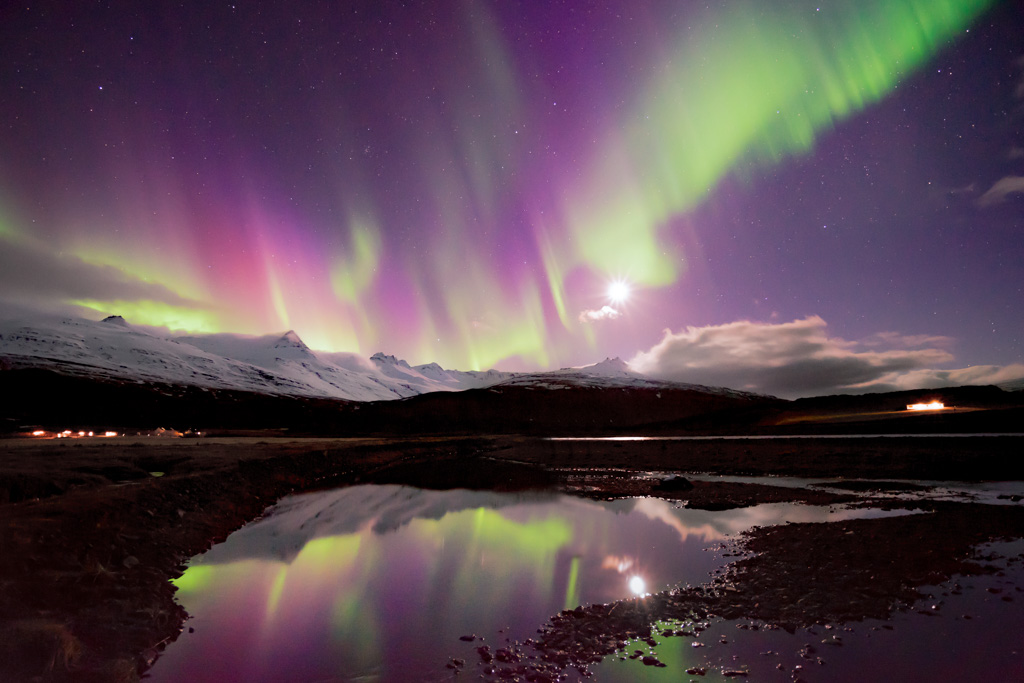
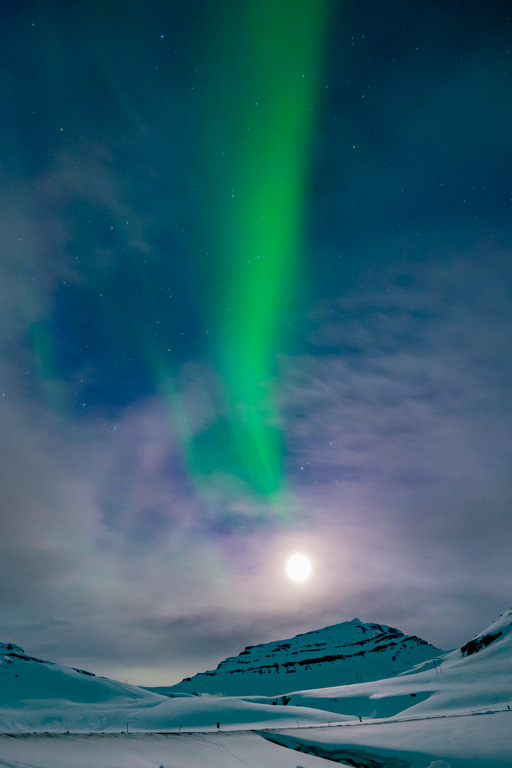
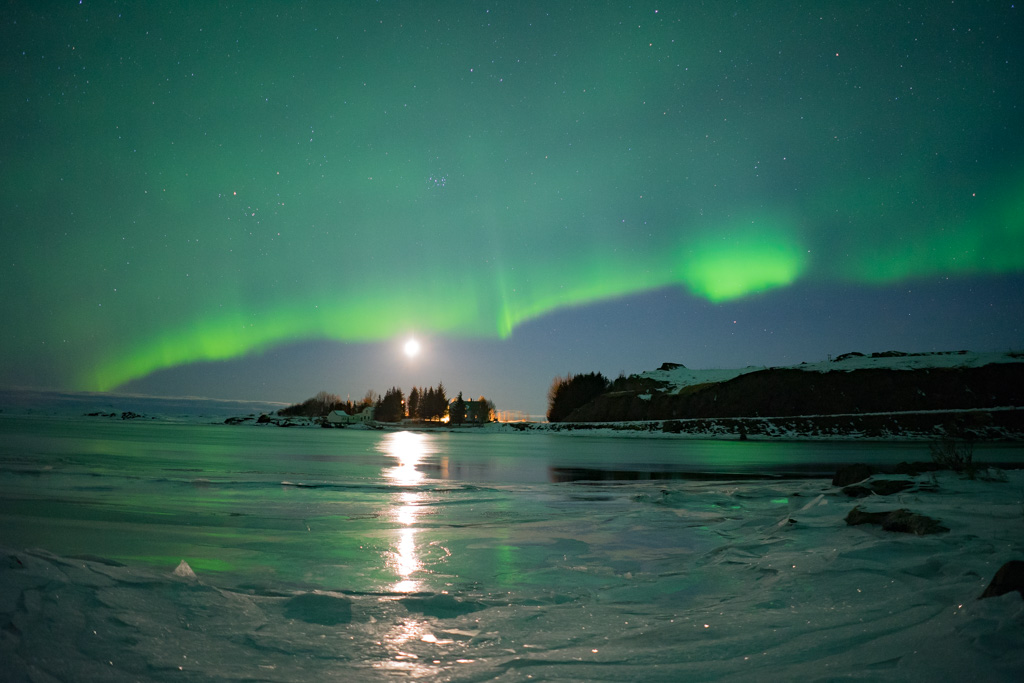
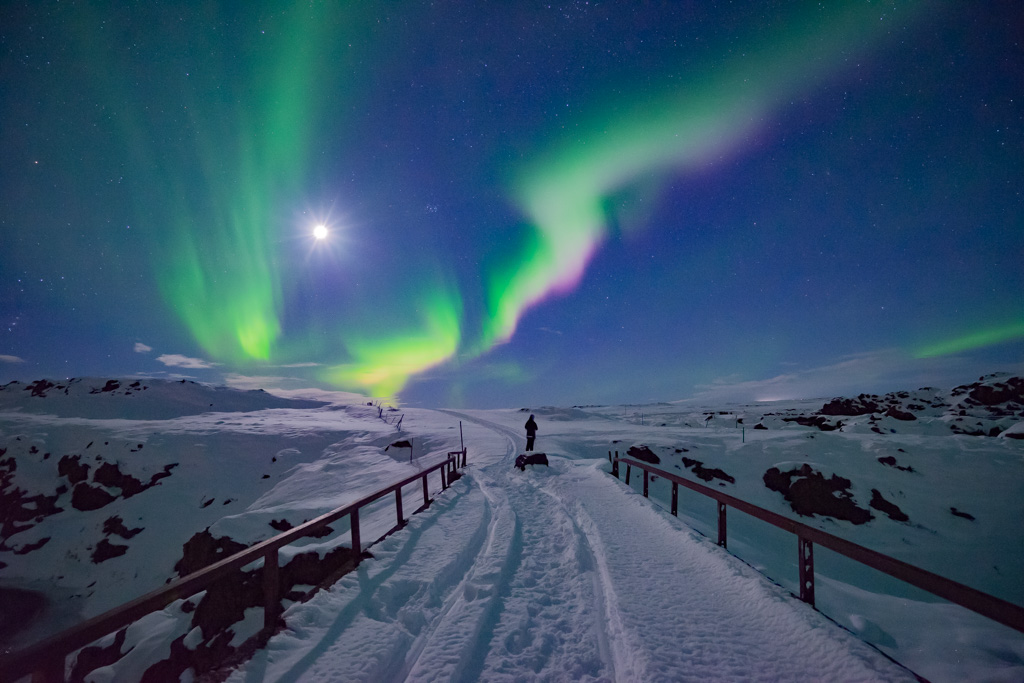
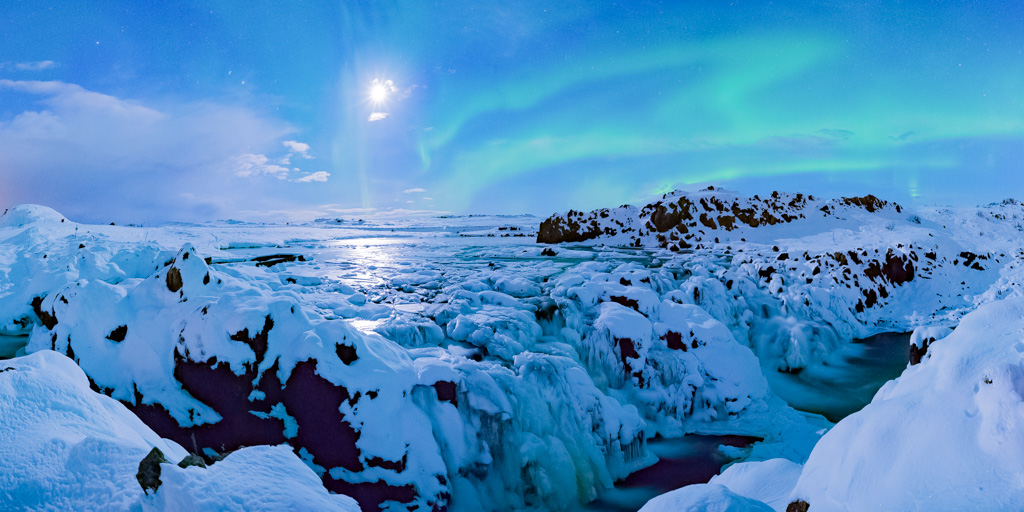
Aurora e luna piena nell'entroterra islandese
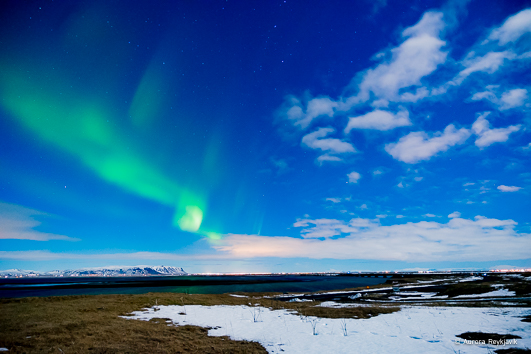
Temperatures rising make spring landscapes ever changing
Comfortable Conditions Compared to Deep Winter
Winter aurora tours can involve temperatures of −10°C or lower.
Spring usually brings:
-
milder temperatures
-
safer road conditions
-
longer daylight for sightseeing
-
less severe storms
For many visitors, this makes aurora hunting far more enjoyable.
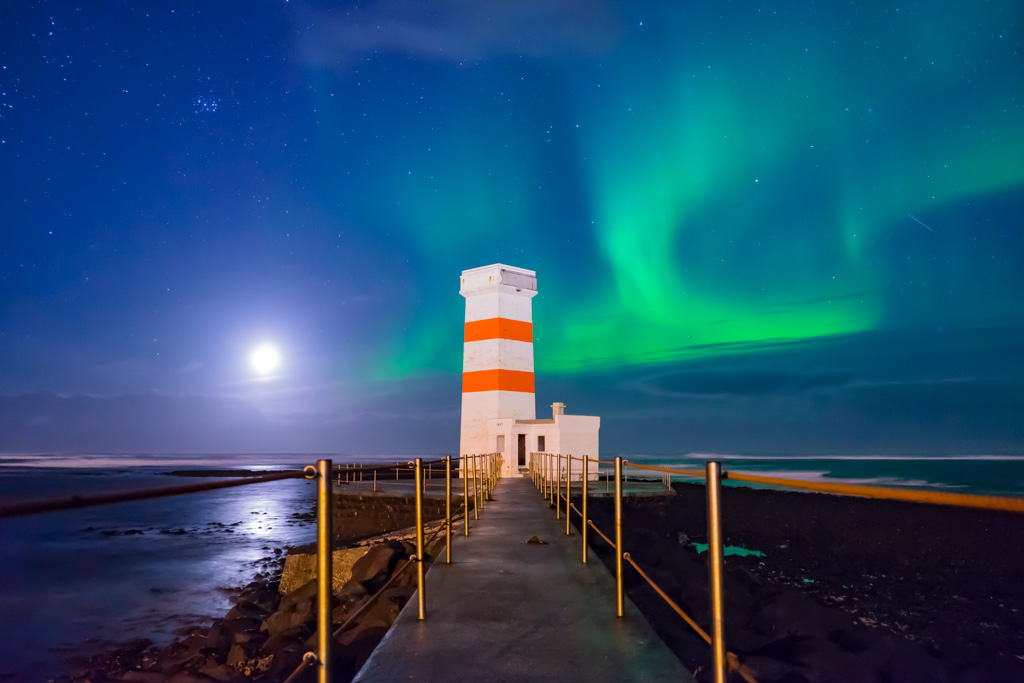
Snowy Landscapes With Better Light for Photography
March still offers winter scenery across much of Iceland.
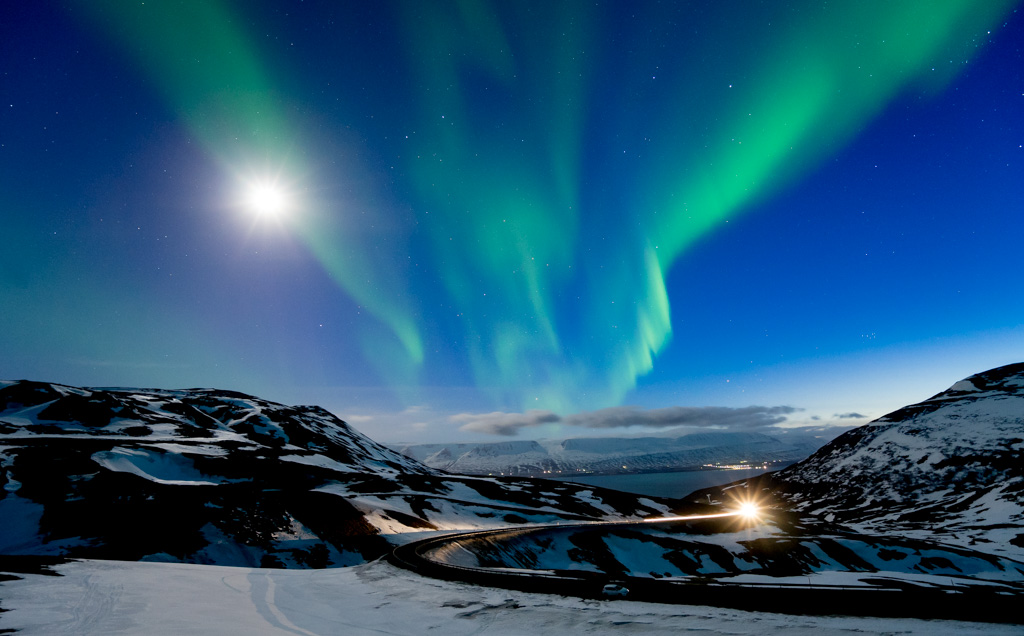
Snow-covered landscapes can dramatically enhance aurora photography by reflecting light and illuminating foregrounds.
But spring also brings an advantage many photographers love:
Long twilight periods.
The sky may retain subtle blue tones rather than turning completely black, allowing foregrounds to appear naturally in photos without artificial lighting.
Learn more about northern lights photography with our experts here: https://aurorareykjavik.is/2025/12/03/how-to-photograph-the-northern-lights/
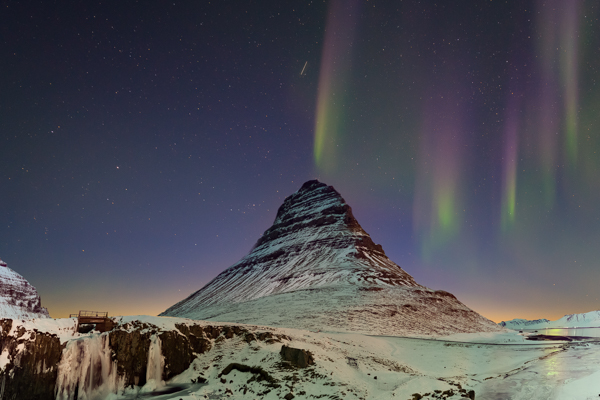
Snowy panorama at Kirkjufell
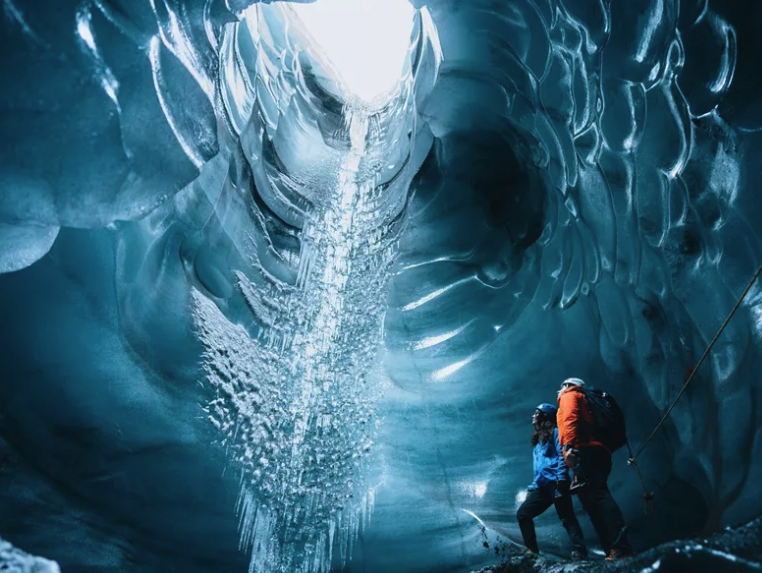
Grotta di ghiaccio naturale Katla in the south of Iceland
More Daytime Activities
Unlike midwinter, spring in Iceland offers longer days for exploring.
Visitors can combine aurora hunting with:
-
cultural experiences in Reykjavík
One of the best places to start your aurora adventure is Aurora Reykjavík, where you can learn how the northern lights work, how to read aurora forecasts, and how to photograph them.
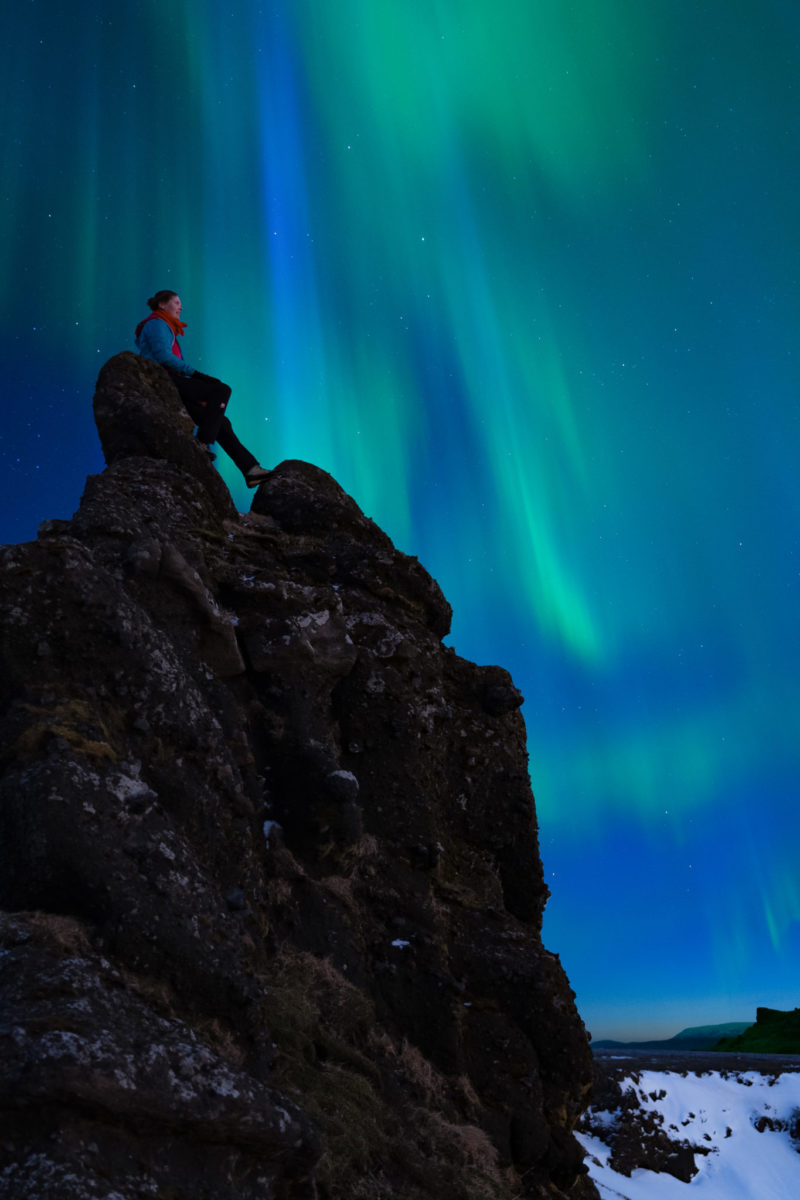
This could be you! Join us off-the-beaten-path on one of our superjeep tours
Best Time of Night to See the Northern Lights in Spring
Auroras can technically appear at any time during dark hours, but in Iceland the most common viewing window is roughly:
9 PM – 2 AM
However, timing depends entirely on solar activity and cloud cover.
The most important strategy is monitoring forecasts and being ready to move when conditions improve.
What You Actually Need to See the Northern Lights
Many myths surround aurora viewing. In reality, you only need three ingredients.
Oscurità
The sky must be dark enough.
This is why the aurora season runs roughly da fine agosto a metà aprile.
Cieli limpidi
Clouds block aurora completely.
Many successful aurora chases involve driving away from cloud cover.
Attività solare
Auroras occur when charged particles from the sun interact with Earth’s magnetic field.
The strength of this activity is often summarized by the Kp index, though in Iceland even Kp 2–3 can produce visible aurora if skies are clear.
Find out more on how to read the Aurora forecast here: https://aurorareykjavik.is/2025/12/05/how-to-read-an-aurora-forecast-your-complete-guide-to-not-miss-the-northern-lights/
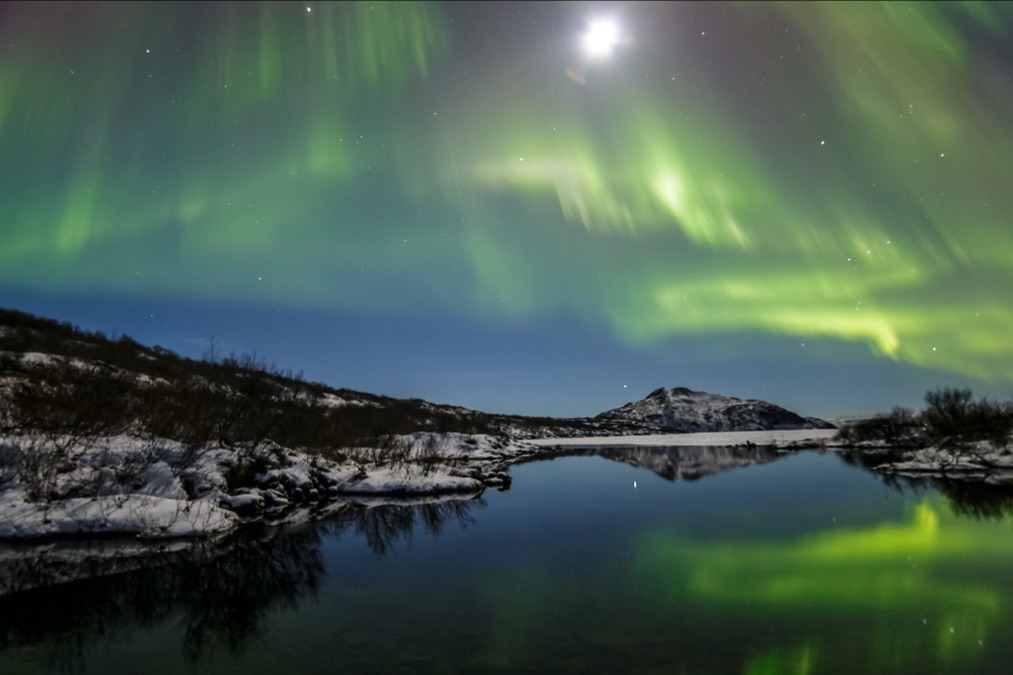
Aurora e luna piena al Parco Nazionale Þingvellir
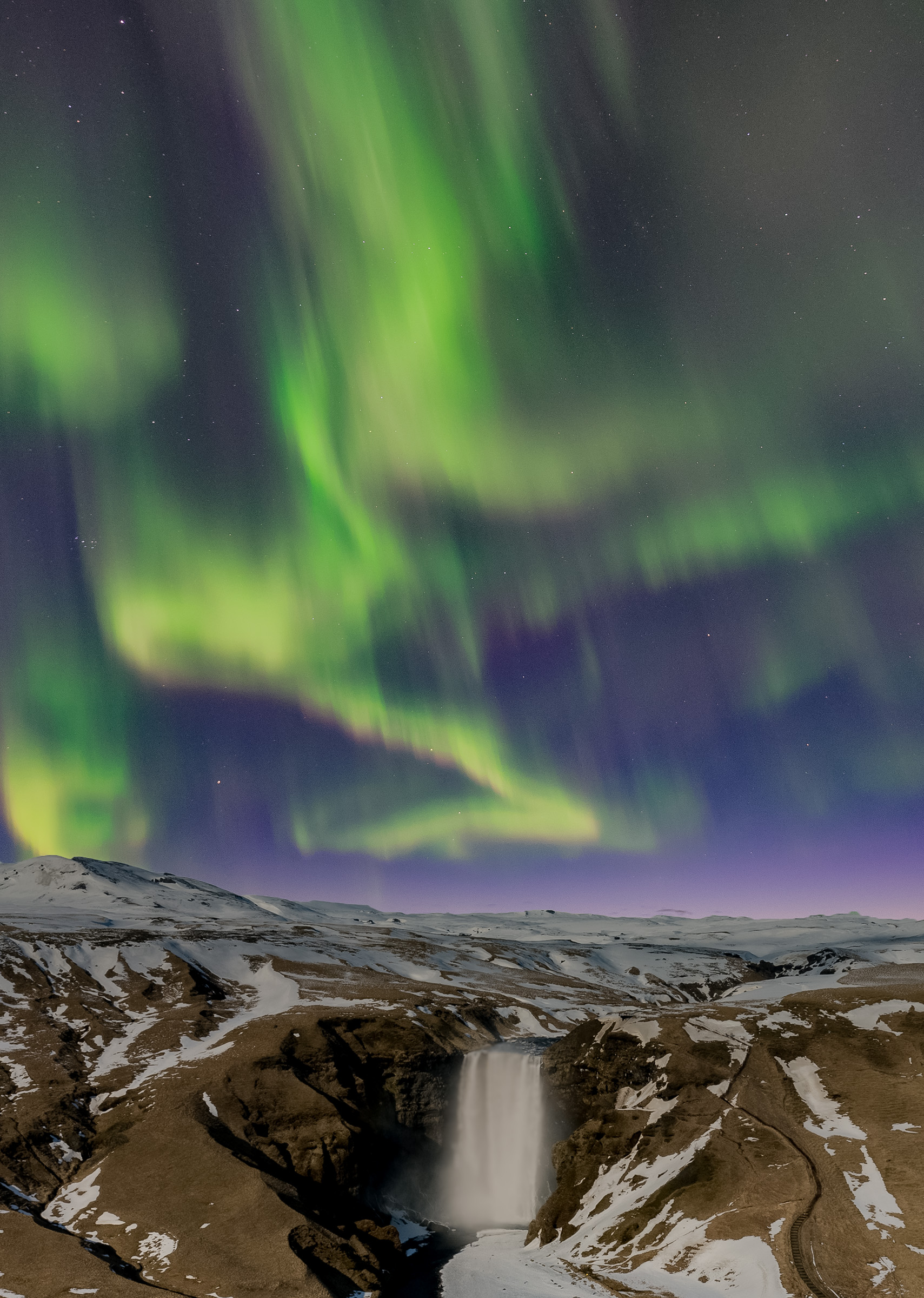
Early spring northern lights over Skógafoss, a convenient day tour from Reykjavík
Is Spring Better Than Winter for Northern Lights?
Both seasons have advantages.
Winter offers:
- longer nights
- more hours of darkness
Spring offers:
- equinox aurora activity
- milder temperatures
- easier travel conditions
- excellent photography light
For many visitors, March is one of the best compromises between comfort and aurora potential.
Further reading about early spring in Iceland:
Frequently Asked Questions
Can you see the northern lights in Iceland in March?
Yes. March is widely considered one of the best months of the aurora season.
Can you see the northern lights in April?
Yes, especially in early April.
By late April the nights become too bright for reliable viewing.
Do you need cold temperatures for aurora?
No. Auroras are caused by solar particles interacting with Earth’s magnetic field — temperature is irrelevant.
Can you see aurora from Reykjavík?
Yes, during strong displays.
However, darker locations outside the city usually provide better visibility.
Final Thoughts
Spring is often overlooked by northern lights travelers — but it shouldn’t be.
With dark skies still available, the potential boost from the equinox season, and far more comfortable travel conditions, March and early April can be excellent times to see the aurora in Iceland.
If you want to understand how the northern lights work — and how to maximize your chances of seeing them — visit Aurora Reykjavík, Iceland’s dedicated Northern Lights Center.
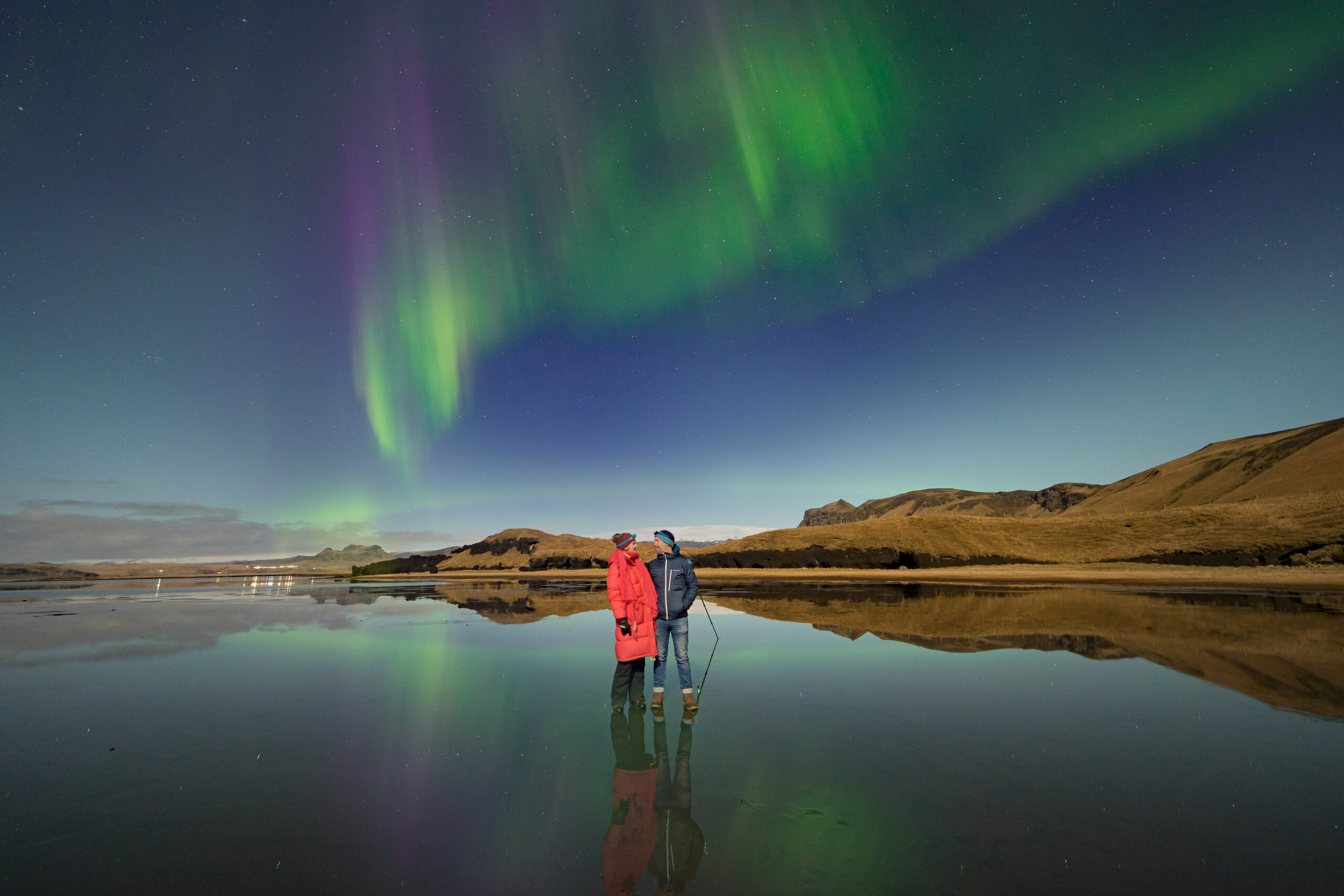
Our Aurora Reykjavík photographers and experts under the northern lights
ESPLORA DI PIÙ CON AURORA REYKJAVÍK
- Visita il nostro Centro dell'Aurora Boreale per scoprire tutto sull'aurora.
- Scopri i migliori consigli per fotografare l’aurora boreale per la tua prossima avventura.
- Scopri i mesi migliori per vedere l’aurora boreale nella nostra guida.
UNISCITI A NOI NEL MIGLIOR TOUR DELL’AURORA BOREALE IN ISLANDA
Compra il biglietto, parti all'avventura. Qui trovi la nostra selezione di tour:
I NOSTRI BESTSELLER
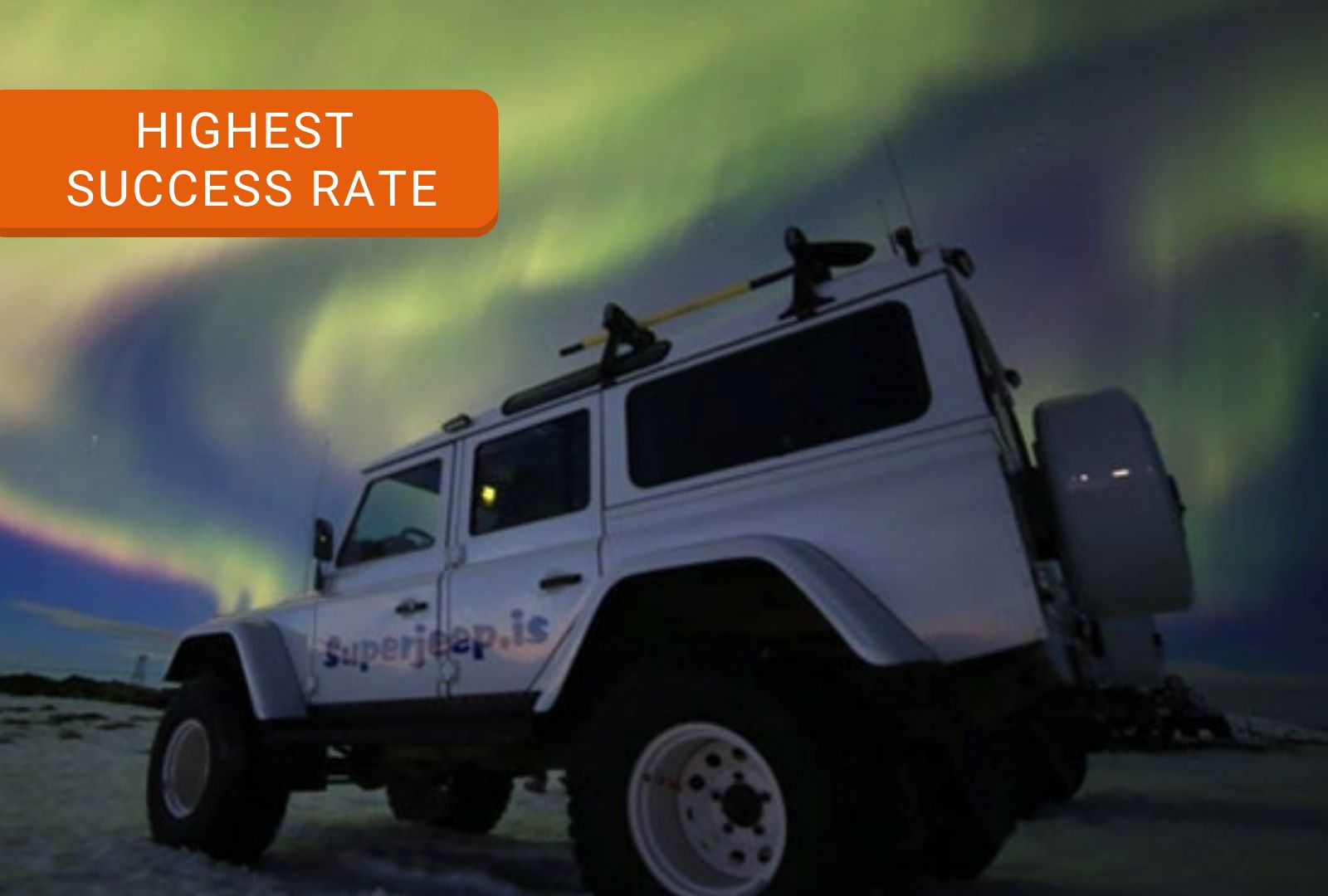
NORTHERN LIGHTS SUPER JEEP TOUR
PUNTI SALIENTI:
✓ Tour dell'aurora boreale in super jeep
✓ Pick-up e drop off gratuiti
✓ Foto di qualità gratuite
✓ cioccolata calda
✓ Veicoli riscaldati
ALTISSIMA PERCENTUALE DI SUCCESSO
INGRESSO AD AURORA REYKJAVÍK INCLUSO NEL PREZZO - RISPARMIA 3900 ISK

COSTA SUD E AURORA BOREALE
PUNTI SALIENTI:
✓ OFFERTA 2 PER 1: RISPARMIA OLTRE 2000 ISK
✓ Visita il ghiacciaio Sólheimarjökull
✓ Passeggia per la cittadina di Vík
✓ Cammina sulla spiaggia nera
✓ Vedi le cascate di Skógafoss e Seljalandsfoss
✓ Osserva L' Aurora Boreale danzare
MIGLIOR RAPPORTO QUALITÀ PREZZO
GARANZIA AURORA BOREALE: SECONDO TENTATIVO GRATUITE SE L'AURORA NON È VISIBILE DURANTE IL TOUR
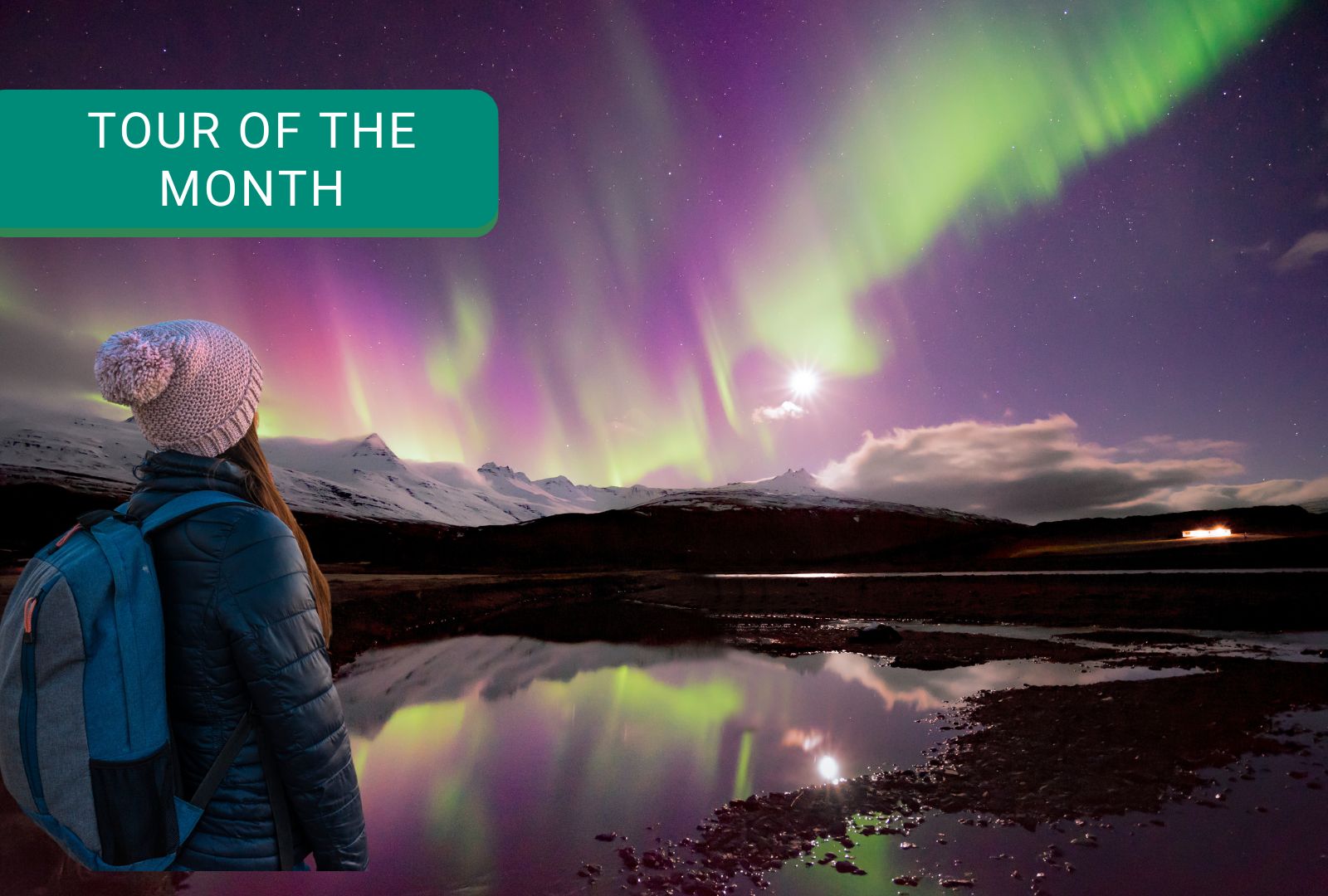
TOUR DELL' AURORA IN MINIBUS
PUNTI SALIENTI:
✓ Tour dell'aurora boreale in un autobus di piccole dimensioni
✓ Foto gratuite con l'aurora boreale
✓ Homemade hot Chocolate e Dolci
✓ Pick-up incluso
TOUR PIÙ VENDUTO
DOMANDE FREQUENTI SULL’AURORA BOREALE
Quando si può vedere l'aurora in Islanda?
Durante questo lungo periodo, l’Islanda sperimenta abbastanza oscurità perché l’aurora sia visibile di notte.
Tuttavia, le probabilità di osservare l’aurora variano a seconda del periodo dell’anno. Scopri quali mesi sono i migliori per vedere l’aurora qui.
Si può vedere l'aurora boreale con la luna piena?
A che ora compaiono le aurore boreali?
During the winter months, when the hours of light are limited, the northern lights can often appear as early at 7:00pm.
As the exact time of an Aurora display cannot be predicted, keep your eyes at the sky. And remember, patience is key!
Quanto durano le aurore boreali?
Posso vedere le aurore boreali quando il cielo è nuvoloso?
Le aurore boreali appaiono solo quando fa freddo?
Le aurore boreali sono visibili in tutta l’Islanda?
Le aurore boreali sono davvero multicolore?
Il novilunio è migliore per osservare le aurore boreali?
La luna piena è adatta per fotografare le aurore boreali?
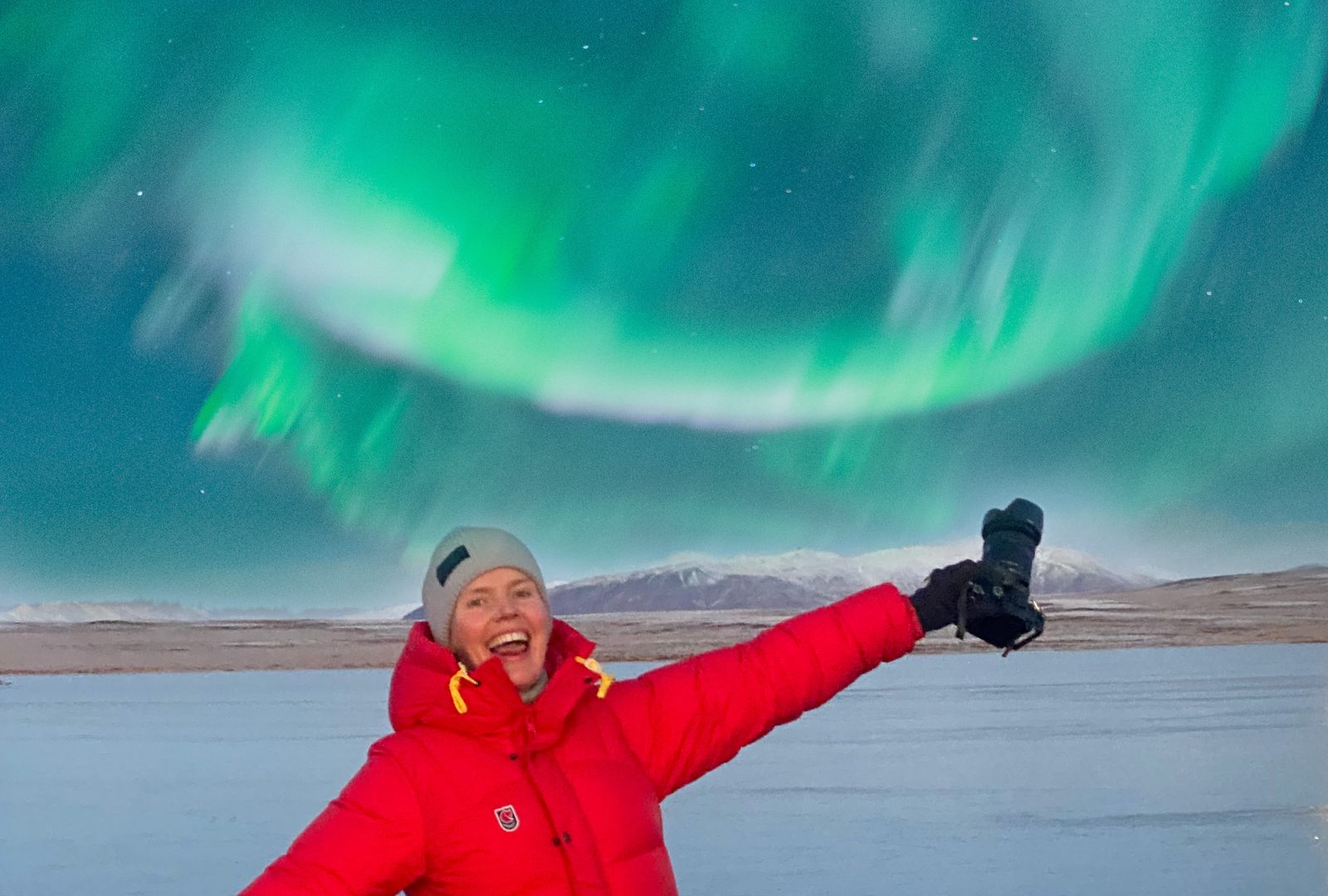
Katarina Raker
SULL’AUTRICE: KATARINA RAKER
Katarina Raker è un’appassionata esperta di aurore boreali e fotografa pluripremiata con base in Islanda. Con anni di esperienza nella ricerca dell’aurora attraverso l’Artico, combina la sua passione per il racconto con una profonda conoscenza della scienza che sta dietro le aurore boreali. Come membro del team di Aurora Reykjavík, Katarina si dedica ad aiutare i viaggiatori a vivere la magia dell’aurora boreale tramite consigli esperti, tour guidati e fotografie straordinarie. Quando non cattura gli spettacoli del cielo, Katarina ama esplorare i paesaggi mozzafiato dell’Islanda e condividere le sue avventure con il mondo.