THE BEST TIME TO SEE THE NORTHERN LIGHTS IN ICELAND (MONTH-BY-MONTH GUIDE)
Vedere Aurora Borealis, better known as the Northern Lights, has fascinated humans for centuries; and for many travelers, it is the single biggest reason to visit Iceland.
One question always comes up: When is the best time to see the Northern Lights in Iceland?
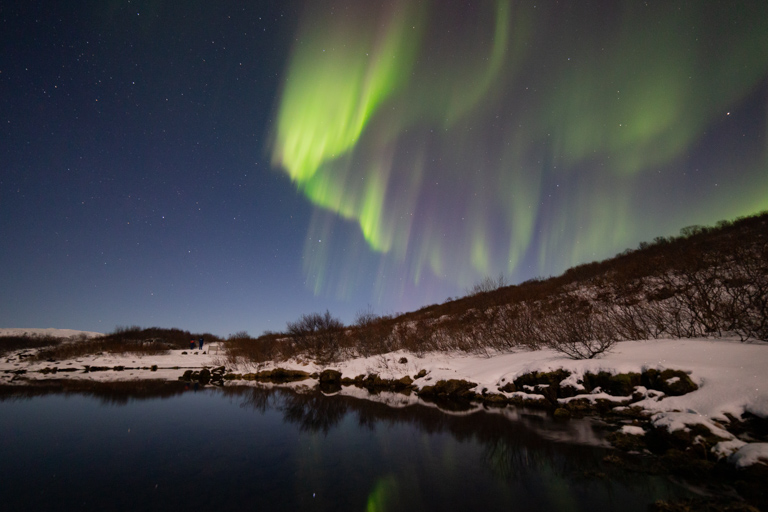
Aurora e luna piena al Parco Nazionale Þingvellir, Islanda
The honest answer is: there is no single perfect moment, but there is a clearly defined aurora season, and each part of it offers something different.
In this guide, we’ll walk you through the best months to see the Northern Lights, explain common myths, and help you choose the season that fits your travel style best.
For a complete planning overview, we also recommend our Ultimate Guide to Seeing the Northern Lights in Iceland
NORTHERN LIGHTS AND THE COLD MYTH
Cominciamo a sfatare il mito più comune sull’aurora boreale: “The Aurora can only be seen in winter, when it is very cold outside.”
This is not true. The aurora happens far above Earth’s weather system, about 100–300 km up in the atmosphere. Temperature on the ground has no direct effect on whether auroras appear.
What does matter:
- Oscurità
- Cieli limpidi
- Attività solare
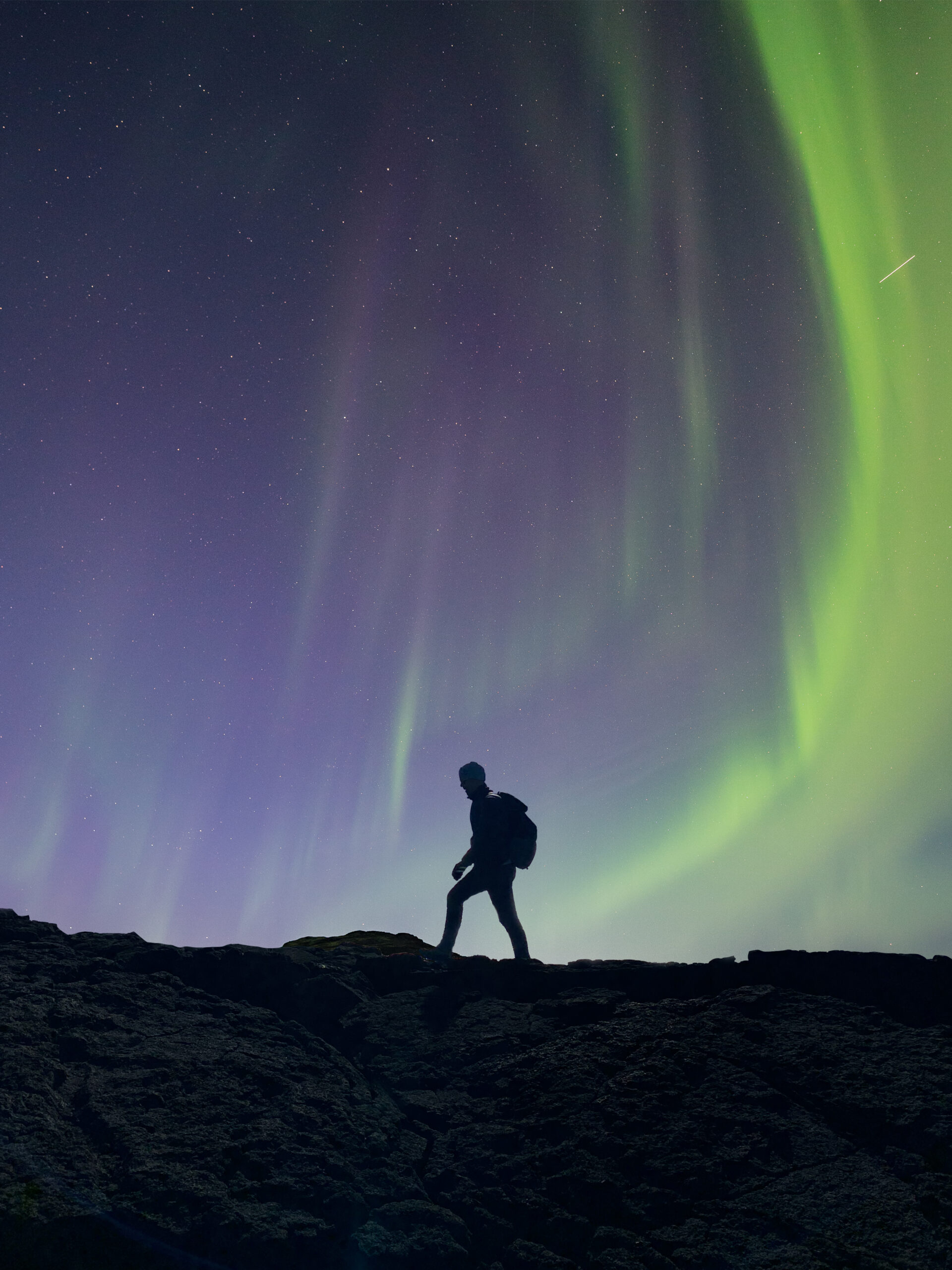
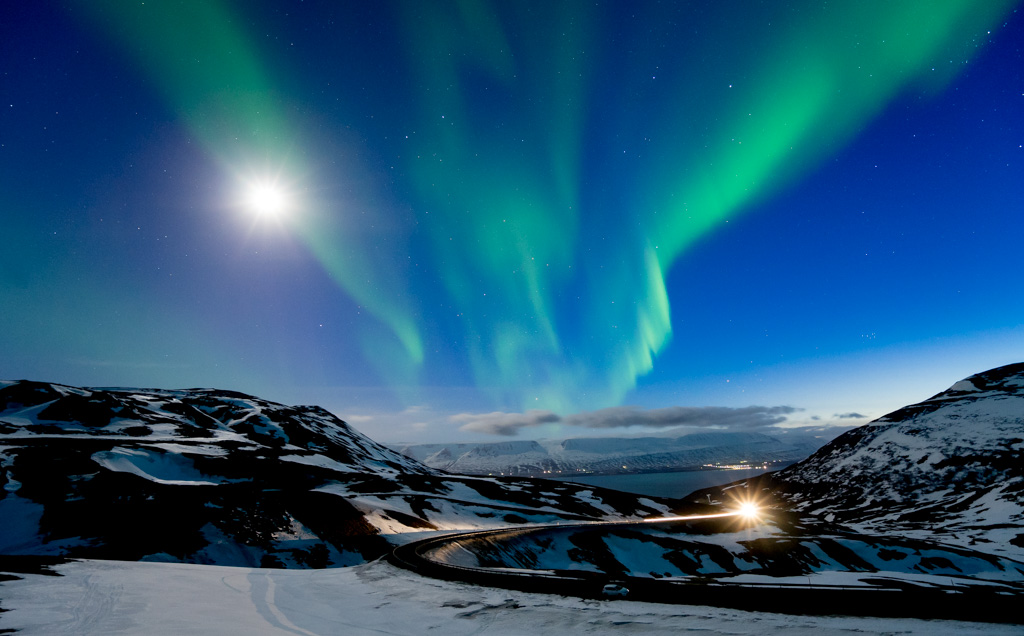
Aurora e luna piena nell'entroterra islandese

Aurora in the East Fjords, Iceland
Clear nights often feel colder because clouds trap heat, but cold itself does not cause auroras. However, during summer month (May – Mid-August), the midnight sun keeps the sky too bright for seeing auroras.
That’s the real reason why you cannot see the Northern Lights in Iceland during summer.
In short, the Aurora season in Iceland starts around the end of August and ends in mid-April, and if you visit for a few days during this time frame, you will have good chances of success.
However, any period within the Aurora season has its own peculiarities.
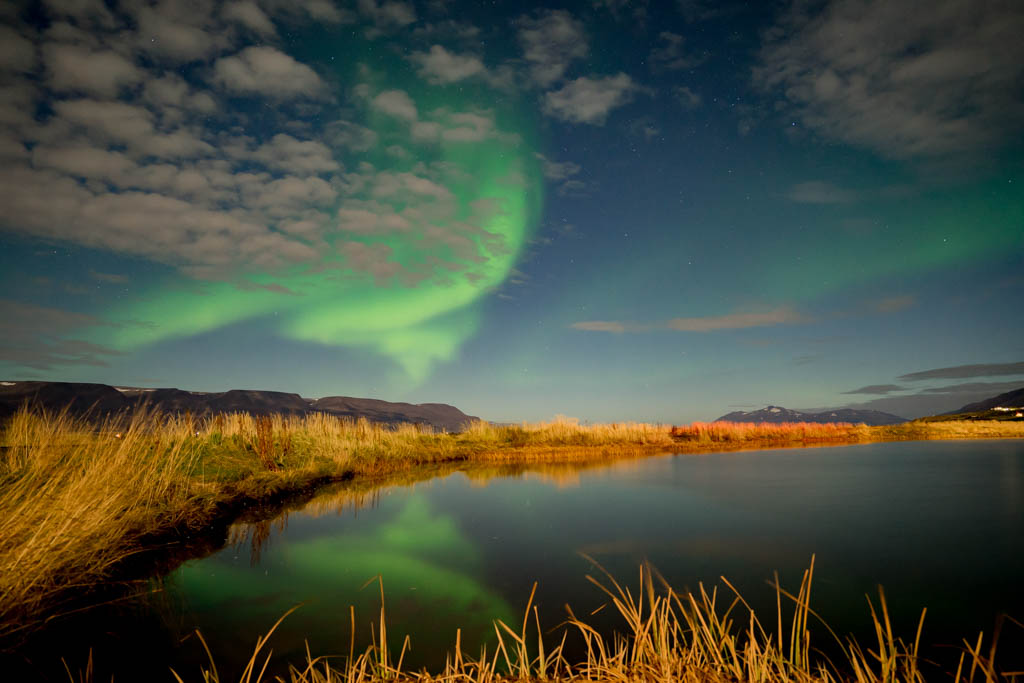
Aurora estiva
NORTHERN LIGHTS SEASON IN ICELAND – LATE AUGUST TO MID-APRIL
If you visit Iceland for a few nights anywhere within this window, you already have a realistic chance of seeing the Northern Lights, especially if you understand how to read the forecast. Before every outing, check:
- The live Aurora Forecast for Iceland
- Our guide on How to Read an Aurora Forecast
Now let’s look at what each part of the season offers.
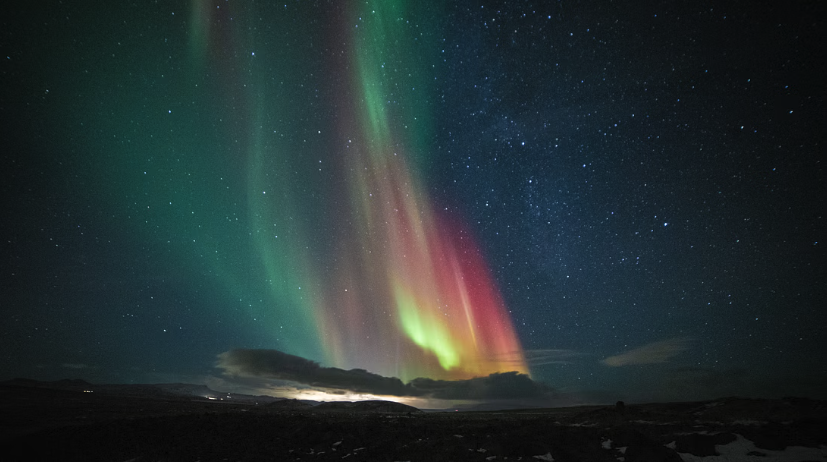
Aurora verde e rossa
SCENIC AUTUMN NORTHERN LIGHTS – SEPTEMBER/ OCTOBER
Da fotografi, l'autunno è uno dei nostri periodi preferiti per andare a caccia dell'aurora boreale. Ecco perché:
- I colori dell'estate islandese
Iceland in autumn is simply beautiful. Sugar-covered mountain tops, arctic moss, blueberry bushes and birch trees are painted in golds and reds. The perfect scenery for observing the first northern lights displays of the season.
2. Le temperature sono ancora ragionevoli
Sì, siamo in Islanda e osservare l'aurora boreale ha un prezzo: può fare molto freddo! In September though, temperatures usually don’t reach beneath 0°C yet. The perfect time to spend a night out under the arctic sky.
3. L'aurora ama gli equinozi
Summer officially turns into autumn on the autumn equinox, September 23rd. While the Aurora Borealis is visible from late August, it is the equinox that gives this cosmic light show an extra boost. As a consequence, it often produces some of the best northern lights activity of the season.
4. I laghi e gli stagni non sono ancora ghiacciati Questo aumenta il numero di potenziali location per splendide foto con riflessi.
5. Le aurore al crepuscolo sono le più spettacolari
Il sole tramonta ancora tardi a settembre, dando la possibilità di osservare delle meravigliose aurore crepuscolari. Quando l'attività aurorale è elevata, le aurore spesso iniziano a danzare subito dopo il tramonto, quando il cielo è ancora illuminato da bellissimi colori blu scuro e arancione all'orizzonte.
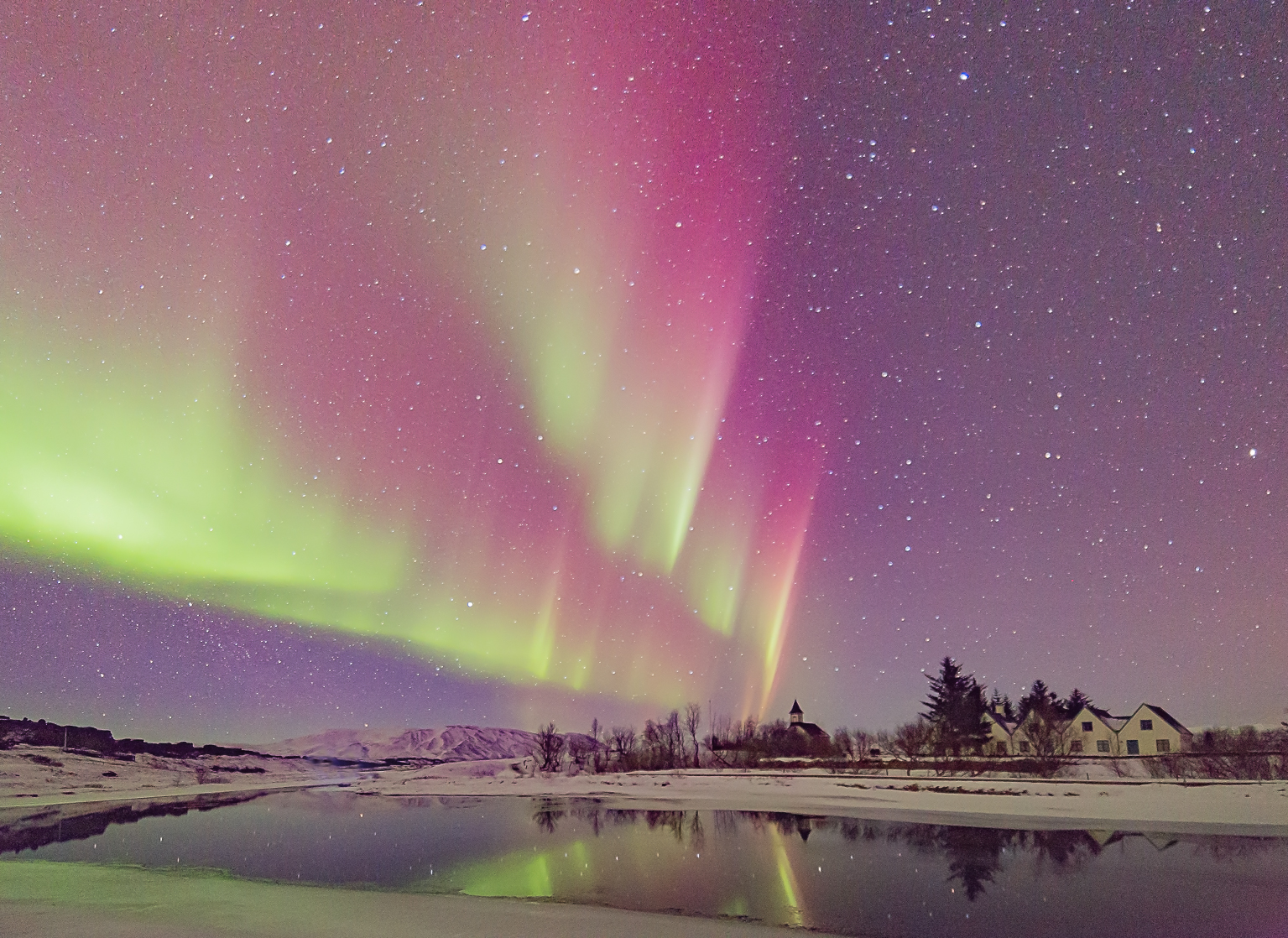
Bright pink and green aurora
Some of the most impressive Aurora displays are captured in September and October: qui is one of our real-time videos from the fall last year.
Looking for locations? See our guide to the 25 Best Places to See the Northern Lights in Iceland
Are you ready to see the lights this autumn? Take a look at our favorite tours qui!
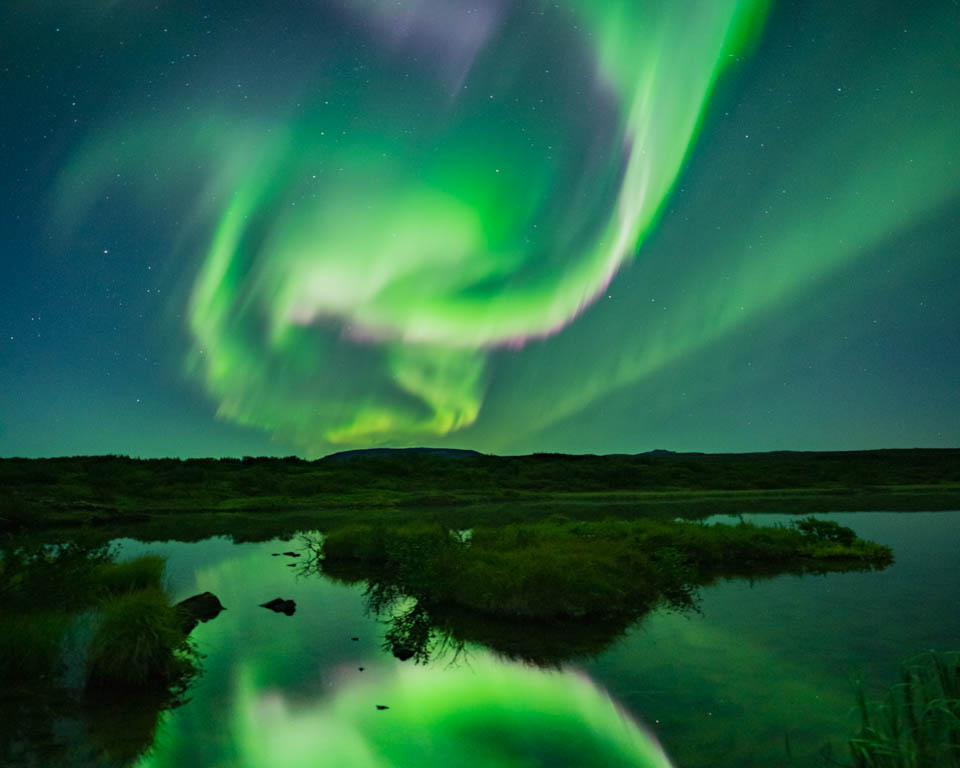
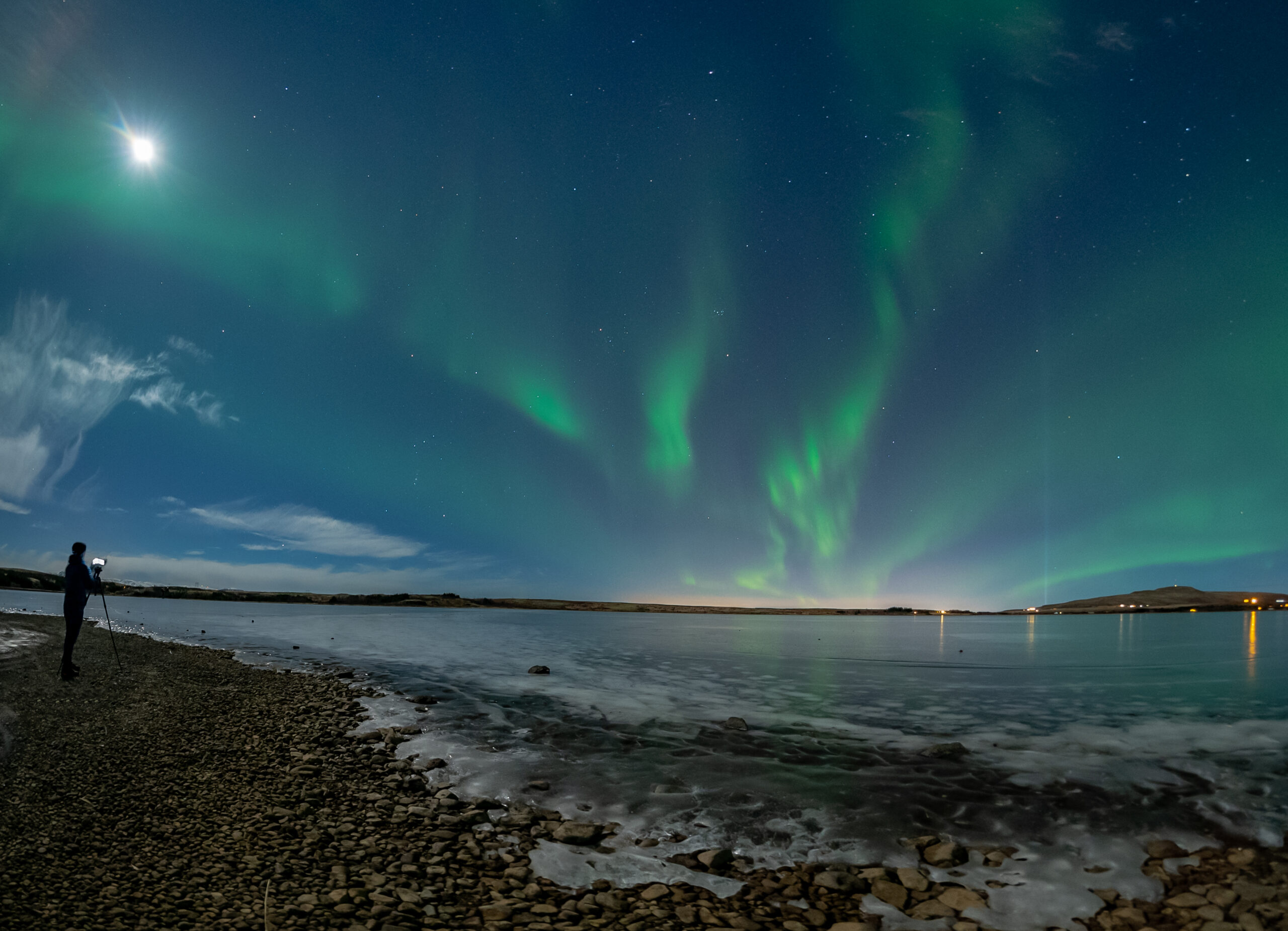
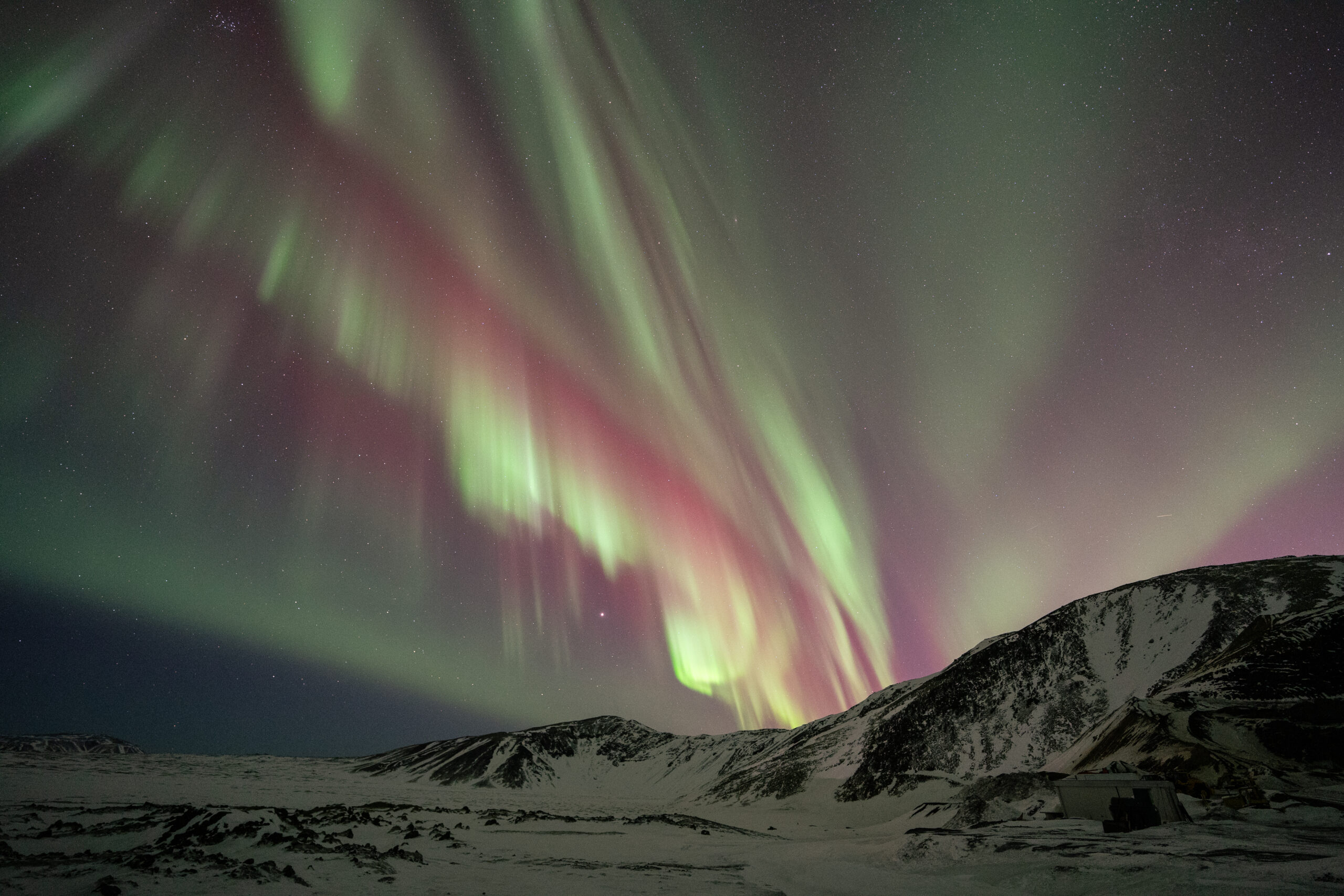
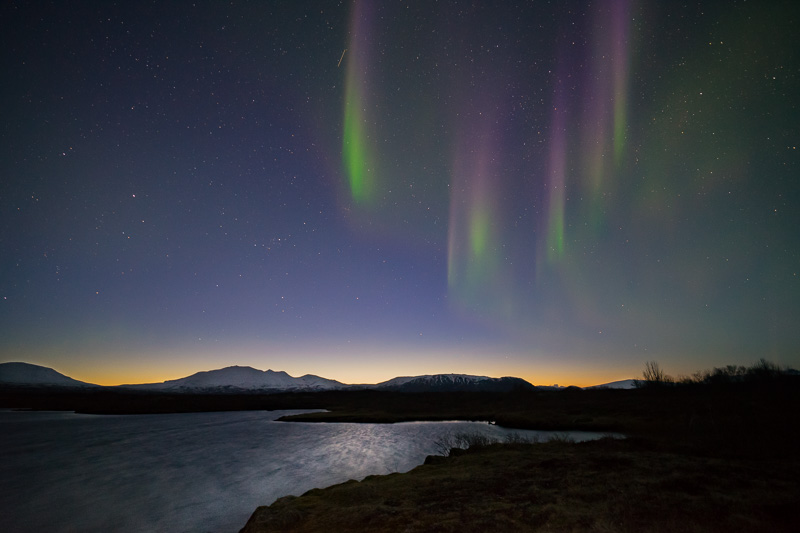
Northern Lights at different times of the year – from August to April
ARCTIC NIGHTS AND WINTER WONDERLAND – DECEMBER AND JANUARY
Due to its location just below the Arctic Circle, Iceland does not get polar nights in the standard definition. Even though there is no total winter blackout, hours of daylight in December and January are very limited.
Essentially, you’re getting between four to five hours of sunlight a day during the depths of winter in Iceland.
It is therefore especially important to keep the light factor into consideration when planning activities and excursions.
Per darti un'idea, ecco alcuni orari dell'alba e del tramonto a Reykjavik durante l'inverno:
- 1st December: Sunrise at 10:45 am and sunset at 3:45 pm
- 15th December: Sunrise at 11:15 am and sunset at 3:30 pm
- 1st January: Sunrise at 11:19 am and sunset at 3:42 pm
- 15th January: Sunrise at 10:56 am and sunset at 4:18pm
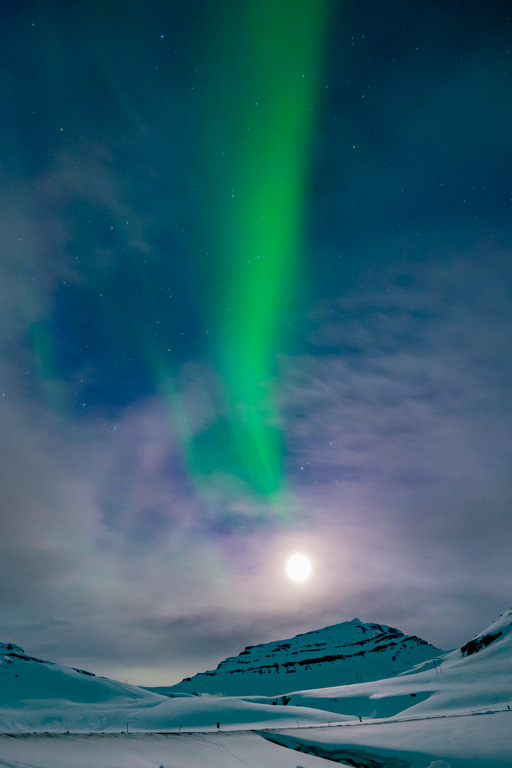
Aurora e luna piena al Parco Nazionale Þingvellir
WHY TRAVEL IN WINTER TO SEE THE NORTHERN LIGHTS
There are of course several good reasons to plan your northern light trip to Iceland in winter:
- L'inverno è arrivato!
Le temperature fredde iniziano a stabilizzarsi e la neve solitamente inizia ad accumularsi a dicembre. La caccia all'aurora nella natura innevata è un modo perfetto per godersi l'aurora boreale.
- Lunghe notti artiche
In order to see the Northern Lights, the most important factor is darkness. Of which we have plenty during the long winer month in the Nordics!
- Vacanze stagionali romantiche e divertenti
A dicembre, l'Islanda è la destinazione invernale per eccellenza per le vacanze di Natale o Capodanno!
- Stargazing!
Due to the extended hours of darkness, winter in Iceland is the perfect time for observing the night sky. Almost no light pollution and crispy clear skies make Iceland an outstanding destination to discover our universe… and beyond.
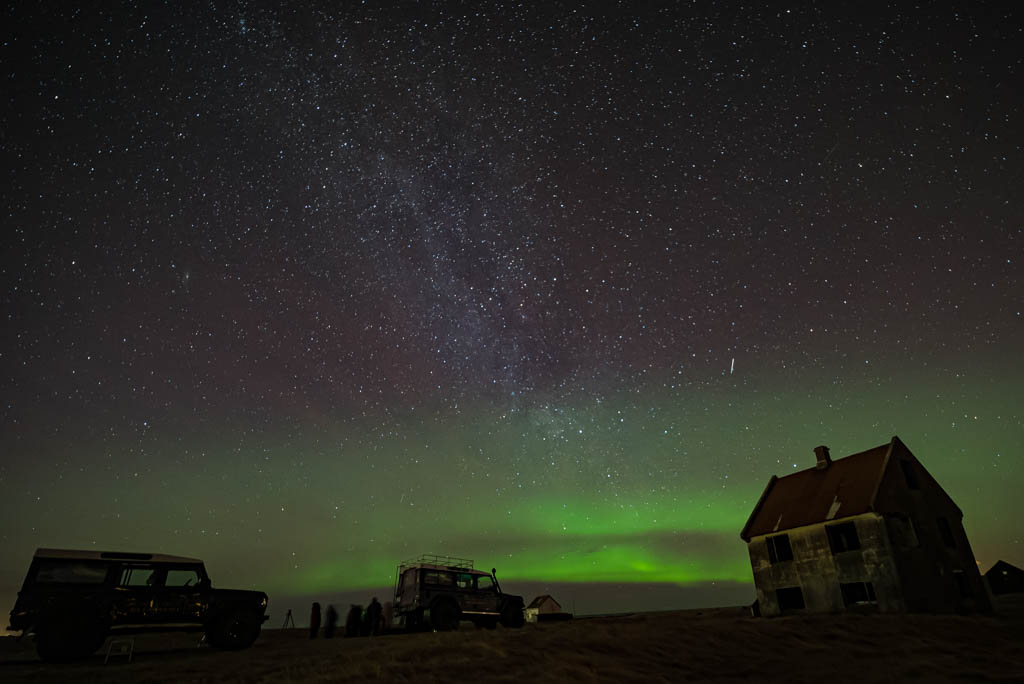
Check out this Northern Lights tour on modified Landrovers – those guys truly lead the pack when it comes to stargazing in Iceland
SPECTACULAR SPRING NORTHERN LIGHTS – FEBRUARY, MARCH AND APRIL
La fine dell'inverno e l'inizio della primavera sono i periodi più gettonati per visitare l'Islanda per ammirare l'aurora boreale, e per delle buone ragioni:
- La primavera è la stagione dell'aurora boreale!
Secondo 75 anni di registrazioni storiche, le perturbazioni geomagnetiche sono quasi due volte più probabili in primavera e in autunno rispetto all'inverno e all'estate. In primavera, spesso sperimentiamo forti esplosioni aurorali, chiamate sottotempeste aurorali. Le sottotempeste si verificano con poco preavviso e a volte con un'intensità incredibile, trasformando l'intero cielo in verde. Preparatevi per gli avvistamenti più spettacolari!
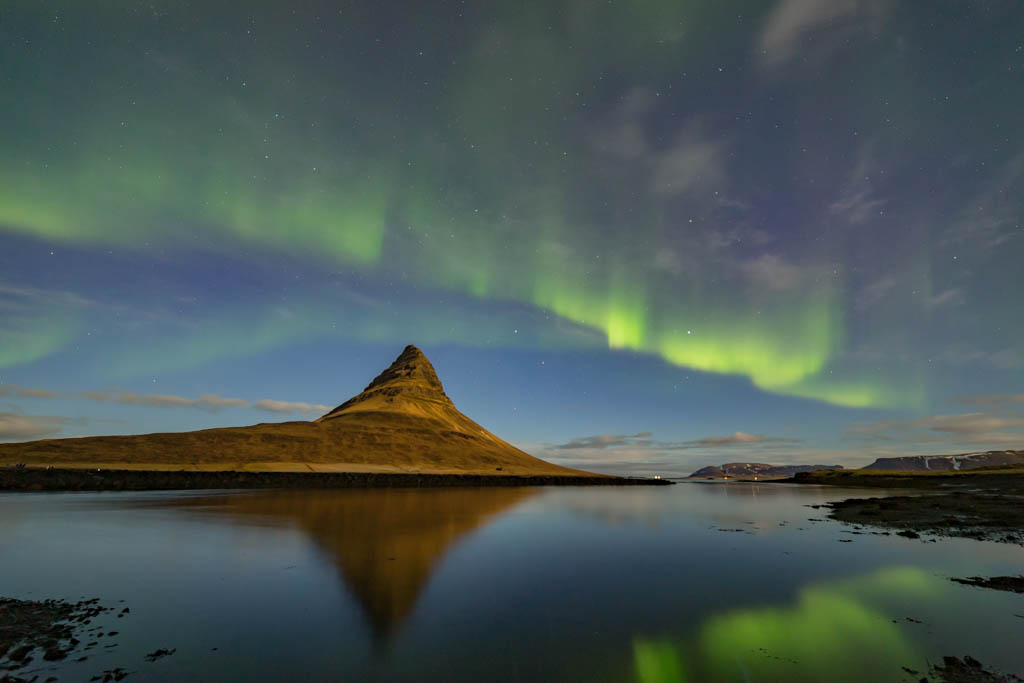
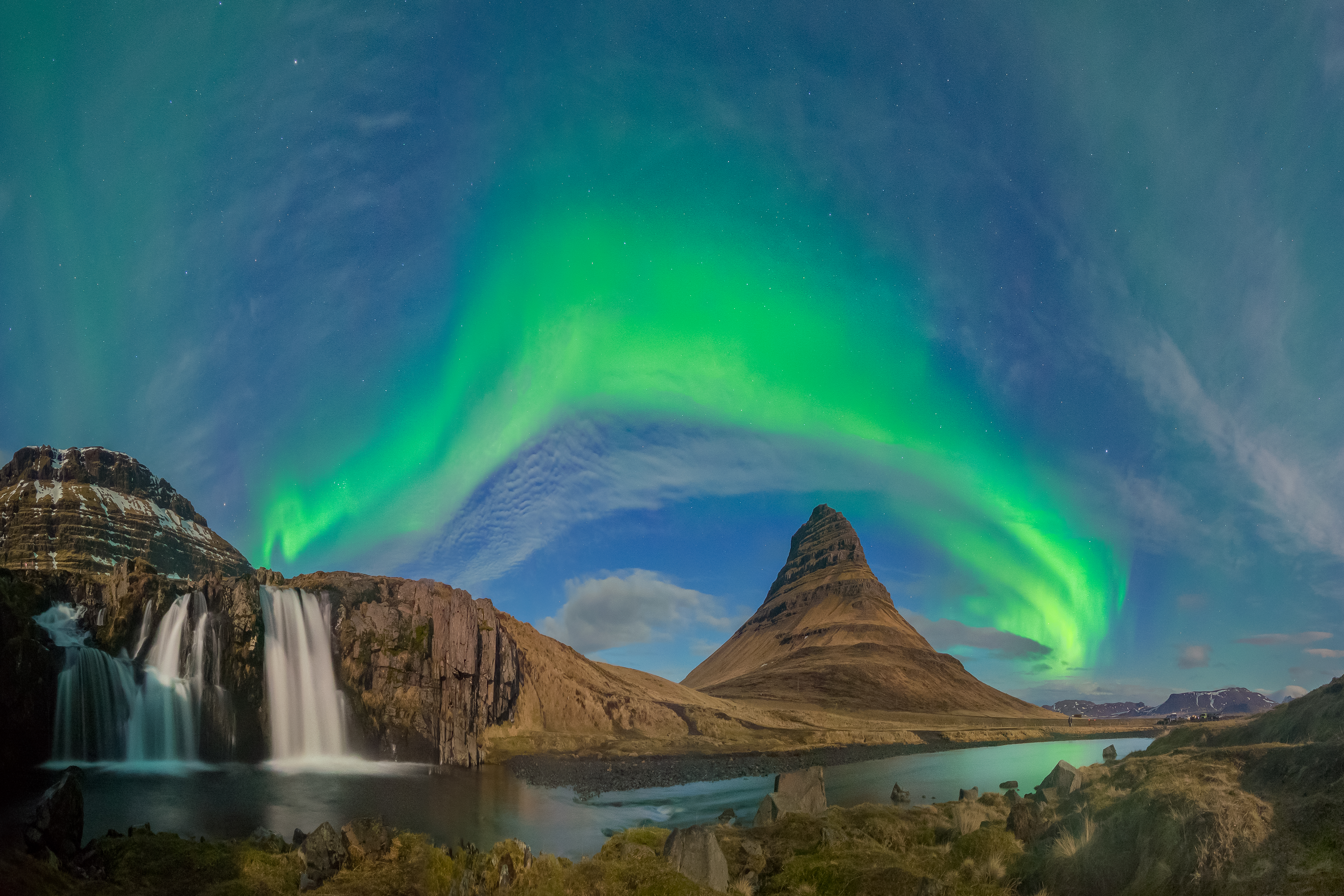
Northern lights over Kirkjufell
2. Gli ultraterreni paesaggi innevati
Iceland is covered in snow – now the country truly honors its name. The combination of Northern Lights and deep powdery snow truly is a sight to behold. Lakes and ponds are frozen, and the views so stunningly unique to make for a real once-in-a-lifetime experience.
3. Più ore di luce
Le giornate si allungano rapidamente, aprendo un tesoro di attività invernali tra cui scegliere. Per molti dei nostri ospiti, combinare la caccia all'aurora boreale notturna con le attività invernali diurne come l'esplorazione di caverne di ghiaccio, la slitta trainata dai cani o le escursioni con le racchette da neve, è il modo perfetto per esplorare l'Islanda. Grazie all'aumento della luce diurna, c'è molto tempo extra per viaggiare nel paese durante il giorno.
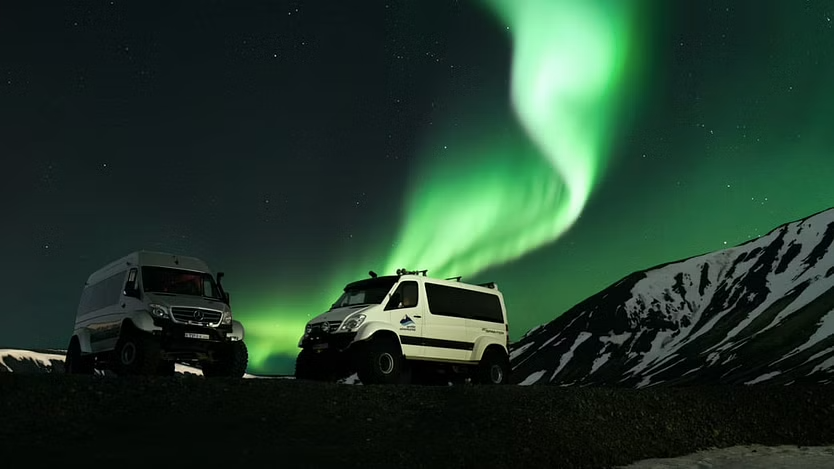
Foto dal nostropacchetto invernale di 4 giorni per l'aurora boreale
FINAL THOUGHTS
The Northern Lights don’t have a perfect month or exact minute: they are living, dancing phenomena shaped by the sun, the Earth’s magnetic field, and the weather above your head.
- In Iceland, the Aurora season starts around the end of August and ends in mid-April. if you visit at any point within this time frame for a few days, you will have a good probability of success.
- Contrary to the common belief, deep winter is not necessarily the best time for the northern lights, due to reduced solar activity and unstable weather conditions. Consider September or March to increase your chances!
- Keep in mind that the magnificent Aurora Borealis is a natural phenomenon, which does not always show up on a cue. Even when the odds seem to be in your favor, always take seeing the northern lights as the cherry on top of your trip.
- Choose the season for your holiday according to your preferences and needs. Are you aiming for an arctic winter getaway with ever-dancing lights above your hot tub? Or would you rather have more hours of daylight and warmer temperatures for exploring the country’s various sights and activities?
UNISCITI A NOI NEL MIGLIOR TOUR DELL’AURORA BOREALE IN ISLANDA
I NOSTRI BESTSELLER
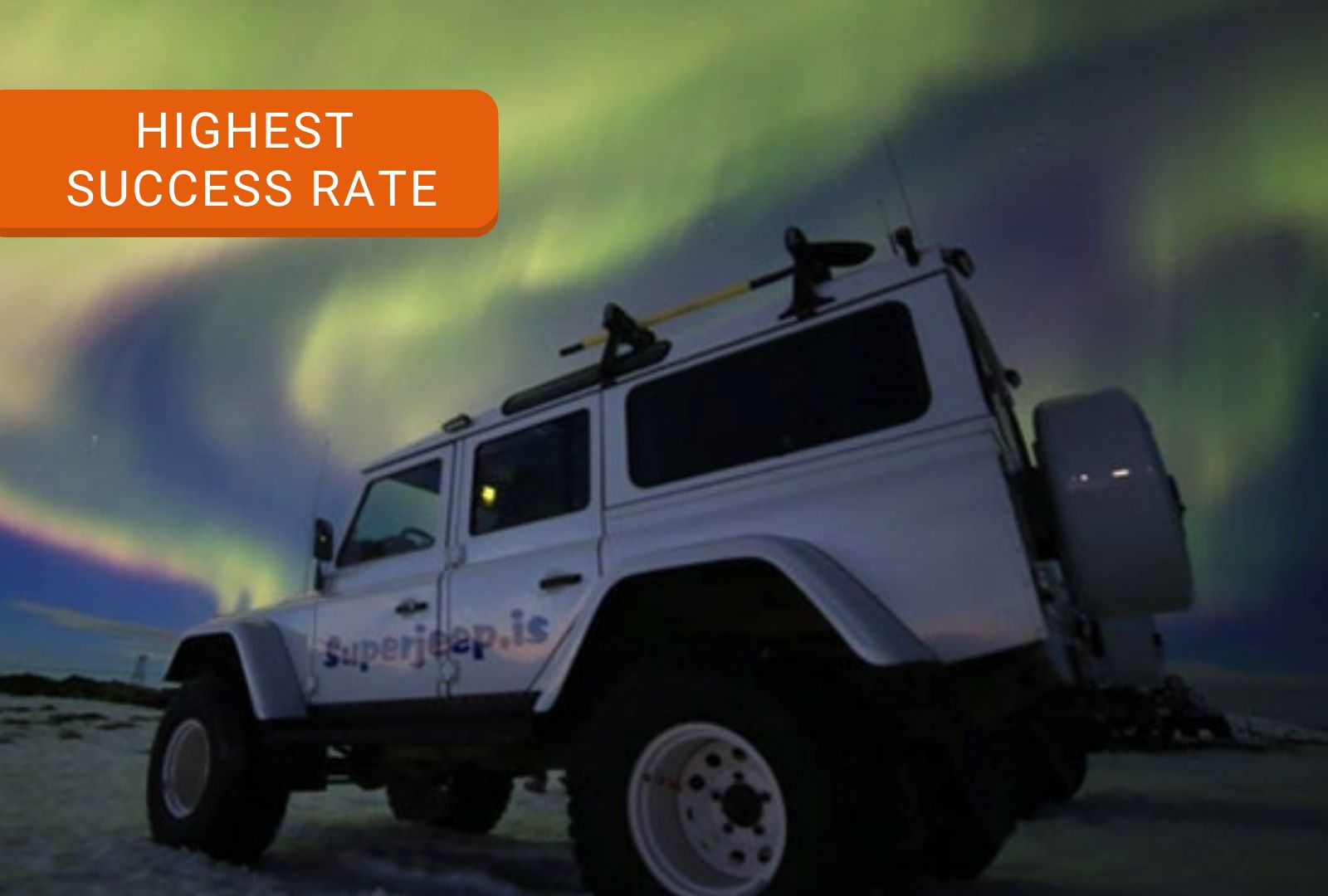
NORTHERN LIGHTS SUPER JEEP TOUR
PUNTI SALIENTI:
✓ Tour dell'aurora boreale in super jeep ✓ Free pick-up and drop-off ✓ Foto di qualità gratuite ✓ cioccolata calda ✓ Veicoli riscaldati
ALTISSIMA PERCENTUALE DI SUCCESSO
INGRESSO AD AURORA REYKJAVÍK INCLUSO NEL PREZZO - RISPARMIA 3900 ISK
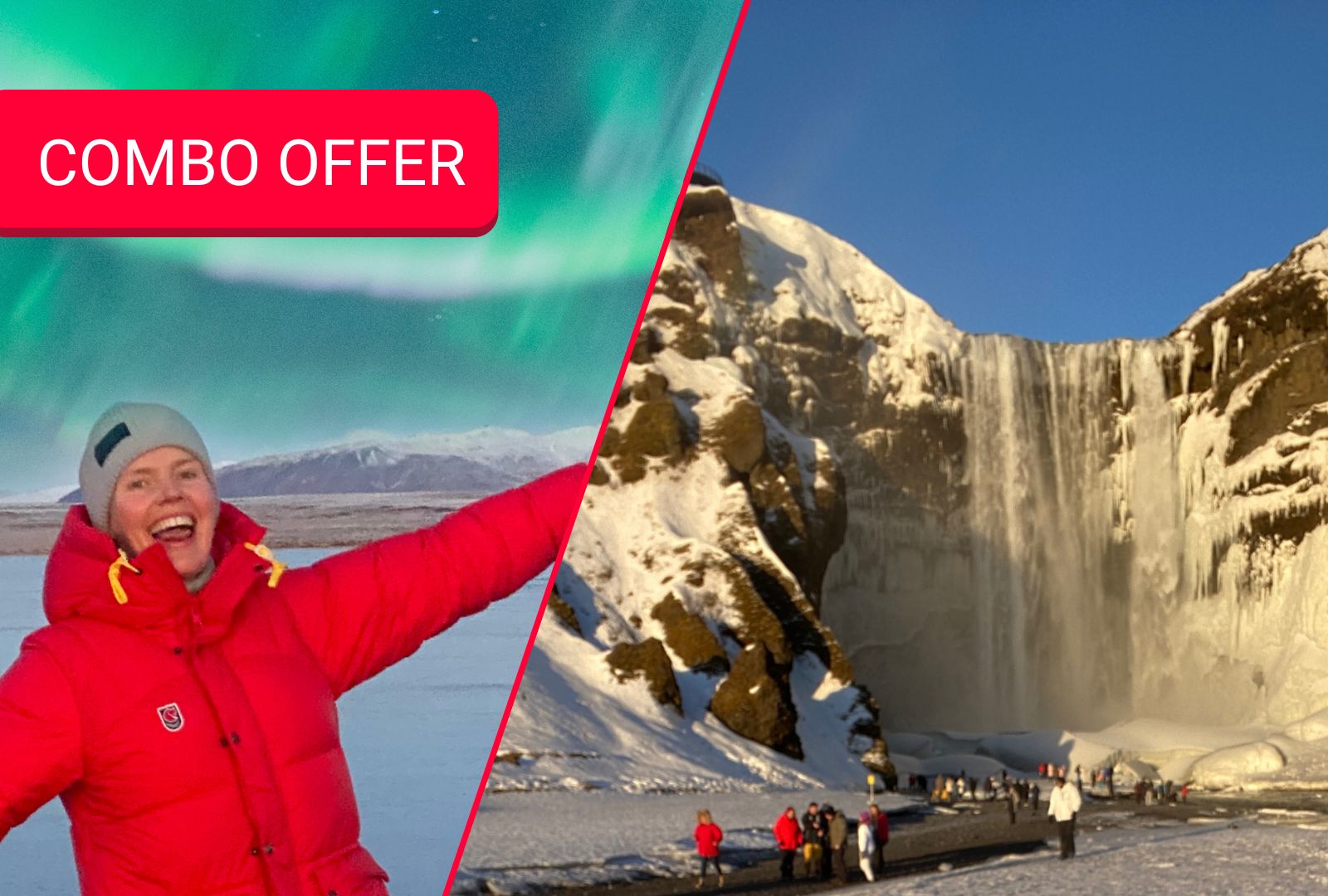
COSTA SUD E AURORA BOREALE
PUNTI SALIENTI:
✓ OFFERTA 2 PER 1: RISPARMIA OLTRE 2000 ISK ✓ Visit Ghiacciaio Sólheimarjökull ✓ Passeggia per la cittadina di Vík ✓ Cammina sulla spiaggia nera ✓ Vedi le cascate di Skógafoss e Seljalandsfoss ✓ Osserva L' Aurora Boreale danzare MIGLIOR RAPPORTO QUALITÀ PREZZO GARANZIA AURORA BOREALE: SECONDO TENTATIVO GRATUITE SE L'AURORA NON È VISIBILE DURANTE IL TOUR
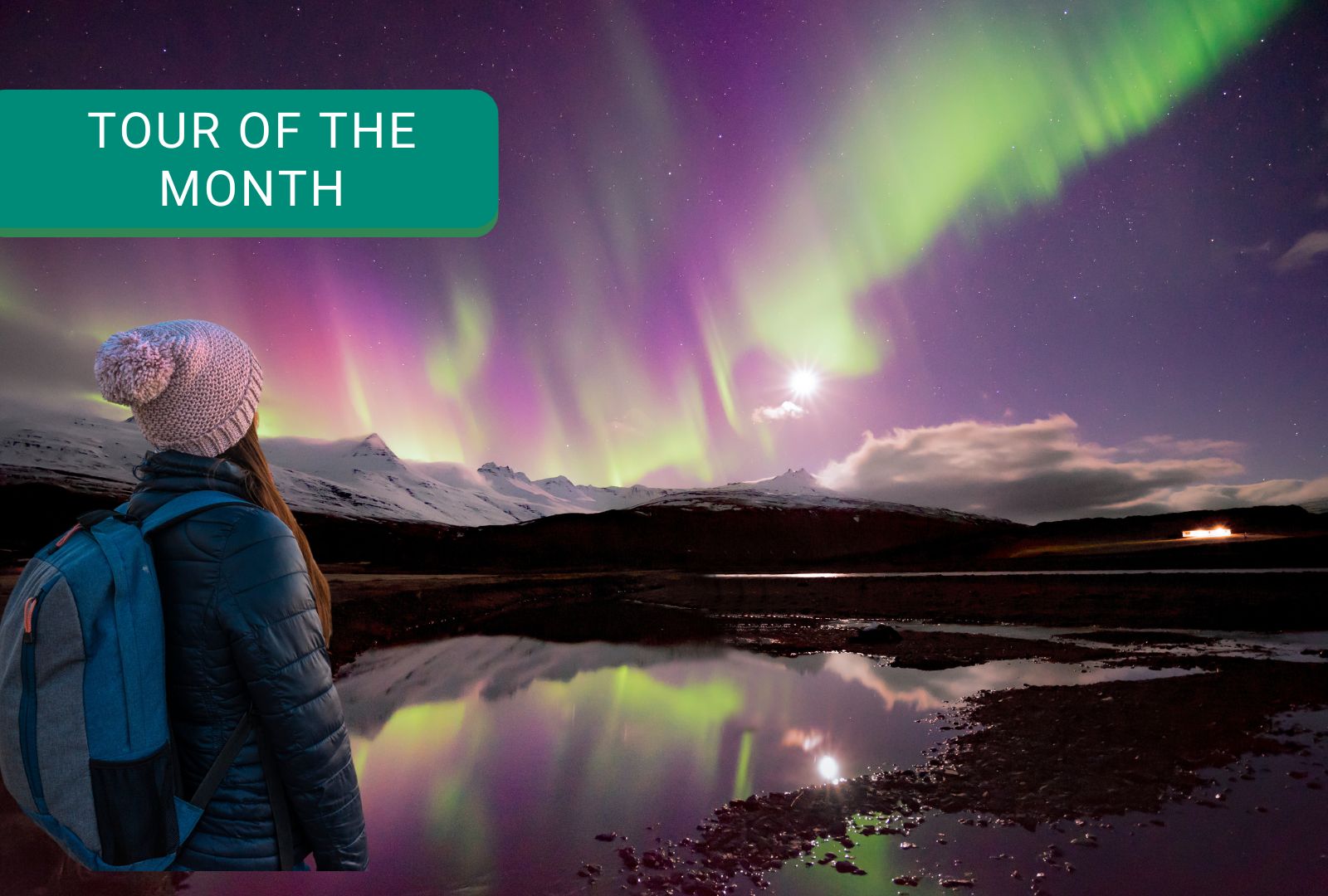
TOUR DELL' AURORA IN MINIBUS
PUNTI SALIENTI:
✓ Tour dell'aurora boreale in un autobus di piccole dimensioni
✓ Foto gratuite con l'aurora boreale
✓ Homemade hot Chocolate e Dolci
✓ Pick-up incluso
TOUR PIÙ VENDUTO
DOMANDE FREQUENTI SULL’AURORA BOREALE
Quando si può vedere l'aurora in Islanda?
Durante questo lungo periodo, l’Islanda sperimenta abbastanza oscurità perché l’aurora sia visibile di notte.
Tuttavia, le probabilità di osservare l’aurora variano a seconda del periodo dell’anno. Scopri quali mesi sono i migliori per vedere l’aurora qui.
Si può vedere l'aurora boreale con la luna piena?
A che ora compaiono le aurore boreali?
Quanto durano le aurore boreali?
Posso vedere le aurore boreali quando il cielo è nuvoloso?
Le aurore boreali appaiono solo quando fa freddo?
Le aurore boreali sono visibili in tutta l’Islanda?
Le aurore boreali sono davvero multicolore?
Il novilunio è migliore per osservare le aurore boreali?
La luna piena è adatta per fotografare le aurore boreali?
Katarina Raker