Il cielo in fiamme: mitologia dell’aurora e saghe medievali islandesi
Miti e significati nel mondo
Folklore islandese
Il curioso caso delle saghe islandesi
Quando il mito incontra la scienza
The Northern Lights or aurora borealis, shimmering in their shades of green, red and violet, have fascinated humans for millennia. To peoples across the Arctic, they were signs from the divine, messages from the dead, or even forces of luck and danger. Yet, for a land like Iceland with its dramatic skies and frequent aurora displays, there are surprisingly few references to the Northern Lights in its medieval literature, including the famous Icelandic sagas.
Miti e significati nel mondo
Across cultures that lived under auroral skies, ancient people developed rich explanations for the lights:
- Greek and Roman antiquity: The term aurora borealis itself comes from Roman and Greek mythology. Aurora was the Roman goddess of dawn, and Boreas the Greek god of the north wind. European observers later combined these names to describe the phenomenon.
- Indigenous Arctic beliefs: Some northern cultures saw auroras as ancestral spirits, omens of fortune or misfortune.
- Elsewhere in the world: Chinese and Russian mythic traditions sometimes interpreted aurora-like luminescence as dragons or celestial serpents.
These mythologies show humanity’s enduring impulse to understand extraordinary phenomena through narrative and spirit, long before modern science offered explanations.
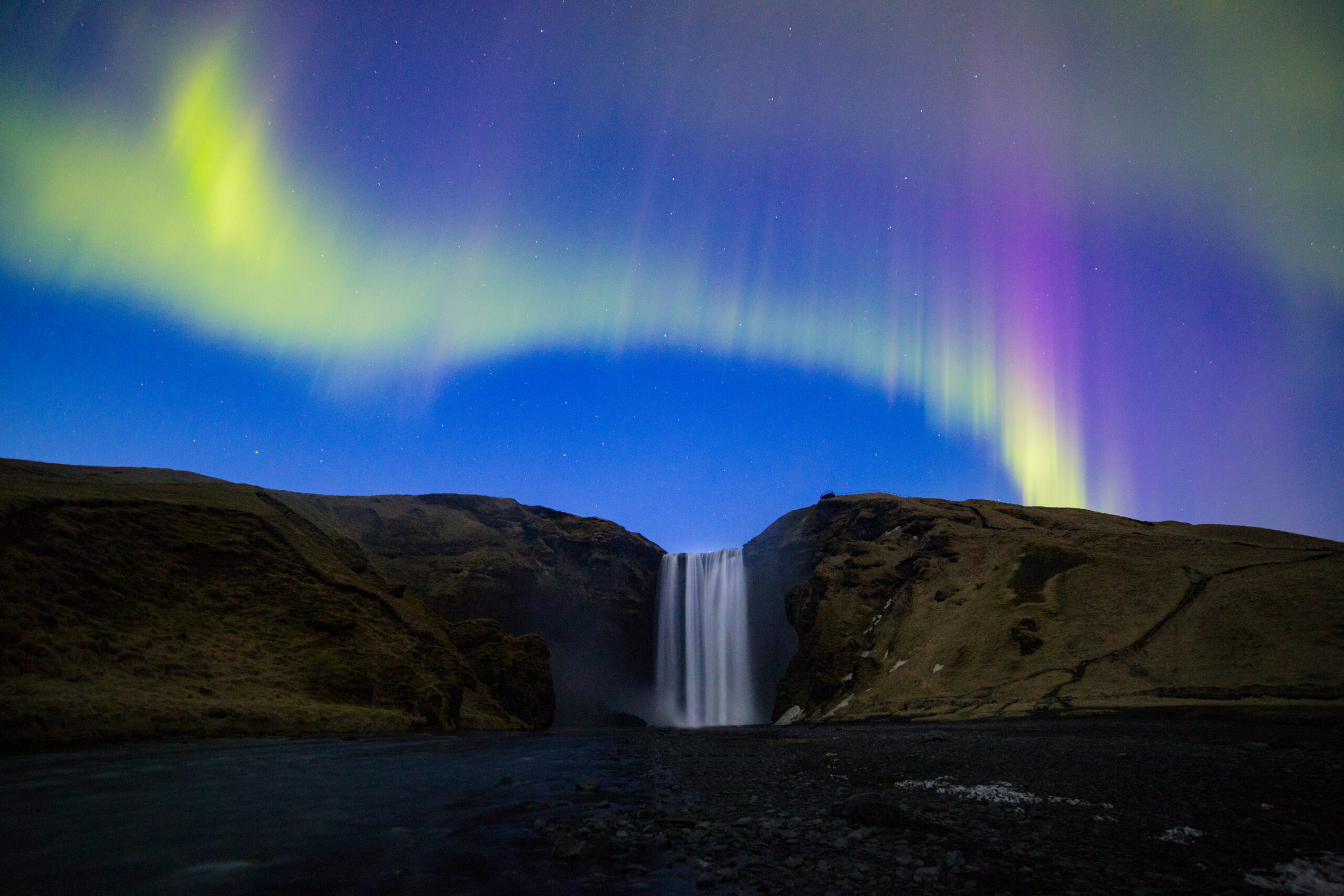
Northern Lights over Skógafoss
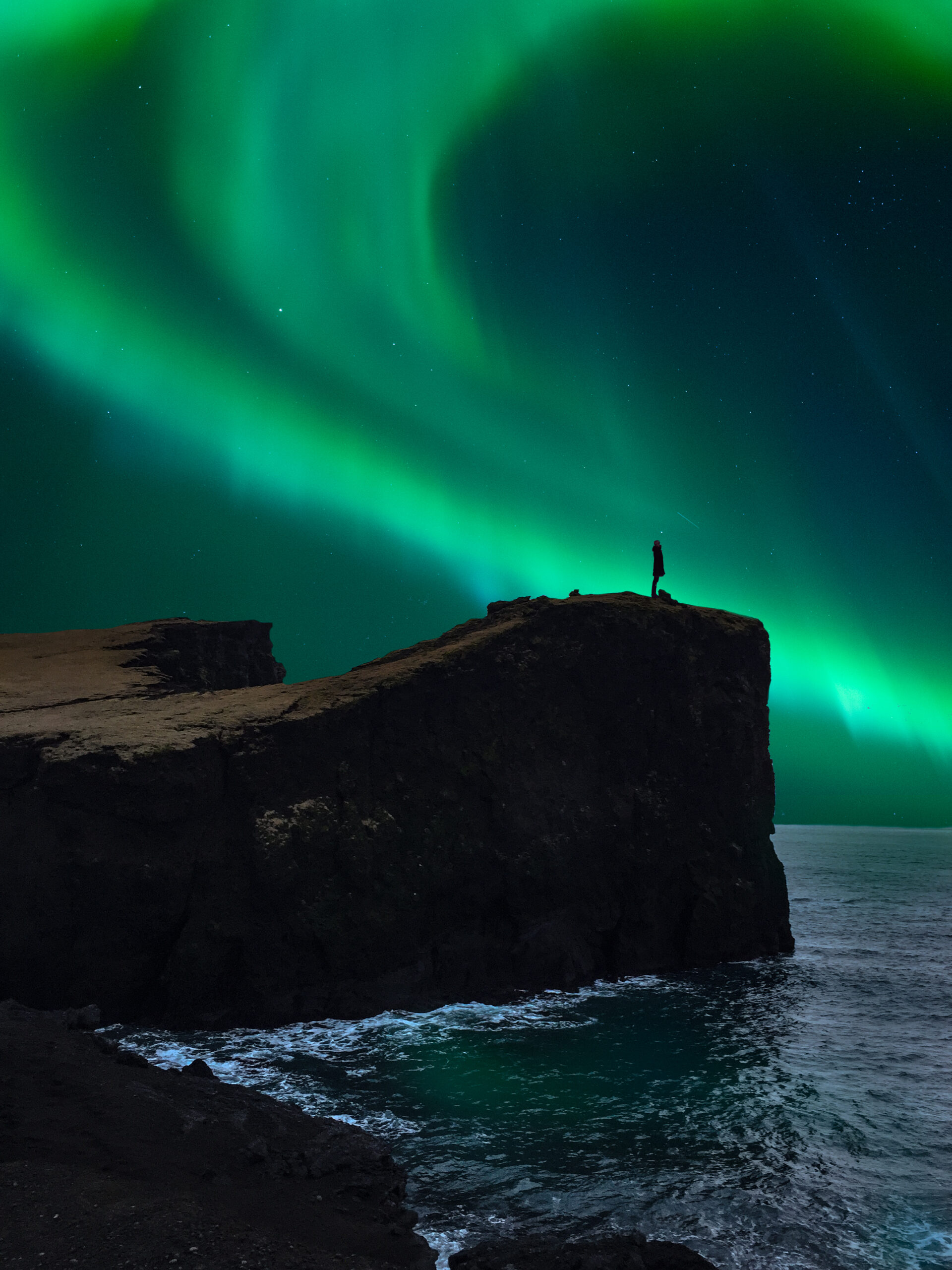
Northern Lights in Reykjanes
Icelandic Folklore: Fragmented Fascination
While Iceland does have folklore about the Northern Lights, these stories tend to be local superstitions rather than structured mythological lore, and from later traditions rather than medieval texts:
- The lights were said to ease childbirth pains, yet pregnant women were warned not to look at them or risk having cross-eyed babies.
- The auroras were seen as weather predictors, sometimes signalling an approaching storm.
- Folklore also tied the northern lights to elves and hidden folk (huldufólk) celebrating secret revelries in the dark skies.
These tales, however charming, are later folkloric interpretations rather than deep mythological frameworks akin to the epic myths of gods like Óðinn, Loki or Þór.
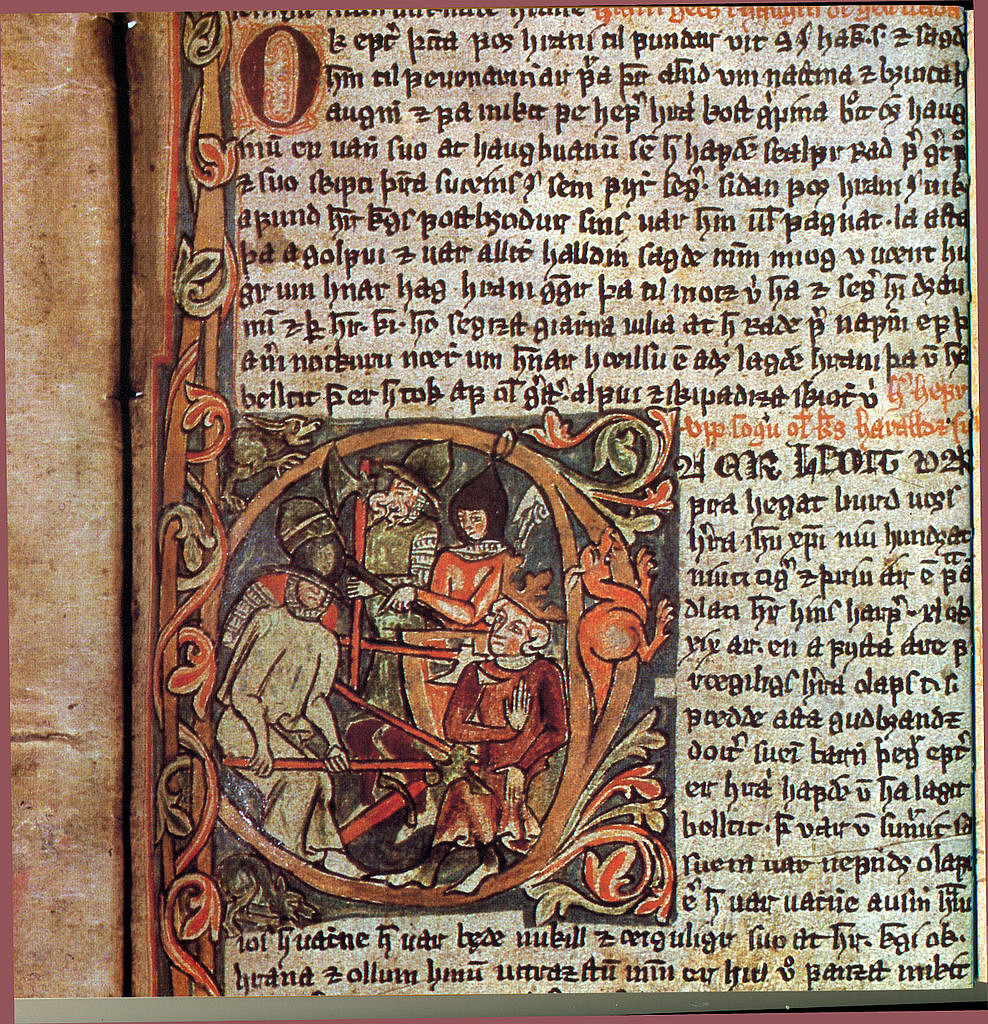
The Icelandic saga manuscript Flateyjarbók
Il curioso caso delle saghe islandesi
Despite the richness of Icelandic medieval literature (sagas, þættir, and the Eddas), explicit references to the aurora borealis are extremely scarce or nonexistent.
But why don’t Medieval Icelandic Sagas mention the Northern Lights prominently?
Scholars and enthusiasts have proposed several hypotheses for a reason why.
- Rarity or invisibility at certain times: Some research suggests that due to shifts in Earth’s magnetic field, auroral activity may have been less common or visible in Iceland and Scandinavia during the Viking Age and early medieval period.
- Perceptions of normalcy: It’s possible that to medieval Icelanders, living in a region where aurora might appear with some regularity, the lights were not unusual enough to require narrative explanation. In other words: if you see something frequently, it stops being storyworthy.
- Focus of saga literature: Sagas tend to concentrate on human drama, law, honor, exploration, and historical events. Natural phenomena are contextualized mainly when they directly affect those human concerns. The aurora may have been seen as a backdrop (atmospheric rather than narrative) even if it inspired awe.
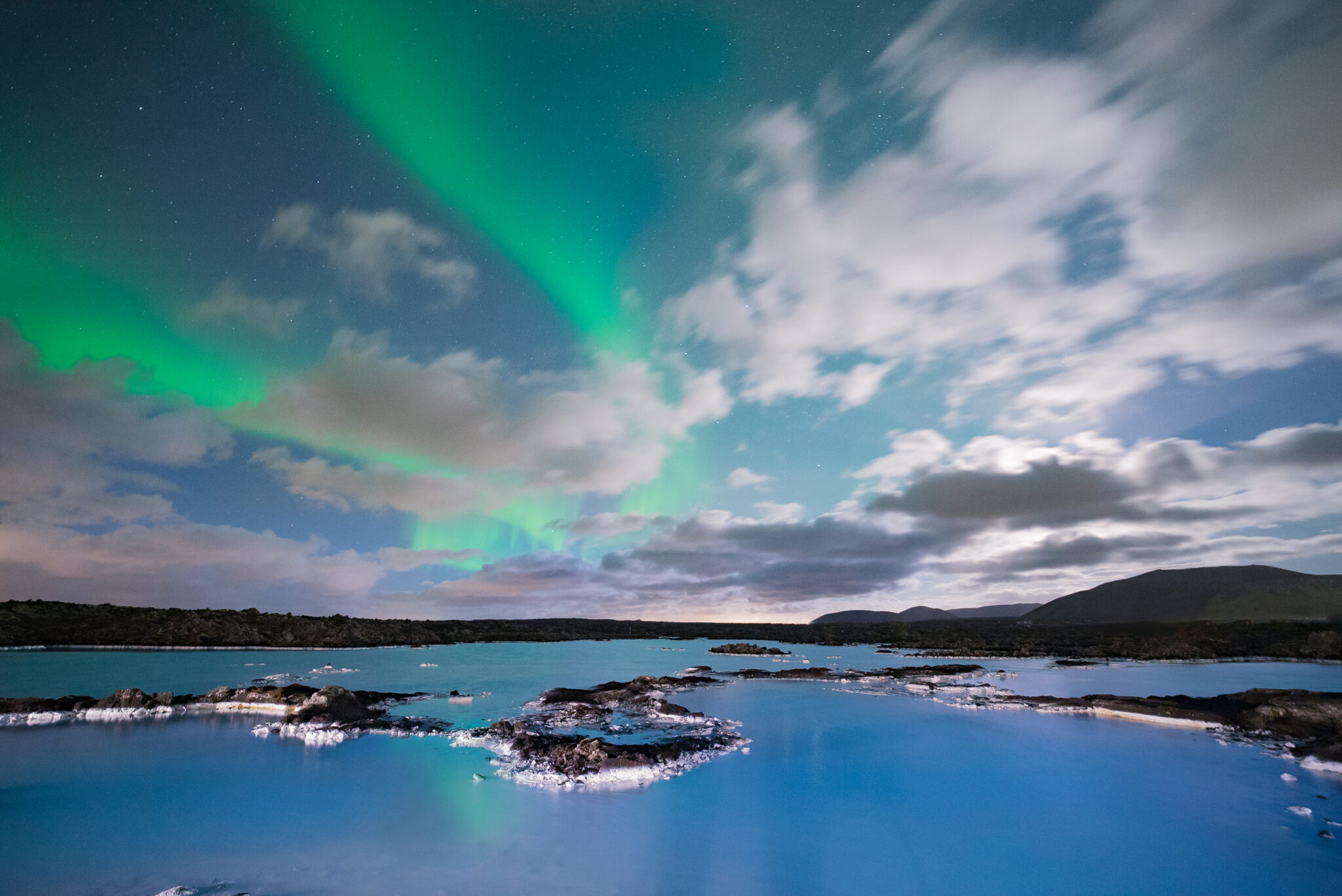
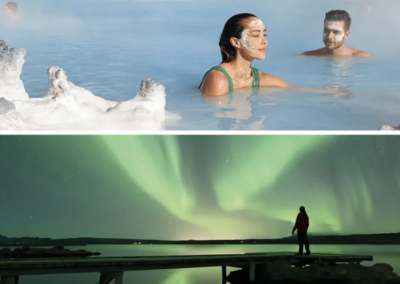
Northern Lights at the Laguna Blu
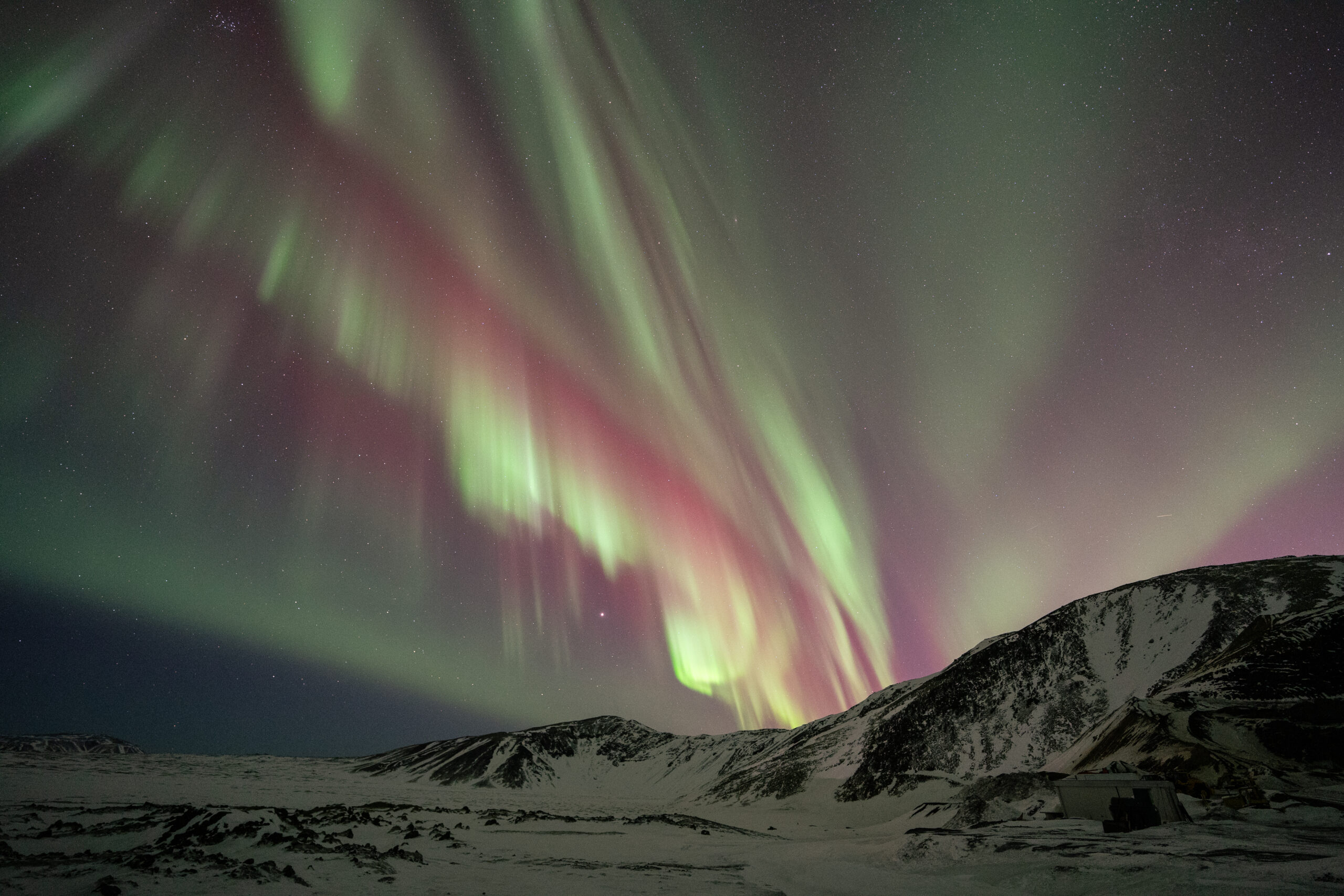
Red auroras illuminating the Icelandic sky
Quando il mito incontra la scienza
Today, we understand the aurora borealis as charged particles from the sun interacting with Earth’s magnetic field and upper atmosphere. But myth as a human attempt to explain the unexplained still resonates when we watch those waves of light ripple across Icelandic skies.
Perhaps the absence of grand mythic tales in the sagas shows us something about medieval Icelandic life: that people could recognize mystery, yet not always weave it into their epic stories. Or maybe those tales were simply lost, recounted by storytellers around a fire, but never committed to parchment.
Whatever the reason, the Northern Lights remain for us both a scientific marvel and a legacy of human imagination. Their ethereal glow continues to inspire awe, reminding us of the beauty and mystery that exist beyond our everyday lives. Across cultures and generations, they serve as a bridge between the natural world and our capacity for wonder, encouraging both curiosity and creativity in those who gaze upon them.
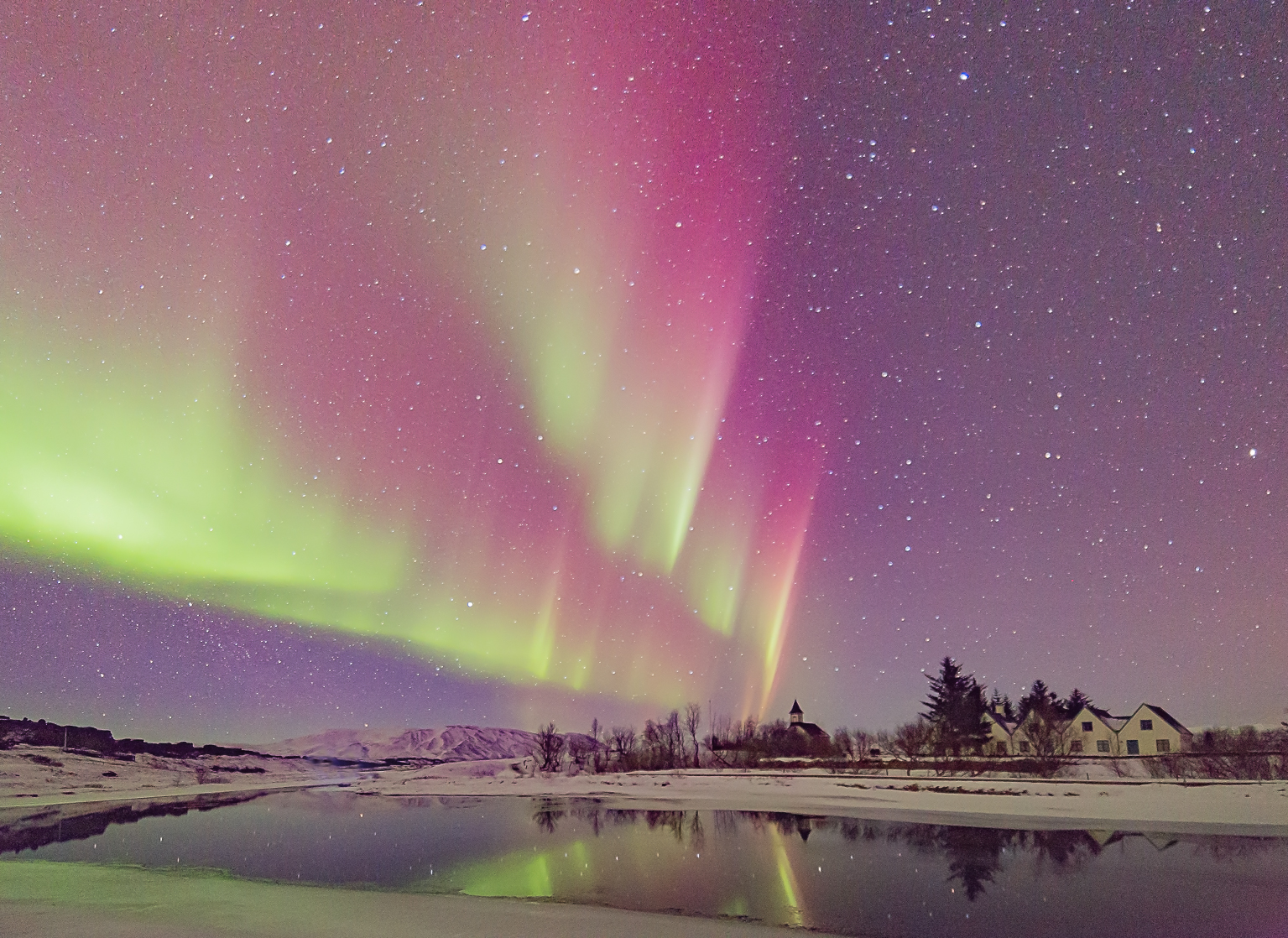
Bright pink and green northern lights
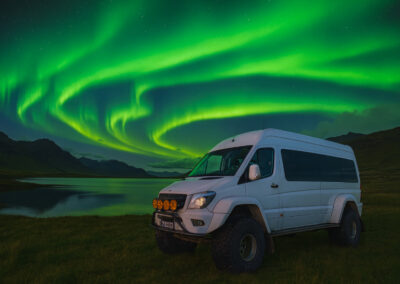
Unisciti a noi in un Tour per l'Aurora Boreale
Evita lo stress di guidare d’inverno al buio e unisciti a un gruppo di avventurieri con la tua stessa passione per un tour guidato dell’aurora boreale.

FAQ about the Northern Lights
Quando si può vedere l'aurora in Islanda?
Durante questo lungo periodo, l’Islanda sperimenta abbastanza oscurità perché l’aurora sia visibile di notte.
Tuttavia, le probabilità di osservare l’aurora variano a seconda del periodo dell’anno. Scopri quali mesi sono i migliori per vedere l’aurora qui.
Why can't I see any northern lights in the summer ?
Want to know more about light conditions in Iceland? Check the sun graph and learn about twilight and dusk in Iceland.
A che ora compaiono le aurore boreali?
During the winter months, when the hours of light are limited, the northern lights can often appear as early at 7:00pm.
As the exact time of an Aurora display cannot be predicted, keep your eyes at the sky. And remember, patience is key!
Quanto durano le aurore boreali?
Posso vedere le aurore boreali quando il cielo è nuvoloso?
Le aurore boreali appaiono solo quando fa freddo?
Le aurore boreali sono visibili in tutta l’Islanda?
Le aurore boreali sono davvero multicolore?
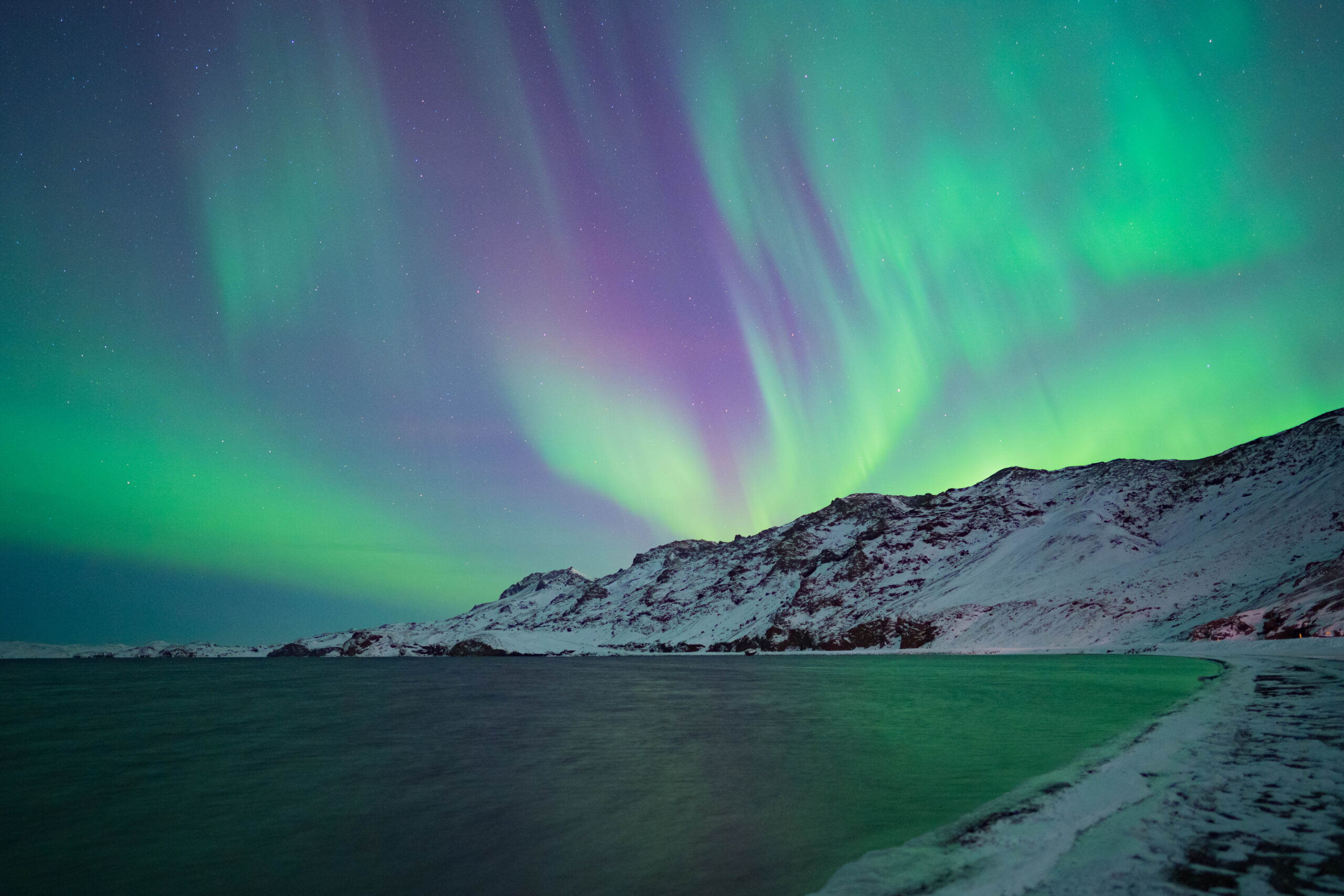
The northern lights happen in a variety of colours. Green is by far the most common, but the Aurora can also appear in vibrant shades of pink, purple, red, violet and blue.
To the naked eye though, the northern lights can look quite faint, and at times be perceived as white or grey-ish. This is due to limitations in our night vision.
Camera devices instead can capture a more truthful version of the colours, as, in most cases, it possible to adjust the device settings in order to better adapt to the night time conditions.
Find more about how to improve your night vision and learn how to take great Aurora shots qui.
Are the northern lights going to disappear in future?
No, the northern lights are not going anywhere!
The Aurora has been visible in the Arctic for centuries, and that is not going to change any times soon.
What is true is that the solar activity, which is responsabile for the occurrence of the northern lights on our planet, changes over time, following an eleven-year cycle.
During each solar cycle, the Sun goes from a peak to a minimum of activity. During the peak, the so called “solar maximum“, we can expect enhanced activity and, potentially, stronger northern lights visible from unusual latitudes (in the northern hemisphere, this means Auroras being spotted further south than usual). While, during the solar minimum, such unusually strong occurrences become rarer.
Still, at Arctic latitudes the northern lights can be see clearly throughout the whole cycle. And Islanda, being well within the “Aurora belt”, is and will remain the perfect destination for northern lights hunting!
What is the BZ value?
The Bz value is part of the Interplanetary Magnetic Field (IMF), which is the magnetic field carried by the solar wind coming from the Sun.
Why does it matter for the Northern Lights? Earth’s magnetic field points north. If the solar wind’s magnetic field (Bz) points south (a negative Bz), it connects with Earth’s field and lets charged solar particles into the atmosphere. This interaction helps create the northern lights. If instead, Bz is positive (northward), the fields don’t connect well, and fewer particles get in — meaning weaker or no aurora.
Think of Bz like an ON/OFF switch: negative Bz (south) = ON, good chance of Aurora soon. Positive Bz (north) = OFF, Aurora less likely.
Learn more about Bz and how the forecast works qui.
Which are the best forecast apps and websites for Northern Lights hunting?
Chasing the Northern Lights is all about timing, clear skies, and up-to-date aurora forecasts. These tools help you know when and where there’s a good chance of seeing the aurora — so you can plan your night the smart way. For the best results, we recommend using more than one source, as different forecasts interpret data differently.
WEB FORECASTS
- Official AURORA REYKJAVÍK Aurora Forecast 👉 https://aurorareykjavik.is/aurora-forecast/
Our 6-step expert forecast combines geomagnetic activity, cloud cover, and viewing tips — designed for real-time Northern Lights planning. - SpaceWeatherLive
A detailed global space weather site with auroral activity maps and solar parameters. - NOAA Space Weather Prediction Center (SWPC)
The official US space weather forecast model that many aurora apps base their data on.
TOP MOBILE APPS
- My Aurora Forecast – Offers real-time KP index, global aurora maps, push alerts and multi-day forecasts — great for travelers and serious aurora watchers alike.
And don’t forget to unable notifications, so you’ll get alerts when aurora activity spikes.
📍App Store
📍 Google Play
By following this guide, you’ll be well-prepared to experience one of nature’s most magical displays. Whether you’re planning your trip or already in Iceland, the Aurora awaits!