LE MIGLIORI LAGUNE GEOTERMALI DELL'ISLANDA: QUALE DOVRESTI VISITARE?
Le Lagune Geotermali in Islanda
Quale Scegliere?
Consigli Per La Tua Visita
L’Islanda è una terra di fuoco e ghiaccio, dove i ghiacciai incontrano i vulcani e l’energia geotermica ribolle appena sotto la superficie. Tra le sue attrazioni più irresistibili ci sono le lagune geotermali, sorgenti termali naturali (e talvolta lussuose) che offrono il mix perfetto di relax, avventura e paesaggi mozzafiato. Dai resort famosi in tutto il mondo alle perle nascoste immerse nella campagna, ogni laguna ha il suo fascino unico, rendendo difficile scegliere quale visitare. In questa guida confronteremo cinque delle migliori lagune islandesi: Laguna Blu, Sky Lagoon, Hvammsvík, Laguna Laugarás, e Secret Lagoon. Ti aiuteremo a decidere quale immersione fa più per te!
1. Laguna Blu: l’Esperienza Spa Iconica
Se c’è un nome che tutti conoscono, è la Laguna Blu, la spa geotermale più famosa d’Islanda. Immersa in un campo di lava vicino a Grindavík, questa sorprendente piscina color azzurro lattiginoso è alimentata da acqua geotermica ricca di silice, minerali e alghe, leggendarie per la cura della pelle.
Perché è fantastica
- Laguna enorme e famosa in tutto il mondo, con acque blu surreali.
- Include una maschera di fango alla silice con la maggior parte dei biglietti.
- Ristoranti, bar e extra spa di lusso lo rendono più di una semplice immersione.
- Vicino all’aeroporto di Keflavík: perfetta per una sosta!
Ideale per: chi visita per la prima volta, amanti delle spa e chiunque cerchi un'esperienza iconica in Islanda.
2. Sky Lagoon: Benessere Islandese Moderno
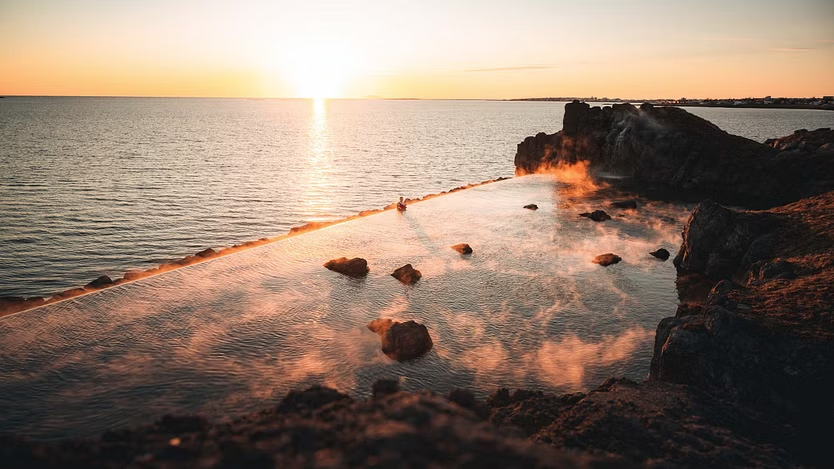
Appena fuori da Reykjavík, Sky Lagoon unisce il bagno geotermale alla tradizione islandese e a splendide viste sull’oceano. È famosa per il Rituale in 7 Passi, una serie di saune, immersioni in acqua fredda ed esperienze di vapore pensate per elevare il benessere.
Perché è fantastica
- Spettacolare piscina a sfioro con vista sul mare.
- Il Rituale rende l’esperienza più simile a un percorso di benessere che a un semplice bagno.
- Tende a essere più tranquilla e più orientata a un pubblico adulto rispetto alla Laguna Blu.
Ideale per: visitatori orientati al benessere e chi desidera panorami spettacolari direttamente sull’oceano.
Piscina a sfioro alla Sky Lagoon
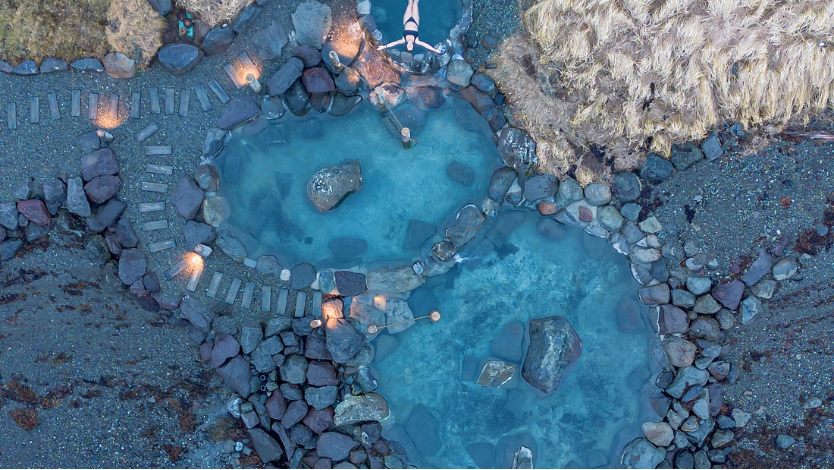
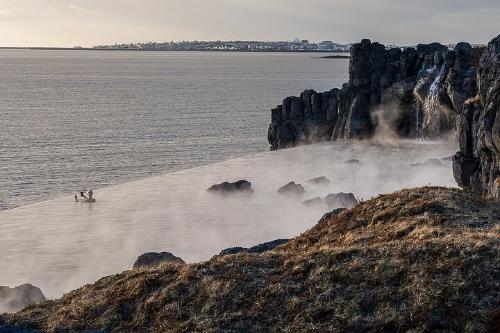
Piscine di Hvammsvík viste dall'alto
3. Hvammsvík: Piscine Calde Naturali
Vuoi natura e relax allo stato puro? Hvammsvík si trova ai margini di Hvalfjörður (Fiordo delle Balene), con diverse piscine naturali, bagni di vapore, e persino accesso diretto all'oceano. È meno raffinato dei grandi resort spa, ma è proprio questo il suo fascino.
Perché è fantastica
- Piscine multiple a temperature diverse, alcune riscaldate, altre raffreddate dall’oceano.
- Splendidi paesaggi di fiordi e spesso molto tranquillo.
- I sentieri escursionistici e le attività all’aperto nei dintorni lo rendono un’avventura di un’intera giornata.
Ideale per: Amanti della natura e viaggiatori che vogliono ammirare i paesaggi islandesi mentre si rilassano in acqua.
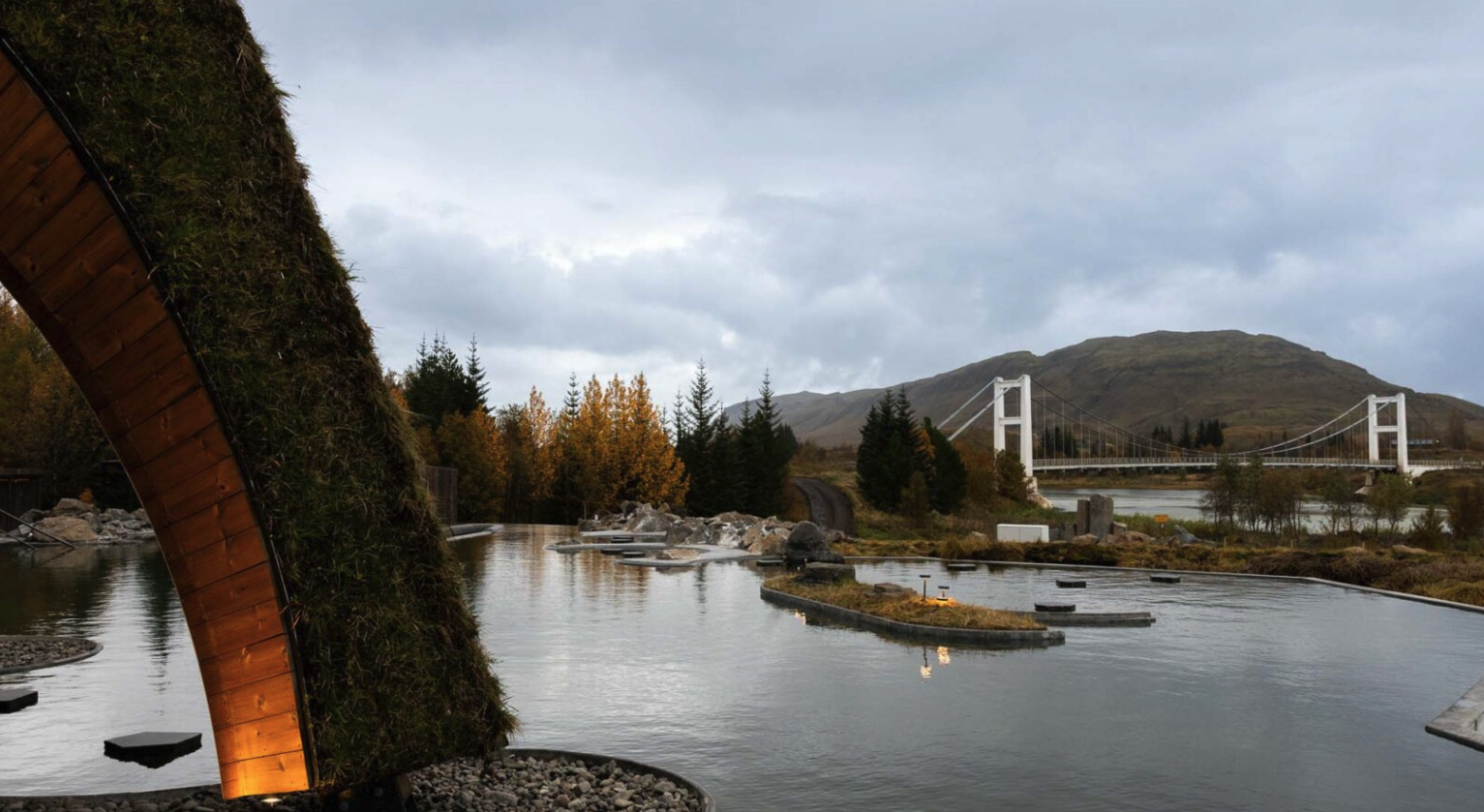
Laguna Laugarás
4. Laguna Laugarás: Il Nuovo Gioiello nell’Esperienza del Circolo d'Oro
Una delle lagune geotermali più nuove d’Islanda, la Laguna Laugarás offre una laguna a due livelli, cascata, piscina nella foresta, saune e bar in acqua, diventando rapidamente una tappa imperdibile del percorso del Circolo d’Oro.
Perché è fantastica
- Goditela in combinazione con il Pacchetto Circolo d'Oro + Laguna Laugarás
- Caratteristica cascata.
- Esperienze di bagno multiple in un unico luogo (sauna, vasca fredda, piscina nella foresta).
- Ristorazione in loco che rende l’esperienza ancora più speciale.
Ideale per: i viaggiatori del Circolo d’Oro e chi desidera un'esperienza fresca e varia.
5. Secret Lagoon: Classica ed Economica
Se cerchi autenticità, Secret Lagoon (Gamla Laugin) a Flúðir è il più antico luogo di balneazione geotermale d’Islanda, risalente al 1891. È semplice, rustica e immersa nella natura con sorgenti calde sempre in ebollizione e persino un mini geyser nelle vicinanze. Molto facile da aggiungere come tappa rilassante sul percorso del Circolo d’Oro!
Perché è fantastica
- Un’aggiunta rilassante con il Pacchetto Circolo d’Oro + Secret Lagoon
- Più accessibile rispetto ai mega resort.
- Atmosfera islandese classica: vapore naturale, strutture più semplici, fascino della campagna.
- Facile da combinare con le visite turistiche del Circolo d’Oro.
Ideale per: Viaggiatori attenti al budget e amanti della cultura autentica delle sorgenti termali.
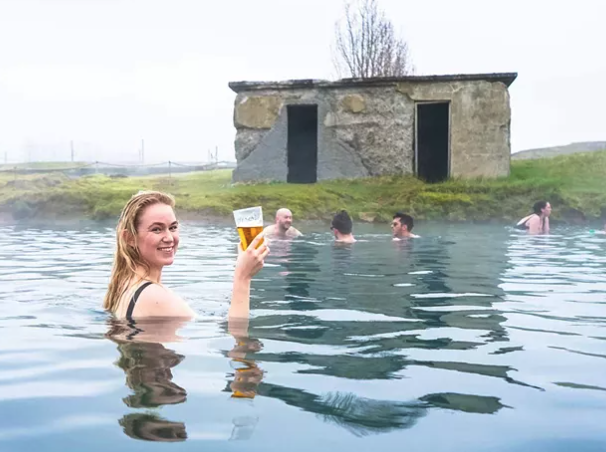
Visitatrice con drink alla Secret Lagoon
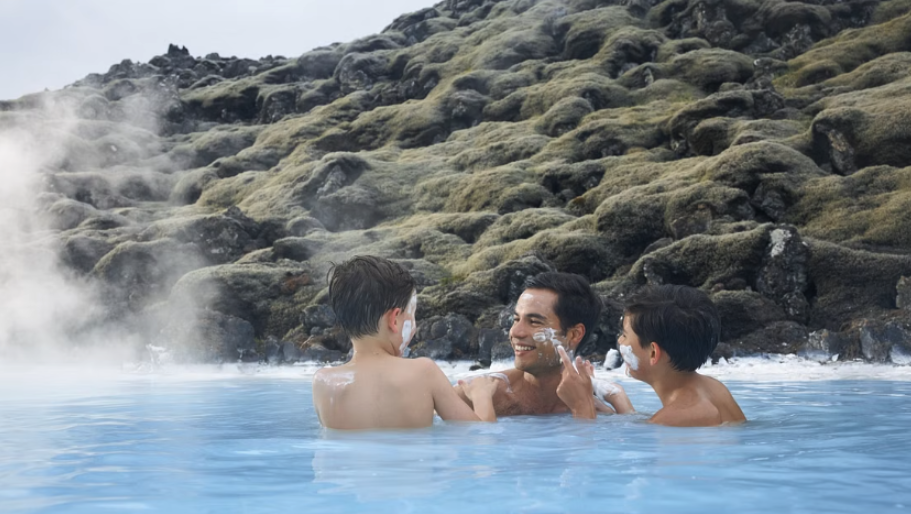
Una famiglia rilassata alla Laguna Blu
Qual è la migliore?
Non esiste una risposta unica, dipende dalle tue priorità:
- Ideale per un’esperienza iconica: Laguna Blu
- Ideale per benessere e panorami: Sky Lagoon
- Ideale per immersione nella natura: Hvammsvík
- Ideale per nuove destinazioni e varietà: Circolo d’Oro + Laguna Laugarás
- Ideale per budget e autenticità: Circolo d’Oro + Secret Lagoon
Consigli Per La Tua Visita
- Prenota in anticipo: le lagune raggiungono rapidamente la capacità massima, quindi è sempre meglio assicurarsi il proprio orario
- Da combinare con le visite turistiche: alcune lagune si prestano perfettamente ai pacchetti del Circolo d’Oro.
- Vai al tramonto per panorami indimenticabili, specialmente a Sky Lagoon o Hvammsvík.
Se hai poco tempo, scegli Laguna Blu o Sky Lagoon. Se invece vuoi un po’ più di avventura nei tuoi piani, Hvammsvík, Circolo d’Oro con Secret Lagoon o Circolo d’Oro con Laguna Laugarás potrebbero rubarti il cuore.
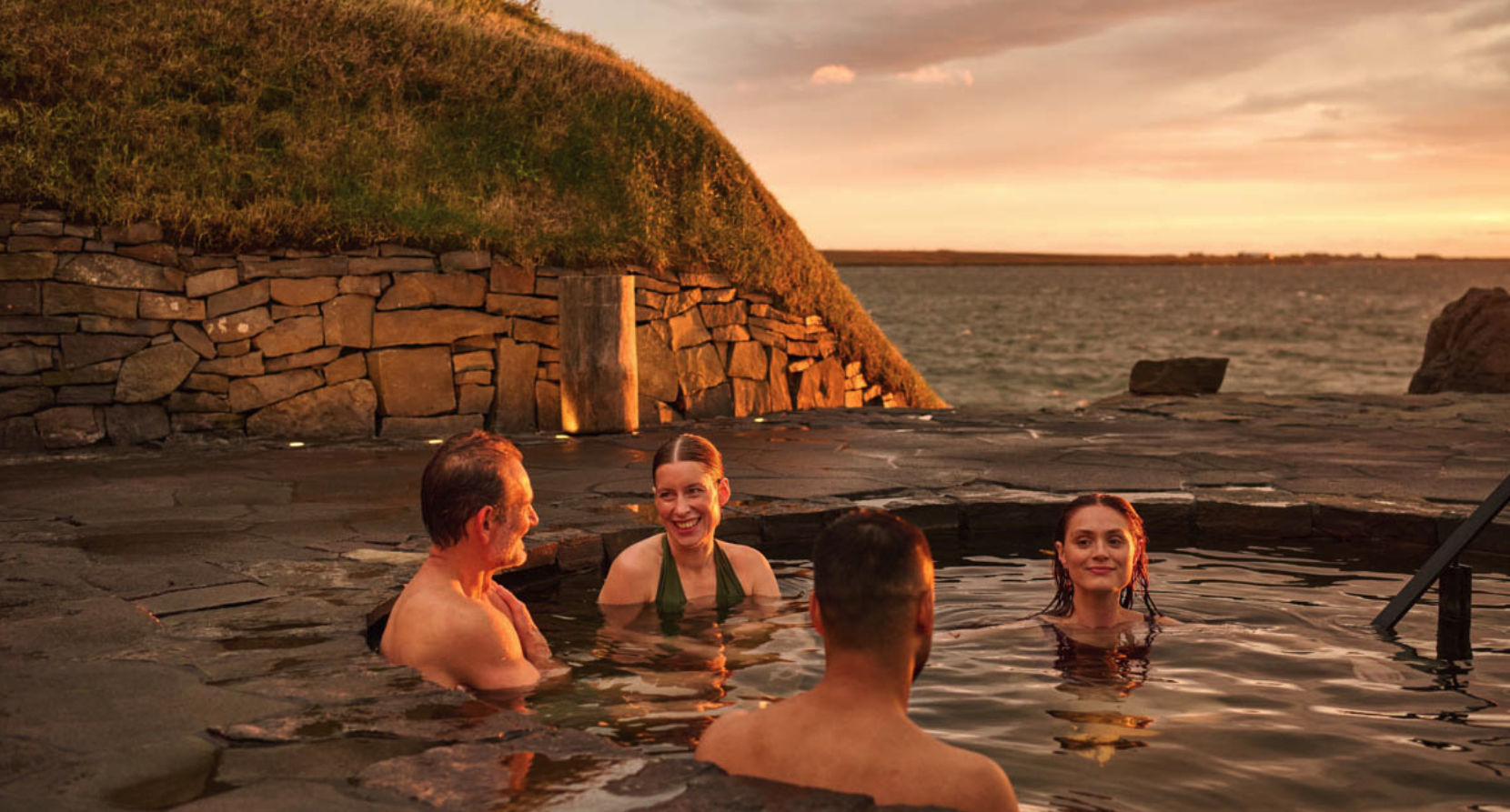
Tramonto rilassante alla Sky Lagoon
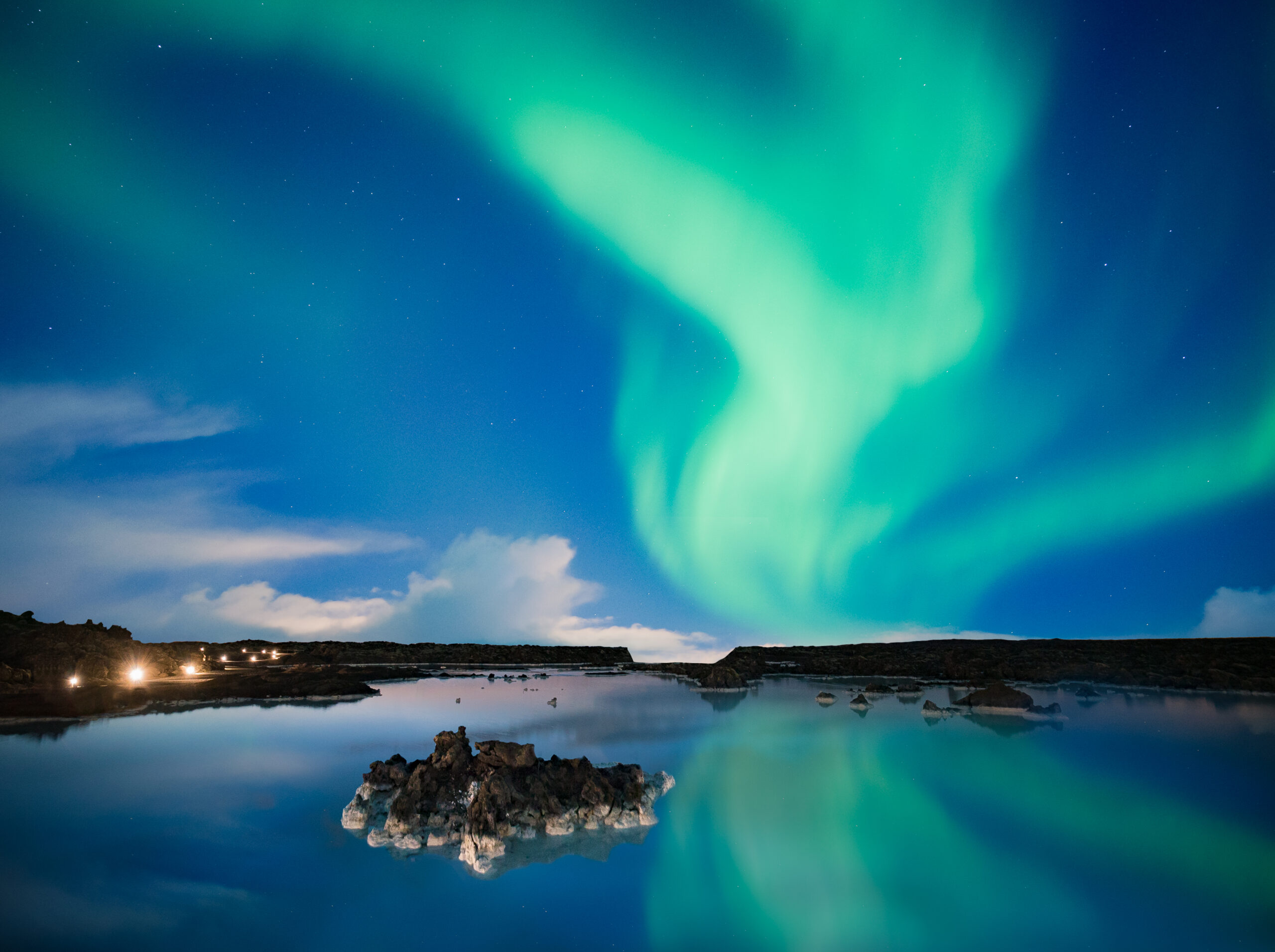
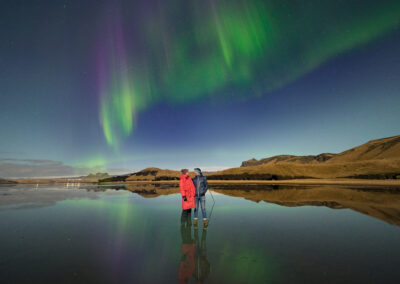
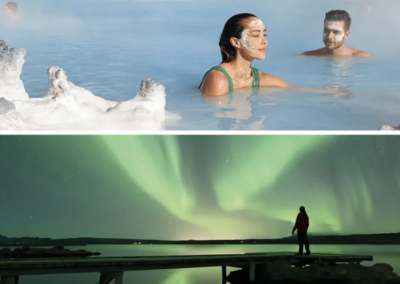
Unisciti a noi in un Tour per l'Aurora Boreale

FAQ about the Northern Lights
Quando si può vedere l'aurora in Islanda?
Durante questo lungo periodo, l’Islanda sperimenta abbastanza oscurità perché l’aurora sia visibile di notte.
Tuttavia, le probabilità di osservare l’aurora variano a seconda del periodo dell’anno. Scopri quali mesi sono i migliori per vedere l’aurora qui.
Why can't I see any northern lights in the summer ?
Want to know more about light conditions in Iceland? Check the sun graph and learn about twilight and dusk in Iceland.
A che ora compaiono le aurore boreali?
Quanto durano le aurore boreali?
Posso vedere le aurore boreali quando il cielo è nuvoloso?
Le aurore boreali appaiono solo quando fa freddo?
Le aurore boreali sono visibili in tutta l’Islanda?
Le aurore boreali sono davvero multicolore?
To the naked eye though, the northern lights can look quite faint, and at times be perceived as white or grey-ish. This is due to limitations in our night vision.
Camera devices instead can capture a more truthful version of the colours, as, in most cases, it possible to adjust the device settings in order to better adapt to the night time conditions.
Find more about how to improve your night vision and learn how to take great Aurora shots qui.
Are the northern lights going to disappear in future?
The Aurora has been visible in the Arctic for centuries, and that is not going to change any times soon.
What is true is that the solar activity, which is responsabile for the occurrence of the northern lights on our planet, changes over time, following an eleven-year cycle.
During each solar cycle, the Sun goes from a peak to a minimum of activity. During the peak, the so called “solar maximum“, we can expect enhanced activity and, potentially, stronger northern lights visible from unusual latitudes (in the northern hemisphere, this means Auroras being spotted further south than usual). While, during the solar minimum, such unusually strong occurrences become rarer.
Still, at Arctic latitudes the northern lights can be see clearly throughout the whole cycle. And Islanda, being well within the “Aurora belt”, is and will remain the perfect destination for northern lights hunting!
What is the BZ value?
Why does it matter for the Northern Lights? Earth’s magnetic field points north. If the solar wind’s magnetic field (Bz) points south (a negative Bz), it connects with Earth’s field and lets charged solar particles into the atmosphere. This interaction helps create the northern lights. If instead, Bz is positive (northward), the fields don’t connect well, and fewer particles get in — meaning weaker or no aurora.
Think of Bz like an ON/OFF switch: negative Bz (south) = ON, good chance of Aurora soon. Positive Bz (north) = OFF, Aurora less likely.
Learn more about Bz and how the forecast works qui.
Which are the best forecast apps and websites for Northern Lights hunting?
Chasing the Northern Lights is all about timing, clear skies, and up-to-date aurora forecasts. These tools help you know when and where there’s a good chance of seeing the aurora — so you can plan your night the smart way. For the best results, we recommend using more than one source, as different forecasts interpret data differently.
WEB FORECASTS
- Official AURORA REYKJAVÍK Aurora Forecast 👉 https://aurorareykjavik.is/aurora-forecast/
Our 6-step expert forecast combines geomagnetic activity, cloud cover, and viewing tips — designed for real-time Northern Lights planning. - SpaceWeatherLive
A detailed global space weather site with auroral activity maps and solar parameters. - NOAA Space Weather Prediction Center (SWPC)
The official US space weather forecast model that many aurora apps base their data on.
TOP MOBILE APPS
- My Aurora Forecast – Offers real-time KP index, global aurora maps, push alerts and multi-day forecasts — great for travelers and serious aurora watchers alike.
And don’t forget to unable notifications, so you’ll get alerts when aurora activity spikes.
📍App Store
📍 Google Play
By following this guide, you’ll be well-prepared to experience one of nature’s most magical displays. Whether you’re planning your trip or already in Iceland, the Aurora awaits!