LAGUNA BLU VS. SKY LAGOON: QUALE SPA ISLANDESE DOVRESTI SCEGLIERE?
Vantaggi e Rapporto Qualità‑Prezzo
Confronto Veloce
Quale Scegliere?
L’Islanda è famosa per i bagni geotermali, e due esperienze termali di livello mondiale attirano visitatori da tutto il mondo. In questo articolo confronteremo l’iconica Laguna Blu con la più recente ma estremamente popolare Sky Lagoon: due modi indimenticabili per rilassarsi nelle rilassanti acque geotermali islandesi.
Panoramica: Il Classico vs. Il Contemporaneo
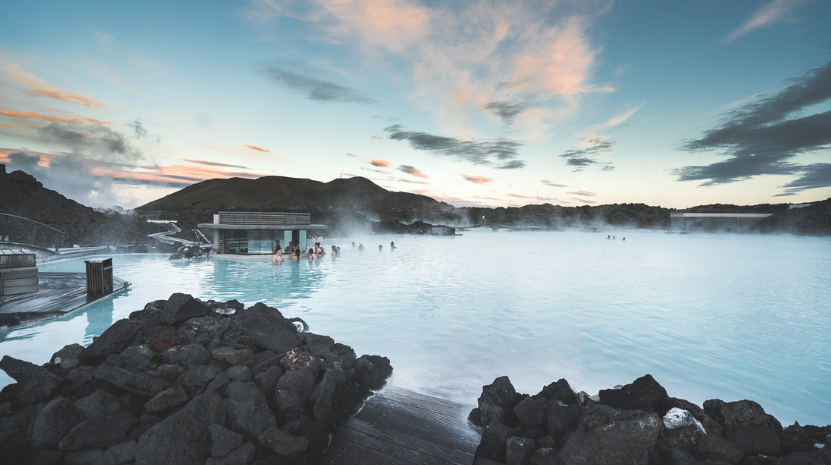
- La Laguna Blu è un’icona islandese dagli anni ’80. Situata in un’area geotermicamente attiva e circondata da antichi campi di lava, questa spa geotermale è famosa per le sue suggestive acque turchesi lattiginose, ricche di silice, alghe e minerali: elementi che si dice abbiano benefici terapeutici per la pelle.
- Sky Lagoon, appena fuori Reykjavík, offre un approccio innovativo alla tradizione dei bagni islandesi. Il suo design e l’esperienza combinano lusso moderno e una profonda connessione con la cultura del benessere nordica, includendo un immersivo Rituale in 7 Passi ispirato alle usanze locali dei bagni termali.
Confronto Veloce: Laguna Blu vs. Sky Lagoon
La Laguna Blu è la spa geotermale più famosa d’Islanda e trasmette una sensazione iconica, ampia e sociale, risultando particolarmente attraente per chi visita l’Islanda per la prima volta e per le famiglie. Offre un’ampia area balneabile, include maschere di fango alla silice e dispone di numerosi servizi come ristoranti e persino alloggi di lusso in loco. La sua collocazione in un drammatico campo di lava crea un’atmosfera surreale e ultraterrena che molti viaggiatori associano immediatamente all’Islanda.
Al contrario, Sky Lagoon offre un’esperienza più moderna e intima, con un forte focus sul rilassamento e sul benessere. È nota soprattutto per la sua esperienza di wellness immersiva, che combina terapia calda e fredda. Situata più vicino a Reykjavík, Sky Lagoon dispone di una piscina a sfioro e di una sauna con vista sull’Atlantico del Nord—un’ambientazione particolarmente memorabile al tramonto.
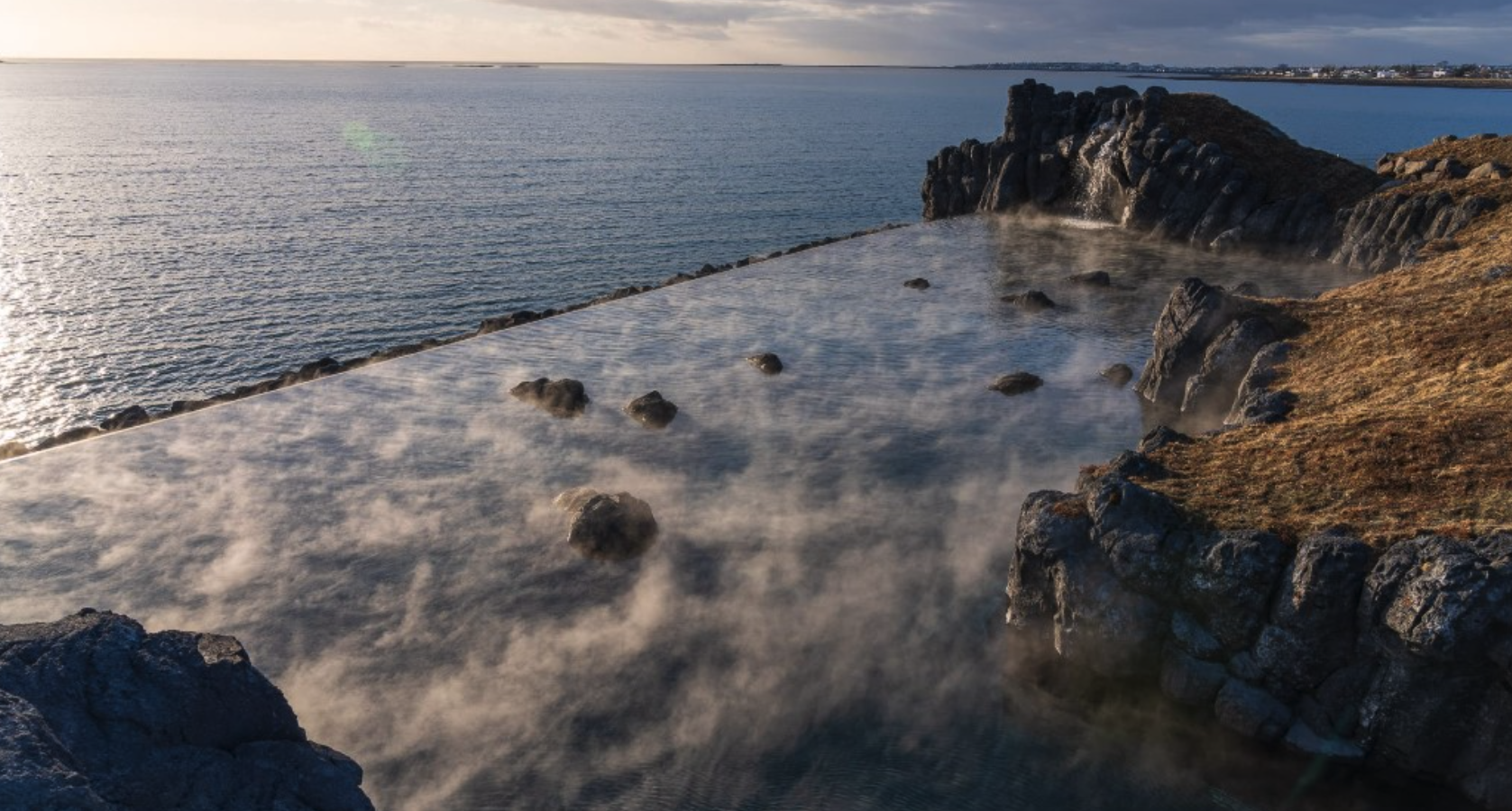
Piscina a sfioro a ridosso dell'oceano alla Sky Lagoon
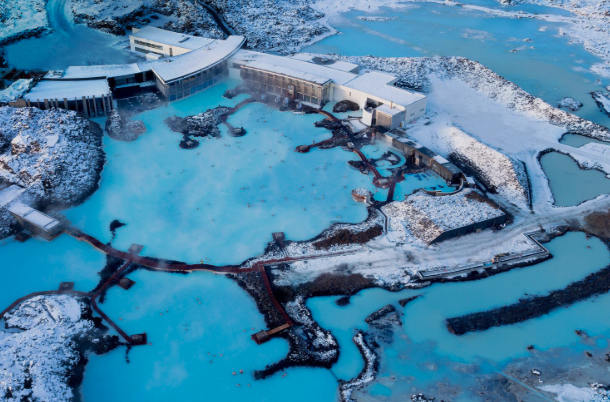
Vista aerea della Laguna Blu
Esperienza & Atmosfera
Laguna Blu
Ricca di storia e immediatamente riconoscibile, questa destinazione appare ultraterrena. Circondata da aspri campi di lava e ampi cieli aperti, le acque turchesi lattiginose della laguna sono calde tutto l’anno e perfette per un lungo e rilassante bagno.
Caratteristiche tipiche:
- Maschera di fango alla silice inclusa con tutti i biglietti.
- Area piscina complessiva più ampia (circa 8.700 m²) con molto spazio per rilassarsi.
- Alloggi di lusso in loco per un esclusivo ritiro benessere.
- Diversi ristoranti e esperienze culinarie con vista sulla laguna.
Sky Lagoon
Sky Lagoon dà priorità all’immersione e alla riflessione. L’esperienza ruota attorno al Rituale in 7 Passi, una sequenza strutturata di bagni caldi, immersioni fredde, saune, bagni di vapore e altro ancora. Il design a sfioro sull'oceano della laguna dà l’impressione di bagnarsi al limite dell’Atlantico del Nord, particolarmente spettacolare al tramonto.
Caratteristiche tipiche:
- Il Rituale in 7 Passi, un percorso di benessere con esperienze alternate di caldo e freddo.
- Spettacolari vedute sull’oceano dalla piscina a sfioro e dalla sauna con vista sull’oceano.
- Design nordico moderno che enfatizza la serenità e la connessione con la natura.
- Layout della piscina leggermente più piccolo ma intimo, con spazi vari da esplorare.

Silica face masks at the Blue Lagoon
Vantaggi e Prezzi: Laguna Blu
I diversi tipi di biglietti includono vantaggi come maschere di silice, asciugamani, bevande, ecc. I pacchetti premium possono trasformarsi in un’intera giornata di benessere con extra.
Perché scegliere la Laguna Blu:
✔ Esperienza classica e iconica dell’Islanda
✔ Ideale per chi visita l’Islanda per la prima volta e per le famiglie
✔ Area più ampia con più opzioni di ristorazione e alloggio
Vantaggi e Prezzi: Sky Lagoon
Questa laguna offre spesso livelli di prezzo leggermente più flessibili (incluso il caratteristico Rituale in 7 Passi).
Perché scegliere Sky Lagoon:
✔ Maggiore focus sul benessere immersivo
✔ Più vicino a Reykjavík
✔ Spettacolari viste sull’oceano e possibilità di tramonti mozzafiato
Consiglio da esperti: È fortemente consigliata la prenotazione anticipata per entrambe le spa, soprattutto durante i mesi di punta, poiché i posti possono esaurirsi rapidamente.
Scegli l’ingresso alla Laguna Blu o alla Sky Lagoon con trasporto incluso da Reykjavík per un’esperienza senza stress.

Un bagno rilassante alla Sky Lagoon
Perché Non Scegliere Entrambe?
Se il tuo viaggio lo permette, provare entrambe può offrirti due esperienze termali uniche in Islanda: una radicata nella storia geotermale, e l’altra incentrata sul lusso moderno e sul rituale di benessere.
Partecipa a un tour combinato, che include un’escursione giornaliera + esperienza termale, e vivi il meglio del tuo soggiorno in Islanda.
I nostri tour combinati consigliati con la Laguna Blu
- Visita i principali luoghi naturali dell’Islanda in un unico tour comodo e che fa risparmiare tempo.
- Rilassati nelle calde acque geotermali della Laguna Blu dopo un’intera giornata di visite turistiche.
- Goditi un viaggio senza stress con trasporto, pianificazione e ingresso inclusi.
- Immergiti nelle calde acque geotermali della Laguna Blu circondato dal paesaggio islandese.
- Insegui le spettacolari Aurore Boreali con guide esperte in un tour notturno.
- Goditi un’esperienza senza intoppi con trasporto e pianificazione inclusi.
I nostri tour combinati consigliati con la Sky Lagoon
- Visita i luoghi iconici del Circolo d’Oro dell’Islanda in un’escursione guidata di un giorno, efficiente e completa.
- Rilassati con spettacolari viste sull’oceano al bordo a sfioro caratteristico della Sky Lagoon.
- Goditi un’esperienza senza intoppi con trasporto e pianificazione inclusi.
- Esplora le spettacolari cascate, spiagge di sabbia nera e ghiacciai della Costa Sud dell’Islanda in un unico tour.
- Rilassati con la vista sul mare nella spa geotermale a sfioro della Sky Lagoon.
- Goditi un’esperienza senza stress con trasporto e pianificazione inclusi.
Consiglio da esperti: Stai pianificando un breve soggiorno nel weekend? Dai un’occhiata al nostro itinerario perfetto di due giorni, comprensivo di una visita alle nostre lagune geotermali preferite.
Pianifica la tua visita con attenzione: ogni laguna offre qualcosa di speciale e entrambe mostrano la magia geotermale dell’Islanda sotto luci molto diverse!
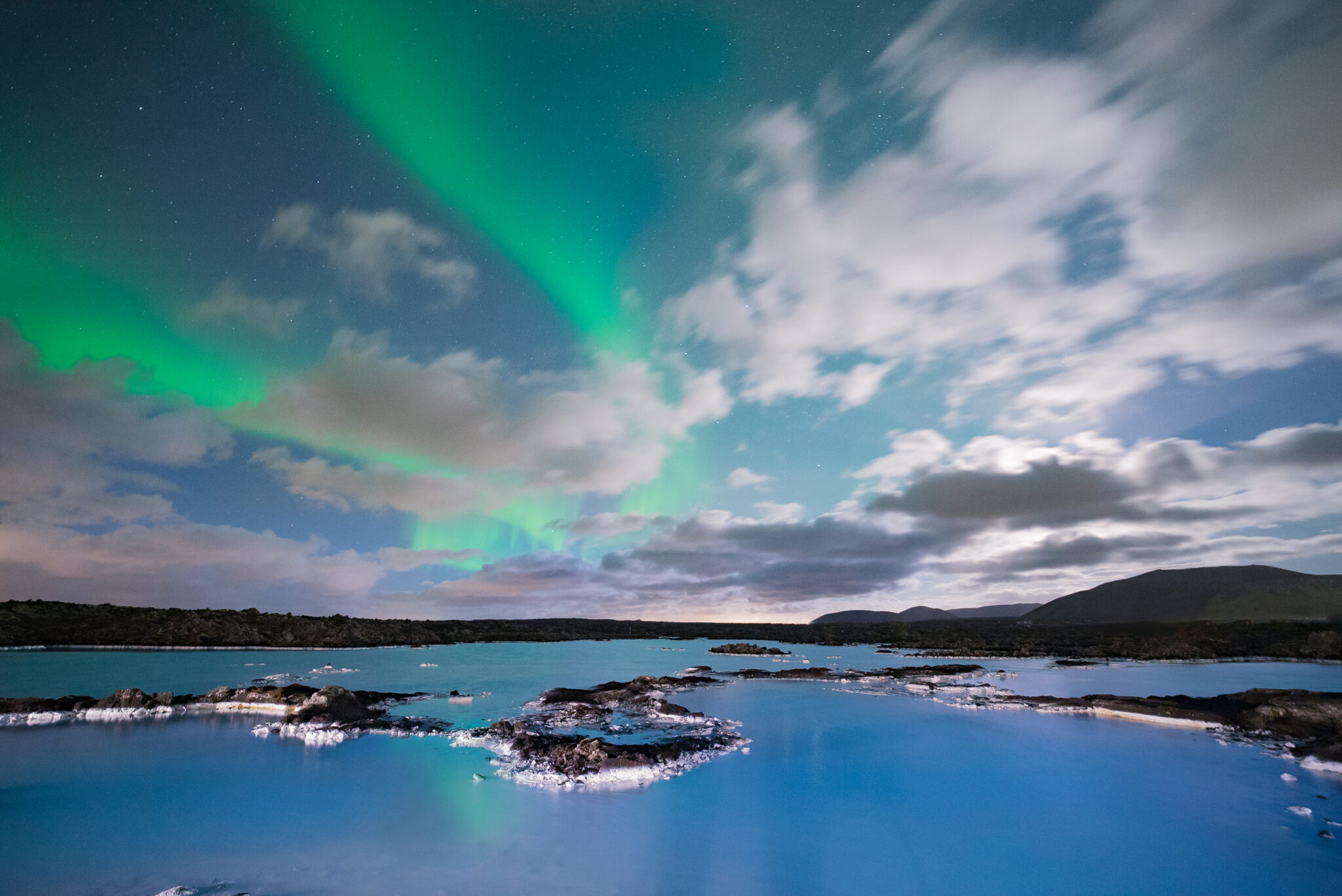
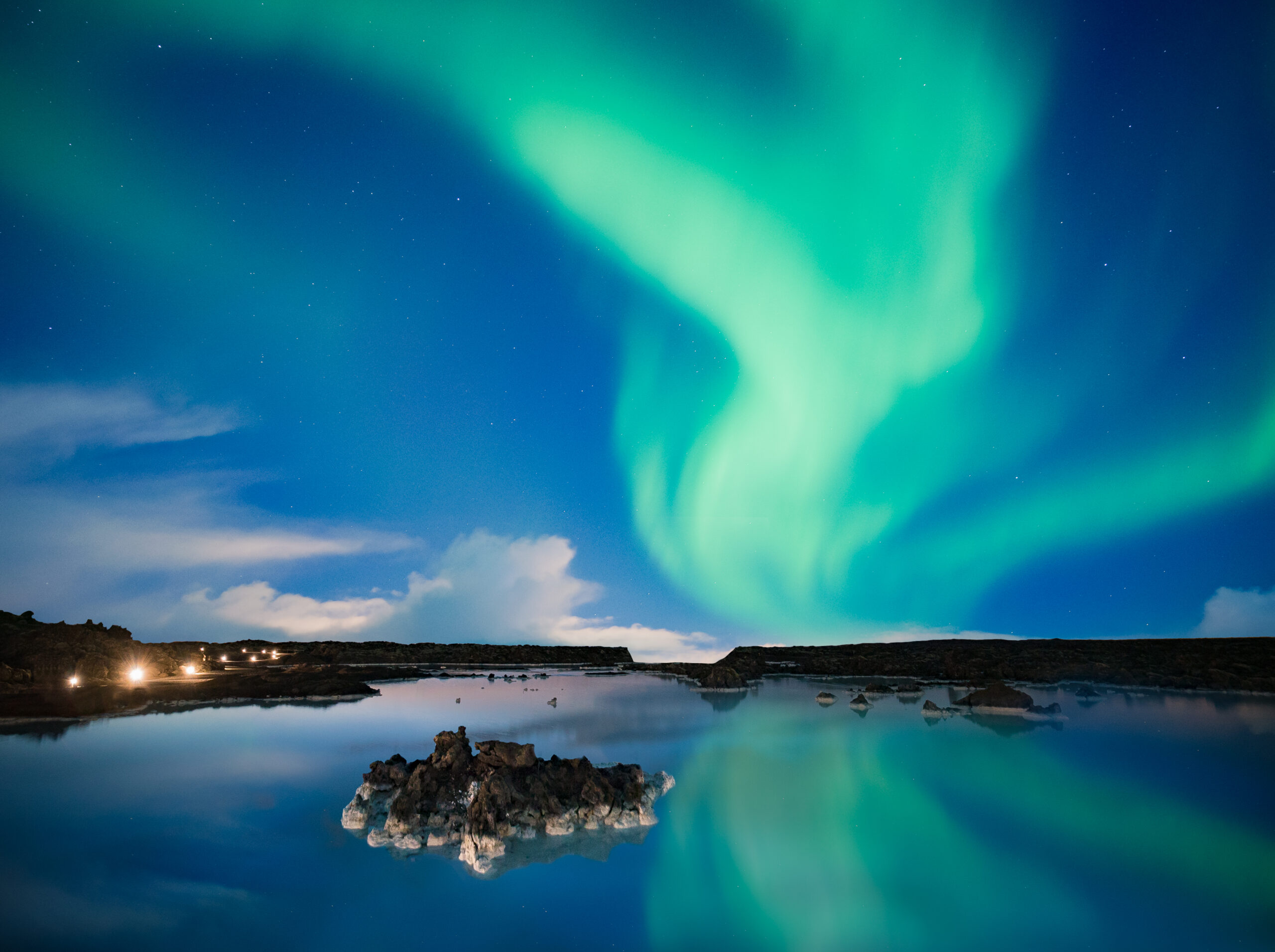
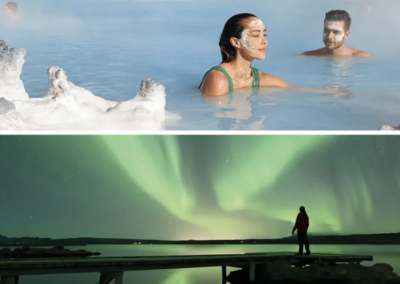
Aurora Boreale sulla Laguna Blu
Unisciti a noi in un Tour per l'Aurora Boreale
Evita lo stress di guidare d’inverno al buio e unisciti a un gruppo di avventurieri con la tua stessa passione per un tour guidato dell’aurora boreale.


FAQ about the Northern Lights
Quando si può vedere l'aurora in Islanda?
Durante questo lungo periodo, l’Islanda sperimenta abbastanza oscurità perché l’aurora sia visibile di notte.
Tuttavia, le probabilità di osservare l’aurora variano a seconda del periodo dell’anno. Scopri quali mesi sono i migliori per vedere l’aurora qui.
Why can't I see any northern lights in the summer ?
Want to know more about light conditions in Iceland? Check the sun graph and learn about twilight and dusk in Iceland.
A che ora compaiono le aurore boreali?
During the winter months, when the hours of light are limited, the northern lights can often appear as early at 7:00pm.
As the exact time of an Aurora display cannot be predicted, keep your eyes at the sky. And remember, patience is key!
Quanto durano le aurore boreali?
Posso vedere le aurore boreali quando il cielo è nuvoloso?
Le aurore boreali appaiono solo quando fa freddo?
Le aurore boreali sono visibili in tutta l’Islanda?
Le aurore boreali sono davvero multicolore?
The northern lights happen in a variety of colours. Green is by far the most common, but the Aurora can also appear in vibrant shades of pink, purple, red, violet and blue.
To the naked eye though, the northern lights can look quite faint, and at times be perceived as white or grey-ish. This is due to limitations in our night vision.
Camera devices instead can capture a more truthful version of the colours, as, in most cases, it possible to adjust the device settings in order to better adapt to the night time conditions.
Find more about how to improve your night vision and learn how to take great Aurora shots qui.
Are the northern lights going to disappear in future?
No, the northern lights are not going anywhere!
The Aurora has been visible in the Arctic for centuries, and that is not going to change any times soon.
What is true is that the solar activity, which is responsabile for the occurrence of the northern lights on our planet, changes over time, following an eleven-year cycle.
During each solar cycle, the Sun goes from a peak to a minimum of activity. During the peak, the so called “solar maximum“, we can expect enhanced activity and, potentially, stronger northern lights visible from unusual latitudes (in the northern hemisphere, this means Auroras being spotted further south than usual). While, during the solar minimum, such unusually strong occurrences become rarer.
Still, at Arctic latitudes the northern lights can be see clearly throughout the whole cycle. And Islanda, being well within the “Aurora belt”, is and will remain the perfect destination for northern lights hunting!
What is the BZ value?
The Bz value is part of the Interplanetary Magnetic Field (IMF), which is the magnetic field carried by the solar wind coming from the Sun.
Why does it matter for the Northern Lights? Earth’s magnetic field points north. If the solar wind’s magnetic field (Bz) points south (a negative Bz), it connects with Earth’s field and lets charged solar particles into the atmosphere. This interaction helps create the northern lights. If instead, Bz is positive (northward), the fields don’t connect well, and fewer particles get in — meaning weaker or no aurora.
Think of Bz like an ON/OFF switch: negative Bz (south) = ON, good chance of Aurora soon. Positive Bz (north) = OFF, Aurora less likely.
Learn more about Bz and how the forecast works qui.
Which are the best forecast apps and websites for Northern Lights hunting?
Chasing the Northern Lights is all about timing, clear skies, and up-to-date aurora forecasts. These tools help you know when and where there’s a good chance of seeing the aurora — so you can plan your night the smart way. For the best results, we recommend using more than one source, as different forecasts interpret data differently.
WEB FORECASTS
- Official AURORA REYKJAVÍK Aurora Forecast 👉 https://aurorareykjavik.is/aurora-forecast/
Our 6-step expert forecast combines geomagnetic activity, cloud cover, and viewing tips — designed for real-time Northern Lights planning. - SpaceWeatherLive
A detailed global space weather site with auroral activity maps and solar parameters. - NOAA Space Weather Prediction Center (SWPC)
The official US space weather forecast model that many aurora apps base their data on.
TOP MOBILE APPS
- My Aurora Forecast – Offers real-time KP index, global aurora maps, push alerts and multi-day forecasts — great for travelers and serious aurora watchers alike.
And don’t forget to unable notifications, so you’ll get alerts when aurora activity spikes.
📍App Store
📍 Google Play
By following this guide, you’ll be well-prepared to experience one of nature’s most magical displays. Whether you’re planning your trip or already in Iceland, the Aurora awaits!