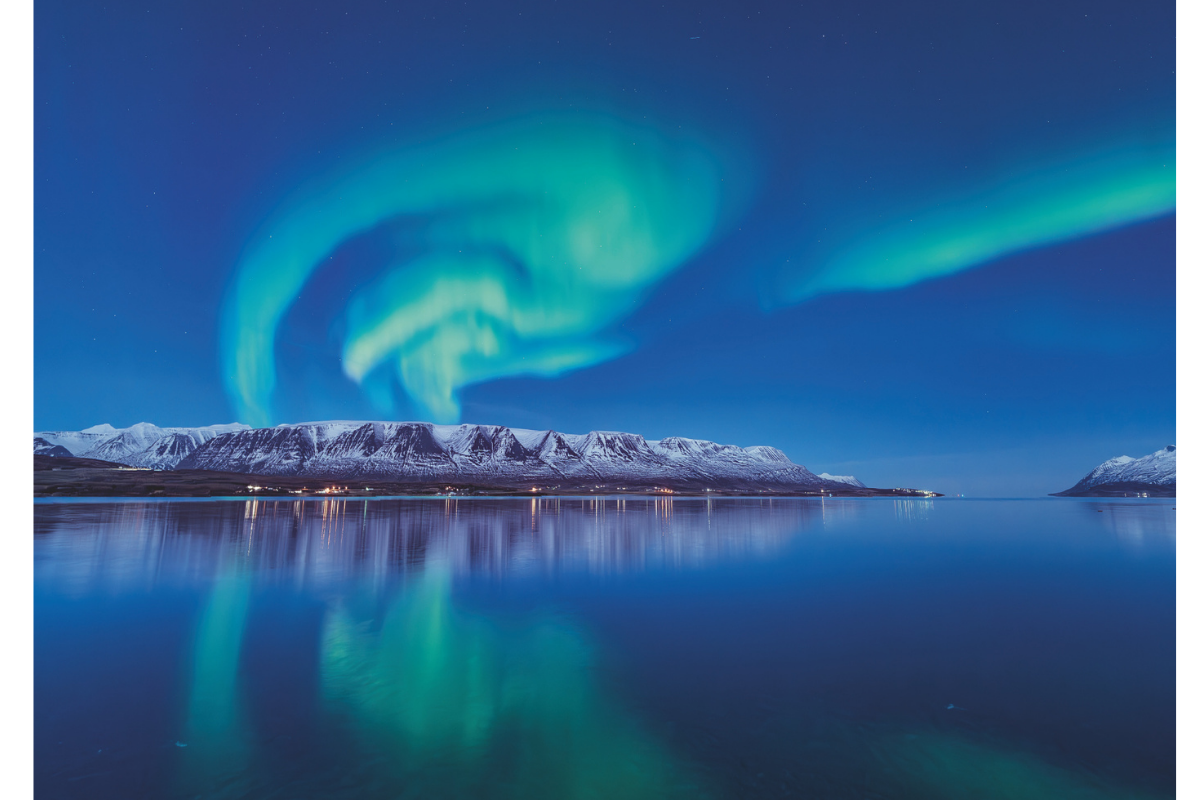
Northern Lights in Iceland in Spring: Why March and Early April Are Underrated
Does the full moon cancel auroras? No
Can you still see them? Yes, if strong
What matters most? Clear skies
Most travelers assume winter is the only serious northern lights season in Iceland.
In reality, March and early April can be one of the smartest times to hunt the aurora.
You still have dark nights long enough for aurora viewing, travel conditions are often easier than in deep winter, and the weeks around the spring equinox are statistically favorable for geomagnetic activity.
For many visitors, spring offers a perfect balance:
dark skies, snowy landscapes, comfortable temperatures, and excellent chances of seeing the northern lights.
At Aurora Reykjavík, we work with aurora forecasting and education every day, and spring consistently surprises visitors with spectacular displays.
Written by Katarina Raker, Northern Lights expert and co-founder of Aurora Reykjavík
Can You See the Northern Lights in Iceland in Spring?
Why March Is One of the Best Months for Aurora in Iceland
Best Time of Night to See the Northern Lights in Spring
What You Actually Need to See the Northern Lights
Is Spring Better Than Winter for Northern Lights?
Northern Lights Photography in Spring
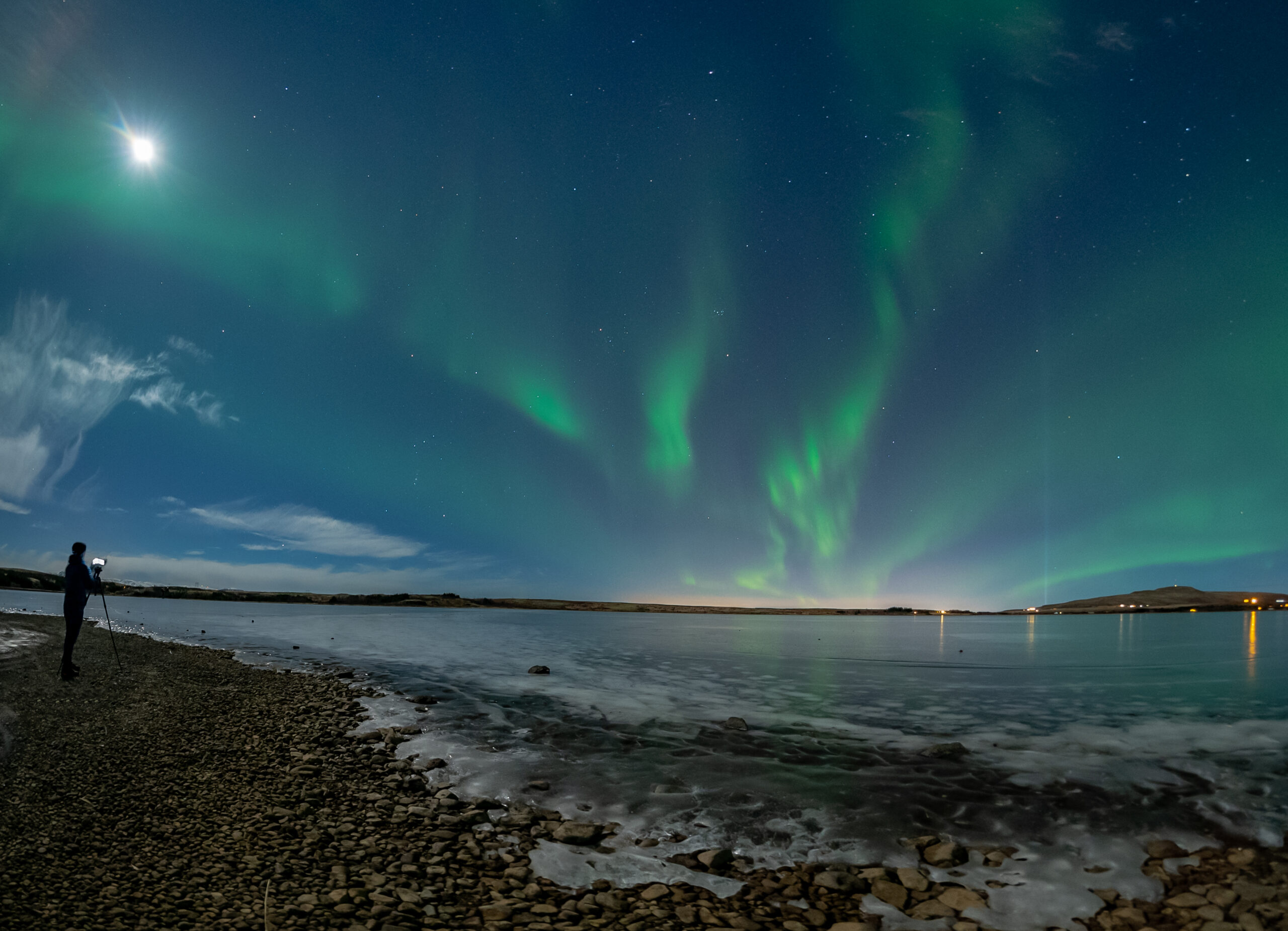
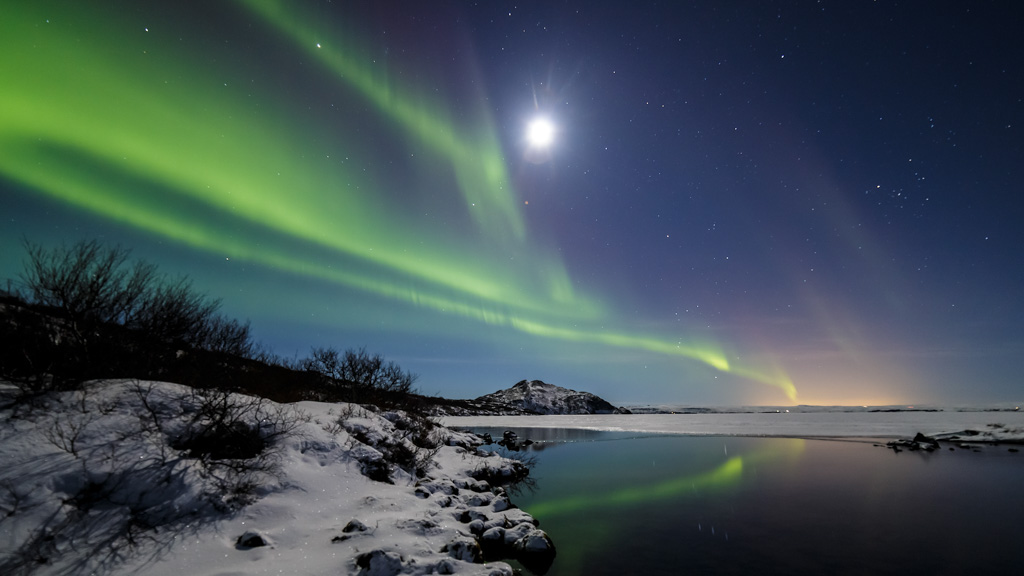
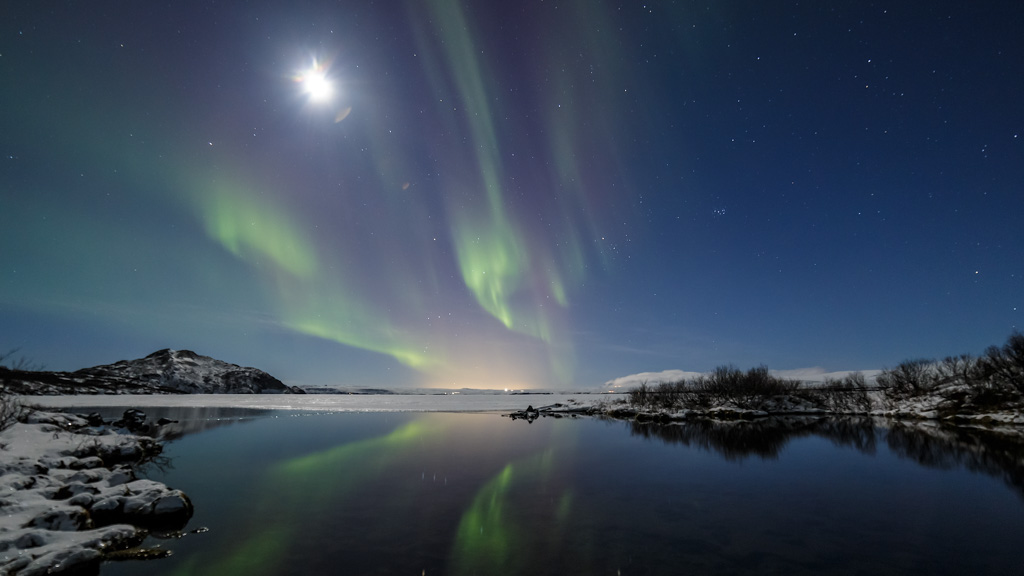
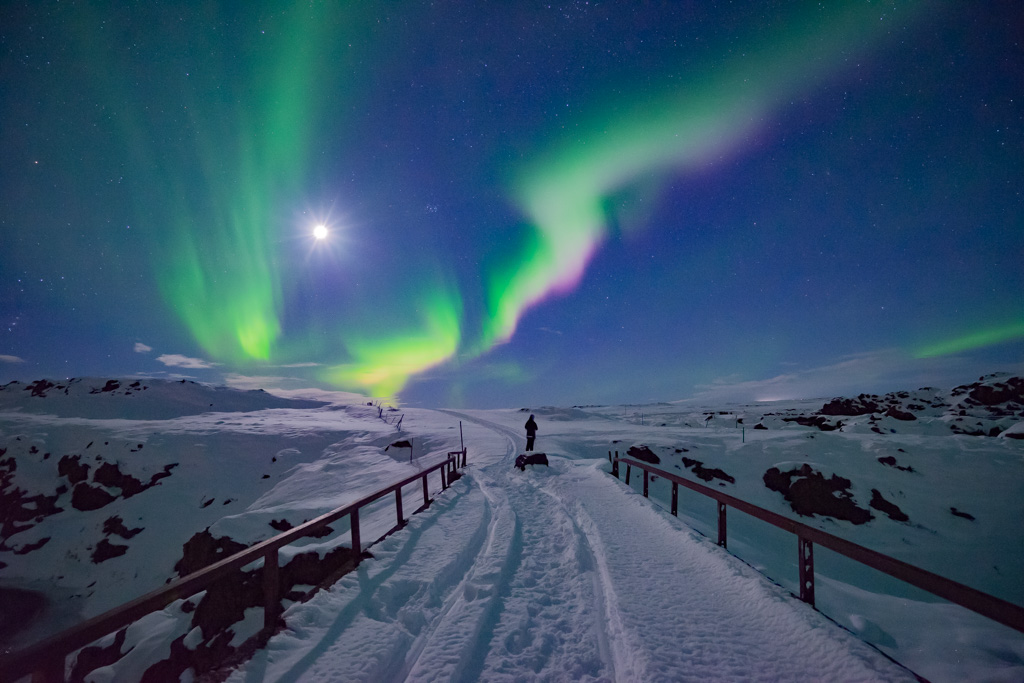
Full moon aurora at Þingvellir National Park, Iceland
Can You See the Northern Lights in Iceland in Spring?
Yes — especially in March and early April.
The aurora can appear any time the following three conditions occur simultaneously:
-
Dark skies
-
Clear or partly clear skies
-
Geomagnetic activity from solar wind
In Iceland, darkness remains sufficient well into April.
Typical viewing potential:
| Month | Aurora visibility potential |
|---|---|
| March | Excellent |
| Early April | Still good |
| Late April | Possible but increasingly difficult |
| May–July | Too bright for aurora viewing |
So while winter has longer nights, spring still provides plenty of darkness — with some added advantages.
Why March Is One of the Best Months for Aurora in Iceland
Several factors make March particularly attractive for northern lights travelers.
The Equinox Effect
Around the spring and autumn equinoxes, aurora activity tends to increase due to a phenomenon called the Russell–McPherron effect.
In simple terms:
-
Earth’s magnetic field interacts with the solar wind.
-
Near the equinoxes, the orientation of Earth’s magnetic field makes it easier for solar wind energy to enter the magnetosphere.
-
This can increase the likelihood of geomagnetic storms.
This does not guarantee stronger auroras every night, but statistically the equinox season tends to produce more geomagnetic disturbances.
For aurora chasers, this means March and September are often very active months.
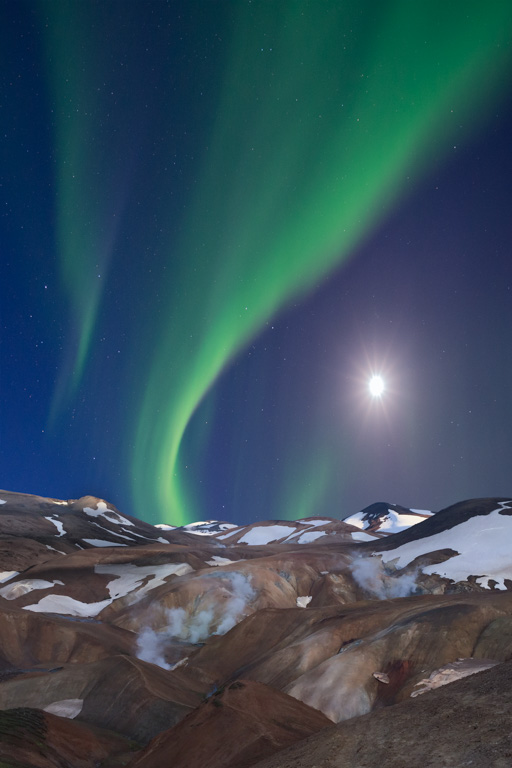
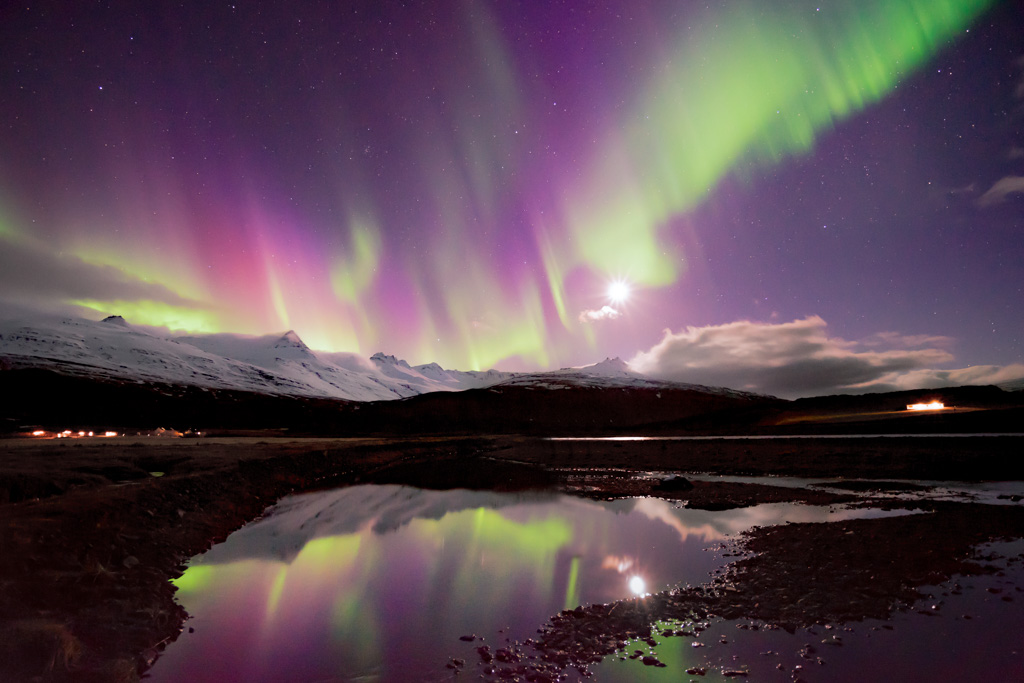
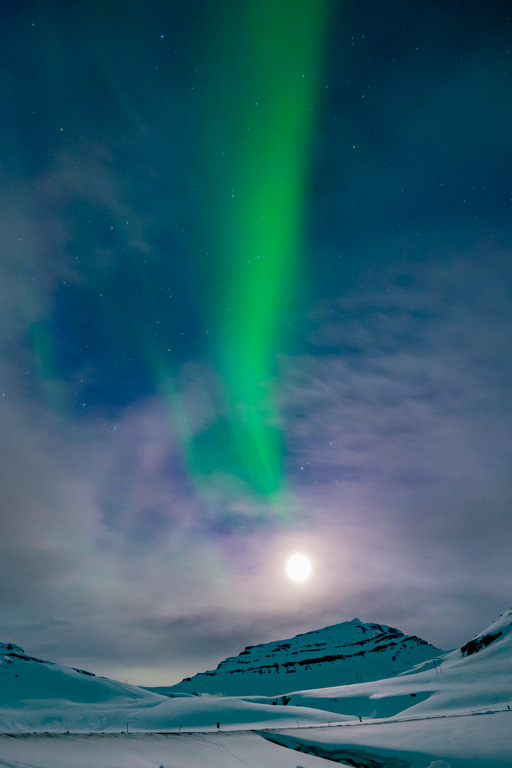
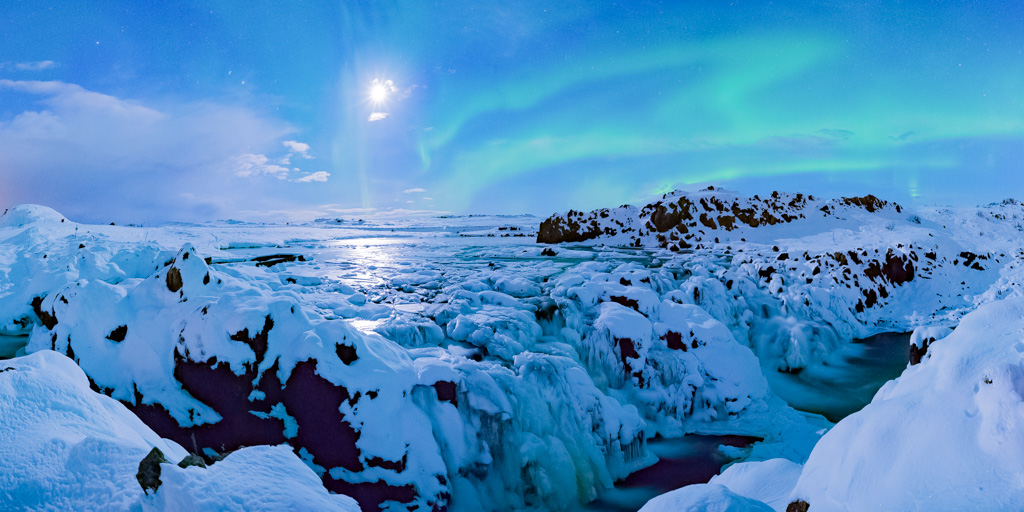
Full moon aurora in the highlands, Iceland
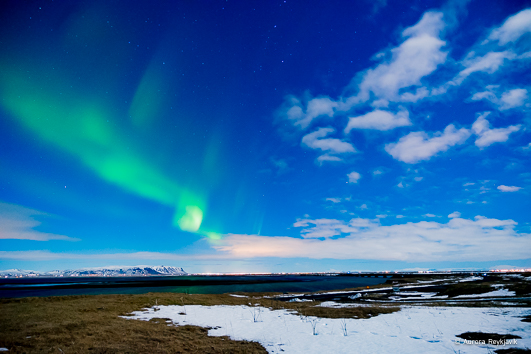
Temperatures rising make spring landscapes ever changing
Comfortable Conditions Compared to Deep Winter
Winter aurora tours can involve temperatures of −10°C or lower.
Spring usually brings:
-
milder temperatures
-
safer road conditions
-
longer daylight for sightseeing
-
less severe storms
For many visitors, this makes aurora hunting far more enjoyable.
Snowy Landscapes With Better Light for Photography
March still offers winter scenery across much of Iceland.
Snow-covered landscapes can dramatically enhance aurora photography by reflecting light and illuminating foregrounds.
But spring also brings an advantage many photographers love:
Long twilight periods.
The sky may retain subtle blue tones rather than turning completely black, allowing foregrounds to appear naturally in photos without artificial lighting.
Learn more about northern lights photography with our experts here: https://aurorareykjavik.is/2025/12/03/how-to-photograph-the-northern-lights/
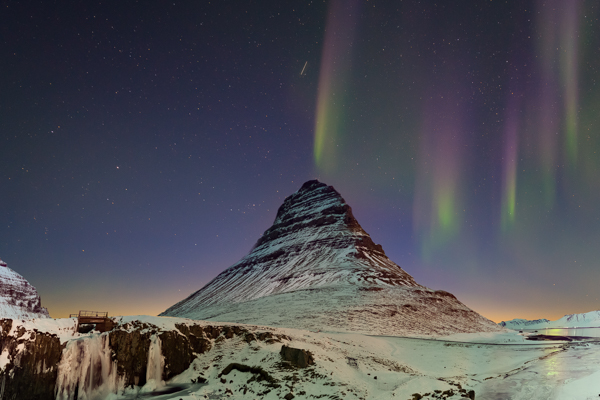
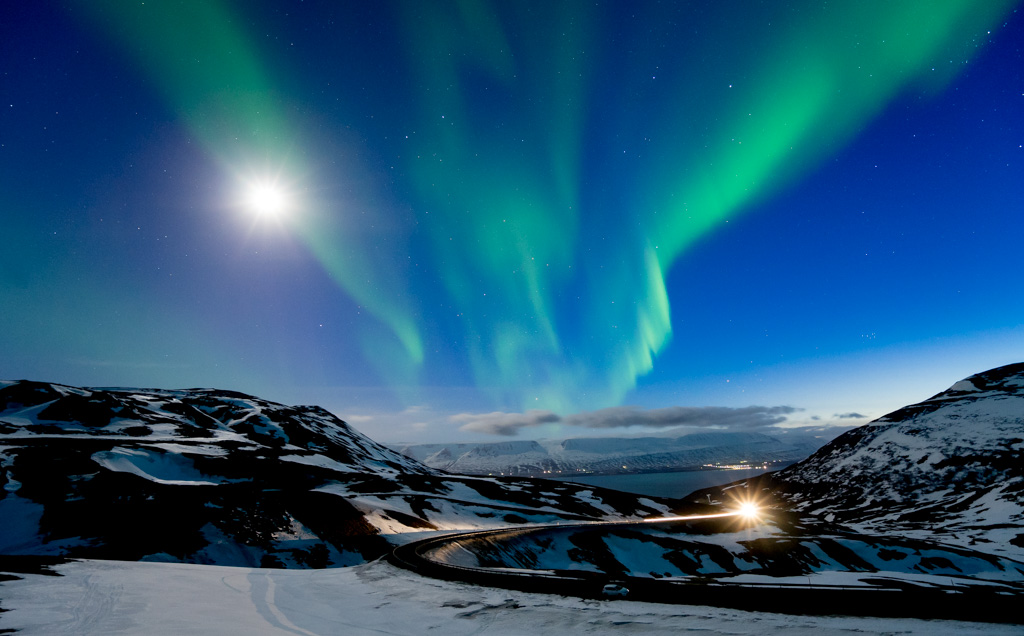
Snowy panorama at Kirkjufell
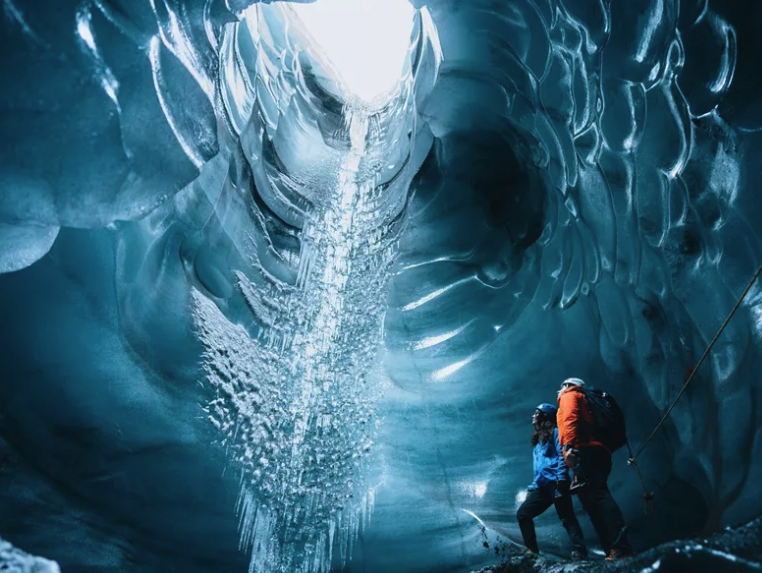
Katla natural ice cave in the south of Iceland
More Daytime Activities
Unlike midwinter, spring in Iceland offers longer days for exploring.
Visitors can combine aurora hunting with:
-
cultural experiences in Reykjavík
One of the best places to start your aurora adventure is Aurora Reykjavík, where you can learn how the northern lights work, how to read aurora forecasts, and how to photograph them.
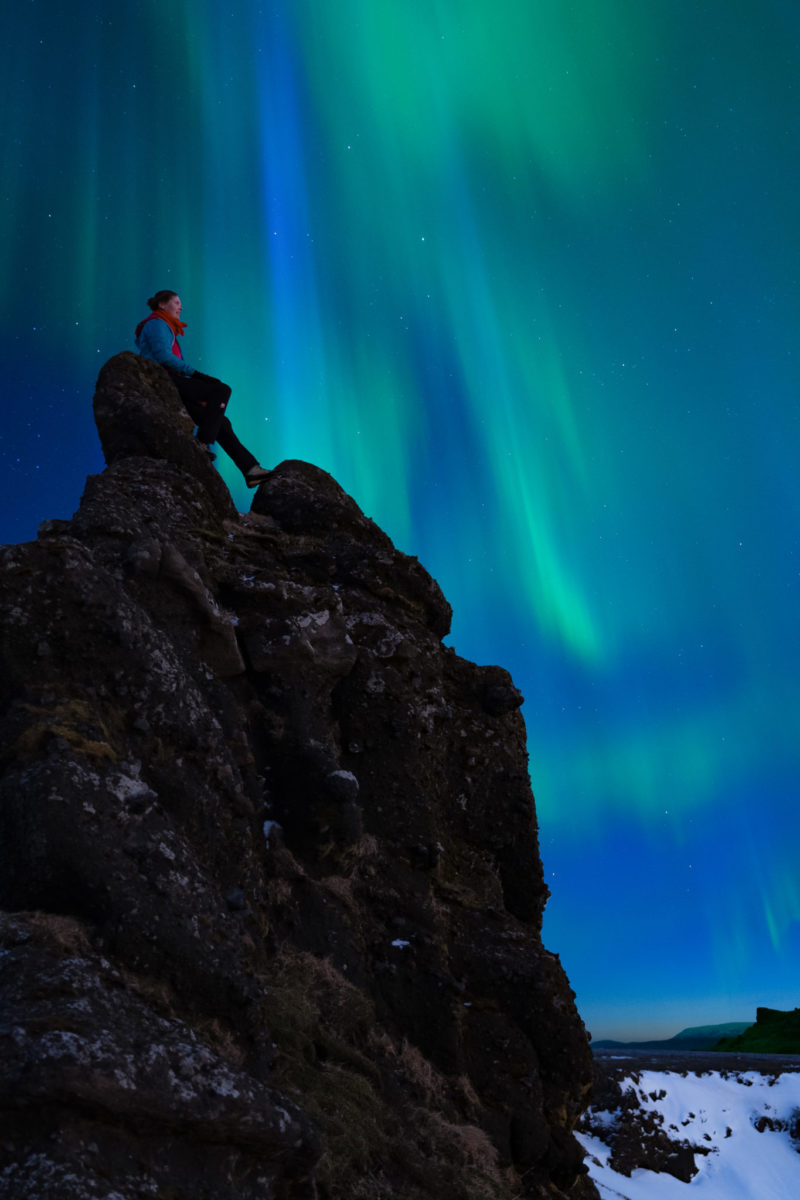
This could be you! Join us off-the-beaten-path on one of our superjeep tours
Best Time of Night to See the Northern Lights in Spring
Auroras can technically appear at any time during dark hours, but in Iceland the most common viewing window is roughly:
9 PM – 2 AM
However, timing depends entirely on solar activity and cloud cover.
The most important strategy is monitoring forecasts and being ready to move when conditions improve.
What You Actually Need to See the Northern Lights
Many myths surround aurora viewing. In reality, you only need three ingredients.
Darkness
The sky must be dark enough.
This is why the aurora season runs roughly late August to mid-April.
Clear skies
Clouds block aurora completely.
Many successful aurora chases involve driving away from cloud cover.
Solar activity
Auroras occur when charged particles from the sun interact with Earth’s magnetic field.
The strength of this activity is often summarized by the Kp index, though in Iceland even Kp 2–3 can produce visible aurora if skies are clear.
Find out more on how to read the Aurora forecast here: https://aurorareykjavik.is/2025/12/05/how-to-read-an-aurora-forecast-your-complete-guide-to-not-miss-the-northern-lights/
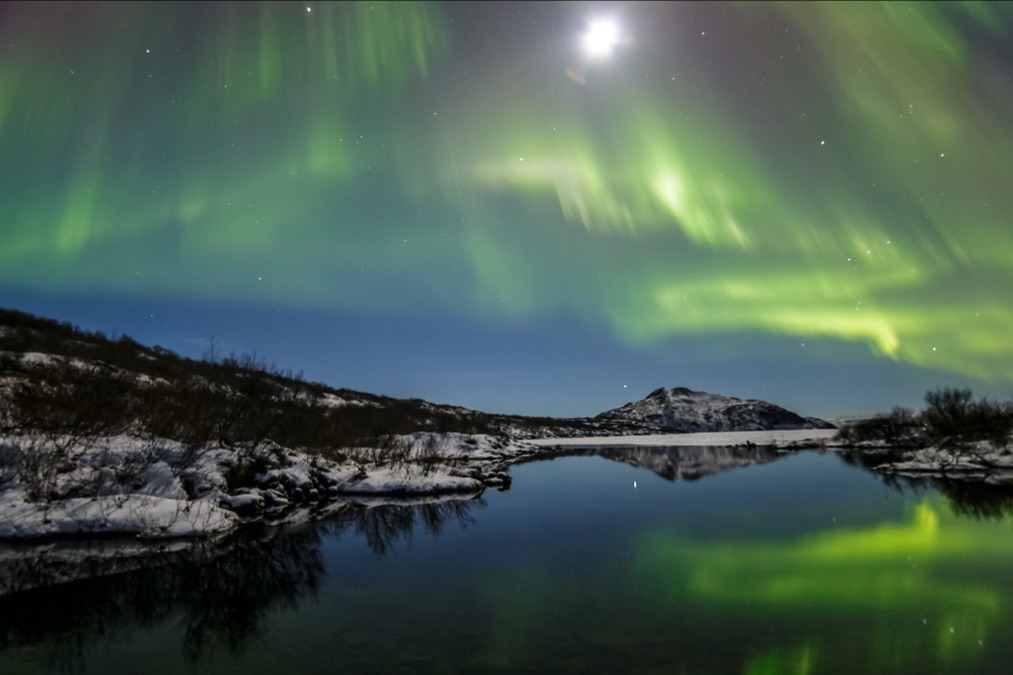
Full moon aurora at Þingvellir National Park
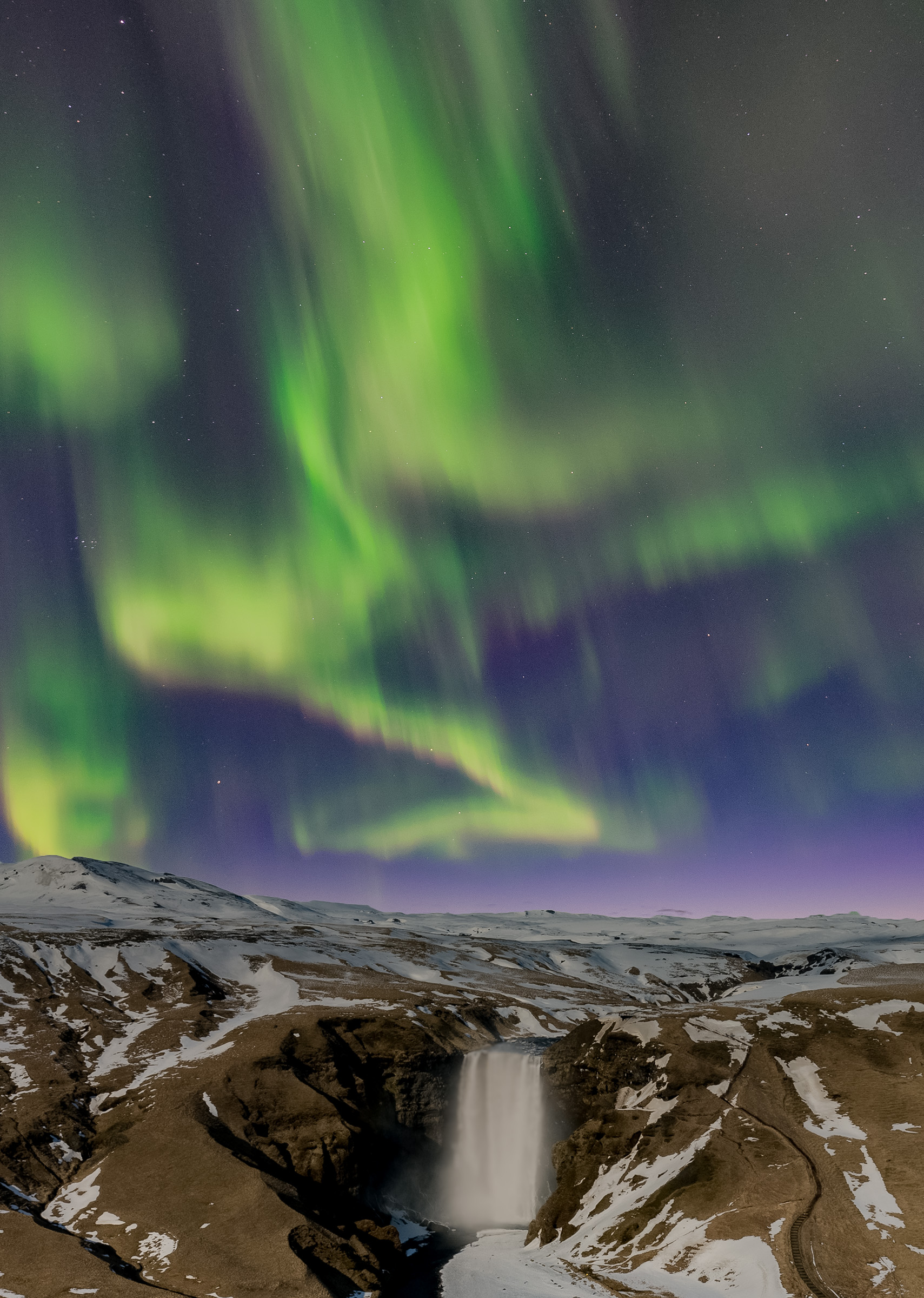
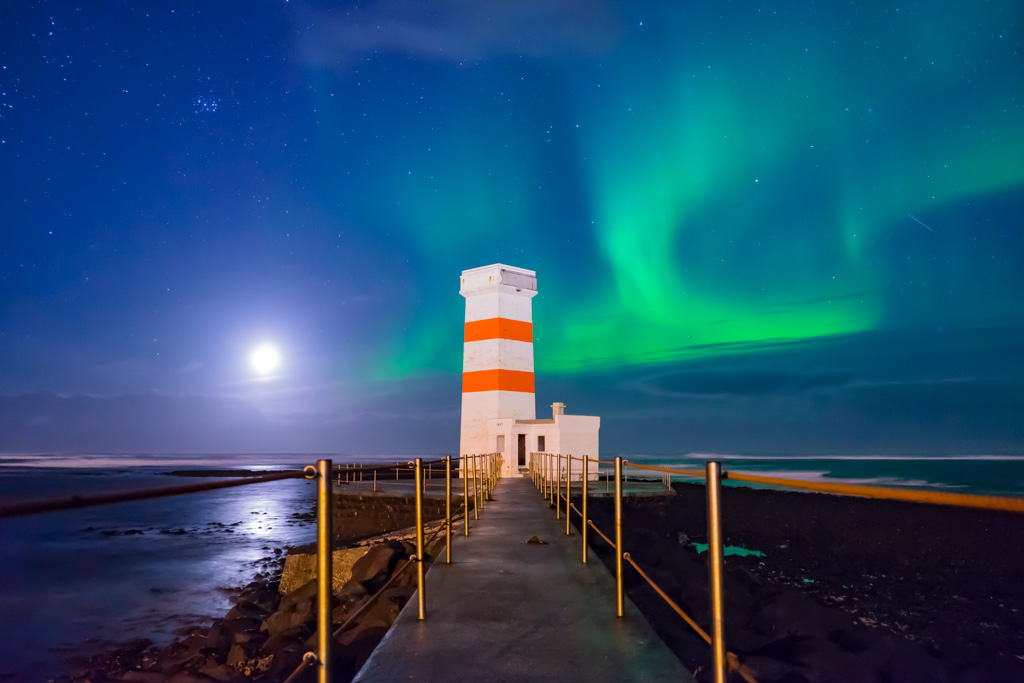
Early spring northern lights over Skógafoss, a convenient day tour from Reykjavík
Is Spring Better Than Winter for Northern Lights?
Both seasons have advantages.
Winter offers:
- longer nights
- more hours of darkness
Spring offers:
- equinox aurora activity
- milder temperatures
- easier travel conditions
- excellent photography light
For many visitors, March is one of the best compromises between comfort and aurora potential.
Further reading about early spring in Iceland:
Frequently Asked Questions
Can you see the northern lights in Iceland in March?
Yes. March is widely considered one of the best months of the aurora season.
Can you see the northern lights in April?
Yes, especially in early April.
By late April the nights become too bright for reliable viewing.
Do you need cold temperatures for aurora?
No. Auroras are caused by solar particles interacting with Earth’s magnetic field — temperature is irrelevant.
Can you see aurora from Reykjavík?
Yes, during strong displays.
However, darker locations outside the city usually provide better visibility.
Final Thoughts
Spring is often overlooked by northern lights travelers — but it shouldn’t be.
With dark skies still available, the potential boost from the equinox season, and far more comfortable travel conditions, March and early April can be excellent times to see the aurora in Iceland.
If you want to understand how the northern lights work — and how to maximize your chances of seeing them — visit Aurora Reykjavík, Iceland’s dedicated Northern Lights Center.
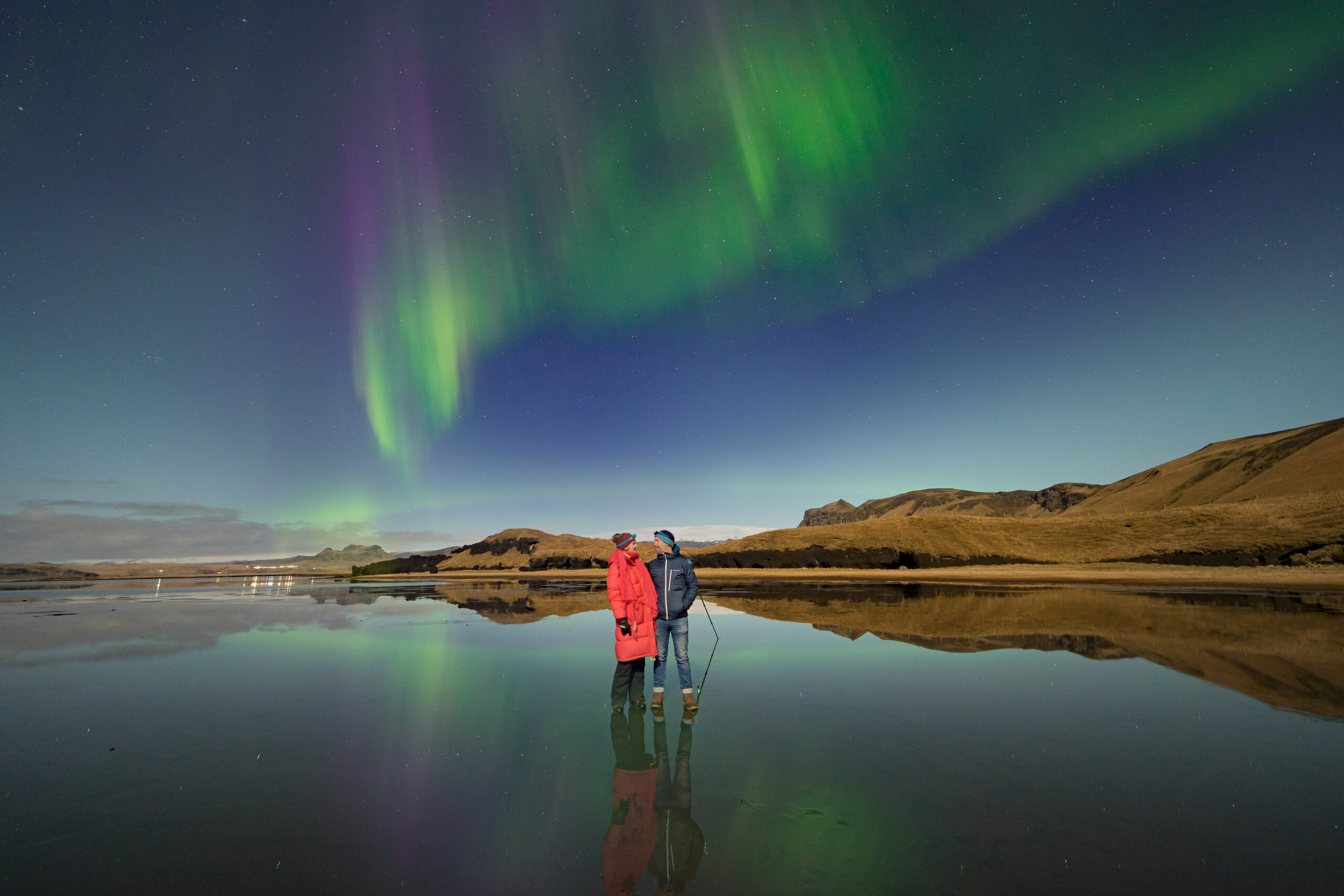
Our Aurora Reykjavík photographers and experts under the northern lights
EXPLORE MORE AT AURORA REYKJAVÍK
- Visit our Northern Lights Center to learn everything about the aurora.
- Discover the best Northern Lights photography tips for your next adventure.
- Find out the best months to see the aurora borealis in our guide.
JOIN US ON ICELAND'S BEST NORTHERN LIGHTS TOUR
So, if you can – buy the ticket, get the ride. You will find our hand-picked selection of tours here:
OUR BESTSELLER

NORTHERN LIGHTS SUPER JEEP TOUR
HÁPUNKTAR:
✓ Úrvals leiðsögn - Norðurljósaferð super jeppi
✓ Frítt skutl: sækja og skila
✓ Fríar hágæða myndir
✓ Heimagert heitt súkkulaði
✓ Hlýir bílar á staðnum
HÆSTA ÁRANGURSHLUTFALLIÐ
FRÍR AÐGANGSEYRIR AÐ AURORA REYKJAVÍK - SPARIÐ 3900KR

NORÐURLJÓS & SUÐURSTRÖND
HÁPUNKTAR:
✓ 2f1 TILBOÐ: SPARAÐU YFIR 2000KR
✓ Sólheimajökull
✓ Labbaðu um bæinn Vík
✓ Labbaðu um í Reynisfjöru
✓ Sjáðu stórkostlegu fossana, Skógafoss & Seljalandsfoss
✓ Vertu vitni af norðurljósunum dansa
BEST VALUE FOR MONEY
NORÐURLJÓSA ÁBYRGÐ: KOMDU MEÐ AFTUR FRÍTT EF ENGIN LJÓS SÁUST.
NORÐURLJÓSAFERÐ - LÍTILL HÓPUR
HÁPUNKTAR:
NORÐURLJÓSAFERÐ í lítilli rútu
FRÍAR MYNDIR af þér undir norðurljósunum
✓ Homemade hot Chocolate og Pastries
✓ Frítt Skutl til og frá
VINSÆLASTA FERÐIN
FAQ ABOUT THE NORTHERN LIGHTS
Hvar get ég séð norðurljós á Íslandi?
During this long period, Iceland experiences sufficient darkness for the Aurora to be visible at night.
However, chances of experiencing the northern lights vary depending on the time of year. Find out which months are the best for seeing the Aurora here.
Can you see the Northern Lights during a full moon?
What time do the northern lights show up?
During the winter months, when the hours of light are limited, the northern lights can often appear as early at 7:00pm.
As the exact time of an Aurora display cannot be predicted, keep your eyes at the sky. And remember, patience is key!
How long do the northern lights last?
Can I see the northern lights when it is cloudy?
Do the northern lights only appear when it is cold?
Are the northern lights visible all over Iceland?
Are the northern lights really colourful?
Is a new moon better for aurora viewing?
Is the full moon good for aurora photography?
Katarina Raker
ABOUT THE AUTHOR: KATARINA RAKER
Katarina Raker is a passionate Northern Lights expert and award-winning photographer based in Iceland. With years of experience chasing the aurora across the Arctic, she combines her love for storytelling with a deep knowledge of the science behind the Northern Lights. As a team member at Aurora Reykjavík, Katarina is dedicated to helping travelers experience the magic of the aurora borealis through expert tips, guided tours, and stunning photography. When she’s not capturing the sky’s most dazzling displays, Katarina enjoys exploring Iceland’s breathtaking landscapes and sharing her adventures with the world.