HELP! IT'S FULL MOON! WILL IT RUIN MY AURORA EXPERIENCE?
Does the full moon cancel the northern lights? No
Can you still see them? Yes, if strong
What matters most? Clear skies
Imagine this: you’ve arrived beneath the auroral oval, solar activity is increasing, and the forecast looks promising — only to discover the sky is dominated by a bright full moon. Many travelers panic at this point. Will the moon wash out the Northern Lights?
The short, science-based answer: no.
The full moon does not affect aurora activity itself. What it can affect is human perception of faint displays — and even that depends on aurora strength, sky conditions, and experience.
At Aurora Reykjavík, we’ve observed and photographed thousands of aurora displays across all lunar phases. In this guide, we explain exactly when the moon matters, when it doesn’t, and why full-moon nights can actually create some of the most memorable aurora experiences in Iceland.
Written by Katarina Raker, Northern Lights expert and co-founder of Aurora Reykjavík

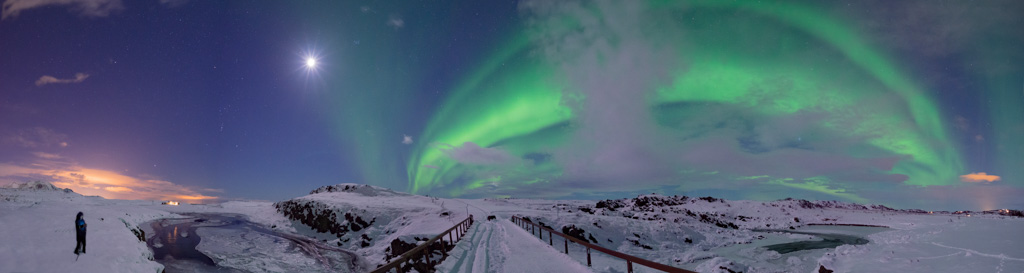
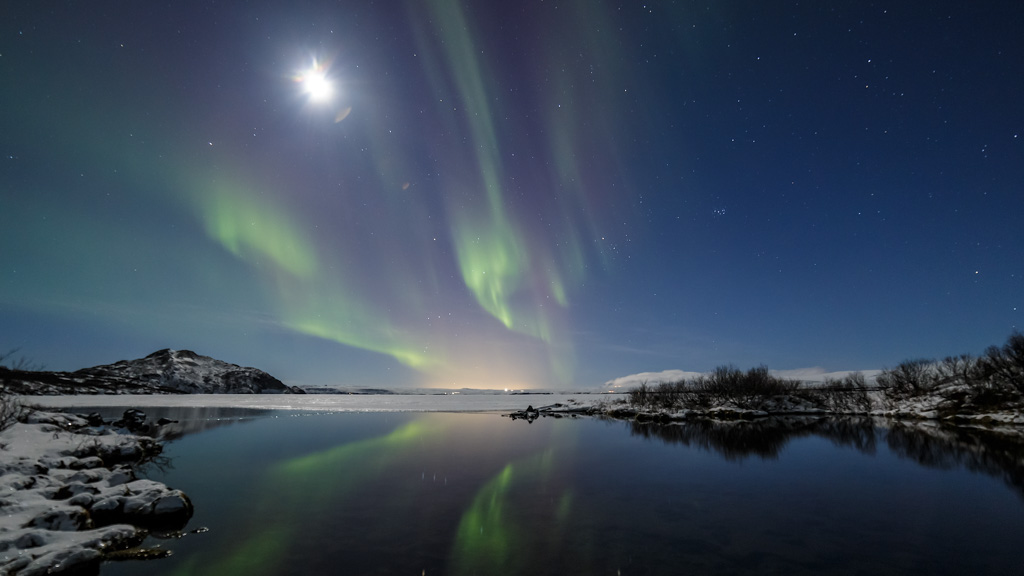
Full moon aurora at Þingvellir National Park, Iceland
DOES THE FULL MOON EFFECT THE NORTHERN LIGHTS?
The moon has no physical effect on the Northern Lights.
Aurora borealis occurs when charged particles from the Sun interact with Earth’s magnetic field and atmosphere. This process is driven by solar wind and geomagnetic activity, not lunar phases.
A full moon only increases ambient light in the sky. This can make very faint auroras harder to notice, especially for inexperienced observers — similar to how moonlight reduces the visibility of dim stars.
FULL MOON – IT ALL DEPENDS ON THE STRENGTHS OF THE AURORA
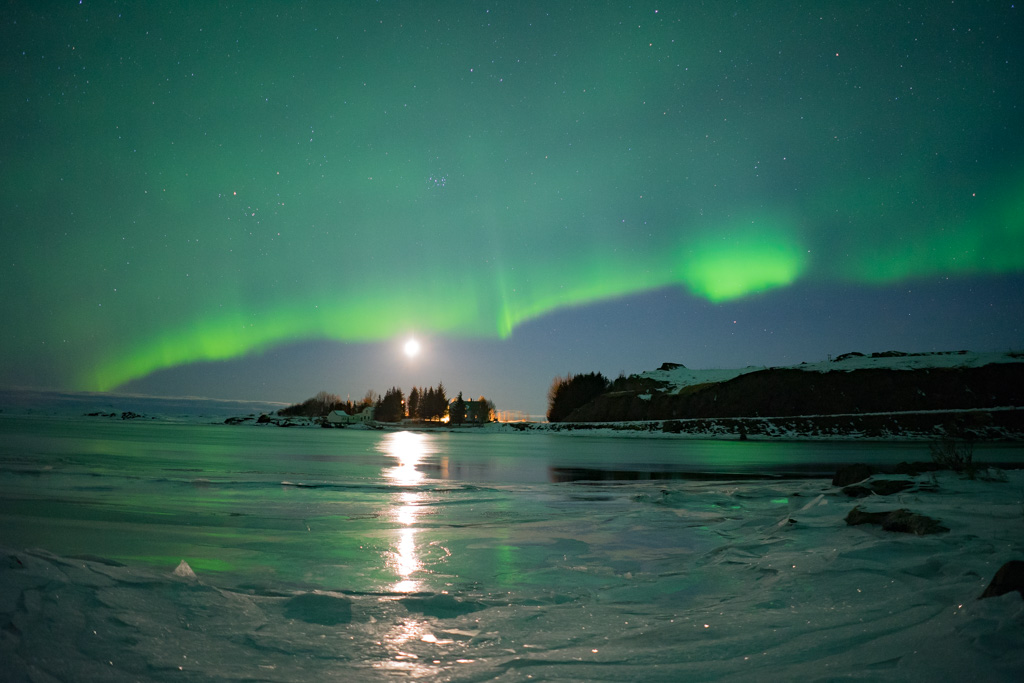
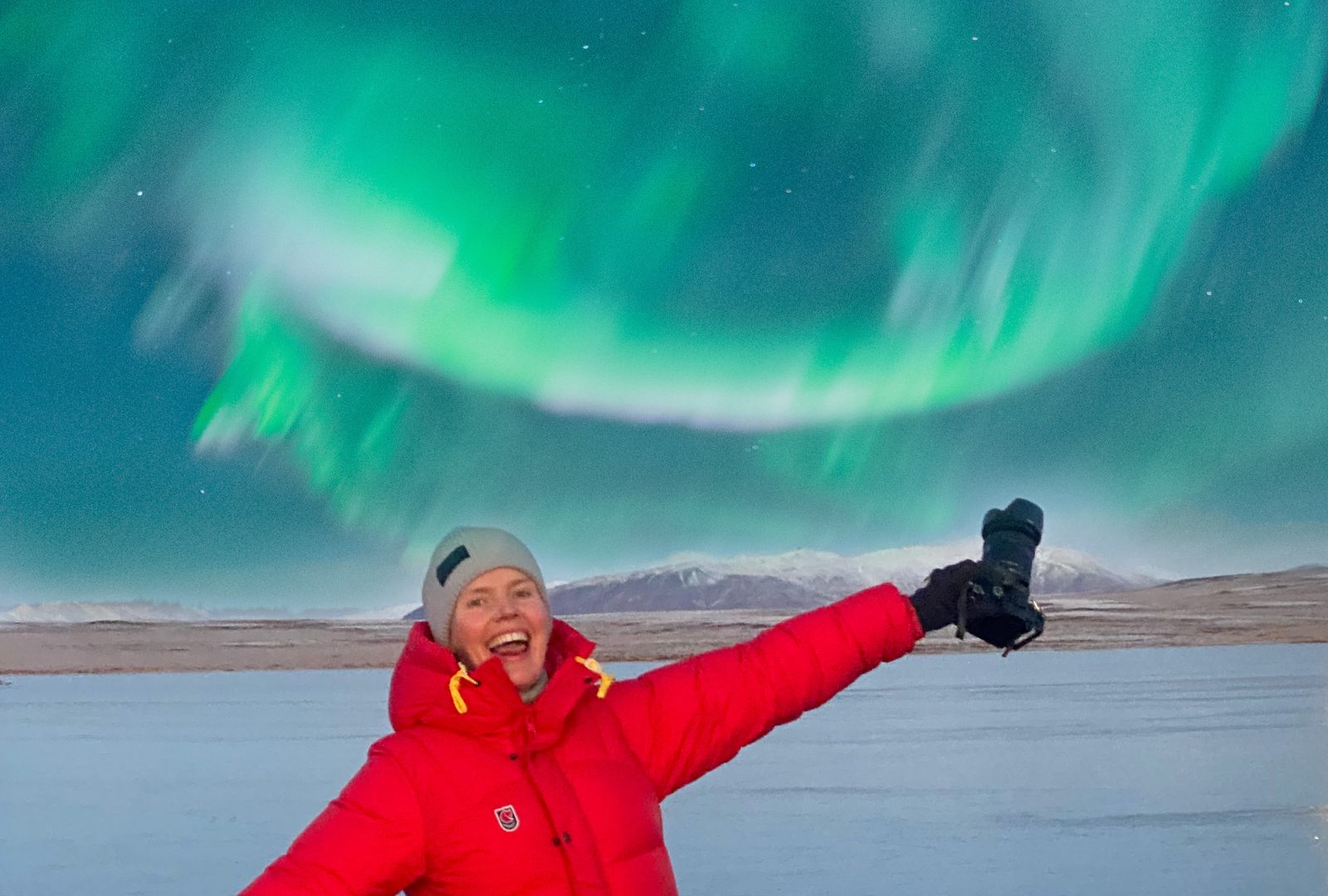
However, it all depends on how strong the display is that you are witnessing. A weak aurora might be drowned in bright moonlight, but if you get a moderate to a high level of solar activity, you will still get a good view of the northern lights. Contrary to what you might have heard, it is possible to see the aurora borealis, or northern lights, when there’s a bright moon, even a full moon, in the sky.
Moonlight matters when:
-
Aurora activity is weak (Kp 1–2)
-
The display is low on the horizon
-
The moon is very high up in the sky.
Moonlight does not matter when:
-
Aurora activity is moderate to strong (Kp 3+)
-
The aurora is overhead
-
Skies are clear and dark away from city lights
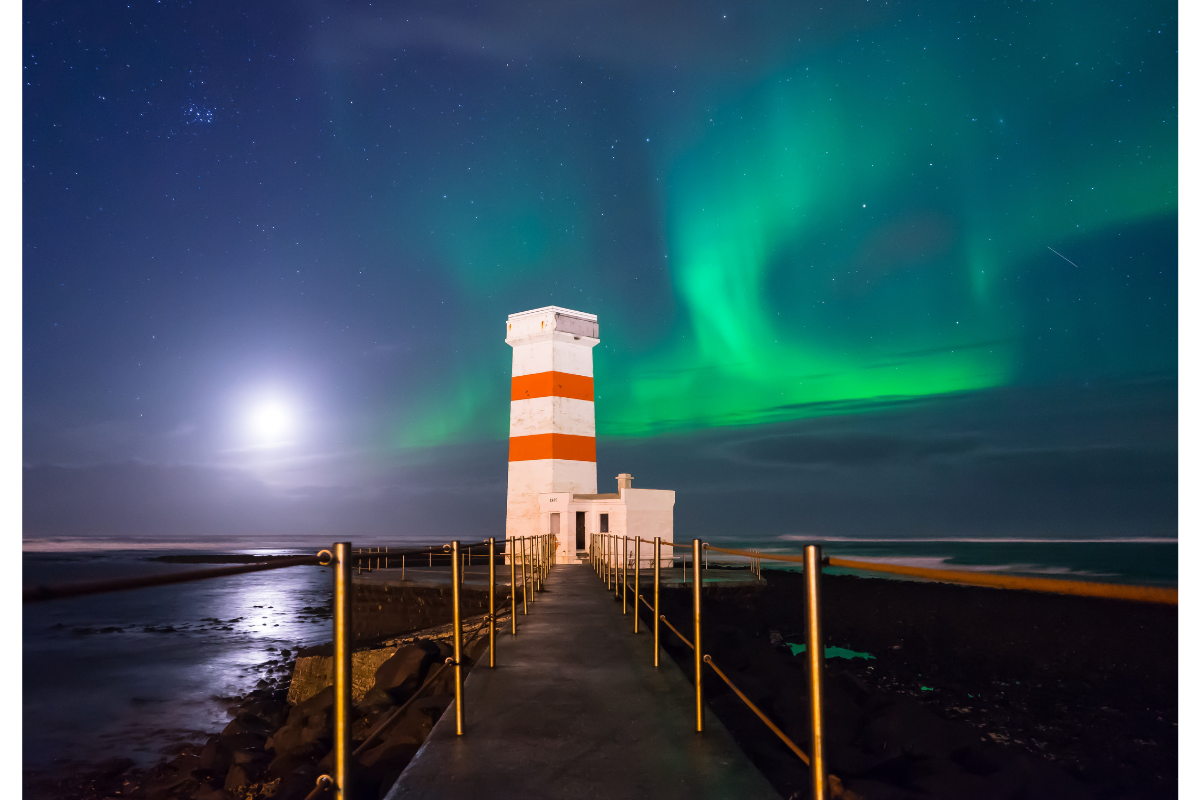
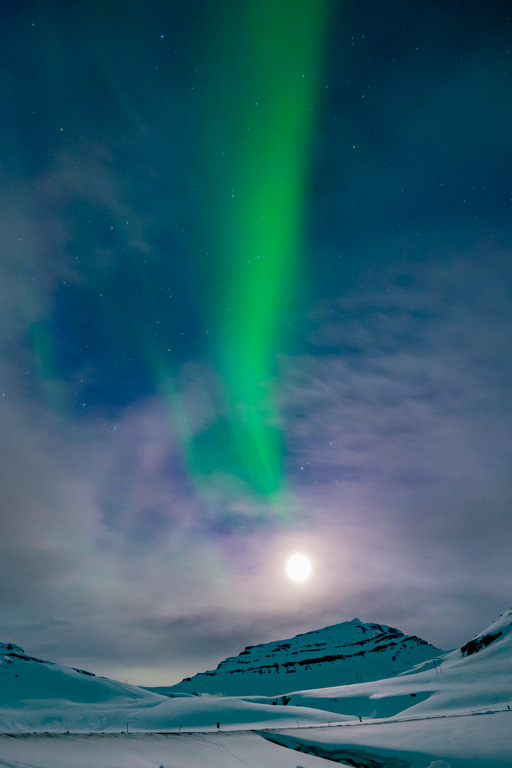
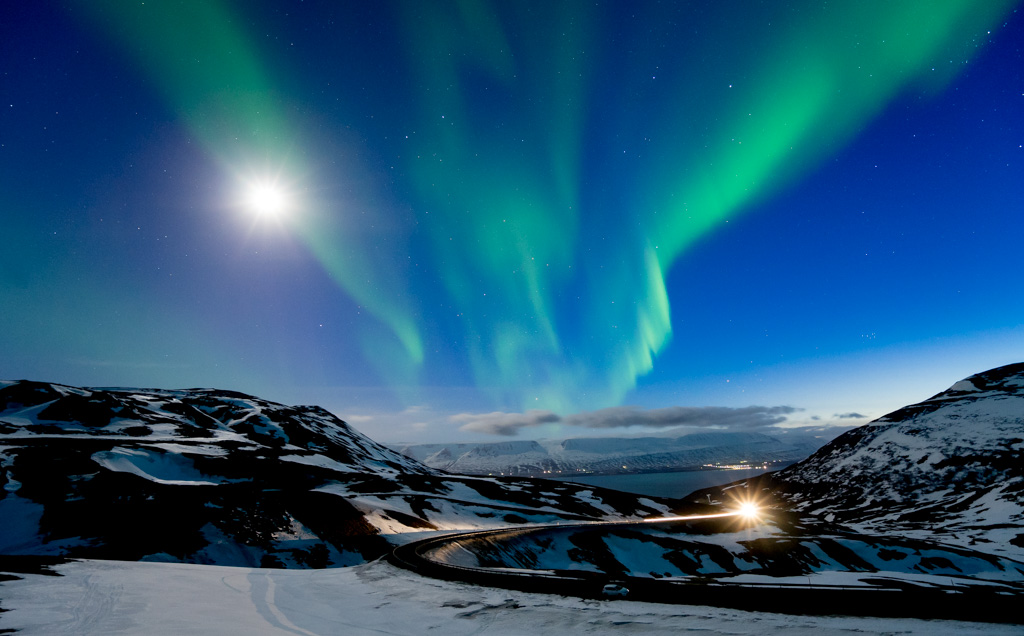
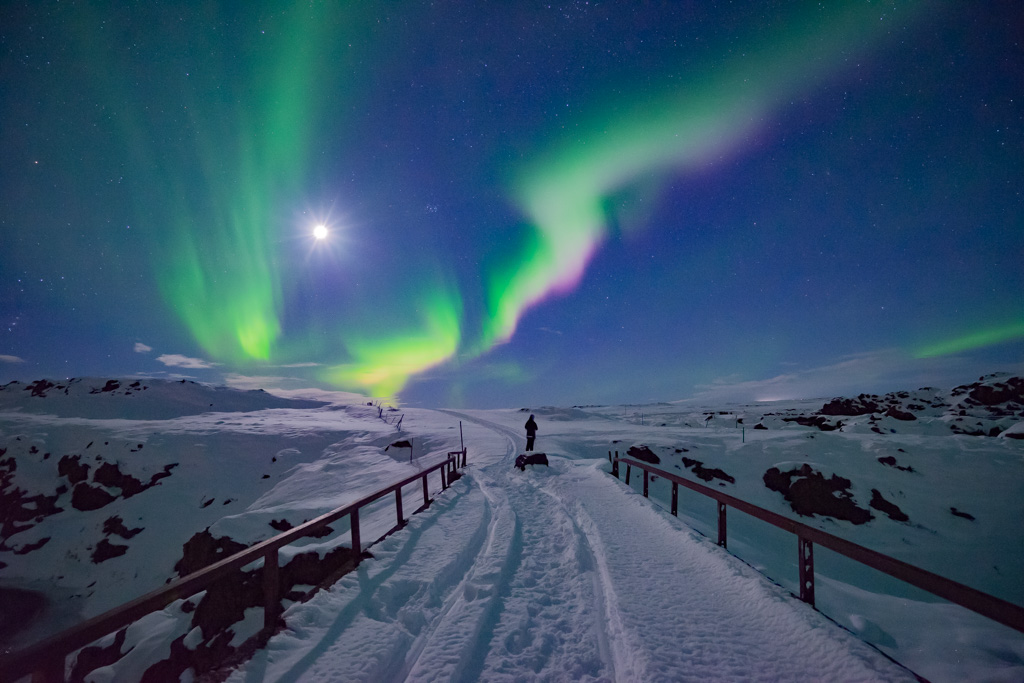
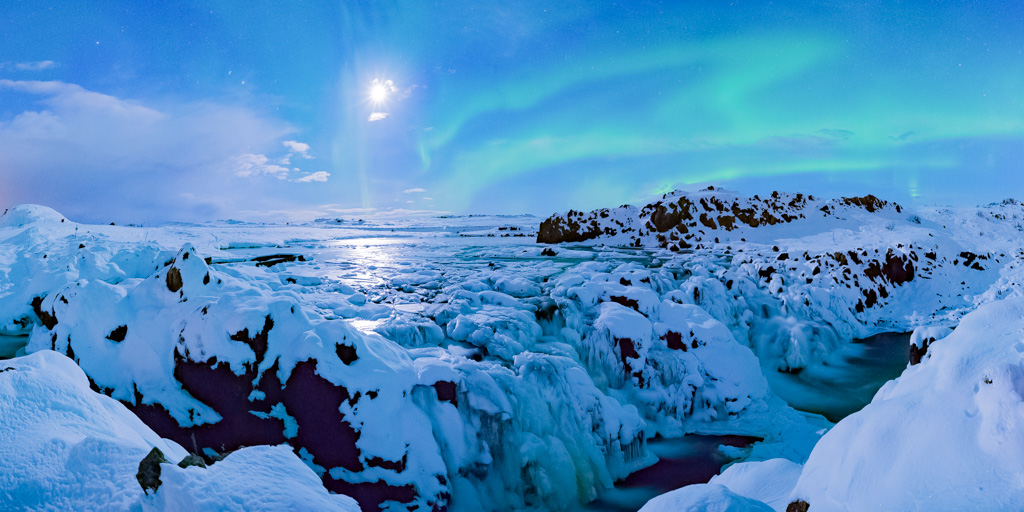
Full moon aurora in the highlands, Iceland
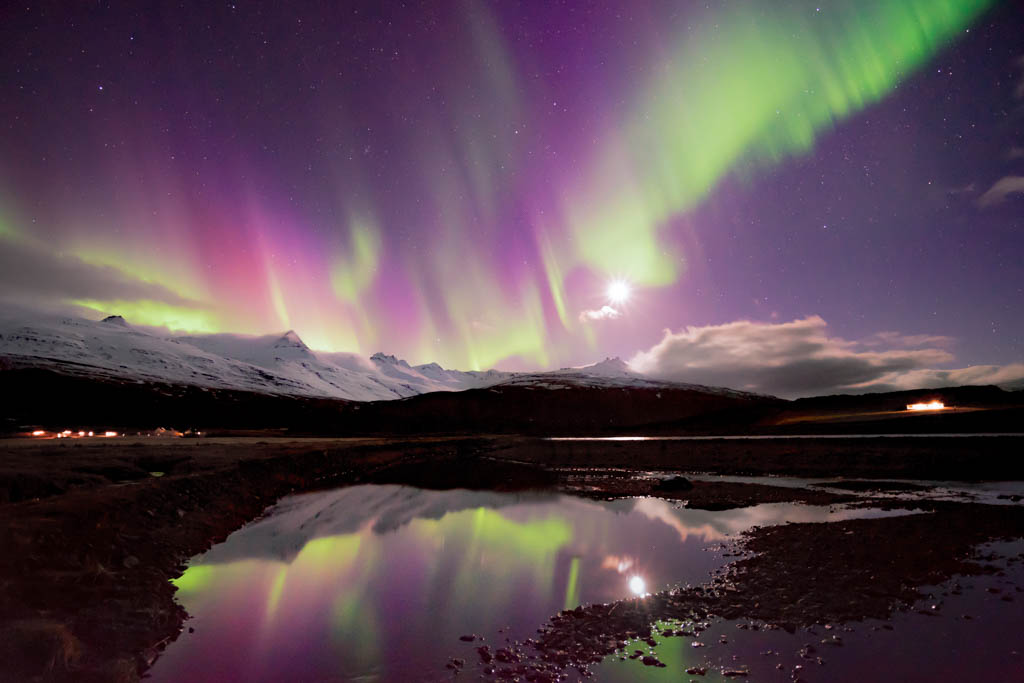
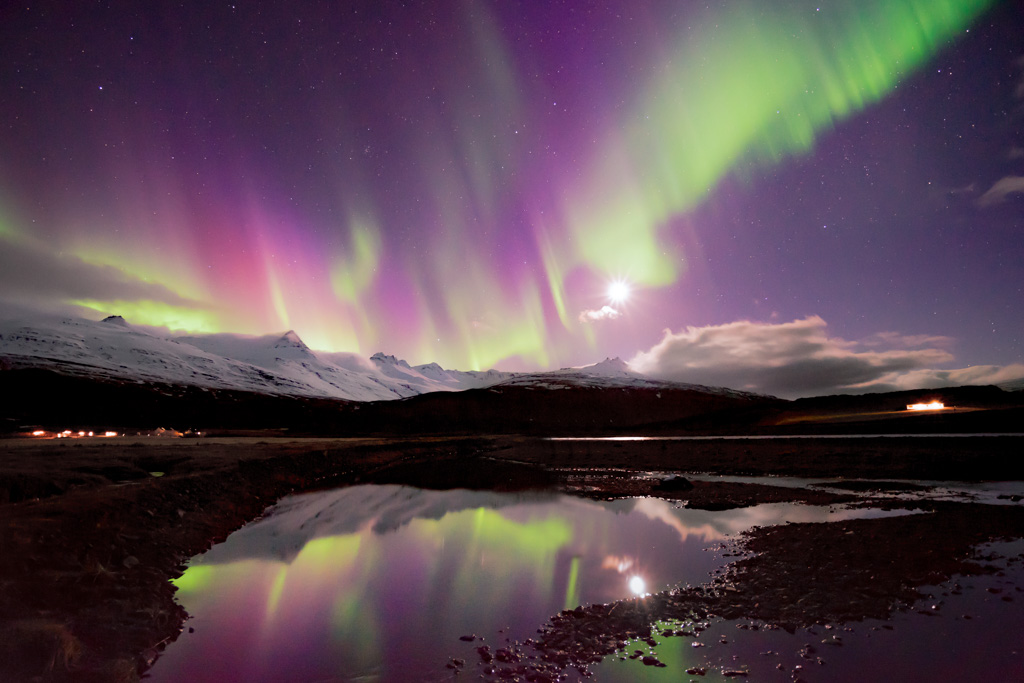
Full moon aurora in the East Fjords, Iceland
WHY WE LOVE FULL MOON FOR AURORA CHASING – AS PHOTOGRAPHERS
1. Moonlight Enhances the Landscape
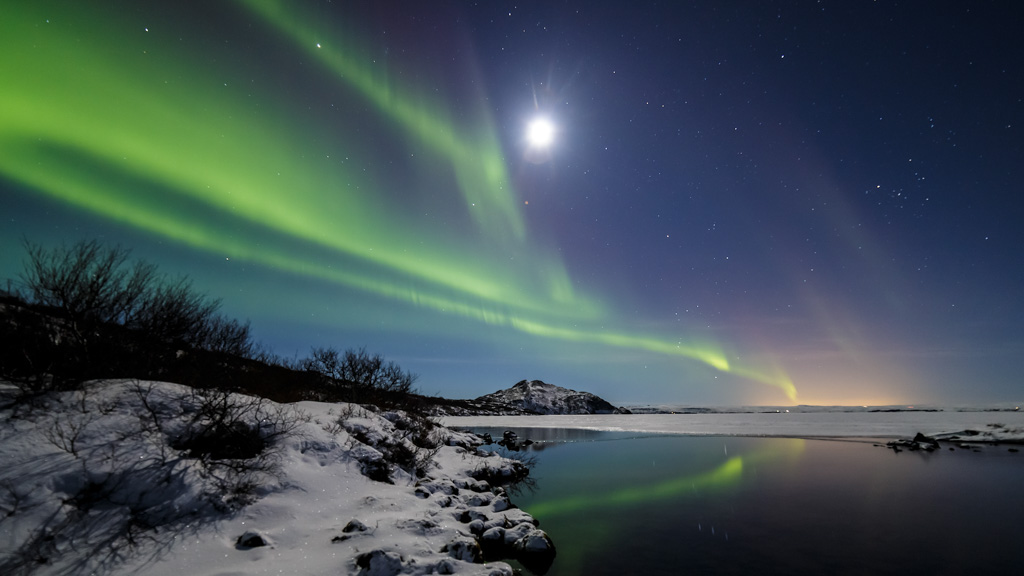
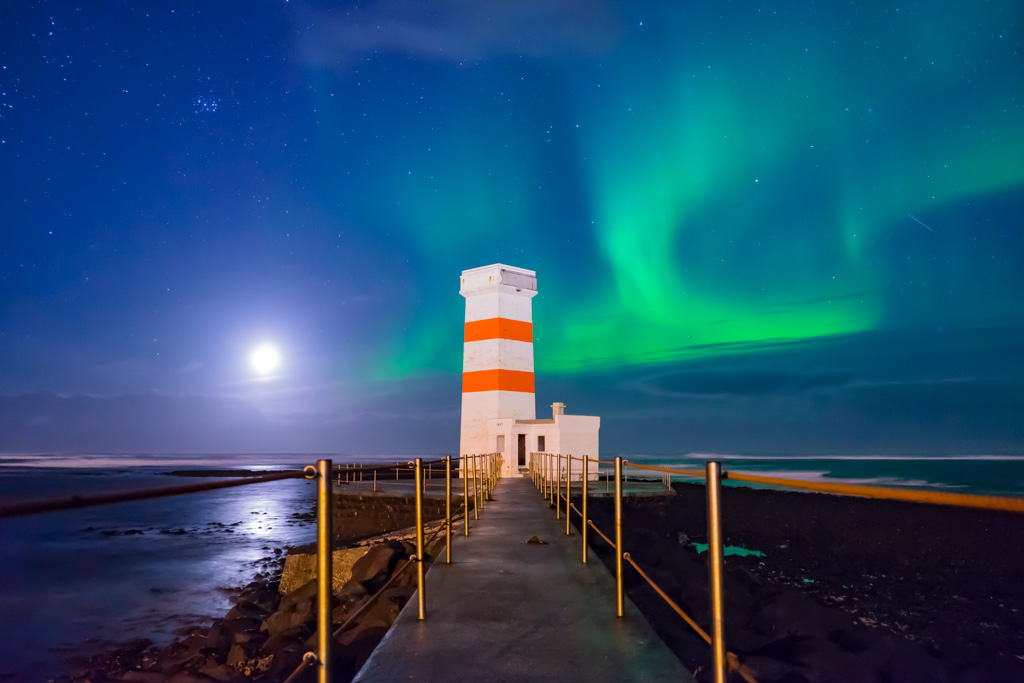
The moon softly illuminates the foreground, creating a magical setting. Snow-covered mountains, lava fields, and Icelandic glaciers appear even more stunning under moonlight.
2. Beautifully Colored Skies
Instead of pitch black, the night sky appears in deep, rich blue hues—a striking backdrop for the aurora
3. Better Aurora Portraits
The moonlight adds just enough light to softly illuminate people in photos, avoiding the silhouette effect while maintaining the natural beauty of the aurora.
4. Shorter Shutter Speeds
Moonlight allows for shorter exposure times, making it easier to capture sharp images of people and realistic time-lapses that mimic real-time aurora movements.
5. Crisper Aurora Shapes
Shorter shutter speeds also capture the intricate shapes and patterns of the aurora with more clarity
6. Safer and More Enjoyable Conditions
Navigating Icelandic landscapes in the dark can be tricky. With a full moon, it’s easier to see your surroundings and avoid potential hazards like hidden lava caves or icy trails.
WHY THE MOON PHASE ALONE DOES NOT TELL THE WHOLE STORY
1. Moonrise and Moonset Matter More Than the Moon Phase
When planning a Northern Lights hunt, it’s not enough to look at the moon phase alone. Moonrise and moonset times are far more important. In many cases, especially around a full moon, the moon may set before aurora prime time – leaving the sky completely moonless during the best viewing hours around magnetic midnight. That’s why experienced aurora chasers always check when the moon is actually above the horizon. Tools like timeanddate.com provide precise moonrise and moonset times for any location and date.
A night labeled as “full moon” on the calendar can, in practice, have zero moonlight impact on your aurora experience.
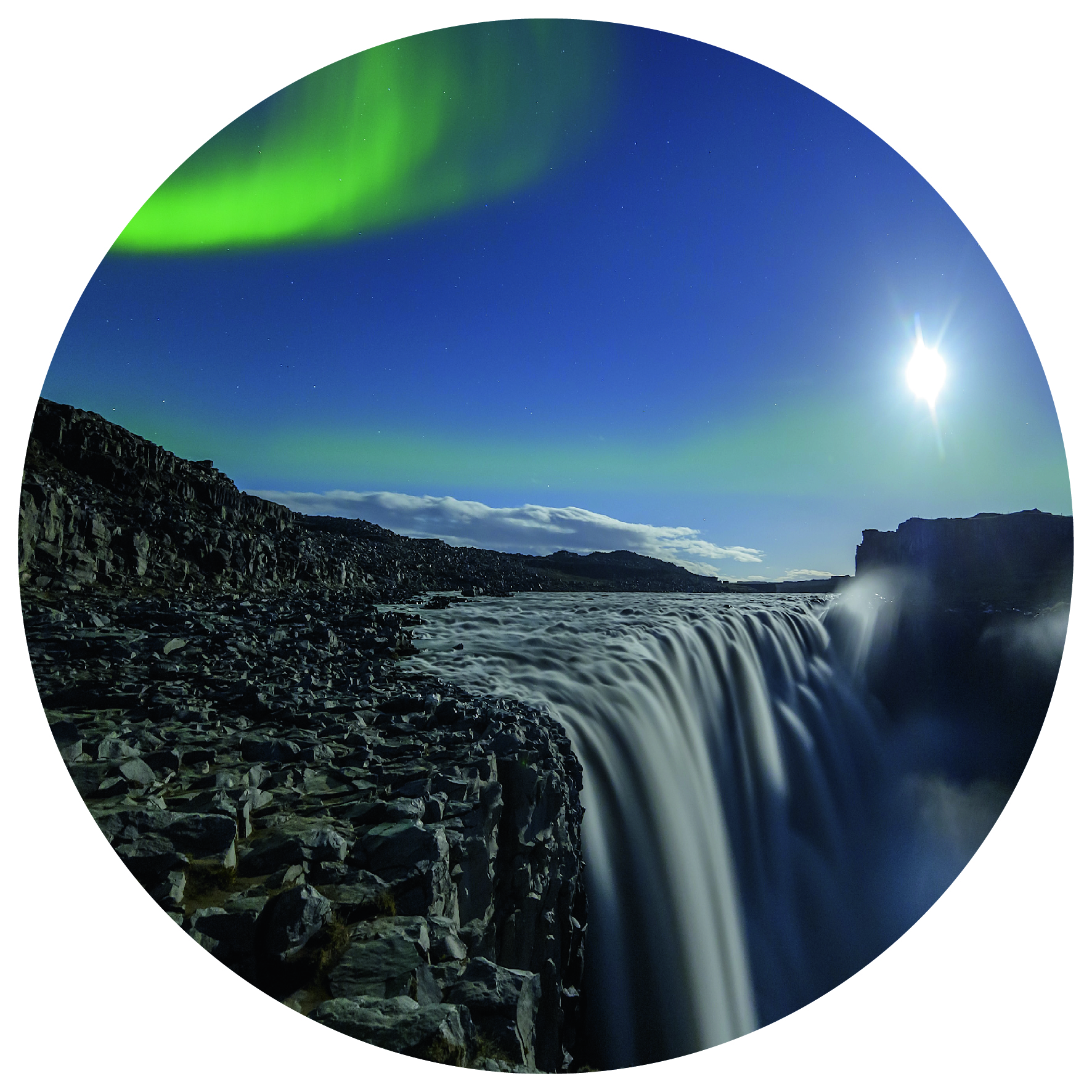
Dramatic full moon aurora at Dettifoss
2. Clouds Can Block the Moon While the Aurora Still Shines
Iceland’s weather adds another important variable: cloud cover.
It’s common to have partly cloudy skies, where low or mid-level clouds obscure the moon in one part of the sky, while clear gaps in another directions allow the aurora to shine through. In this situations, moonlight may be completely diffused or blocked, while the aurora remains visible – sometimes even more dramatically as green arcs illuminate breaks in the clouds. This is one of the reasons why cloud forecasts and on-site decisions matter far more than the moon phase alone.
3. Full Moon Nights Create Extra Opportunities for Astrophotography
For astrophotographers, full-moon nights offer additional creative opportunities beyond the aurora itself.
Moonrise and moonset during a full moon can produce:
- Dramatic low-angle moonlight over mountains and glaciers
- Golden or pastel tones near the horizon
- Unique compositions combining the aurora with lunar-lit landscapes
When times correctly, photographers can capture both aurora activity and moonrise or moonset at the same session, adding depth and storytelling in their images.
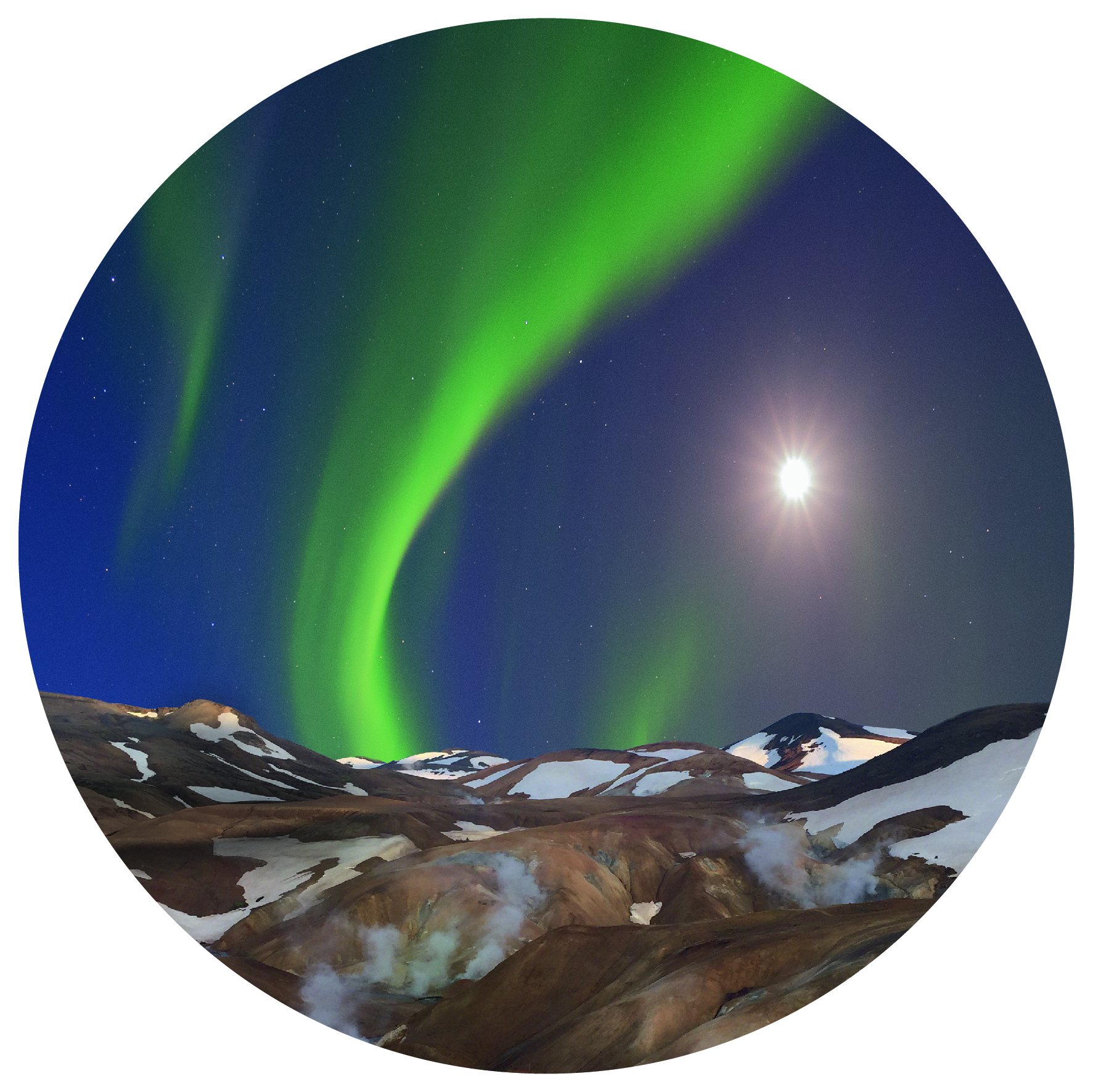
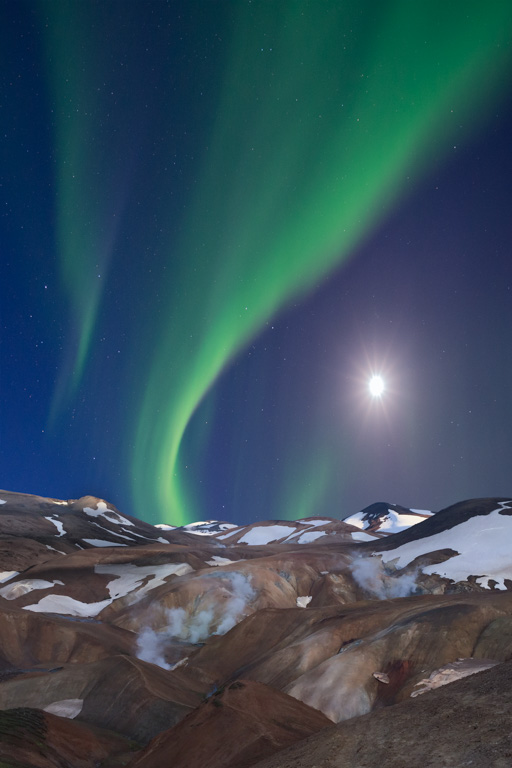
Full moon aurora at Kerlingarfjöll, Iceland
CONCLUSION: SHOULD YOU AVOID FULL MOON FOR NORTHERN LIGHTS CHASING?
Expert takeaway:
A full moon does not ruin Northern Lights viewing. What truly matters is:
-
Aurora strength
-
Cloud cover
-
Light pollution
-
Whether the moon is actually above the horizon
Pro tip: Track the aurora forecast and cloud cover on reliable apps, like the ones mentioned in our guide to Northern Lights apps, to plan your chase effectively.
CAPTURE THE AURORA WITH US
At Aurora Reykjavík, we know how to make the most of every lunar phase. Whether it’s a moonlit night or a moonless one, our expert guides will help you chase the aurora under the best conditions. Plus, our team of photographers will ensure you go home with breathtaking photos.
Check out our hand-picked selection of Northern Lights tours and let us take you on an unforgettable adventure. Remember, the magic of the aurora doesn’t fade under the full moon—it shines brighter in new ways.
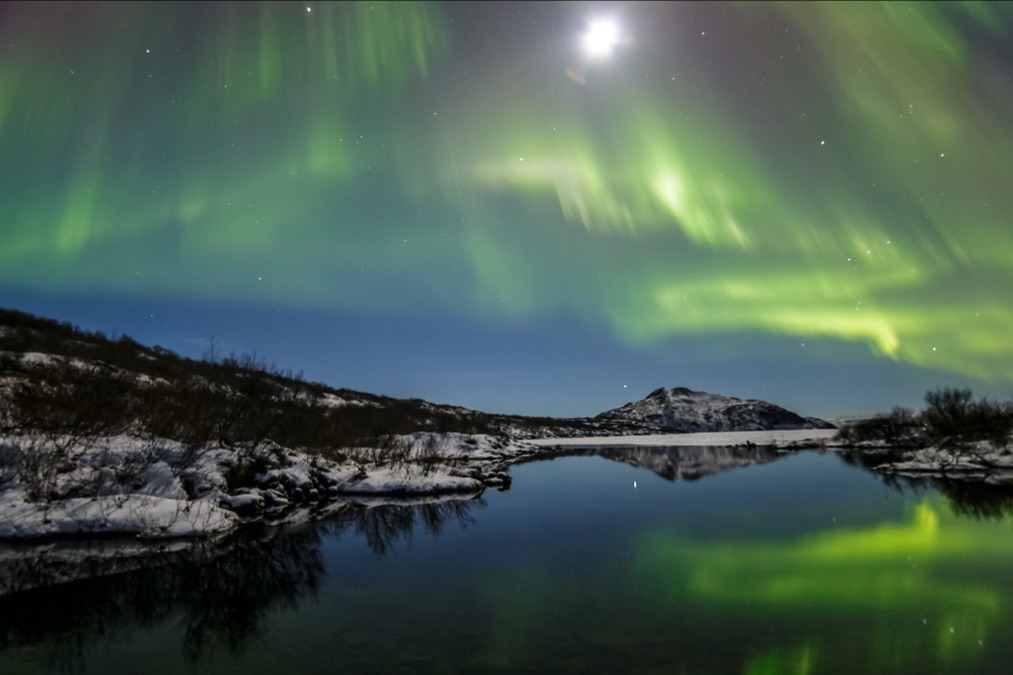
Full moon aurora at Þingvellir National Park
EXPLORE MORE AT AURORA REYKJAVÍK
- Visit our Northern Lights Center to learn everything about the aurora.
- Discover the best Northern Lights photography tips for your next adventure.
- Find out the best months to see the aurora borealis in our guide.
JOIN US ON ICELAND'S BEST NORTHERN LIGHTS TOUR
OUR BESTSELLER
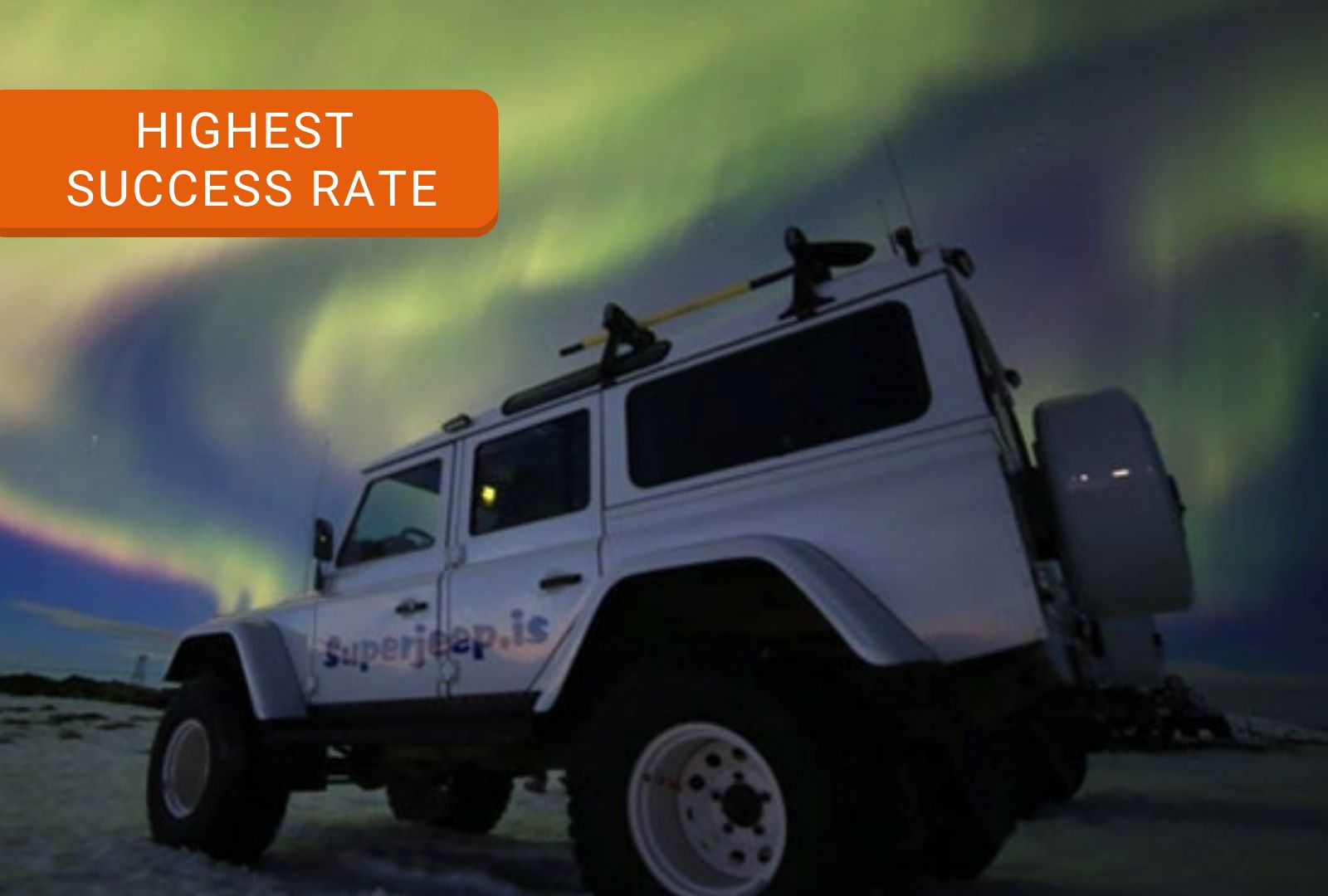
NORTHERN LIGHTS SUPER JEEP TOUR
HÁPUNKTAR:
✓ Úrvals leiðsögn - Norðurljósaferð super jeppi
✓ Frítt skutl: sækja og skila
✓ Fríar hágæða myndir
✓ Heimagert heitt súkkulaði
✓ Hlýir bílar á staðnum
HÆSTA ÁRANGURSHLUTFALLIÐ
FRÍR AÐGANGSEYRIR AÐ AURORA REYKJAVÍK - SPARIÐ 3900KR
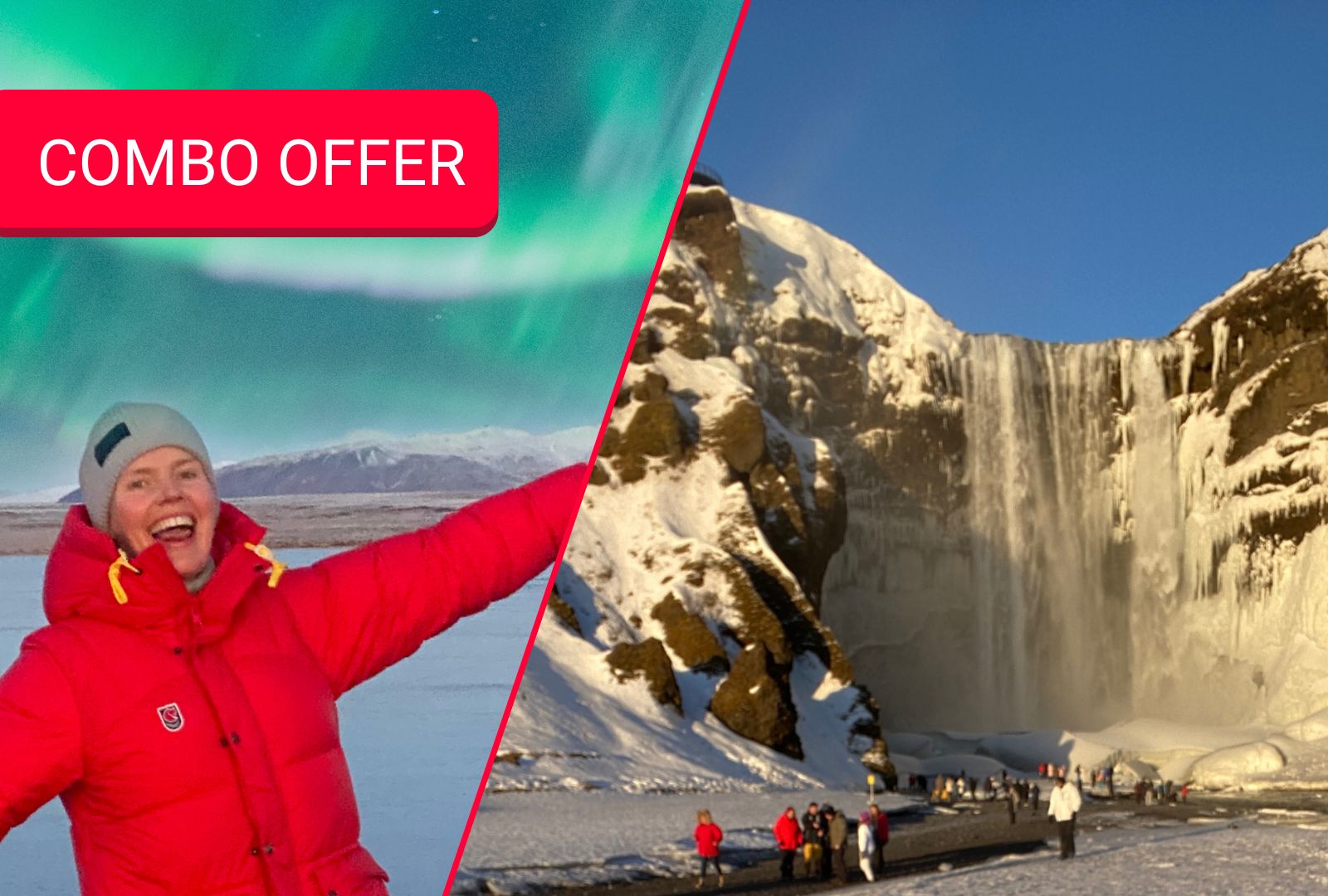
NORÐURLJÓS & SUÐURSTRÖND
HÁPUNKTAR:
✓ 2f1 TILBOÐ: SPARAÐU YFIR 2000KR
✓ Sólheimajökull
✓ Labbaðu um bæinn Vík
✓ Labbaðu um í Reynisfjöru
✓ Sjáðu stórkostlegu fossana, Skógafoss & Seljalandsfoss
✓ Vertu vitni af norðurljósunum dansa
BEST VALUE FOR MONEY
NORÐURLJÓSA ÁBYRGÐ: KOMDU MEÐ AFTUR FRÍTT EF ENGIN LJÓS SÁUST.
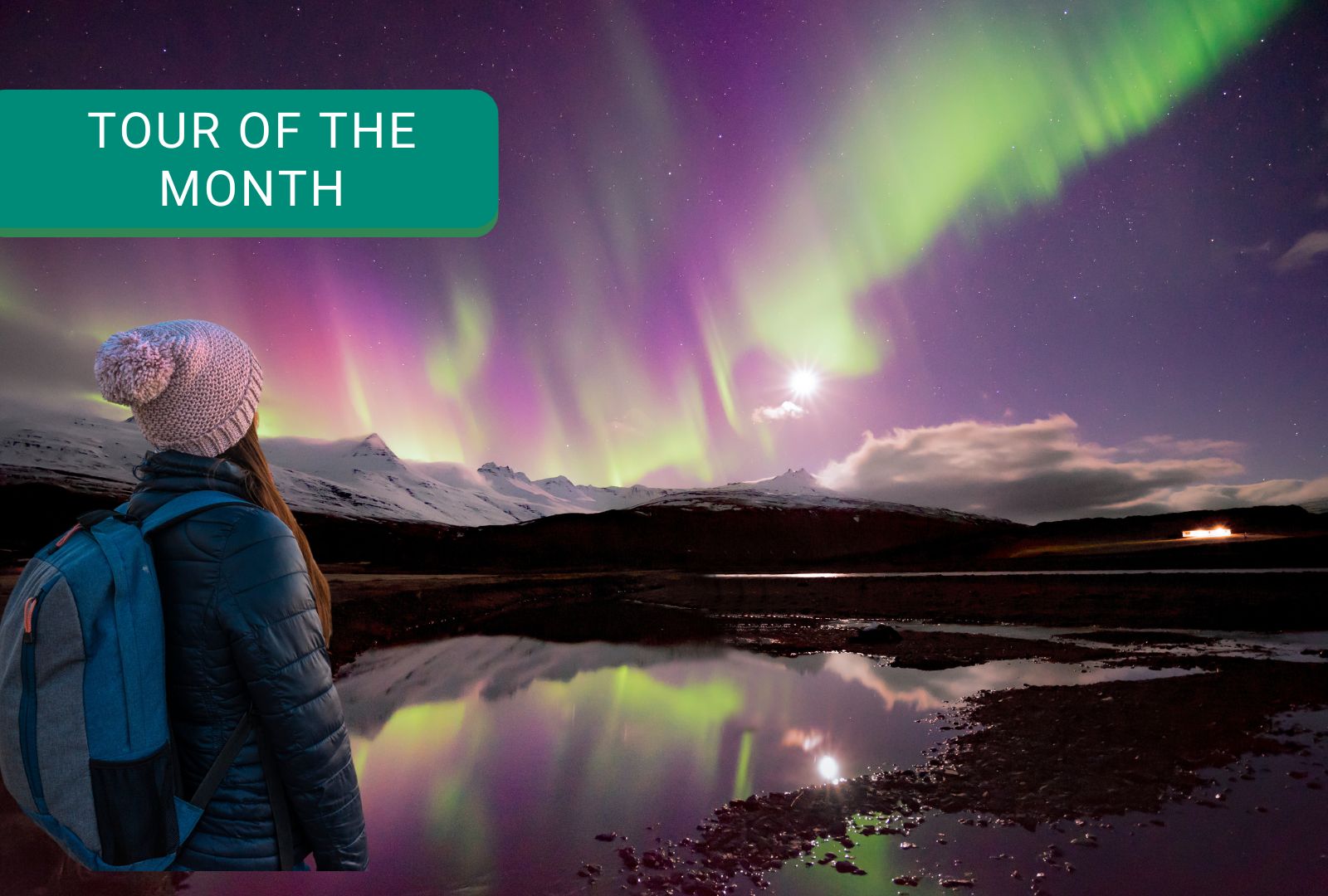
NORÐURLJÓSAFERÐ - LÍTILL HÓPUR
HÁPUNKTAR:
NORÐURLJÓSAFERÐ í lítilli rútu
FRÍAR MYNDIR af þér undir norðurljósunum
✓ Homemade hot Chocolate og Pastries
✓ Frítt Skutl til og frá
VINSÆLASTA FERÐIN
FAQ ABOUT THE NORTHERN LIGHTS
Hvar get ég séð norðurljós á Íslandi?
During this long period, Iceland experiences sufficient darkness for the Aurora to be visible at night.
However, chances of experiencing the northern lights vary depending on the time of year. Find out which months are the best for seeing the Aurora here.
Can you see the Northern Lights during a full moon?
What time do the northern lights show up?
During the winter months, when the hours of light are limited, the northern lights can often appear as early at 7:00pm.
As the exact time of an Aurora display cannot be predicted, keep your eyes at the sky. And remember, patience is key!
How long do the northern lights last?
Can I see the northern lights when it is cloudy?
Do the northern lights only appear when it is cold?
Are the northern lights visible all over Iceland?
Are the northern lights really colourful?
Is a new moon better for aurora viewing?
Is the full moon good for aurora photography?
Katarina Raker
ABOUT THE AUTHOR: KATARINA RAKER