LIVE AURORA FORECAST
MARCH 21th – MEDIUM CHANCES
Solar activity: KP index is high today, peaking at around 4. This means good chances of auroral displays, if the skies stay clear.
Cloud cover: Reykjavik and surrounding areas are expecting mostly cloudy skies during prime aurora hours.
Sufficient Darkness: 20:35
Moon: 5%, Waxing Crescent. Good conditions for aurora photography.
Best Time to See the Northern Lights: 22:00 – 01:00
Outlook for the next days: Skies are expected to be cloudy in the South-West of Iceland, with good solar activity. Monitor the forecast for updates.
TONIGHT’S OUTLOOK
CHASING THE NORTHERN LIGHTS - A STEP BY STEP GUIDE FOR YOUR AURORA HUNT
PLANE VORAUS
Maximise your chances of witnessing the Northern Lights by following our expert tips!
Two factors matter most when you plan your trip
-
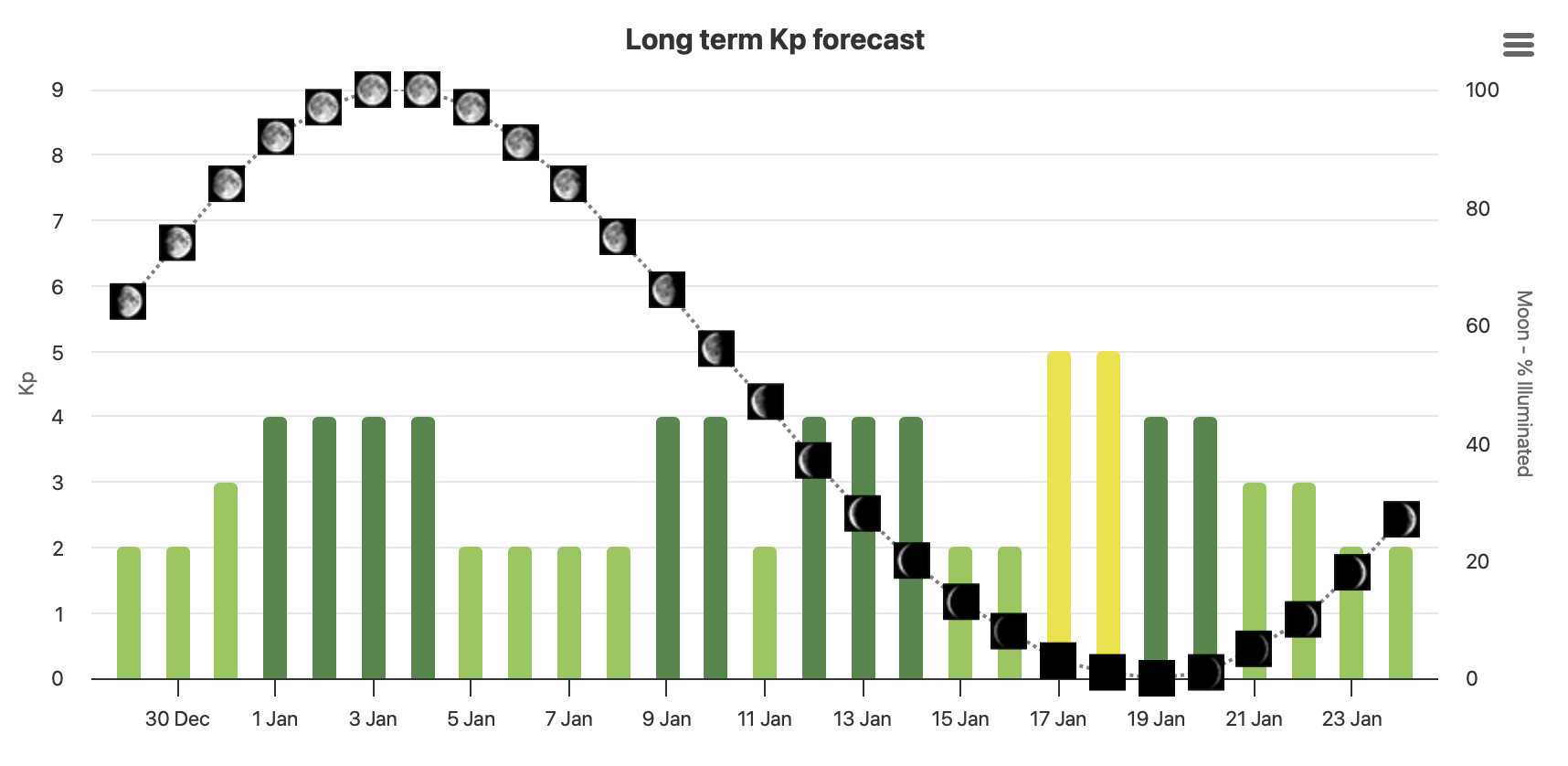
The 27-day KP forecast: The 27-day KP forecast is based on the Sun’s rotation. Since the Sun turns once every 27 days, active regions can reappear and give a rough idea of aurora chances weeks ahead.
-
Das moon phases: A bright full moon can wash out faint auroras, but it can also create magical photo opportunities by lighting up Iceland’s landscapes. Learn more about auroras and the moon phases here.
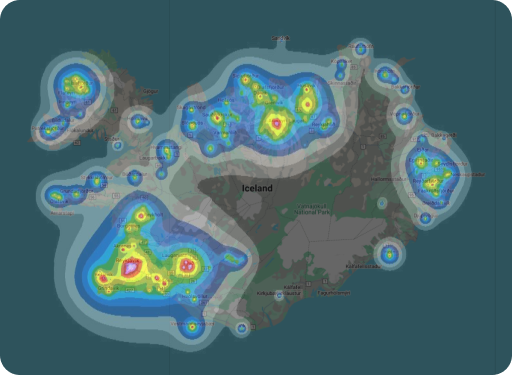
FIND DARK SKIES
FIND CLEAR SKIES
Aurora Hunting Tip: If you can see stars, you might see the Northern Lights!
Check cloud cover to find clear skies. Use the time slider to track changes, and look for white or light areas on the map for the best viewing spots.
Map colors explained:
🟢 Green – All clouds (composite)
🔵 Blue – Low clouds
🔴 Red – Middle clouds
🟠 Orange – High clouds (Northern Lights may still be visible through them)
Loading…
PICK A SAFE SPOT
MONITOR SOLAR ACTIVITY

Image updated in real-time, courtesy of NOAA's Space Weather Prediction Center.
MONITOR LIVESTREAM FROM REYKJAVÍK AND THE GOLDEN CIRCLE
Live Stream from Reykjavík: Your Window to the Northern Lights and Midnight Sun
Live Stream from The Golden Circle: Next to The Kerið Crater
Experience the magic of Iceland in real-time with our live stream from Reykjavík, available year-round on aurorareykjavik.is. Whether you’re dreaming of witnessing the Northern Lights or eager to catch a glimpse of the Midnight Sun, this live feed offers you an immersive look at the stunning natural phenomena Iceland is famous for.
Live Stream from The Golden Circle – One of the World’s Best Locations for Aurora Hunting
Facing north, towards Búrfell and Þingvellir
REAL-TIME AURORA FORECAST
CURRENT SOLAR ACTIVITY
Image updated in real-time, courtesy of NOAA's Space Weather Prediction Center.
CURRENT KP INDEX
3-DAY KP INDEX
CURRENT BZ VALUE
UNDERSTANDING THE AURORA FORECAST
Auroral Activity (Kp Index)
The Kp index measures global geomagnetic activity on a scale from 0 to 9. The higher the number, the stronger the potential aurora.
Good for aurora hunting: Kp2 or higher usually means visible lights in most of Iceland.
Bz (North–South Magnetic Field)
The Bz component tells us the direction of the interplanetary magnetic field. When Bz is negative (–2 nT or lower), it opens a “door” in Earth’s magnetic field, allowing solar particles to enter and create auroras.
Ideal: –3 nT or below.
Bt (Total Magnetic Field Strength)
Bt shows the strength of the magnetic field carried by the solar wind. Stronger Bt (above 6 nT) increases auroral intensity when Bz is southward.
Ideal: Bt ≥ 6 nT combined with Bz ≤ –2 nT.
Solar Wind Speed
The solar wind is a stream of charged particles flowing from the Sun. Faster winds deliver more energy into Earth’s atmosphere.
Good chances: speeds above 400 km/s often produce bright, fast-moving auroras.
Combine all these indicators with clear skies and darkness for the best viewing conditions.
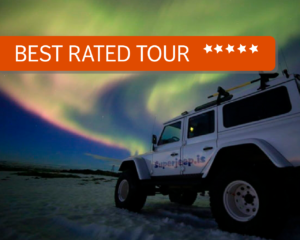
Nordlicht-Tour mit einem Superjeep
4.9
Chase the Northern Lights with the experts with our Superjeep tour. Small group experience, wilderness-ready vehicles, and highest success rate. Book now!
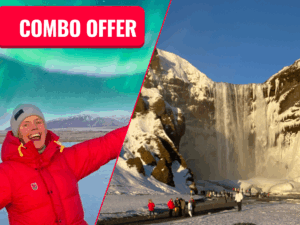
Kombo-Tour: Südküste und Nordlichter
5
Explore Iceland’s South Coast and hunt the Northern Lights on this epic combo tour. Adventure awaits. Book your place today!
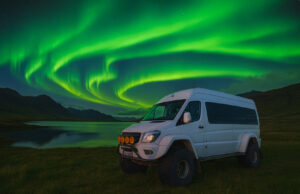
NORTHERN LIGHTS SMALL GROUP SUPERJEEP TOUR WITH PHOTOGRAPHER
5
Embark on a Northern Lights Hunt with Expert Guidance and Photography Experience the magic of the Northern Lights on our exclusive small group superjeep tour with a professional photographer. Join us on a 4-hour adventure through the Icelandic countryside, away from city lights, to witness one of nature’s most awe-inspiring phenomena. Our experienced guides will […]
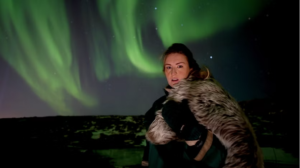
BESTSELLER: NORTHERN LIGHTS MINIBUS TOUR
4.9
Join Iceland's highest-rated minibus aurora tour! HIGHLIGHTS Northern Lights tour in a small bus Free photos of you under the Northern Lights Homemade hot chocolate and pastries Free pick-up and drop-off MOST POPULAR TOUR
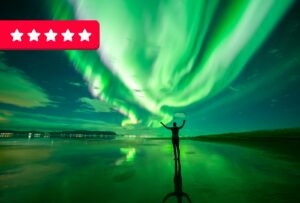
N. 1 NORTHERN LIGHTS MINIBUS TOUR
5
Join a northern lights minibus tour and maximise your chances of success. Free retry, complimentary photos, hot chocolate and sweet Icelandic treats. Book now!
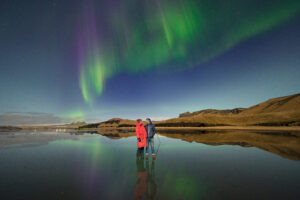
PRIVATE NORTHERN LIGHTS TOUR WITH PROFESSIONAL PHOTOS
5
Experience the Northern Lights like a VIP! Join this private tour with free professional photography and create everlasting memories. Book now!
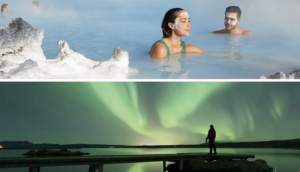
3 in 1: Golden Circle, Blaue Lagune und Nordlichter
5
Explore Iceland’s Golden Circle, relax at the Blue Lagoon, and chase the Northern Lights. A perfect combo tour for Iceland’s best attractions. Book now!

NORTHERN LIGHTS PRIVATE SMALL GROUP TOUR
5
Perfect for small groups - chase the Northern Lights with an experienced private guide. A magical adventure, including free photos and refreshments. Book today!
8 Tage rund um Island - Nordlichter garantiert!
5
Experience Iceland’s wonders with an 8-day Northern Lights tour. From glaciers to hot springs, adventure awaits. Book your spot today!
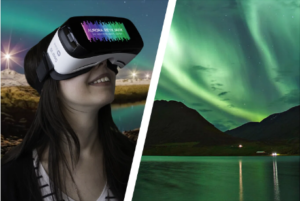
2 in 1: Nordlicht-Museum und Nordlichttour mit dem Schiff
5
Experience the Northern Lights by day and night with this Aurora Reykjavík and northern lights cruise combo. Watch the night dance on land and at sea, book now!
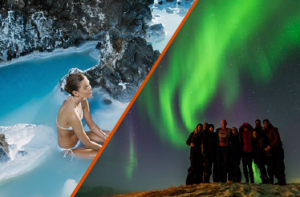
2in1: Nordlichttour und Blaue Lagune
5
Relax at the Blue Lagoon and chase the Northern Lights in one unforgettable tour. Geothermal and celestial wonders. Book your ticket now!
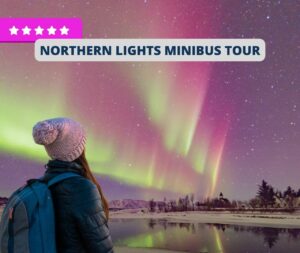
Nordlicht-Minibus-Tour
5
Join us on a minibus tour for chasing the Northern Lights in Iceland. Small group, expert guides, photos and refreshments included. Book your seat now!
Why do Aurora forecasts change?
Are there any other Aurora data sources I should keep track of?
How accurate is the Kp index for seeing the Northern Lights?
What are the best months to see the Northern Lights in Iceland?
What is the difference between a low Kp number and a high Kp number for Northern Lights viewing?
Can I see the Northern Lights in summer?
What are the best Northern Lights forecast Apps to enhance my experience?
- My Aurora Forecast – Live aurora maps, 27-day forecasts, and customizable alerts. Great for both beginners and seasoned chasers.
- Aurora Alerts – Northern Lights – Real-time alerts, cloud coverage maps, and Kp index readings. Perfect for instant notifications.
- Hello Aurora – Community-shared sightings, forecasts, and real-time conditions. Ideal for a social and interactive experience.
- Northern Eye Aurora Forecast – Detailed solar wind data, Kp index, and real-time solar activity updates. Best for science enthusiasts.
- Aurora Forecast & Alerts – Hourly forecasts, cloud maps, and customizable notifications. Simple and user-friendly for quick updates.